
Selecting the perfect jigging lure with hooks for Philippine waters depends entirely on matching the lure’s action and hook setup to the feeding behavior and habitat of your target species. For bottom-dwelling ambush predators like Lapu-Lapu, slow-fluttering short jigs with snag-resistant top assist hooks are ideal. For fast, sharp-toothed mid-water hunters like Tanigue, long, fast-sinking jigs paired with bite-resistant wire leaders and heavy-duty hooks are required. For deep-dwelling, powerful pelagic speedsters like Yellowfin and Skipjack Tuna, streamlined, heavy jigs with robust double assist hooks are essential to withstand intense, sustained fights.
The diverse marine topography of the Philippines, featuring deep drop-offs, coral reefs, and strong currents, requires anglers to carefully evaluate their jigging lure with hooks. Selecting the wrong profile or weak hardware can result in immediate gear failure or lost fish. Understanding how these lures behave in local environments is the first step toward a successful day on the water.
Understanding Jig Profiles and Hook Configurations
Long, slim jigs and short, wide jigs behave differently in the water column. Long, slim jigs are designed for high-speed vertical jigging, often called speed jigging. They cut through the water column with minimal resistance, creating a sharp, darting flight path that mimics a panicked baitfish. This rapid action is highly effective for fast-moving pelagic species that hunt by sight and speed.
Products mentioned in this guide
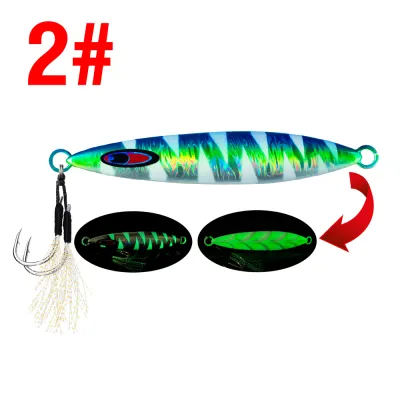
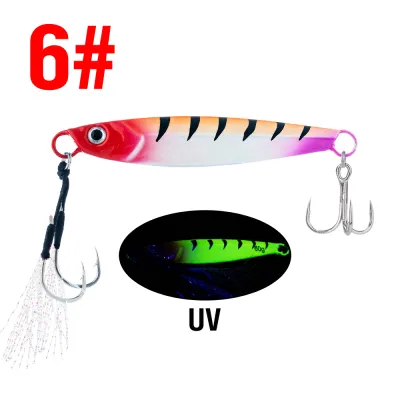
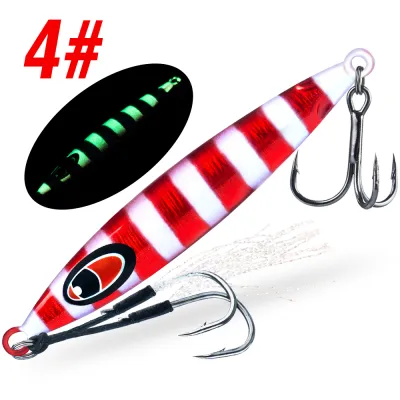
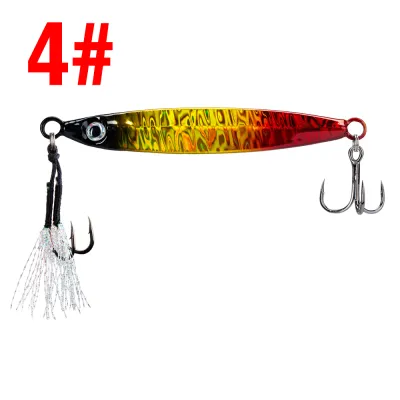
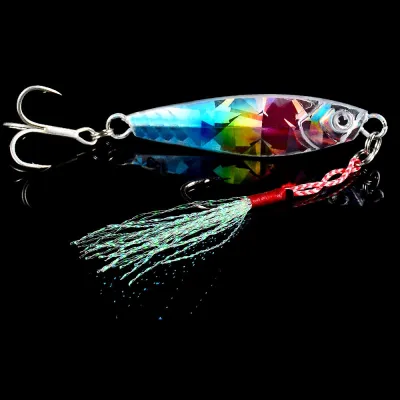
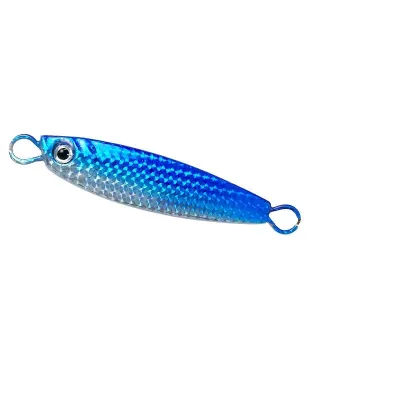
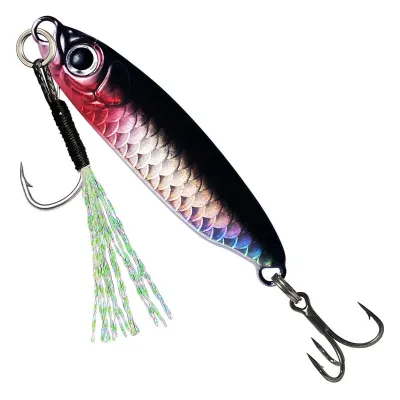
Prices are valid at publication and may change. Please refer to the product page for the latest price.
Conversely, short, wide, or asymmetrical jigs are engineered for slow-pitch jigging. They fall slowly through the water column, producing a wide, horizontal fluttering action that resembles a dying or injured baitfish. This slow descent keeps the lure in the strike zone longer, giving slower bottom-dwelling predators more time to strike.
Traditional treble hooks, once common on vertical jigs, are prone to snagging on underwater structures like rocks and corals. They also act as levers during a fight, often tearing out of a fish’s mouth under heavy pressure. Modern assist hooks—single or double hooks attached to the jig’s eye via flexible braided cords—have revolutionized jigging. They swing freely, allowing the fish to inhale the hook easily, and significantly reduce the leverage a fish can use to shake the hook free.
Buying a pre-rigged jigging lure with hooks saves valuable preparation time and ensures that the hardware is perfectly balanced. Manufacturers match the hook size, cord length, split rings, and solid rings to the specific weight and action of the jig. This eliminates the guesswork of rigging, ensuring the lure swims naturally without being weighed down or unbalanced by oversized hooks.
Matching Jigging Lures to Target Species in Philippine Waters
Lapu-Lapu (Grouper) and Bottom-Dwelling Reef Fish
Lapu-Lapu are classic ambush predators that hide in crevices, caves, and coral structures. To entice them, choose short, wide, or highly asymmetrical jigs designed for slow-pitch or micro-jigging. These lures fall slowly and flutter erratically, remaining in the target zone right above the reef for an extended period. This slow, highly visible action triggers the predatory instinct of a grouper waiting in the shadows.

When targeting these structure-loving fish, use single or double assist hooks rigged at the top of the jig only. The assist cords should be short and made of heavy fluorocarbon or Kevlar. Placing hooks only at the top minimizes the chance of the jig snagging on rocks or coral as it bounces near the bottom. The heavy leader material provides the abrasion resistance needed when a hooked Lapu-Lapu immediately tries to retreat back into its rocky hole.
Action Tip:
- Drop the jig all the way to the seafloor, then lift it slightly.
- Work the lure using slow, deliberate rod lifts and drops, allowing the jig to flutter down naturally on the slack line.
- Keep the jig within one to three meters of the bottom, as Lapu-Lapu rarely chase bait far from their shelter.
Tanigue (Spanish Mackerel) and Mid-Water Predators
Tanigue are incredibly fast, aggressive predators known for their razor-sharp teeth and high-speed slashing strikes. To target them in the mid-water column, opt for long, slim, and heavily weighted jigs. These streamlined profiles cut through the water quickly during fast retrieval, mimicking fleeing round scads (galunggong) or sardines.
Because of their sharp teeth, standard Kevlar assist cords can be severed instantly. Use heavy-wire assist hooks rigged with a short wire core, or reinforced, saltwater-grade treble hooks attached via heavy-duty split rings. Always connect your jig to a wire leader or an exceptionally thick fluorocarbon shock leader (80lb to 100lb) to prevent cut-offs during the initial strike.
Action Tip:
- Drop the jig to the desired depth, then retrieve it using rapid, continuous rod pumps.
- Tanigue are highly visual hunters attracted to speed; any hesitation or pause in the retrieval can cause them to lose interest or bite the line ahead of the jig, resulting in a lost lure.
- React immediately to any sudden line stops or aggressive hits.
Tuna (Yellowfin and Skipjack) and Pelagic Speedsters
Tuna are powerful, open-ocean pelagics that travel in schools and feed at various depths. To reach these deep-dwelling fish, especially in areas with strong ocean currents like the Verde Island Passage, you need heavy, highly streamlined, fast-sinking jigs. These jigs must reach depths of 50 to 150 meters quickly before the boat drifts away from the school.
Tuna fights are long, grueling battles of endurance that put immense pressure on your tackle. Use heavy-duty, thick-wire double assist hooks rated for high breaking strengths. These should be paired with premium, seamless solid rings and heavy-duty split rings. Avoid cheap hardware, as the violent head shakes and sustained downward runs of a Yellowfin tuna will easily straighten weak hooks or open low-quality split rings.
Action Tip:
- Deploy a high-speed, rhythmic jigging style (often called mechanical jigging).
- Keep a tight line at all times, as tuna frequently strike on the drop or during the transition from drop to retrieve.
- Set the hook firmly multiple times to penetrate their tough mouths.
Essential Specifications to Check Before Buying
A fundamental rule of vertical jigging is matching the weight of your jig to the depth of the water and the speed of the current. A common starting point is using 1 to 1.5 grams of jig weight for every meter of water depth. However, in strong currents, you may need to double this ratio to keep your line vertical. Always check your fishing rod manufacturer’s specifications to ensure the selected jig weight falls within your rod’s specified lure weight rating to avoid overloading and damaging the rod blank during aggressive jigging motions.
The physical size of the hook must match the target species. The hook gap (the distance between the hook shank and the point) should be wide enough to clear the body of the jig to prevent the jig from blocking a hookset. Additionally, check the wire gauge; thin-wire hooks penetrate easily but will bend under the heavy drag settings required to stop large pelagic fish in Philippine waters.
Saltwater is highly corrosive, especially in the warm, humid tropical climate of the Philippines. Inspect the pre-rigged hardware carefully. Ensure the split rings and solid rings are made of marine-grade, rust-resistant stainless steel. Check that the assist cord is tightly bound, sealed with heat-shrink tubing, and free of fraying. In the local market, high-quality pre-rigged options typically range from broad price bands of ₱150 to over ₱600 depending on the brand and weight.
Cross-Species Compatibility: Can One Jig Do It All?
While specialized jigs yield the best results, budget-conscious anglers or those traveling light can opt for a versatile, middle-ground setup. A semi-long, center-weighted jig weighing between 80g and 120g, paired with standard double assist hooks, offers a balanced compromise. This profile can be worked fast enough to attract mid-water Tanigue, yet still possesses enough flutter on the drop to tempt bottom-dwelling Lapu-Lapu in moderate depths.
Using a single, multi-purpose jig comes with distinct limitations. A middle-ground jig will not flutter as slowly or enticingly as a dedicated slow-pitch jig, reducing your catch rate for stubborn bottom fish. Conversely, it will lack the weight and streamlined shape needed to sink quickly through strong currents to reach deep-water Tuna schools, and its standard assist cords remain vulnerable to the sharp teeth of mackerel.
Instead of relying on a single lure, a more effective strategy is to assemble a compact, targeted selection of two or three pre-rigged jigs. Having one dedicated slow-pitch jig for bottom fishing, one fast-sinking slim jig for mid-water predators, and one heavy-duty pelagic jig ensures you are prepared for whatever species are active on any given day in Philippine waters.
Frequently Asked Questions (FAQ)
Should I add a stinger hook to my jigging lure?
Adding a stinger hook—a secondary assist hook attached to the tail of the jig—can be highly effective when targeting short-striking or tail-biting species like Tanigue. However, if you are fishing close to heavy reef structures, drop-offs, or shipwrecks for Lapu-Lapu, avoid using tail-mounted stinger hooks. The extra hook trailing at the bottom of the jig will dramatically increase your chances of snagging on rocks, coral, or debris, leading to lost lures and interrupted fishing time.
How do I maintain the hooks on pre-rigged jigs after a saltwater trip?
To protect your investment and maintain hook sharpness, rinse all used jigs and hooks thoroughly with clean freshwater immediately after your trip. Saltwater residue accelerates corrosion, which dulls hook points and weakens metal rings. After rinsing, allow the lures to air-dry completely in a well-ventilated area away from direct sunlight. To provide long-term protection against high humidity, apply a light coat of multi-purpose reel oil or a dedicated marine corrosion inhibitor to the hooks, split rings, and solid rings before storing them in your tackle box.
Community discussion
Share your experience or ask a question. Comments are reviewed before publication.