
Setting up a functional training space inside a compact home or high-rise condominium requires a careful balance of equipment utility and spatial economy. When floor space is at a premium, selecting the right jump box gym equipment becomes a decision of geometry as much as fitness. A highly practical jump box for a limited space is one that delivers multiple training heights without demanding a massive permanent footprint. For many home fitness enthusiasts, this points toward a 3-in-1 wooden plyometric box or a compact adjustable metal platform. While a traditional wooden box can be flipped to offer three distinct heights on a single footprint, adjustable and stackable models provide alternative ways to reclaim floor space when your workout is finished. Your choice ultimately depends on how you balance noise constraints, ceiling clearance, and storage availability within your living area.
Measuring Your Space and Clearance Needs
Before purchasing plyometric equipment, map out your training zone’s physical boundaries. Measuring only the box itself neglects the dynamic clearance required for safe movement. Maintain an unobstructed perimeter of at least one meter around all sides of the box to account for balance adjustments, missteps, or stepping off quickly.
Vertical clearance is critical, especially in modern condominiums with lower ceilings. To calculate your ceiling safety margin, add your maximum jump height to the box height, then add your standing height. Maintain a gap of at least 30 to 40 centimeters between your head at peak extension and the ceiling to prevent head strikes during explosive movements. Remember to account for low-hanging fixtures like ceiling fans, light bulbs, or fire sprinklers.
Products mentioned in this guide

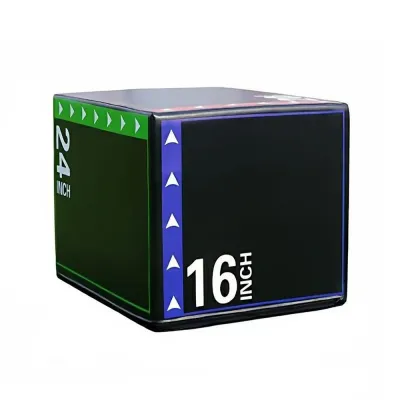
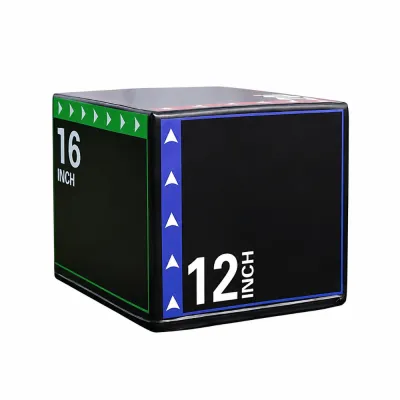
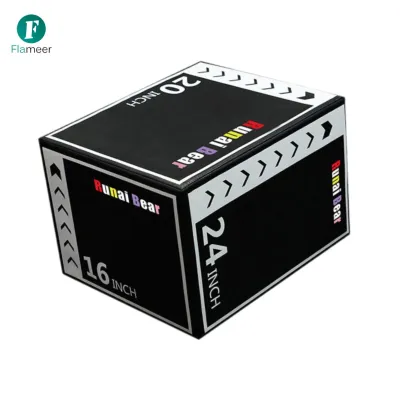
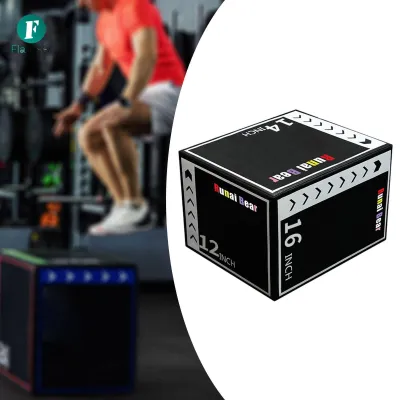
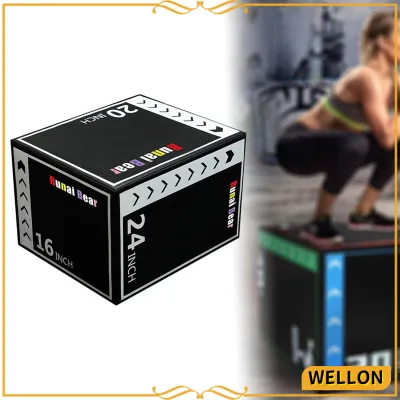
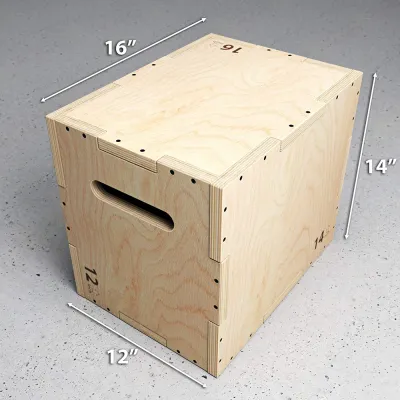
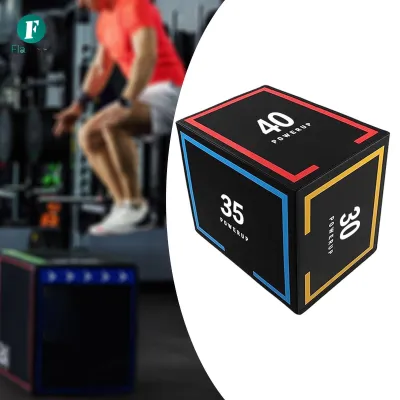
Prices are valid at publication and may change. Please refer to the product page for the latest price.
Finally, consider transport logistics. A jump box must travel from storage to your workout area without scraping walls or colliding with furniture. Measure your storage closets, under-bed clearance, or narrow corridors to ensure easy transport. An awkward path may require a lighter or modular option to prevent accidental household damage.
Comparing Jump Box Types for Small Spaces
Selecting a jump box for a compact home gym involves evaluating how different designs utilize limited square footage. Fixed-dimension, modular stackable, and adjustable mechanical platforms each offer distinct spatial trade-offs. The goal is to maximize training variety while minimizing the physical volume occupied when idle.

Weigh several criteria: total floor area, ease of changing heights, unit weight, and noise dampening. Your training goals also dictate the stability required. Rapid, high-velocity plyometric drills demand a highly stable base, whereas slower step-ups are less demanding on the footprint. Matching these criteria to your room dimensions and weight helps identify an efficient design.
Foam vs. Wooden Plyo Boxes
Foam plyometric boxes are valued in home settings for safety and noise dampening. The soft outer shell protects shins from scrapes during missed jumps, boosting confidence at higher elevations. Additionally, the dense foam core absorbs impact force, reducing the thudding noise and vibrations that travel through floors to downstairs neighbors. However, foam boxes require a wider base to remain stable, resulting in a larger, fixed footprint. They cannot be disassembled, making their bulkier profiles more challenging to store in tight closets.
Wooden plyo boxes, particularly 3-in-1 designs, offer excellent spatial efficiency. Rotating the box onto different sides provides three distinct heights—typically 50, 60, and 75 centimeters—using a single footprint. This multi-height utility eliminates the need for multiple platforms. Wood is durable and provides a rigid landing surface that does not compress under heavy loads. However, missed jumps can result in painful shin injuries, and the heavy, hollow block cannot be folded away, requiring a dedicated corner when not in use.
Adjustable and Stackable Configurations
For those avoiding the bulk of a traditional wooden cube, adjustable and stackable configurations present space-saving alternatives. Stackable foam or wooden blocks allow you to customize training height by layering individual sections. When your workout is complete, these blocks stack neatly in a corner, utilizing vertical space rather than spreading across your floor. This modular approach is excellent for progressive training, though you must verify that the hook-and-loop fasteners or alignment straps remain secure during use.
Adjustable metal jump boxes utilize a single frame with telescoping legs or a pin-selected platform to change heights. This design offers multiple height options while maintaining a slim profile at its lowest setting. Some adjustable models fold flat to slide under a bed or stand upright in a closet. When choosing an adjustable model, inspect the locking mechanisms, hinge quality, and frame stability. Because these units rely on moving parts, any wear, loose pins, or structural play can compromise stability during dynamic landings.
Ensuring Stability and Floor Protection
Using a jump box on residential flooring requires careful preparation to protect your home and your safety. Hard surfaces common in tropical climates, such as ceramic tile, polished vinyl, or hardwood, offer very little natural traction. A jump box placed directly on these surfaces can slide or shift during takeoffs or landings. To prevent this, look for boxes equipped with rubberized, non-slip feet or textured bottom surfaces.
To safeguard floors from scratches, cracks, and wear, always place a high-density rubber mat beneath your training setup. A thick gym mat protects fragile tiles from cracking under impact forces and dampens acoustic vibrations that irritate neighbors. However, ensure the mat itself is flat and firm. Soft, cushioned yoga mats compress unevenly, causing the jump box to tilt or wobble during use, creating a serious tripping and ankle-sprain hazard.
Before beginning any workout, perform a quick structural safety check. Inspect the box for signs of wear, such as loose screws in wooden models, tearing seams in foam covers, or bent pins in adjustable frames. Verify the manufacturer’s maximum weight capacity, keeping in mind that dynamic landing forces are significantly higher than static body weight. If you notice any wobbling, structural deformation, or sliding, stop your workout immediately to adjust the setup.
Storage and Multi-Use Integration
When your workout is over, a jump box should not become an eyesore or a tripping hazard. If you choose a model that cannot be folded, look for ways to integrate it into your living space. A clean, well-finished wooden plyo box can double as an entryway bench, a side table, or an extra seat when hosting guests. Some home gym enthusiasts use the hollow interior of a wooden box to store smaller fitness accessories like resistance bands, chalk, or jump ropes.
If dual-purpose integration is not appealing, prioritize models designed for easy storage. Foldable metal platforms slide flat against a wall or fit under a bed frame. Stackable foam blocks can be tucked into a closet or arranged as a footrest. Regardless of the style, establish a consistent routine of cleaning the box after use, especially in humid environments where sweat can degrade wood or cause mold on foam covers.
Before your next training session, clear the surrounding area of any household items, toys, or loose cables. Returning the box to a designated, clear workout zone ensures that your training remains safe, focused, and free from unnecessary hazards.
Frequently Asked Questions (FAQ)
Can I use a jump box on a tiled condo floor without damaging it?
Yes, you can safely use a jump box on a tiled floor, provided you take specific protective measures. Avoid placing the box directly on bare ceramic or porcelain tiles, as the impact forces from jumping can cause the tiles to crack or chip, and the box may slide. Placing a high-density rubber gym mat (at least 6 to 10 millimeters thick) under the box is recommended to absorb the impact and distribute the weight evenly. Additionally, inspect the bottom of your jump box before every workout to ensure there are no exposed screws, rough wooden splinters, or sharp metal edges that could scratch or gouge the floor surface through the mat.
Are adjustable jump boxes safe for heavy athletes?
Adjustable jump boxes can be safe for heavy athletes, but they require adherence to manufacturer guidelines and regular maintenance. Because adjustable models rely on moving parts like pins, hinges, and telescoping legs, they have specific weight capacity limits that must not be exceeded. Keep in mind that landing on a box generates dynamic forces that are much higher than your static body weight. Before purchasing, verify that the box’s dynamic load rating comfortably exceeds your weight. Prior to every training session, inspect the locking pins to ensure they are fully engaged, check the hinges for any signs of metal fatigue or bending, and confirm that the frame sits level on the floor.
Community discussion
Share your experience or ask a question. Comments are reviewed before publication.