
Choosing the right Mizuno judo uniform (judogi) requires balancing your training frequency, skill level, and competition goals against the physical demands of the sport. In tropical climates where high humidity and intense heat are constant factors in the dojo, your choice of fabric weight and material blend also directly impacts your comfort, recovery, and drying times between sessions. Selecting the correct uniform ensures you can move freely, defend against grips effectively, and remain compliant with tournament regulations.
While a premium uniform offers structural advantages like stiff collars and reinforced stitching, it is important to remember that equipment cannot replace proper training, physical conditioning, and falling techniques (ukemi). Before stepping onto the mat, always inspect your uniform for tears or loose seams that could trap an opponent’s fingers or toes, and ensure your skill level aligns with the intensity of your training session.
Quick Guide: Identifying Your Judo Uniform Needs
Identifying your primary usage profile is the first step in selecting a judo uniform. Judo practitioners generally fall into three categories: beginners learning the fundamentals, regular club practitioners training multiple times a week, and active competitors preparing for tournaments. Each profile requires a different balance of fabric weight, durability, and flexibility to perform techniques safely and comfortably.
Products mentioned in this guide
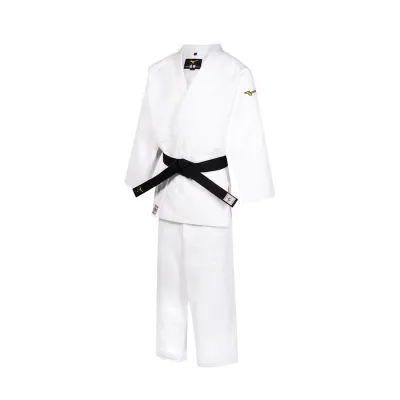
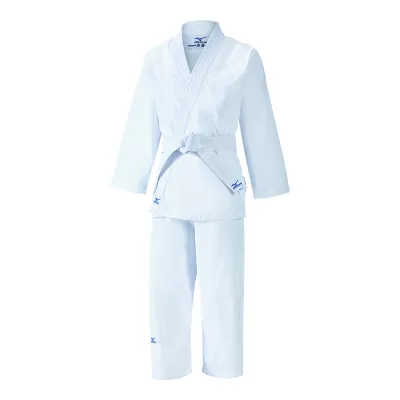
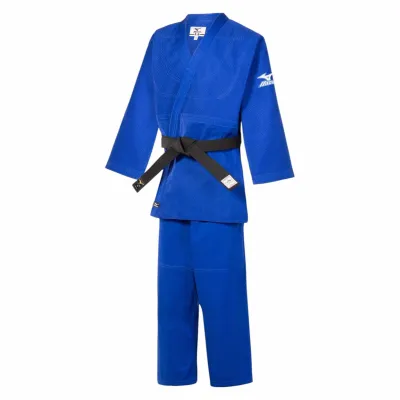
Prices are valid at publication and may change. Please refer to the product page for the latest price.
For beginners and casual practitioners, the primary focus is on ease of movement and affordability. When you are first learning how to fall and execute basic throws, a heavy, stiff uniform can restrict your range of motion and make warm-ups unnecessarily exhausting. A lightweight uniform allows you to focus entirely on mastering body mechanics without fighting against the resistance of stiff fabric.
Regular club practitioners who train two to four times a week require a significant step up in durability. The constant pulling, tugging, and friction of daily sparring (randori) will quickly wear down basic entry-level fabrics. For this level of commitment, the ideal uniform balances structural strength with daily comfort, ensuring the jacket can withstand heavy gripping while still drying quickly enough between consecutive training days.
Active competitors have the most stringent requirements, as their uniforms must serve as both a defensive tool and a compliant piece of athletic gear. Competitors look for heavy-duty fabrics that make it difficult for opponents to establish and maintain a dominant grip. However, these uniforms must also strictly adhere to international design standards regarding sleeve length, jacket overlap, and fabric stiffness to avoid disqualification at tournament weigh-ins.
Choosing the right uniform involves clear trade-offs. Stiffer, heavier uniforms provide excellent grip defense and durability, but they trap heat, restrict mobility slightly, and take much longer to dry in humid environments. Lighter uniforms offer superior breathability and comfort in warm dojos, but they are easier for opponents to grip and may stretch or wear out faster under intense, daily training loads.
Key Specifications to Evaluate When Choosing a Mizuno Judo Uniform
Weave Types
The weave of a judo uniform refers to how the cotton threads are knitted together, which directly determines the fabric’s thickness, weight, and texture. Single weave uniforms feature a simple, lightweight pattern that is highly breathable and flexible, making them excellent for warm-weather training and beginners. However, the thinner fabric is relatively easy for opponents to grab and hold during grip fighting.

Double weave uniforms use twice as much thread, resulting in a thick, dense, and heavy fabric. This construction makes the jacket incredibly durable and stiff, which helps break an opponent’s grip during kumikata (grip fighting). The trade-off is that double weave uniforms are significantly heavier, retain more sweat, and can feel excessively hot during intense training sessions in unconditioned dojos.
Gold or hybrid weaves offer a middle ground, combining the durability and grip-resistant texture of a double weave with the lighter weight and flexibility of a single weave. These uniforms are highly favored by intermediate practitioners who want a robust uniform for sparring without the extreme weight and heat retention of a traditional double weave.
Fabric Weight
Fabric weight is measured in grams per square meter (GSM) and indicates the density of the uniform. Lightweight uniforms typically range from 350 to 450 GSM, offering maximum breathability and freedom of movement. These are ideal for children, beginners, and warm-climate training where heat exhaustion is a practical concern.
Mid-weight uniforms generally fall between 550 and 650 GSM, providing a versatile balance of durability and comfort for daily club use. Heavyweight uniforms, often used for high-level competition, range from 680 to 750 GSM. While heavyweight fabrics offer the best grip defense, international tournament rules set strict upper limits on fabric weight to ensure fairness and athlete mobility.
Fit and Cut
Mizuno uniforms are generally available in two primary cuts: the traditional Japanese cut and the European or competition cut. The traditional Japanese cut features shorter sleeves, a longer jacket skirt, and a roomier body fit. This design prioritizes traditional aesthetics and maximum freedom of movement around the shoulders and torso during classic throwing techniques.
The European or competition cut is more tailored, featuring longer sleeves and a slimmer fit through the chest and waist. This modern cut reduces the amount of loose fabric available for your opponent to grab, providing a subtle defensive advantage in competitive matches. When choosing a cut, consider your body type and whether you prefer a loose, traditional feel or a snug, athletic fit.
Material Blends
Traditional judo uniforms are made from 100% cotton, which is highly absorbent, soft on the skin, and traditional in feel. However, 100% cotton is prone to significant shrinkage during the first few washes and absorbs a large amount of sweat, making the uniform heavy during long training sessions.
Many modern uniforms utilize cotton-polyester blends (typically 70% cotton and 30% polyester). These blends are highly resistant to shrinkage, retain their shape better over time, and dry much faster than pure cotton. In humid tropical climates, a poly-cotton blend is highly practical as it reduces drying times and helps prevent the buildup of musty odors and mildew in your gear bag.
Matching Uniform Specifications to Your Skill Level
Beginners and Casual Practitioners
If you are new to judo or train only once a week, your primary goal is to find a comfortable, lightweight, and affordable uniform. Look for single-weave options made from 100% cotton or a light poly-cotton blend, with a fabric weight between 350 and 450 GSM. These specifications ensure you can practice breakfalls and basic movement patterns without feeling restricted by stiff, heavy fabric.
At this stage, there is no need to invest in expensive competition-grade uniforms. A lighter uniform is also much easier to wash and dry at home, which is ideal as you establish your training routine. Focus on finding a comfortable fit that allows you to bend your knees and extend your arms fully without the fabric pulling tightly across your back or shoulders.
Intermediate and Frequent Trainees
As you progress to intermediate training and begin participating in regular sparring (randori), a basic single-weave uniform may start to stretch, tear, or wear thin at the collar and knees. At this level, you should transition to a mid-weight uniform ranging from 550 to 650 GSM, featuring reinforced stitching along the chest, armpits, and knees.
A gold weave or a heavy single-weave uniform is highly suitable for this stage. These options provide the necessary durability to withstand daily grip fighting while maintaining enough flexibility for dynamic movement. Opting for a cotton-polyester blend can also be highly beneficial here, as it ensures the uniform survives frequent washing cycles without shrinking out of fit.
Advanced Competitors
For advanced judoka and active competitors, the uniform is an essential piece of performance equipment. You will require a heavyweight double-weave uniform (typically 680 to 750 GSM) that features a stiff collar and a tailored competition cut. This construction maximizes your grip defense, making it much harder for opponents to control your posture during matches.
Competitors must also ensure their uniform complies with all tournament organization standards, such as those set by the International Judo Federation (IJF). These uniforms must feature specific certification labels and adhere to strict dimensional rules. Investing in a high-quality, compliant uniform ensures you can step onto the competition mat with confidence, knowing your gear meets all technical requirements.
| Skill Level | Recommended Weave | Weight Category (GSM) | Primary Use Case |
|---|---|---|---|
| Beginner / Casual | Single Weave | 350 – 450 GSM | Introductory classes, light technique practice, warm-weather training |
| Intermediate / Frequent | Heavy Single / Gold Weave | 550 – 650 GSM | Regular club training, active sparring, daily dojo use |
| Advanced Competitor | Double Weave | 680 – 750 GSM | Official tournaments, intense competition preparation, grip-defense focus |
Pre-Purchase Checks and Competition Compliance
Sizing and Shrinkage
Judo uniforms do not follow standard clothing sizes; instead, they use a specific numbering system (typically ranging from 1 to 7, including half sizes). Because cotton fibers naturally contract when exposed to water and heat, a brand-new 100% cotton uniform will shrink after the first few washes. You must account for this shrinkage when selecting your size.
Always consult the manufacturer-specific size chart before purchasing, as sizing can vary between different cuts and models. If you are between sizes or plan to wash your uniform frequently, it is generally safer to size up. A uniform that is slightly too large can be shrunk down carefully through controlled washing, whereas a uniform that is too small cannot be expanded and will restrict your movement on the mat.
IJF Approval Checks
If you plan to compete in official national or international tournaments, your uniform must meet the strict guidelines established by the International Judo Federation (IJF). Compliant uniforms must feature the official red IJF approval label on both the jacket and the trousers. This label indicates that the uniform has passed testing for fabric weight, stiffness, and construction quality.
During tournament inspections, officials will also measure the fit of your uniform using a specialized tool. The jacket sleeves must extend to the wrist joint when your arms are held straight out, and there must be a minimum clearance of 10 to 15 centimeters between the fabric and your arm. Ensuring your uniform meets these dimensions before traveling to a tournament is critical to avoiding last-minute disqualification.
Care and Maintenance Limits
To preserve the structural integrity of your uniform and prevent excessive shrinkage, always wash your judogi in cold water (30°C or below) using a mild detergent. Avoid using bleach, as chlorine breaks down the cotton fibers over time, weakening the fabric and making it highly susceptible to tearing during training.
Never tumble dry a cotton judo uniform on high heat, as this will cause severe, uneven shrinkage and can warp the stiff collar. Instead, hang the uniform to air dry in a well-ventilated area away from direct sunlight. Hanging the uniform immediately after washing helps reshape the fabric and prevents the stiffening that often occurs when heavy cotton dries in stagnant air.
Return and Exchange Policies
Because martial arts uniforms must fit precisely to ensure safety and performance, it is highly recommended to check the retailer’s return and exchange policies before finalizing your purchase. Many specialized martial arts retailers allow exchanges for sizing, provided the uniform has only been tried on for fit and has not been washed, worn during training, or soiled.
When your uniform arrives, try it on at home with clean skin and clean undergarments to check the sleeve length, shoulder mobility, and trouser waist. Keep all original tags attached and avoid washing the garment until you are completely satisfied with the fit. If the uniform feels restrictive or significantly too large even after accounting for minor shrinkage, initiate an exchange for the correct size immediately.
Frequently Asked Questions (FAQ)
How do I prevent my cotton judo uniform from shrinking excessively?
To prevent excessive shrinkage, always wash your cotton uniform in cold water and hang it to air dry in a well-ventilated area. Avoid using hot water cycles or commercial tumble dryers, as high heat causes the cotton fibers to contract rapidly. Additionally, gently stretch and reshape the collar, sleeves, and trouser legs while the uniform is still damp to help maintain its original dimensions as it dries.
Can I use a blue judo uniform for regular club training?
Yes, blue judo uniforms are generally accepted in most modern club training environments, though traditional white remains the standard. However, dojo rules can vary significantly based on tradition and instructor preference. Before purchasing a blue uniform, always consult your club’s head instructor to ensure it aligns with their specific dress code policies. For official competitions, you may be required to have both a white and a blue uniform to distinguish between competitors during matches.
Community discussion
Share your experience or ask a question. Comments are reviewed before publication.