
Selecting the right NENCA knee support depends entirely on matching the physical demands of your specific activity to the structural design of the brace. Basketball players require lateral stability and patellar protection to handle sudden pivots on hard courts. Runners need lightweight, highly breathable compression sleeves that prevent chafing over long distances. Gym-goers performing heavy lifts require thick, heat-retaining support to assist with joint warmth and proprioception. By identifying your primary movement patterns and verifying the product specifications on the packaging, you can choose a model that supports your knees without restricting your performance.
Quick Guide: Matching Knee Support Features to Your Sport
Every sport places a unique set of mechanical stresses on the knee joint. Basketball involves high-impact landings, rapid deceleration, and lateral cutting movements that stress the ligaments. Running, by contrast, is characterized by thousands of repetitive, linear strides that can lead to overuse issues if the patella does not track correctly. Gym workouts, particularly weightlifting, subject the knees to heavy axial loads during deep flexion, requiring structural reinforcement and joint warmth.
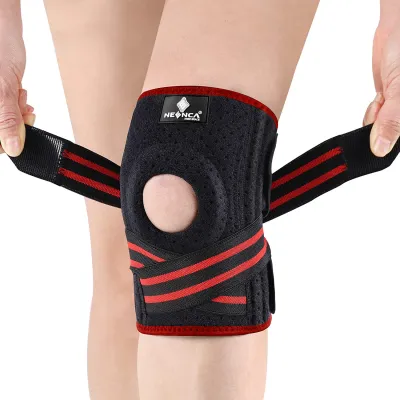
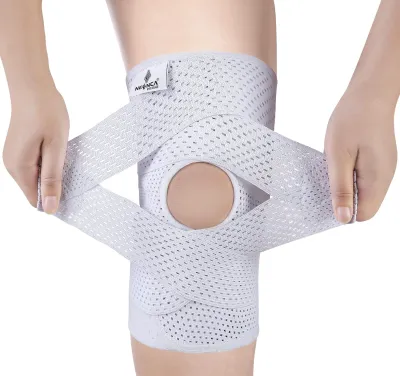
To address these varying demands, knee supports generally fall into three categories: compression sleeves, wraparound braces, and hinged supports. Compression sleeves offer mild to moderate support, improve blood flow, and enhance proprioception—the body’s awareness of joint positioning. Wraparound braces feature adjustable straps that allow you to customize the tension and fit around the patella. Hinged braces incorporate rigid or semi-rigid side stabilizers to prevent lateral movement, making them suitable for moderate joint instability.
Products mentioned in this guide
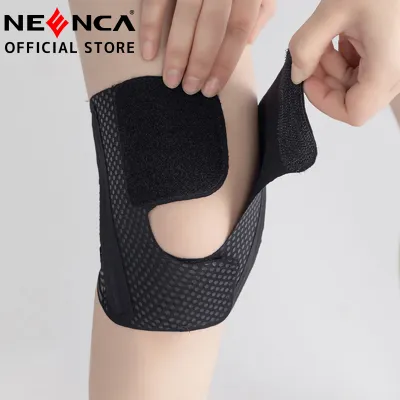
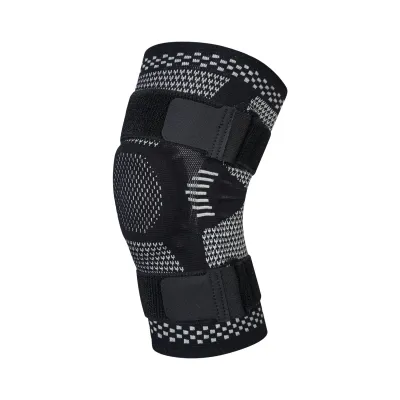
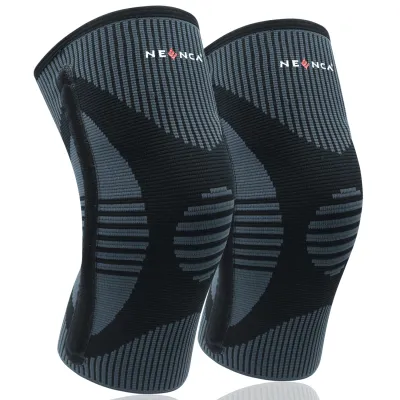
Prices are valid at publication and may change. Please refer to the product page for the latest price.
When selecting a NENCA knee support, it is essential to read the manufacturer’s packaging and product inserts. These labels outline the intended use, compression rating, and specific structural features of each model. Matching these details to your primary activity ensures you do not end up with a brace that is either too restrictive for running or too flexible for high-impact court sports.
Identifying Stability Needs for Basketball
Basketball is a dynamic sport that demands rapid changes of direction, explosive jumps, and physical contact under the hoop. These movements subject the knee joint to intense lateral forces and sudden rotational stress. Without adequate support, the patella can experience tracking issues, and the surrounding ligaments can become overworked. Therefore, basketball players must prioritize lateral stability and patellar tracking when selecting a knee support.

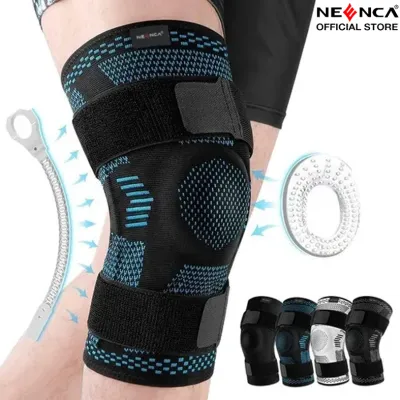
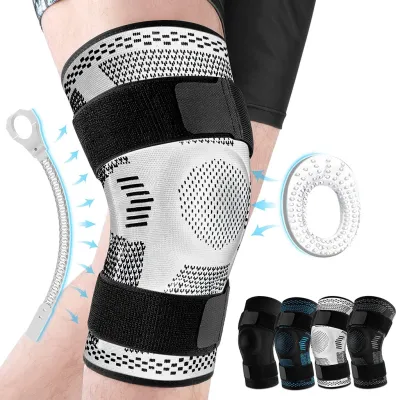
If your playstyle involves frequent driving to the basket, pivoting, and rebounding, look for NENCA models equipped with built-in stabilizers. Features such as flexible side spring stays and contoured silicone patella gel pads help keep the kneecap centered during deep bends and sudden stops. The side stays offer resistance against lateral twisting without completely locking the joint, allowing you to maintain your agility on the court.
Adjustable wraparound straps are another valuable feature for basketball players. These straps allow you to customize the compression level and secure the brace firmly, preventing it from sliding down during intense play. This is particularly important when playing on outdoor concrete courts, where hard landings increase the impact transmitted through your lower joints.
However, there is a clear trade-off between maximum joint stability and overall mobility. Highly reinforced braces tend to be bulkier and heavier, which can restrict your natural running stride or vertical jump. In the tropical heat of the Philippines, thick materials can also trap sweat, leading to discomfort and skin irritation. If you play in humid indoor gyms or outdoor barangay courts, look for models that balance stabilizing elements with breathable, open-knit fabrics to manage moisture effectively.
Selecting Lightweight Compression for Running
Runners subject their knees to thousands of repetitive, low-impact strides over the course of a single workout. Because the movement is almost entirely linear, runners rarely require the heavy lateral stabilization needed for court sports. Instead, the primary goals are managing mild swelling, improving joint tracking, and maintaining a natural, unrestricted stride. For these reasons, lightweight compression sleeves are the preferred choice for distance running.
A high-quality compression sleeve provides continuous, gentle pressure that promotes blood circulation and reduces muscle oscillation during foot strikes. When browsing NENCA options, look for models made from lightweight, circular-knit elastic fabrics. These materials conform closely to the contours of your leg, offering a low-profile fit that easily slides under running shorts or tights without adding unnecessary bulk.
Chafing is a major concern for runners, especially when training in hot and humid tropical climates. Repetitive friction combined with trapped sweat can quickly lead to painful skin abrasions behind the knee. To prevent this, check the product descriptions for moisture-wicking properties, seamless construction, and specialized breathable zones in the back of the knee. A breathable weave allows sweat to evaporate quickly, keeping your skin dry and comfortable.
If you experience mild patellar tracking issues or discomfort around the kneecap during long runs, consider a sleeve with an integrated, low-profile gel ring. This feature provides targeted compression around the patella to encourage proper alignment without the weight of heavy straps or rigid stays. Always verify the sizing carefully; a running sleeve must fit snugly enough to remain securely in place during continuous movement, yet remain flexible enough to allow full knee flexion.
Choosing Load-Bearing Support for Gym Workouts
Gym workouts encompass a wide range of movements, from high-intensity interval training to heavy compound lifts like squats and deadlifts. The type of knee support you need depends heavily on your training style. General fitness enthusiasts who perform bodyweight exercises, lunges, and machine workouts benefit most from flexible, moderate-compression sleeves that keep the joint warm and responsive.
For heavy weightlifting and powerlifting, the mechanical demands change significantly. Under heavy axial loads, the knees experience extreme compression forces, particularly at the bottom of a squat. Lifters often prioritize joint warmth and maximum compression to enhance proprioception and joint stability. In these scenarios, look for NENCA supports made from thicker materials, such as heavy-duty neoprene or dense elastic knits.
Thicker materials help retain body heat around the joint, which keeps the synovial fluid warm and the surrounding tendons pliable. This thermal retention is highly beneficial during rest periods between heavy sets, preventing the joint from cooling down and stiffening. When selecting a support for heavy lifting, check the product specifications for material thickness, typically measured in millimeters, to ensure it matches your load-bearing requirements.
It is important to distinguish between supportive gym gear and restrictive medical braces. Avoid using highly rigid or hinged braces for deep squats unless a physical therapist has explicitly instructed you to do so. Rigid hinges can alter your natural squat mechanics, forcing other joints like the hips and ankles to compensate, which may lead to secondary strain. For standard gym training, a flexible but supportive sleeve that allows a full range of motion is generally the safest and most effective choice.
Verifying Fit and Reading NENCA Product Labels
No matter how advanced a knee support’s features are, it will not perform effectively if it does not fit correctly. An ill-fitting brace can slip down, bunch up, or restrict blood circulation, rendering it useless or even harmful. Before purchasing a NENCA knee support, take the time to measure your leg accurately to find your correct size on the manufacturer’s sizing chart.
To measure your knee circumference, stand up straight and relax your leg. Use a flexible measuring tape to measure around the center of your kneecap. Many manufacturers also require measurements taken a few inches above and below the patella to account for thigh and calf sizing. Write down these measurements in centimeters or inches, and compare them directly to the sizing table printed on the NENCA packaging or official product listing.
When reading NENCA product labels, pay close attention to key terms that describe the brace’s functionality:
- Compression Level: Typically categorized as mild, moderate, or firm. Mild is best for daily wear and light running; moderate is suitable for basketball and general gym use; firm is designed for heavy lifting or recovery support.
- Open vs. Closed Patella: An open patella design features a cutout over the kneecap to relieve direct pressure and improve tracking, while a closed patella design offers uniform compression across the entire joint.
- Adjustable Tension: Indicates the presence of straps or hook-and-loop fasteners that allow you to tighten or loosen the brace manually.
Once you put the knee support on, perform a quick self-check. The brace should feel snug and supportive, but it should never cause numbness, tingling, coldness in your foot, or deep red marks on your skin. If you experience any of these symptoms, the brace is too tight, and you should exchange it for a larger size. If the brace slips down during a few basic bodyweight squats, it is too loose and will not provide adequate support during your workout.
Care, Maintenance, and Replacement Signals
Proper maintenance is essential to preserve the elasticity, compression, and hygienic condition of your knee support. Because these accessories absorb sweat, skin oils, and dirt during workouts, they require regular cleaning. Failing to wash your brace can lead to bacterial growth, unpleasant odors, and accelerated degradation of the synthetic fibers.
To clean your NENCA knee support, always refer to the care instructions on the inner label. As a general rule, hand wash the brace in cool or lukewarm water using a mild, liquid detergent. Avoid using bleach, fabric softeners, or harsh chemical cleaners, as these can break down the elastic fibers and neoprene material. Gently squeeze out excess water without twisting or wringing the fabric, as wringing can warp the internal stabilizers or stretch out the knit.
Air drying is the safest method for preserving your knee support. Lay the brace flat on a clean towel or hang it up in a well-ventilated indoor area away from direct sunlight and high heat sources. Never place the support in a mechanical dryer, as the intense heat can melt synthetic adhesives, warp silicone gel pads, and ruin the elasticity of the fabric.
Over time, all sports protective gear will eventually wear out and lose its effectiveness. You should regularly inspect your knee support for observable signs of degradation. If you notice stretched-out elastic, fraying seams, peeling hook-and-loop straps, or a noticeable loss of compression, it is time to replace the brace. Continuing to use a worn-out support increases the risk of joint instability during high-impact activities, making a replacement a smart way to protect your investment of several hundred pesos in your joint health.
Frequently Asked Questions (FAQ)
Can I use the same NENCA knee support for both running and heavy squats?
While you can use a versatile, mid-weight compression sleeve for both activities, it involves clear compromises. Running requires a highly breathable, lightweight fabric that prevents chafing during repetitive motion. Heavy squats, on the other hand, demand thick, rigid support to handle high axial loads and retain joint warmth. If you engage in both activities regularly, using a lightweight sleeve for running and a thicker, more supportive sleeve for heavy gym sessions will provide the best balance of comfort and protection.
How tight should my NENCA knee sleeve feel during a workout?
Your knee sleeve should feel like a firm, supportive hug around the joint. It should provide noticeable compression without restricting your natural range of motion or cutting off circulation. If you experience numbness, tingling, throbbing, or coldness in your lower leg or foot, the sleeve is too tight and must be removed immediately. Conversely, if the sleeve slides down your leg during movement, it is too loose to offer any therapeutic or stabilizing benefits.
Community discussion
Share your experience or ask a question. Comments are reviewed before publication.