
Practicing pickleball at home is one of the most effective ways to build muscle memory, refine your paddle mechanics, and improve your footwork without needing a partner or a dedicated court. The ideal pickleball trainer for your home setup depends on three primary factors: your available physical space, your current skill level, and your specific training goals. By selecting a system that aligns with these constraints, you can transform a driveway, carport, or backyard into a highly productive personal training ground.
While some players benefit most from the rapid, continuous feedback of a rebounder net, others require the precise, automated feeds of a portable ball machine to practice complex footwork and spin recovery. For those focusing on soft-game precision, low-profile target systems and dinking mats offer a quiet, space-efficient alternative. Evaluating these options systematically ensures you invest in a tool that actively elevates your game while remaining practical for daily residential use.
Assessing Your Home Space and Practice Goals
Before purchasing any training equipment, you must carefully measure your physical environment to ensure safe and effective practice. For indoor setups, such as a spacious garage or a high-ceilinged living area, ceiling height is the most critical constraint. A standard pickleball paddle swing and ball arc require a clear vertical clearance, ideally matching or exceeding standard residential ceiling heights to prevent damage to light fixtures and plaster. If you plan to practice outdoors on a driveway, carport, or patio, measure the total length and width of the flat surface. A standard half-court space is ideal, but even a smaller area can accommodate specific drills if you choose the right equipment.
Products mentioned in this guide
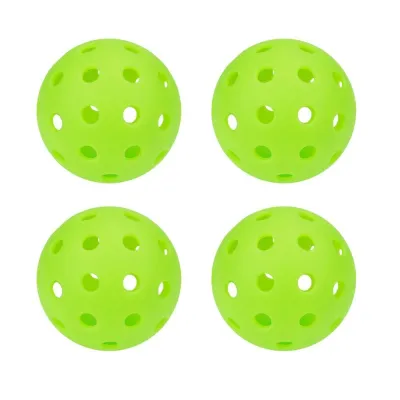
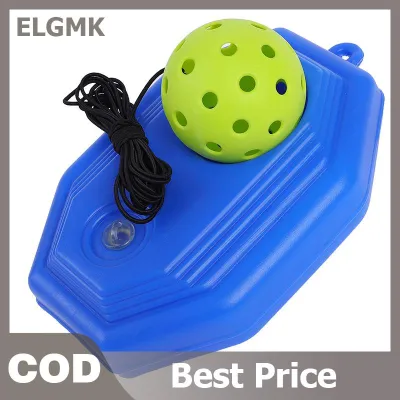
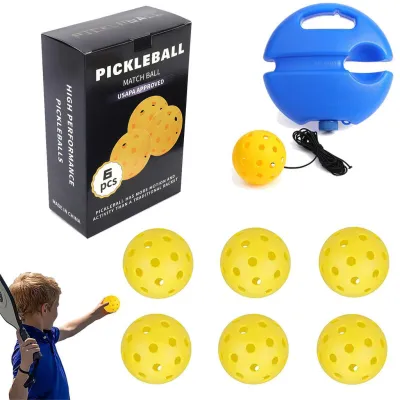
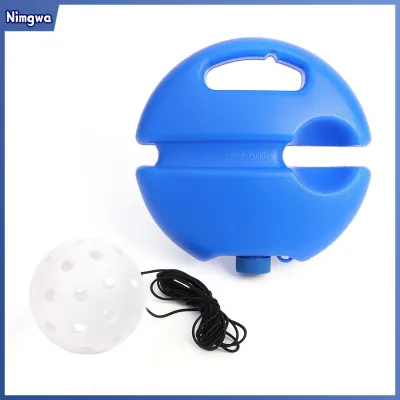
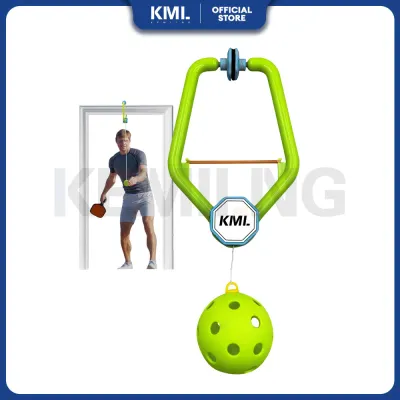
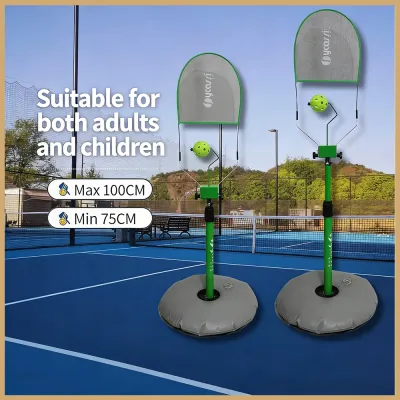
Prices are valid at publication and may change. Please refer to the product page for the latest price.
Your primary training objectives should dictate the type of trainer you select. If your goal is to master the soft game, you will need a setup that allows you to practice dinking accuracy and third-shot drops at close range. Conversely, if you want to build shoulder endurance and improve your serve consistency, you will require a longer runway that permits full-power swings and deep ball flight. Clearly defining these goals prevents you from buying a complex machine when a simple target system would be more effective, or vice versa.
Residential living also introduces environmental and social factors, particularly noise levels and surface compatibility. The distinct, sharp “pop” of a pickleball paddle striking a ball can carry significant distances, potentially leading to friction with neighbors in dense subdivisions or townhouse complexes. Additionally, the surface material of your practice area affects ball behavior; smooth concrete or asphalt provides a true, predictable bounce, while tiled carports or textured outdoor pavers can cause erratic deflections. Understanding these localized conditions helps you select a trainer that minimizes disruption while maximizing the realism of your practice sessions.
Comparing Pickleball Trainer Types for Solo Play
Solo training equipment generally falls into three distinct categories, each utilizing different mechanical principles to return the ball. Choosing among them requires balancing the physical space they occupy against the specific type of athletic feedback they provide. By understanding how these systems operate, you can select a mechanism that matches your daily routine and training style.

Rebounder Nets and Return Systems
Rebounder nets rely on manual energy, using a tensioned fabric or mesh screen to bounce your shots back to you in real time. When evaluating these systems, pay close attention to the stability of the steel or fiberglass frame and the adjustability of the net tension. A high-tension net is essential for generating a realistic ball return speed, allowing you to practice fast-paced volleys and reflex shots close to the net. Look for models with adjustable angles, which let you customize the return trajectory to simulate deep drives or soft dinks.
While rebounders are excellent for building hand-eye coordination and rhythm, they do have inherent mechanical limitations. Because the return force depends entirely on the speed of your incoming shot, practicing delicate spins or high, defensive lobs can be difficult. Additionally, lightweight frames may shift or tip over during intense sessions unless secured with integrated base weights or sandbags.
Portable Ball Machines
Portable ball machines offer the closest approximation to a live opponent by actively launching balls at adjustable intervals, speeds, and trajectories. These electronic units typically utilize spinning counter-rotating wheels to propel the ball forward, allowing you to practice returning heavy topspin, backspin, and flat drives. When comparing machines, verify the battery runtime and the sophistication of the feeding mechanism, such as horizontal oscillation or random feed intervals, which force you to move and split-step between shots.
Portability is a major consideration for home users who must transport the machine from a storage closet or garage to the driveway. Check the total weight of the unit and look for robust transport wheels and ergonomic handles that can withstand rough outdoor surfaces. Safety features are equally vital; look for models equipped with wireless remote controls or built-in startup delays, which give you ample time to walk to the opposite side of the court before the first ball is launched.
Target Systems and Dinking Trainers
Target systems and dinking trainers are static, low-profile tools designed specifically for precision work and soft-game mastery. These systems often consist of durable, weather-resistant vinyl mats that lay flat on the ground to mark the non-volley zone (the kitchen), or lightweight targets that attach directly to an existing net. Because they do not actively return the ball, they focus your attention entirely on placement, depth control, and cross-court accuracy.
These trainers are highly valued for their simplicity and near-silent operation, making them perfect for quiet residential areas. However, because they lack an active return mechanism, you must plan for manual ball retrieval. Combining a target mat with a large basket of practice balls or a simple ball-collector tube is usually necessary to maintain a smooth, continuous training flow without constantly bending down to pick up individual balls.
Matching Equipment to Your Skill Level
Your current proficiency on the court should heavily influence the complexity of the training equipment you choose. Beginners should focus on building fundamental muscle memory, consistent paddle face contact, and basic footwork. For this stage, simple rebounder nets or static target mats are highly effective because they do not overwhelm the player with excessive speed or unpredictable placement. These tools allow novices to slow down their strokes, focus on hitting the sweet spot of the paddle, and establish a reliable, repeatable swing path.
Intermediate players, who already possess consistent stroke mechanics, need equipment that challenges their positioning and shot placement. At this level, tension-adjustable return nets that allow for varied angles, or entry-level ball machines with basic oscillation, are ideal. These systems introduce the element of movement, forcing the player to adjust their feet, establish a balanced base, and practice transitioning from the baseline to the non-volley zone line.
Advanced players require high-intensity drills that simulate the unpredictable nature of competitive tournament play. For these athletes, programmable ball machines capable of delivering heavy topspin, deep underspin, and rapid, randomized oscillation are essential. These advanced features test reaction times, force rapid paddle-face adjustments, and build the physical conditioning required to sustain long, high-speed rallies. Investing in a highly customizable trainer ensures that advanced players can continue to find challenge and growth in their solo home sessions.
Setup, Safety, and Space Management at Home
Operating sports equipment in a residential environment requires careful preparation to prevent personal injury and property damage. When setting up outdoor trainers, particularly lightweight rebounder nets or target frames, always secure the structure against sudden wind gusts or accidental tipping. Utilizing heavy-duty sandbags, ground anchors, or built-in weight bags filled with water is highly recommended, especially in the tropical climate of the Philippines, where sudden afternoon downpours, high humidity, and intense sunlight can rapidly degrade outdoor gear.
Establishing a clear safety perimeter is critical to protecting both the player and the surrounding household. Ensure the practice zone is entirely free of tripping hazards, such as garden hoses, uneven pavement edges, or loose gravel. If you are practicing near windows, parked vehicles, or fragile landscaping, consider installing temporary mesh netting or protective barriers to catch stray balls that miss the trainer.
Regular maintenance is key to preserving the lifespan of your training gear, particularly in warm, humid environments. For ball machines, regularly inspect the throwing wheels and wipe away accumulated plastic dust and dirt to maintain consistent grip and ball speed. Store all electronic components, especially lithium-ion batteries, in a cool, dry indoor location to prevent degradation from high humidity and ambient heat. Always consult the manufacturer’s instruction manual to verify specific weight limits, surface compatibility, and recommended cleaning agents before performing any maintenance.
Frequently Asked Questions (FAQ)
Can I practice pickleball indoors without damaging my floors or walls?
Yes, you can safely practice indoors by adapting your equipment and protective measures to suit a residential interior. Using specialized foam practice balls or low-compression indoor balls significantly reduces both the noise of impact and the risk of damaging drywall or delicate household items. To protect your flooring from scuffs and paddle strikes, lay down a durable rubber utility mat or a thick yoga mat to define your standing area. Always verify that you have at least several feet of clear space in all directions, including ceiling clearance, to execute a full, unrestricted swing without contacting light fixtures or furniture.
How do I maintain a pickleball ball machine for long-term use?
Maintaining a ball machine requires consistent care of its electronic and mechanical parts, particularly when stored in humid climates. Always follow the manufacturer’s guidelines for battery care, which typically involve charging the battery fully after each use and avoiding leaving it completely discharged for extended periods. Clean the internal ball-feeding wheels periodically using a dry, stiff-bristled brush to remove dirt, debris, and plastic residue left behind by outdoor balls. Additionally, check the manufacturer’s official website periodically to see if your specific model requires firmware updates or specialized internal lubrication.
Is a rebounder net better than a ball machine for beginners?
For most beginners, a rebounder net is often the more practical and cost-effective choice for developing early hand-eye coordination. Rebounders are generally simpler to set up, require no electrical power, and provide immediate, direct feedback based on the force of your own stroke. This simplicity helps new players focus entirely on consistent ball contact and basic paddle angles. However, if your primary goal is to practice footwork and receive consistent, perfectly placed balls without having to hit a precise shot first, an entry-level ball machine can offer a more structured learning experience.
Community discussion
Share your experience or ask a question. Comments are reviewed before publication.