
Selecting the right knee support requires matching the specific physical demands of your sport with the structural design of the brace. For athletes in the Philippines, where high humidity and tropical heat are constant factors, this choice becomes even more critical. Whether you are executing quick lateral cuts on a concrete outdoor basketball court, logging long kilometers on asphalt roads, or diving for a dig on an indoor volleyball court, your knees experience distinct mechanical stresses. A support that works perfectly for a straight-line runner might restrict a volleyball player’s deep defensive stance or fail to provide the lateral stability needed by a basketball guard. Finding the ideal Psyche knee support model involves analyzing your sport’s movement patterns, evaluating material breathability, and verifying a secure fit that won’t slip during intense, sweat-heavy play.
Understanding How Your Sport Stresses Your Knees
Every sport places a unique set of physical demands on the musculoskeletal system, and the knee joint is often at the center of these forces. To choose an effective support, you must first understand the specific biomechanical stresses your primary activity inflicts on your joints.
In basketball, the knee is subjected to constant multi-directional forces. Players must execute rapid lateral cuts, sudden decelerations, and explosive vertical jumps, followed immediately by high-impact landings. These movements create significant shear stress across the knee joint, requiring robust lateral stability to prevent the knee from collapsing inward or outward. Furthermore, the constant change of direction demands excellent patella tracking, as the kneecap must glide smoothly within its groove under high loads. If you frequently play on outdoor concrete courts, which are common across the Philippines, the lack of shock absorption from the playing surface amplifies the impact transmitted up your legs, increasing the strain on your patellar tendon and joint cartilage.
Products mentioned in this guide
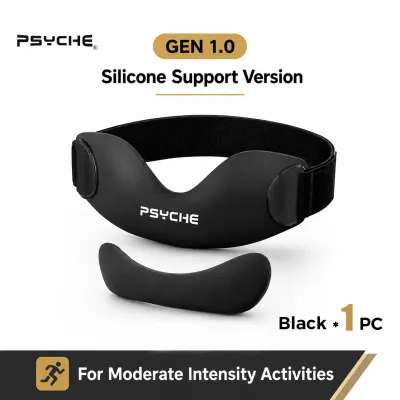
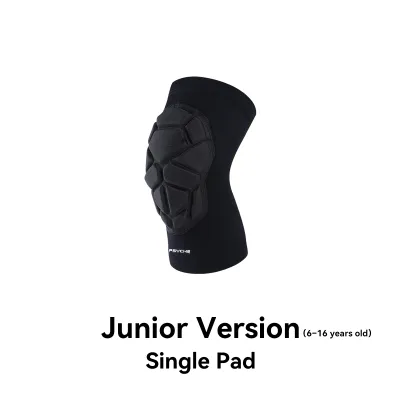
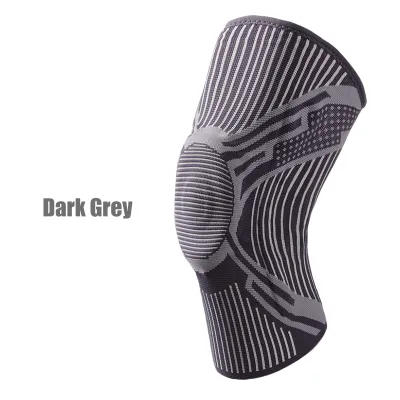
Prices are valid at publication and may change. Please refer to the product page for the latest price.
Running, by contrast, is a highly repetitive, linear activity that primarily occurs in the sagittal plane. While runners do not typically face the sudden lateral twisting forces seen in court sports, their knees must endure thousands of repetitive flexion and extension cycles over a single session. This repetitive motion can lead to overuse issues, such as patellofemoral pain syndrome (commonly known as runner’s knee) or iliotibial band friction. For runners, the primary requirement of a knee support is lightweight compression that helps manage shock, improves joint awareness (proprioception), and supports blood flow without adding unnecessary bulk. In tropical climates, a heavy or restrictive brace can alter your natural running gait and trap excessive heat, leading to discomfort and skin irritation.
Volleyball introduces a combination of explosive vertical jumping and extreme, rapid changes in posture. Players must transition instantly from a standing position to a deep, low defensive stance to dig a ball, requiring maximum, unrestricted knee flexion. When landing from a block or a spike, the knee joint must absorb forces that can equal several times your body weight. This requires a support that offers targeted compression around the patellar tendon to manage the high impact of jumping, while remaining flexible enough to allow deep squats without bunching up behind the joint. Additionally, volleyball players need a support that maintains joint warmth during brief periods of inactivity on the bench, ensuring the muscles and ligaments remain pliable and ready for sudden, explosive movements.
Matching Psyche Support Features to Your Activity
Once you understand the specific stresses of your sport, you can evaluate the design features of different Psyche knee support models to find the one that aligns with your physical needs. Choosing the right category of support—sleeve, strap, or stabilized brace—is the first step in this process.

Knee sleeves are the most common type of support and are highly versatile. They slip over the leg to provide continuous compression, warmth, and mild joint support. Sleeves are excellent for runners who require general joint compression and improved circulation over long distances, as well as volleyball players who need flexible warmth that does not restrict deep bending. However, for sports requiring high lateral stability, a basic sleeve may not offer sufficient structural support.
Patellar straps, or bands, are minimalist supports that wrap tightly around the leg just below the kneecap. They apply targeted pressure to the patellar tendon, which helps distribute forces more evenly and reduce strain on the tibial tuberosity. Straps are highly favored by both runners and volleyball players who experience localized discomfort below the kneecap but do not want the bulk or heat of a full sleeve. Because they cover very little skin, they are exceptionally breathable and ideal for high-heat, high-humidity environments where a full sleeve might feel suffocating.
For basketball players or athletes recovering from mild joint instability, a stabilized or hinged knee support may be necessary. These models incorporate flexible side stabilizers or rigid hinges embedded within a compressive sleeve. The stabilizers help resist lateral twisting and lateral forces during quick cuts on the court, providing a physical boundary that keeps the joint aligned. While these braces offer the highest level of structural support, they are bulkier and may slightly limit your maximum range of motion, making them less suitable for long-distance running.
Material selection is another critical factor, particularly in tropical climates. Traditional neoprene supports offer excellent heat retention and durability, but they can quickly become hot, heavy, and saturated with sweat. For active sports in warm weather, look for modern 3D-knit fabrics or lightweight nylon-spandex blends. These materials are engineered to wick moisture away from the skin and allow air to circulate, keeping your leg cool and dry. Breathable fabrics also prevent the support from sliding down your leg as you sweat, ensuring consistent compression throughout your game or run.
Patella support features, such as open-patella designs or integrated gel pads, are highly beneficial for jumping and court sports. An open-patella design features a circular cutout that relieves direct pressure on the kneecap while helping to keep it centered during movement. Many advanced supports include a silicone or gel ring surrounding this cutout. This ring provides targeted compression to the soft tissues around the kneecap, dampening the vibrations and impact forces experienced during hard landings on basketball or volleyball courts.
How to Measure and Verify the Right Fit
Even the most advanced knee support will fail to perform effectively if it does not fit your leg correctly. An improperly sized support can slip down, bunch up, restrict blood circulation, or fail to provide the necessary compression. Following a systematic fitting and verification process is essential before using any support in active play.
To find your correct size, you must take precise physical measurements rather than relying on your standard clothing size. Use a flexible measuring tape and stand with your leg slightly bent. Measure the circumference of your thigh at the specific distance above the kneecap indicated by the manufacturer’s sizing chart (typically 10 to 15 centimeters). Next, measure the circumference of your calf at the designated distance below the kneecap. Compare these measurements carefully against the sizing guide for the specific Psyche model you are considering. If your measurements fall between two sizes, it is generally advisable to choose the larger size to prevent excessive constriction, unless you require highly rigid compression for short periods.
Once your knee support arrives, perform a practical movement test in a controlled environment before wearing it during a competitive game or a long workout. Put the support on and perform a series of sport-specific movements. For basketball and volleyball, practice a few lateral shuffles, light jumps, and deep squats. For running, jog in place or take a short run around your immediate area. Pay close attention to whether the support stays securely in place. High-quality supports often feature silicone grip strips along the inner cuffs to prevent slipping; verify that these strips are resting flat against your skin and holding the garment secure without sliding down as you move.
During this initial testing phase, monitor your leg closely for any signs of restricted circulation or skin irritation. Keep the support on for at least 20 to 30 minutes while moving around. Check for red flags such as numbness, tingling, coldness in your toes, or a deep, painful pinching sensation, particularly in the sensitive area behind your knee. The support should feel snug and supportive, providing a firm “hug” to the joint, but it should never feel like a tourniquet. If you observe any signs of restricted blood flow or severe skin chafing, remove the support immediately and verify if you need a larger size or a different material composition.
Recognizing When a Knee Support Is Not Enough
While a knee support is a valuable tool for managing mild discomfort, improving joint awareness, and providing light stability, it is important to recognize its limitations. A commercial knee sleeve or strap is not a medical cure-all and cannot repair structural damage within the joint.
You must be able to identify red-flag symptoms that indicate a more serious injury requiring immediate professional medical attention. If you experience acute swelling where the joint balloons with fluid shortly after an impact, a sensation of the knee locking or being unable to fully bend or straighten, or a feeling of the joint “giving way” or popping during movement, do not attempt to push through the pain with a knee support. These symptoms often point to structural issues such as ligament tears (like the ACL or MCL) or meniscal damage, which require a comprehensive evaluation by a sports doctor or orthopedic specialist.
It is also vital to understand that an external support garment is not a substitute for physical conditioning and proper joint mechanics. A knee sleeve cannot strengthen weak muscles or correct poor movement patterns. To protect your knees over the long term, you must integrate targeted strength training into your routine, focusing on the quadriceps, hamstrings, glutes, and calf muscles, which act as the primary stabilizers for the knee joint. Additionally, dedicating time to a thorough dynamic warm-up before your sport and maintaining joint mobility through stretching and foam rolling are essential components of injury prevention that no brace can replace.
If you experience persistent knee pain that does not improve with rest, ice, and the temporary use of a compression support, avoid relying on the brace as a permanent crutch. Consult a licensed physiotherapist or sports physician. A professional can conduct a thorough biomechanical assessment, identify any muscle imbalances or movement dysfunctions contributing to your discomfort, and design a personalized rehabilitation program to restore your joint’s natural strength and stability, ensuring you can play your favorite sport safely and pain-free.
Frequently Asked Questions (FAQ)
Can I use the same knee support for both running and court sports?
While you can use a versatile, medium-compression sleeve for both activities, it may not provide the optimal balance of support and comfort for either. Running requires a highly breathable, lightweight, and flexible sleeve designed specifically for repetitive, straight-line movement without adding bulk or trapping excessive heat. Court sports like basketball and volleyball, however, demand lateral stability, reinforced side stabilizers, or robust patellar padding to handle sudden cuts, pivots, and high-impact landings. A support built for the court might feel too heavy, hot, and restrictive during a long run, while a minimalist running sleeve may fail to offer the lateral support needed to protect your joint during a fast-paced basketball game.
How do I know if my knee support is too tight during a game?
During active play, your muscles naturally swell slightly due to increased blood flow, which can make a snug knee support feel significantly tighter. You can tell your support is too tight if you experience physical symptoms of restricted circulation or nerve compression, such as numbness, a pins-and-needles sensation, or a cold feeling in your lower leg and foot. Other warning signs include visible discoloration of the skin below the brace, deep and painful skin indentations after removal, or severe pinching behind the knee joint. If you notice any of these symptoms during a game, you should remove or adjust the support immediately to prevent tissue irritation or circulatory issues.
Community discussion
Share your experience or ask a question. Comments are reviewed before publication.