
Selecting the right rescue boat for kayaking and small boat expeditions in the Philippines depends on your specific operational environment, the vulnerability of the vessels you are supporting, and your logistical constraints. For close-quarters assistance where you must pull kayakers or stand-up paddleboarders out of the water without damaging their gear, a soft-sided inflatable or a rigid inflatable boat (RIB) is generally the most effective choice. Conversely, if you are patrolling deep, open-water channels prone to sudden squalls and rough chop, a rigid-hull vessel provides the necessary speed and structural durability.
Quick Guide: Matching Rescue Boat Types to Your Trip
To match a rescue boat to your specific water activities, you must balance portability, durability, and the safety of the people and watercraft you intend to assist. In the Philippines, where marine environments range from shallow, reef-fringed lagoons to deep, wave-swept straits, no single boat type excels in every scenario.
Inflatable rescue boats, often called Soft Inflatable Boats (SIBs), are highly portable, soft-sided boats that can be deflated, rolled up, and transported in the back of a utility vehicle or stored on the deck of a larger support vessel. Their soft, air-filled tubes provide excellent natural fendering, making them ideal for coming alongside fragile fiberglass or carbon-fiber kayaks without causing damage.
Products mentioned in this guide
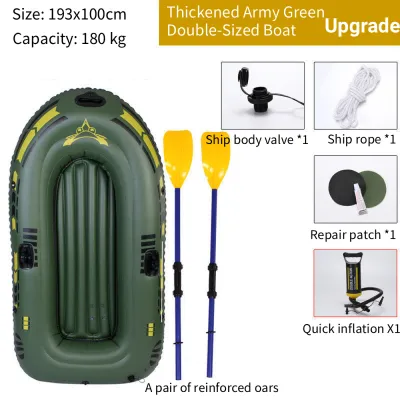
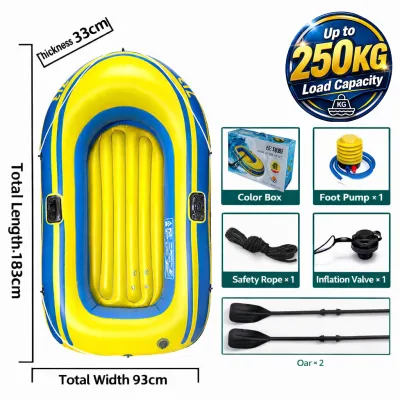
Prices are valid at publication and may change. Please refer to the product page for the latest price.
Rigid-hull boats, constructed from marine-grade aluminum, fiberglass, or heavy-duty rotomolded polyethylene, are built for speed, tracking, and extreme structural durability. They are the preferred choice for dedicated patrol operations, long-distance open-water crossings, and areas with high risks of sharp rock or reef impacts.
Hybrid boats, commonly known as Rigid Inflatable Boats (RIBs), combine a solid, V-shaped hull with inflatable outer collars. This design offers the wave-cutting performance and speed of a rigid boat alongside the stability, buoyancy, and soft-sided protection of an inflatable, making them the standard for professional rescue teams and commercial tour operators.
| Feature / Dimension | Inflatable Rescue Boat (SIB) | Rigid-Hull Boat (Aluminum/Fiberglass) | Hybrid Boat (RIB) |
|---|---|---|---|
| Portability & Storage | Excellent; deflates for compact storage | Poor; requires a trailer, davit, or dedicated dock | Moderate; requires trailer or spacious deck storage |
| Reef & Coral Durability | Low; vulnerable to punctures from sharp coral | High; resists scrapes and moderate impacts | Moderate to High; rigid keel protects bottom; tubes vulnerable |
| Kayak Protection | Excellent; soft tubes prevent scratches | Poor; hard gunwales require heavy fendering | Excellent; collar acts as a built-in bumper |
| Rough Water Performance | Moderate; prone to bouncing and wind drift | High; cuts through heavy chop efficiently | Excellent; highly stable with superior tracking |
| Ideal Route Types | Calm bays, protected lagoons, short crossings | Deep channels, rocky coastlines, long patrols | Open seas, multi-day expeditions, reef transits |
Critical Selection Criteria for Philippine Waters
Operating a rescue boat in the Philippine archipelago presents unique environmental and logistical challenges that demand careful consideration before purchasing or deploying a vessel. The country’s marine landscape is characterized by diverse underwater topography, seasonal monsoon patterns, and varying levels of coastal infrastructure.

Shallow coral reefs and extensive tidal flats are common across popular kayaking destinations like Palawan, Cebu, and the Caramoan Peninsula. A rescue boat operating in these areas must have a shallow draft to avoid damaging delicate marine ecosystems and to prevent grounding on sharp coral heads. Grounding a rigid hull on a reef can cause costly structural damage, while scraping an inflatable can lead to catastrophic punctures. Operators must evaluate the typical water depth of their routes and choose a hull design that matches these environmental realities.
Sudden tropical squalls and rapid weather shifts are frequent, particularly during the southwest monsoon (Habagat) and northeast monsoon (Amihan) seasons. A calm morning can quickly transition into a wind-whipped afternoon with steep, short-period chop. Your rescue boat must possess sufficient stability and power to navigate these sudden changes safely. High-wind conditions also introduce significant windage challenges, particularly for lightweight inflatables, which can be blown off course if underpowered.
Deployment logistics are equally critical in remote or undeveloped coastal areas. Many launch sites in the Philippines lack concrete boat ramps, docks, or mechanical hoists. If you plan to launch from sandy beaches, muddy coves, or rocky shorelines, the physical weight of the rescue boat becomes a limiting factor. A heavy rigid-hull boat may require a dedicated trailer and a four-wheel-drive vehicle, which are impractical on remote islands. In contrast, a lightweight inflatable can be carried to the water by a small crew, making it highly adaptable to undeveloped coastlines.
Finally, capacity and power requirements must be calculated based on realistic rescue scenarios. A rescue boat must not only carry its operator and safety crew but also accommodate rescued passengers, their gear, and potentially waterlogged kayaks. Overloading a vessel compromises its freeboard and stability, increasing the risk of swamping or capsizing in rough water. Always verify the manufacturer’s maximum payload capacity plate and ensure your outboard motor has sufficient horsepower to push a fully loaded boat against strong tidal currents, which can exceed several knots in narrow island passages.
Inflatable Rescue Boats: Portability and Kayak Protection
Pure inflatable rescue boats are highly valued by recreational paddling clubs and light support teams due to their unmatched portability and gentle handling characteristics. When deflated, these boats can be packed into compact carrying bags, allowing them to be transported in standard passenger vehicles or stowed securely on the deck of a larger support banca during island-hopping transits. This eliminates the need for expensive trailers and dedicated storage slips.
The primary operational advantage of an inflatable boat during a kayak rescue is its soft, air-filled collar. When maneuvering in close proximity to a kayak or stand-up paddleboard, collisions are common due to wave action and wind drift. The flexible tubes of an inflatable absorb these impacts, preventing scratches, cracks, or structural damage to fragile composite, thermoformed, or rotomolded kayaks. Furthermore, the low freeboard of an inflatable makes it significantly easier for a rescue crew to pull a tired or injured paddler out of the water and over the side of the boat.
However, these benefits come with distinct trade-offs in durability and performance. The primary vulnerability of any inflatable boat in tropical marine environments is the risk of puncture. Sharp coral reefs, submerged volcanic rocks, and barnacle-encrusted pier pilings pose a constant threat to the fabric hulls. Additionally, pure inflatables lack a rigid keel, which limits their ability to slice through waves. In heavy chop, they tend to ride over the waves rather than cutting through them, resulting in a rough, wet ride and reduced tracking efficiency.
When selecting an inflatable rescue boat, it is essential to verify the material specifications on the manufacturer’s label. Look for high-denier fabrics—ideally 1100 Decitex or higher—which offer superior resistance to abrasions and punctures. Hypalon (chlorosulfonated polyethylene) is highly recommended for tropical climates like the Philippines because it resists intense UV radiation, high temperatures, and saltwater degradation far better than standard PVC. Additionally, evaluate the floor construction; a high-pressure drop-stitch air floor or interlocking aluminum floorboards will provide the structural rigidity needed to stand securely while assisting a paddler. Always inspect the inflation valves and verify pressure limits using a reliable pressure gauge before launching.
Rigid-Hull Boats: Speed and Open-Water Durability
Rigid-hull rescue boats, typically constructed from marine-grade aluminum, fiberglass, or heavy-duty rotomolded polyethylene, are engineered for demanding marine environments where speed, structural integrity, and long-term durability are paramount. These vessels are the standard choice for municipal disaster response units, professional lifeguards, and commercial maritime operators who must patrol large expanses of open water or navigate treacherous coastal zones.
The defining advantage of a rigid hull is its superior hydrodynamic performance. A well-designed fiberglass or aluminum V-hull cuts through steep waves and heavy chop with ease, maintaining high speeds and directional stability when time is of the essence. This rapid-response capability is critical when attempting to locate a drifted kayaker in a wide channel or during a sudden offshore squall. Furthermore, rigid hulls are highly resilient against physical impacts; an aluminum or rotomolded hull can survive scraping over sandbars or striking submerged debris that would easily puncture a soft-sided inflatable.
Despite their durability, rigid-hull boats present significant operational challenges when used specifically for kayak and small boat rescue. Their heavy weight makes manual launching from remote beaches exceptionally difficult, requiring trailers, slipways, or mechanical davits. Storage is also more demanding, as these boats cannot be deflated or packed away, requiring dedicated dock space or secure dry storage protected from tropical storms.
More importantly, the hard, unyielding gunwales of a rigid boat present a safety hazard during close-quarters rescue maneuvers. In rough seas, a rigid hull can crash against a kayak, potentially crushing the kayak’s hull, trapping a paddler’s fingers, or causing injury to a swimmer in the water. To mitigate this risk, operators must install specialized fendering systems, heavy-duty rubber rub rails, or soft foam bumpers along the entire perimeter of the gunwales. When purchasing a rigid-hull boat, verify the hull thickness, structural weld warranties, and ensure the interior layout allows for clear, unobstructed movement when pulling individuals on board.
Hybrid (RIB) Boats: The Professional Standard for Versatility
Rigid Inflatable Boats (RIBs) represent the pinnacle of rescue boat design, successfully merging the high-speed, wave-cutting performance of a rigid hull with the unmatched stability and safety features of an inflatable collar. This hybrid configuration has made RIBs the professional standard for coast guards, military maritime units, and serious expedition guides worldwide, including those operating in the challenging waters of the Philippines.
The core strength of a RIB lies in its dual-nature construction. The solid V-hull, usually crafted from fiberglass or aluminum, allows the boat to slice through rough chop, maintain excellent tracking, and reach high speeds even when powered by heavy outboard motors. Surrounding this rigid structure is a multi-chambered inflatable collar. This collar provides extraordinary reserve buoyancy and lateral stability, making the boat virtually unsinkable and highly resistant to capsizing, even when loaded to capacity or taking on water.
For kayak and small boat support, the inflatable collar serves as a continuous, built-in fender. Rescue crews can safely approach a distressed kayak in rough seas, knowing that any contact between the vessels will be cushioned by the air-filled tubes. The low center of gravity and stable platform of a RIB also allow rescue personnel to lean over the side to assist swimmers or haul heavy gear aboard without tipping the vessel.
However, the versatility of a RIB comes with a premium price tag. These boats are significantly more expensive to purchase and maintain than pure inflatables or basic rigid utility boats. They are also heavy, requiring a trailer or a robust davit system on a mother ship, and they demand a larger storage footprint. When evaluating a RIB for tropical use, pay close attention to the collar material. Given the intense sun exposure in the Philippines, Hypalon collars are highly preferred over PVC due to their superior UV resistance and longevity. Additionally, check the hull-to-tube bonding method; high-quality mechanical or multi-layered chemical bonds are essential to prevent the collar from separating under the stress of rough sea transits.
Essential Safety Checks and Operational Boundaries
Regardless of the rescue boat type you select, the equipment itself is only one component of a successful safety system. A high-specification rescue boat cannot compensate for a lack of training, poor weather judgment, or inadequate physical fitness. Safety on the water begins with rigorous preparation and a clear understanding of operational limits.
Before every deployment, the operator must conduct a comprehensive pre-trip inspection. For inflatable and hybrid vessels, this includes checking the air pressure in all collar chambers, inspecting the valves for slow leaks, and examining the seams for signs of delamination or wear. For rigid hulls, inspect the transom, hull welds, and drain plugs. If the boat is motorized, verify the fuel lines, battery connections, spark plugs, and steering mechanisms according to the manufacturer’s operational manual. Test the outboard motor in shallow water or on a flush attachment before heading into open seas.
Every rescue boat must carry a dedicated suite of safety and survival gear. This includes, at a minimum, approved personal flotation devices (PFDs) for all occupants, a heavy-duty throw bag with floating line, a marine first aid kit, a waterproof VHF radio for communication, a manual bilge pump or bailer, a suitable anchor with chain and rode, and a signaling kit containing a whistle, mirror, and flares. Ensure all gear is secured in waterproof dry bags and easily accessible in an emergency.
Finally, establish and respect strict operational boundaries. Every vessel has a maximum capacity and sea-state rating specified by the manufacturer; exceeding these limits dramatically increases the risk of structural failure or capsizing. If weather conditions, wind speeds, or wave heights exceed the rated capacity of your rescue boat—or the skill level of your crew—the mission must be aborted, or professional assistance from the Philippine Coast Guard must be requested immediately. Never attempt a rescue operation that puts the rescue vessel and its crew in immediate danger, as this only compounds the emergency.
Frequently Asked Questions (FAQ)
Do I need a motorized rescue boat for kayaking trips?
Whether you need a motorized rescue boat depends on the distance of your trip from shore, local tidal currents, and the size of your paddling group. For short, recreational paddling sessions in calm, enclosed bays or shallow lagoons, a non-motorized support kayak or a rowing utility boat may be sufficient to assist tired paddlers. However, for coastal expeditions, open-water crossings, or areas prone to strong tidal currents (such as channels between islands), a motorized rescue boat is essential. An outboard motor provides the speed and power necessary to overcome strong winds and currents, allowing you to reach a distressed paddler quickly. Always check local maritime regulations, as motorized vessels may be restricted or require special permits in protected marine sanctuaries and marine protected areas (MPAs) across the Philippines.
How should I store an inflatable rescue boat in a tropical climate?
Storing an inflatable rescue boat in a hot, humid tropical climate requires specific care to prevent material degradation and seam failure. After every use in saltwater, thoroughly rinse the boat inside and out with clean fresh water to remove salt crystals, sand, and organic debris. Allow the boat to dry completely in the shade; never store an inflatable while it is wet, as this promotes mold, mildew, and adhesive breakdown. If storing the boat inflated, release a small amount of air to lower the internal pressure, allowing the chambers to expand safely when temperatures rise during the day. Keep the boat in a cool, well-ventilated area out of direct sunlight, and protect it from sharp objects and pests. Consult your specific product’s care manual for approved cleaning agents, and avoid using harsh chemical solvents or silicone-based protectants that can damage the fabric coatings.
Community discussion
Share your experience or ask a question. Comments are reviewed before publication.