
To optimize your Taekwondo kicks—such as the roundhouse (dollyo chagi), side kick (yop chagi), and front kick (ap chagi)—the ideal taekwondo resistance band must accommodate rapid, multi-directional leg movements without slipping, pinching, or snapping. For most practitioners, a combination of fabric loop bands for short-range hip activation and heavy-duty tube bands with secure ankle straps for anchored kicking drills offers the best balance of safety, comfort, and functional resistance. Selecting the right setup requires understanding how different materials and designs interact with barefoot training, high-velocity movements, and tropical training environments.
Integrating resistance bands into your martial arts routine helps bridge the gap between general strength training and sport-specific movement. Unlike free weights, which rely on gravity and primarily provide vertical resistance, bands allow you to apply horizontal and diagonal tension that closely mimics the trajectory of a kick. This targeted resistance strengthens the hip flexors, glutes, and core stabilizers, which are essential for maintaining balance on your supporting leg while executing high, powerful strikes on the mat.
Core Requirements for Taekwondo Resistance Training
Dynamic kicking motions place extreme stress on training equipment, making durability and snap-resistance your primary safety concerns. A band that snaps mid-kick can cause severe rebound injuries to your face, eyes, or limbs. When shopping for a taekwondo resistance band, look for multi-layered latex tubes or high-thread-count fabric bands that are explicitly rated for high-velocity stretching. Avoid thin, cheap plastic bands that degrade quickly under rapid tension cycles.
Products mentioned in this guide
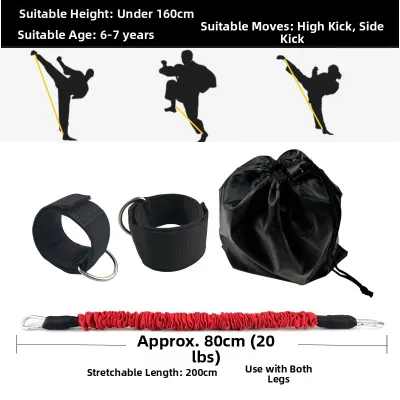
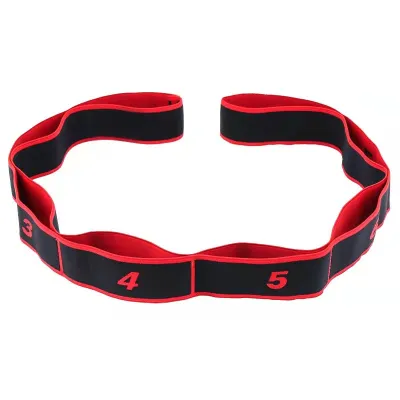
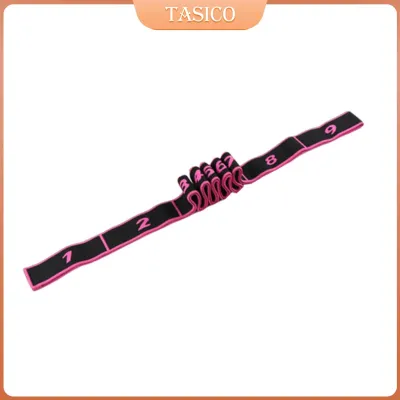
Prices are valid at publication and may change. Please refer to the product page for the latest price.
Attachment methods dictate how effectively you can transfer resistance to your lower body. While looping a standard band directly around a bare foot is common, it often leads to slipping during the extension or retraction phase of a kick. Dedicated ankle straps with heavy-duty hook-and-loop fasteners and steel D-rings provide a secure, slip-free connection point. This setup ensures the resistance remains anchored at the ankle joint, allowing you to focus entirely on your kicking form rather than keeping the band in place.
Material choice is highly dependent on your training environment and comfort preferences. In the warm, humid climate of the Philippines, sweat can quickly make latex bands slippery and accelerate their degradation. Fabric bands, woven with a blend of elastic and cotton, offer superior grip on bare skin and do not roll up during dynamic movements. However, fabric bands are harder to sanitize than latex, which can simply be wiped down with a damp cloth after a sweaty training session in the dojang.
Loop Bands vs. Tube Bands for Martial Arts Movements
Tube bands with handles are highly versatile for upper-body conditioning, such as reinforcing the shoulder rotation needed for powerful punches and blocks. However, their utility for lower-body kicking drills is limited unless they feature interchangeable clipping systems. Attempting to loop a standard foam handle around your foot or ankle is highly unstable and increases the risk of the band slipping off mid-drill, potentially causing joint hyperextension.

Continuous loop bands, including short mini-loops and long pull-up assist bands, excel at lower-body mobility and hip activation. Short mini-loops are ideal for placing around the thighs or ankles during lateral stepping drills to target the gluteus medius, which stabilizes your base leg during a kick. Long loop bands can be anchored to a post and looped around your hips or ankles to provide continuous tension throughout a full leg swing or chambering motion.
When choosing between fabric and rubber loop bands, consider the trade-offs in elasticity and skin comfort. Rubber or latex loops offer a wider range of stretch, allowing for longer kicking extensions, but they tend to pinch bare skin and roll up into tight, painful bands during rapid movements. Fabric loops stay flat against your legs and provide a more comfortable, consistent resistance, though they generally offer less maximum stretch length than their latex counterparts.
Matching Tension Levels to Taekwondo Skill and Drill Types
Selecting the correct tension level is critical to preventing injury and ensuring your training translates to actual sparring speed. Light tension bands are best suited for speed work, technique refinement, and high-repetition hip flexor conditioning. If your goal is to perfect the rapid chambering of a roundhouse kick, a light band allows you to complete the movement quickly without compromising your posture or alignment.
Medium tension bands are the standard choice for building muscle endurance and developing kicking power. These bands provide enough resistance to challenge your muscles through the entire range of motion, helping to strengthen the stabilizing muscles around the knee and hip joints. Medium bands are highly effective for slow, controlled kicking repetitions where you focus on the distinct phases of the kick: chamber, extension, hold, and retraction.
Heavy tension bands should be reserved for pure strength building, slow controlled movements, and isometric stance holds. Using a heavy band for fast, explosive kicks is counterproductive, as the excessive resistance will force you to alter your biomechanics, leading to poor habits like leaning your torso too far backward. If you cannot maintain a upright, stable posture during a banded drill, the tension is too high.
To test and adjust tension dynamically without relying solely on printed weight labels, use the distance from your anchor point as a manual gauge. Start by standing close to the anchor and executing a slow kick; if you feel no resistance at the start of the movement, step further away to pre-tension the band. Conversely, if you feel your base leg slipping or your hips locking up before you reach full extension, step closer to the anchor to reduce the load.
Safe Anchoring and Setup for Kicking Drills
Before beginning any banded kicking session, perform a thorough pre-session inspection of your equipment. Run your fingers along the entire length of the band to check for micro-tears, discoloration, thinning, or dry rot, which is common in humid tropical climates. Inspect the stitching on ankle straps and the integrity of metal clips or D-rings; if you detect any wear, retire the equipment immediately to prevent a dangerous snap-back.
Identifying a secure anchoring point is paramount for safety during high-impact movements. Anchor your bands to heavy, structural elements such as concrete pillars, dedicated wall mounts, or the base of a heavy, filled punching bag stand. Never anchor bands to light household furniture, door knobs, or plastic fixtures, as these can easily break or tip over under the sudden force of an explosive kick.
Proper foot and ankle wrapping techniques help prevent joint strain and friction burns. When using ankle straps, ensure they are fastened snugly above the ankle bone to prevent shifting, but not so tight that they restrict circulation. If you are looping a continuous band around your foot, position it securely across the midfoot arch rather than the toes, which minimizes the risk of the band slipping off during a high extension.
Establish clear conditions for stopping a drill immediately to protect your joints and muscles. You should halt the exercise if you experience any of the following:
- Your kicking form breaks down, such as an inability to chamber the knee properly.
- The anchor point shifts, wobbles, or makes unusual noises.
- You feel a sudden, sharp pain in your hip, knee, or ankle joints.
- The band begins to slide or show signs of structural fatigue.
Essential Taekwondo Drills Using Resistance Bands
To build the specific hip strength required for high kicks, integrate these targeted drills into your training routine. Investing around ₱500 to ₱1,500 in a quality set of bands and ankle straps will provide you with the necessary tools to execute these exercises safely and effectively.
Banded Chamber Holds
This drill targets the hip flexors and core stabilizers to improve your kicking height and balance. Anchor a tube band at floor level and attach it to your kicking ankle. Stand facing away from the anchor, lift your knee into a high front kick chamber position, and hold it for three to five seconds against the downward pull of the band. Lower your leg slowly under control, and repeat for three sets of ten repetitions on each leg.
Resisted Side Kicks (Yop Chagi)
This exercise develops explosive extension and hip rotation. Anchor the band at hip height and attach it to your kicking ankle. Stand sideways to the anchor, chamber your knee, and execute a controlled side kick, driving through your heel while pivoting your base foot. Focus on holding the extension for a split second before slowly retracting the leg back to the chamber position, resisting the pull of the band as you return.
Banded Stance Walking
To enhance base stability and stance transitions, place a mini loop band around your ankles. Assume a low front stance (ap kubi) or back stance (dwit kubi) and practice stepping forward, backward, and pivoting while maintaining tension on the band. This constant outward pressure activates the glutes and lateral hip stabilizers, building a rock-solid foundation for your kicking game.
If you find that a band restricts your natural joint biomechanics or forces you to compromise proper technique, modify the drill immediately. You can do this by reducing the band tension, shortening your range of motion, or performing the movement without resistance until your strength improves. Equipment should always serve to enhance your technique, never to degrade it.
Frequently Asked Questions (FAQ)
Can I use standard pull-up assist bands for Taekwondo kicking?
Yes, you can use standard pull-up assist bands, but they require careful setup. Because these bands are thick and made of dense latex, wrapping them directly around a bare foot can cause discomfort and friction burns. To use them safely, anchor the band at floor level and loop it securely around your midfoot while wearing training shoes, or use a dedicated carabiner strap to connect the band to a padded ankle cuff.
How often should I replace my resistance bands for martial arts?
For active martial artists, resistance bands should generally be replaced every 6 to 12 months, depending on usage frequency and storage conditions. In tropical regions with high humidity, latex degrades more rapidly due to sweat and heat exposure. Perform a visual and tactile check before every session, and replace the bands immediately if you notice any stickiness, micro-tears, cracking, or loss of elasticity.
Will resistance band training make my kicks slower in actual sparring?
Resistance band training will not make your kicks slower if you balance it with unresisted speed work. To maintain and improve your striking speed, utilize contrast training: perform a set of five to ten resisted kicks, remove the band, and immediately execute five high-speed, unresisted kicks. This neuromuscular contrast helps your body adapt to the resistance while preserving your explosive, rapid-fire kicking mechanics.
Community discussion
Share your experience or ask a question. Comments are reviewed before publication.