
Choosing the right roller skates for your boy depends entirely on his current balance, confidence, and where he plans to skate. For absolute beginners who need immediate stability, traditional quad skates offer a wide, balanced base that helps them stand upright. If your boy has already mastered basic balance or wants to skate fast outdoors on subdivision pavements, inline skates provide the necessary speed and maneuverability. For parents looking to accommodate rapidly growing feet without buying new gear every few months, adjustable skates offer a highly practical, multi-size solution. Prioritizing structural ankle support and matching the wheel configuration to his skill level ensures a safe, enjoyable introduction to the sport.
Assess Your Boy's Current Skating Ability
Before browsing online marketplaces or local sports shops, you must accurately diagnose your child’s current physical coordination and skating environment. A true beginner is easy to identify: he will need to hold your hand for balance, struggle to stand still on wheels, or be stepping onto a skating surface for the very first time. At this stage, his primary challenge is learning how to center his weight and push off without falling backward.
An intermediate skater, by contrast, exhibits clear signs of independence. He can glide forward smoothly, turn confidently in both directions, and bring himself to a complete stop without relying on walls or posts. He might also express a desire to go faster, join local roller hockey games, or try basic tricks.
Products mentioned in this guide
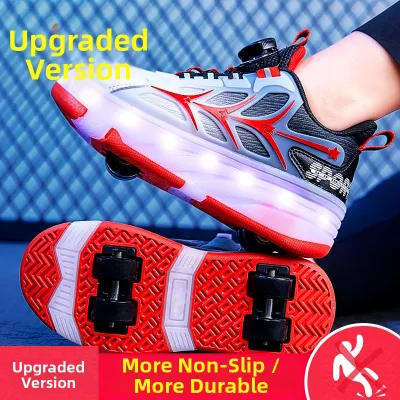
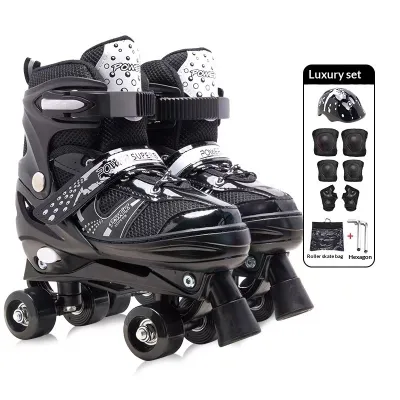
![IMUTO[Free protective gear]Roller Skate Shoes for Kids Adjustable Quad Skates Roller Blades Skate Shoes for Girls Boys](https://img.lazcdn.com/g/p/825ea35eea06c587864d651862874cfc.png_400x400q80.png_.webp)
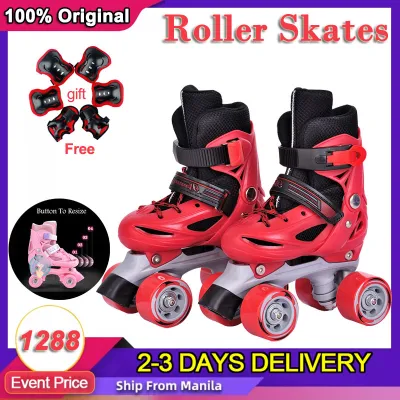
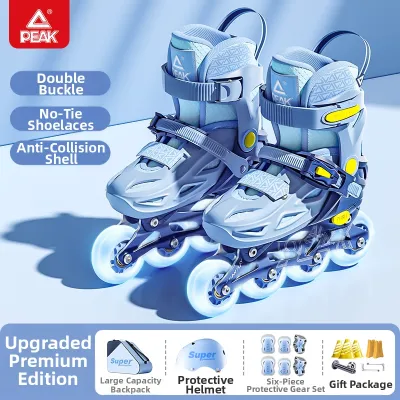
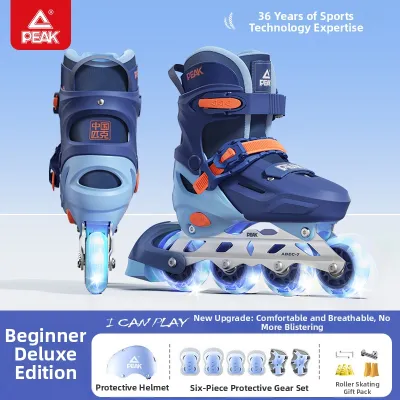
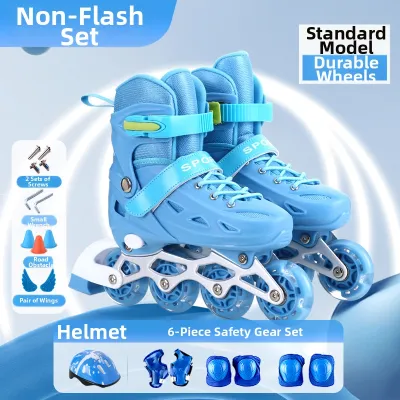
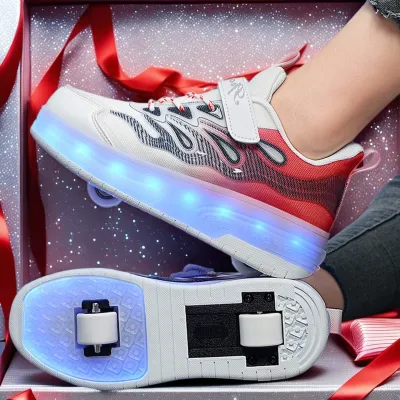
Prices are valid at publication and may change. Please refer to the product page for the latest price.
You must also consider where he will actually use the skates. In the Philippines, outdoor environments like concrete subdivision driveways, barangay basketball courts, or public park pathways are far more common than indoor wooden rinks. These outdoor surfaces are often uneven, dusty, and subject to tropical heat, which means the skates must be durable enough to handle rougher terrain and occasional debris.
Evaluate Quad Skates for Beginners and Stability
Traditional quad skates, featuring two wheels in the front and two in the back, are the classic choice for early learners. This side-by-side wheel configuration provides a wider, more stable base of support when standing still. It allows young boys to find their center of gravity quickly and maintain an upright posture without their ankles immediately rolling inward or outward.

These skates are highly suited for recreational indoor rinks, smooth garage floors, and flat, covered courts. They allow a child to focus on the basic mechanics of rolling, steering, and using a front toe stop to slow down. The immediate stability of quads builds early confidence, making them excellent for younger boys who might feel intimidated by narrower wheel profiles.
However, quad skates have distinct limitations that you must check against your boy’s intended use. The wider wheel layout creates more rolling resistance, which naturally results in slower top speeds. Additionally, the small, wide wheels of standard quad skates do not roll easily over pebbles, cracks, or rough outdoor asphalt, making them less practical for long-distance outdoor fitness or bumpy neighborhood streets.
Evaluate Inline Skates for Intermediate Skaters and Speed
Inline skates arrange their wheels in a single straight line, which significantly reduces rolling resistance and allows for much faster speeds. This design requires a higher level of core stability and ankle strength, as the narrow profile does not support itself when standing still. If your boy has already mastered basic balance, inline skates will allow him to glide longer distances with less effort.
Because inline skates lack the lateral stability of quads, they demand rigid ankle support from the boot. When shopping, you must perform a physical check of the boot’s cuff: it should be stiff enough to prevent the ankle from bowing outward or collapsing inward during lateral movements. This structural support is critical for mastering the heel brake and executing sharp, high-speed turns.
Inline skates are the ideal choice for outdoor fitness skating, basic aggressive skating at local skateparks, and recreational roller hockey. Their larger, narrower wheels roll over small stones, pavement cracks, and rough outdoor concrete much more smoothly than quad wheels, making them highly versatile for typical Philippine neighborhood environments.
Consider Adjustable Skates for Growing Feet
Children’s feet grow rapidly, often making fixed-size footwear obsolete within a single season. Adjustable skates address this issue by incorporating a sliding toe cap or heel mechanism that allows the boot to expand across several sizes. This design offers a highly practical, cost-effective solution, potentially saving you from spending ₱2,000 or more on frequent replacements.
Most adjustable models utilize a simple push-button or tool-adjustable mechanism. To verify the sizing range, always check the manufacturer’s product label, which typically specifies a range such as small, medium, or large, alongside corresponding standard shoe sizes. Before each session, you must inspect the locking mechanism to ensure it is fully engaged and cannot slip while your boy is in motion.
While highly convenient, adjustable skates do have trade-offs. The sliding mechanism can add slight weight to the boot, and the overall structural rigidity may be slightly lower than that of a high-end, fixed-size skate. As your boy’s skill level advances to competitive hockey or complex tricks, transitioning to a dedicated, fixed-size skate will provide the precise fit and stiffness required for high-performance maneuvers.
Verify Fit, Safety Gear, and Manufacturer Specs
Regardless of the skate type you choose, a proper physical fit is the most critical factor for safety and control. When your boy tries on the skates, his heel must be locked securely into the back of the boot without lifting when he bends his knees. His toes should lightly touch the front of the toe box without being cramped or bent, allowing for natural toe movement while maintaining a snug overall fit. Always cross-reference his foot measurement in centimeters with the manufacturer’s specific sizing chart rather than relying solely on standard shoe sizes.
Safety gear is non-negotiable for every session, regardless of skill level. Ensure your boy wears a certified helmet that fits snugly on his head, along with durable knee pads, elbow pads, and wrist guards. In tropical climates, look for protective gear with breathable mesh backing to help manage sweat and heat buildup.
Finally, establish a quick pre-ride inspection routine before he steps onto the pavement. Use the tools provided in the product box to check that all wheel axles are tight, the frame is properly aligned, and the brake pad is securely fastened and not excessively worn. Refer to the included product manual for specific maintenance intervals and cleaning instructions to keep the bearings rolling smoothly.
Frequently Asked Questions (FAQ)
Can my boy use inline skates if he has never skated before?
Yes, a beginner can start directly on inline skates, provided the boot offers exceptional lateral ankle support. While the learning curve is steeper than with quad skates, starting on inlines helps a child develop correct balance and ankle strength from day one. You must ensure he practices on a flat, smooth surface away from traffic, and allow ample time for him to master the heel brake before attempting any sloped surfaces.
How do I know when it is time to upgrade from adjustable to fixed skates?
You should upgrade when your boy’s foot reaches the maximum size limit of his adjustable skates, or when his skills outgrow the boot’s capabilities. If he is attempting advanced tricks, high-speed cornering, or competitive sports, he will require the superior rigidity, lighter weight, and specialized wheel configurations that only high-quality, fixed-size skates can provide.
Are soft-boot or hard-boot skates better for kids?
Soft-boot skates offer immediate comfort, flexibility, and better ventilation, making them excellent for casual, recreational skating. Hard-boot skates, however, feature a rigid plastic outer shell that provides superior ankle support, impact protection, and durability. For beginners who need maximum ankle stability, or intermediate skaters tackling rough outdoor pavements, a hard-boot design is generally the safer and more supportive option.
Community discussion
Share your experience or ask a question. Comments are reviewed before publication.