
Choosing between a beachside escape along the coast of Zambales and a misty trek up the peaks of Benguet requires vastly different gear strategies. While a shower tent provides essential privacy for bathing, changing, and toilet use, a model that excels on shifting sand can easily fail on a wind-whipped mountain ridge. To make the right choice, you must evaluate how a tent’s structure, materials, and anchoring systems interact with the distinct environmental challenges of coastal and highland campsites.
For beach camping, the primary threats are high winds, loose sand, and intense sun exposure. Here, the ideal shower tent features a highly aerodynamic profile, built-in sandbags, and excellent ventilation to prevent the interior from becoming a greenhouse. Conversely, mountain camping demands a shelter that can withstand sudden downpours, retain warmth during chilly nights, and anchor securely into hard, rocky soil. Understanding these differences ensures your private shelter remains standing when you need it most.
Environmental Challenges: Coast vs. Highland
Coastal camping in the Philippines exposes your gear to a harsh combination of salt spray, intense ultraviolet (UV) radiation, and unpredictable sea breezes. Shifting sand presents a major structural challenge, as standard tent pegs slip out easily under tension. The salt-laden air accelerates the corrosion of metal zippers and frame components, while the tropical sun can rapidly degrade thin polyester fabrics. Without proper ventilation, the humid coastal air trapped inside a sealed tent quickly becomes stifling, turning a quick change of clothes into an uncomfortable ordeal.
Products mentioned in this guide
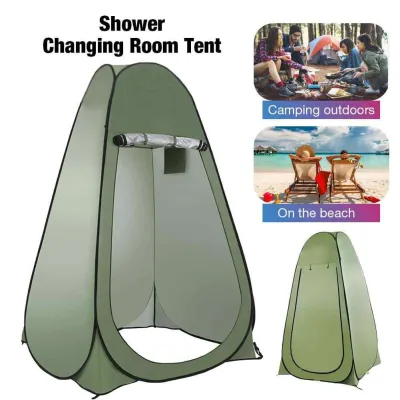
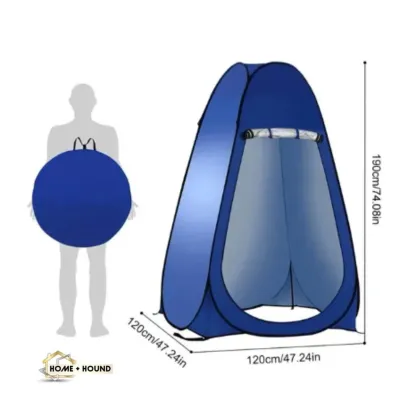
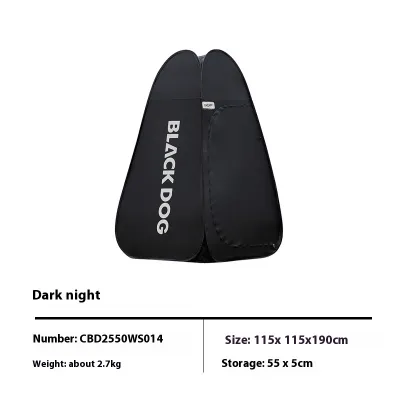
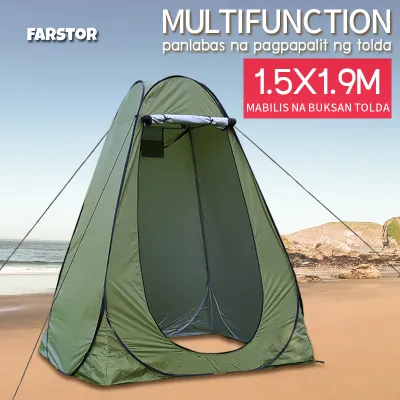
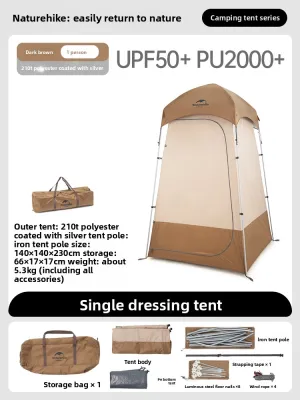
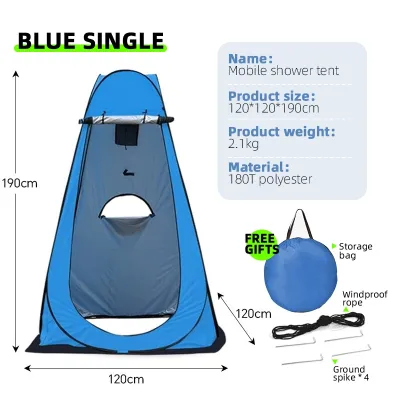
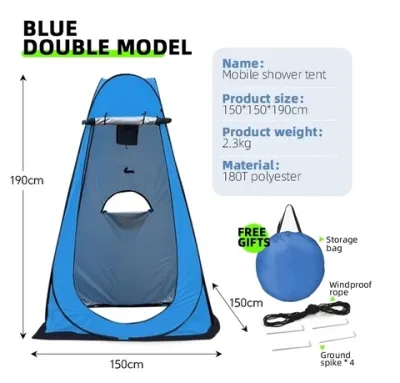
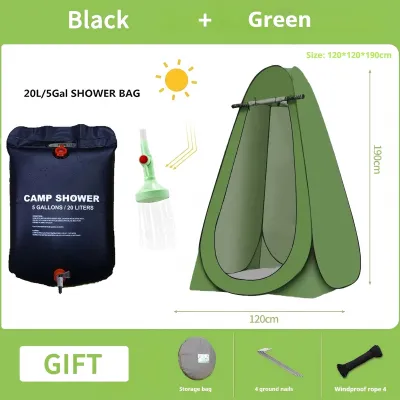
Prices are valid at publication and may change. Please refer to the product page for the latest price.
In contrast, highland campsites present an entirely different set of physical demands. Mountain environments are characterized by rapid temperature drops, dense fog, and sudden, heavy rain showers. The ground is often a mix of compacted clay, gravel, and thick root systems, making it difficult to drive in wide stakes. Lower atmospheric pressure and high-altitude winds can put immense stress on flexible tent frames. Furthermore, the cold mountain air makes heat retention a priority; a highly ventilated beach tent will let in freezing drafts, making a warm camp shower nearly impossible to enjoy.
Ideal Shower Tent Features for Beach Camping
To survive the coastal elements, a shower tent must have specialized anchoring systems. Standard thin metal pegs are useless in loose sand. Instead, look for tents equipped with wide, screw-style sand pegs or built-in external sand pockets. These pockets can be filled with wet sand on-site to act as heavy ballast, keeping the tent grounded even when the wind picks up. Adjustable guyline tensioners are also crucial, allowing you to fine-tune the stability of the structure as the sand shifts beneath it.

The tent’s physical profile plays a significant role in wind resistance. A tall, boxy structure acts like a sail, catching every gust of wind coming off the ocean. Opting for a model with a slightly tapered top or a dome-like silhouette helps deflect wind upward and around the shelter. Additionally, look for fabrics treated with a protective silver coating on the interior. This coating serves a dual purpose: it blocks harmful UV rays during the day and ensures complete opacity, preventing embarrassing silhouettes when using a lantern inside at night.
Ventilation is the final piece of the coastal puzzle. A beach shower tent requires large mesh windows or a mesh roof to facilitate continuous airflow. However, these openings must be equipped with secure, roll-down zippered covers. This allows you to open the vents to let the breeze carry away humidity, while still giving you the option to seal the tent completely to block blowing sand or unwanted sightlines.
Ideal Shower Tent Features for Mountain Camping
When heading into the highlands, weatherproofing and thermal management are your top priorities. A mountain-ready shower tent should feature a full-coverage rainfly that protects the mesh roof from driving rain. Look for models with fully taped or sealed seams to prevent water from seeping through the stitching during prolonged downpours. To keep the interior warm, the tent fabric should be thick and wind-resistant, with adjustable roof vents that can be cracked open slightly to let steam escape without letting in cold drafts.
Securing your shelter on rugged mountain terrain requires heavy-duty stakes. Standard plastic or thin aluminum pegs will bend or break when driven into rocky soil or hard clay. Equip your kit with elongated steel or titanium stakes designed to penetrate tough ground. Because you cannot rely on perfectly flat terrain, adjustable guylines are essential for tensioning the tent unevenly, compensating for slopes, rocks, or tree roots that prevent a symmetrical setup.
Interior space and drainage are also critical in cold environments. You need enough headroom and floor area to change clothes comfortably without brushing against wet, cold tent walls. A high-quality mountain shower tent should feature a removable floor mat with a mesh perimeter. This design allows water to drain quickly into the soil below while keeping your feet elevated above the mud, ensuring you stay clean and dry throughout the process.
Structural Showdown: Pop-Up vs. Pole-Supported Designs
The debate between pop-up and pole-supported shower tents centers on the trade-off between convenience and structural resilience. Pop-up designs utilize a pre-installed, coiled steel frame that springs into shape instantly when unpacked. This rapid deployment is incredibly convenient after a long day of traveling. However, these flexible steel bands have limited structural integrity in high winds. If a strong gust deforms the frame, it can be difficult to reshape, and a broken steel band is nearly impossible to repair in the field.
Pole-supported tents, on the other hand, use traditional fiberglass or aluminum poles that must be threaded through fabric sleeves and secured with clips. While this setup takes longer and requires more effort, the resulting structure is significantly more rigid and stable. Pole-supported frames distribute wind loads more evenly, making them highly resilient against strong mountain gusts or coastal gales. Furthermore, if a pole breaks, it can often be temporarily spliced with a repair sleeve, allowing you to continue using the shelter.
| Feature | Pop-Up Designs | Pole-Supported Designs |
|---|---|---|
| Setup Time | Under 1 minute | 5 to 10 minutes |
| Wind Resilience | Low to Moderate; prone to collapsing in high gusts | High; rigid frame distributes wind loads |
| Packed Size | Large, flat disc; can be awkward to pack | Compact, cylindrical bag; easy to lash to a pack |
| Field Repairs | Difficult; broken steel bands usually require replacement | Moderate; poles can be spliced or replaced individually |
| Weight | Lightweight | Moderate to Heavy |
Cross-Scenario Compatibility: Can One Tent Handle Both?
If your adventures take you from the coast to the peaks, you might wonder if a single shower tent can handle both environments. A hybrid approach is possible, but it requires accepting certain compromises. A middle-ground tent—typically a pole-supported model with moderate ventilation—can be adapted for both settings, but it will not offer the effortless setup of a pop-up on the beach or the extreme thermal retention of a dedicated mountain shelter.
To make a single tent work across both scenarios, you must invest in adaptable accessories. When heading to the beach, pack aftermarket sand anchors, wide plastic pegs, and empty bags that you can fill with sand to weigh down the corners. When transitioning to the mountains, swap these out for heavy-duty steel stakes, a footprint tarp to protect the tent floor from sharp rocks, and a reliable rainfly.
The decision to purchase two dedicated tents depends on your frequency of use and the severity of the weather. If you only camp occasionally in mild weather, a single adaptable pole-supported tent is highly cost-effective. However, if you frequently face extreme coastal winds or freezing highland temperatures, investing in two specialized shelters is the safest way to ensure comfort, privacy, and gear longevity.
Frequently Asked Questions (FAQ)
How should you clean and store a shower tent after beach use?
To prevent long-term damage, always rinse your shower tent with fresh water as soon as you return from a beach trip. Salt crystals are highly abrasive and can degrade fabric coatings, while dried salt can seize up zippers and corrode metal components. Pay close attention to the zipper tracks, seams, and pole joints, ensuring all sand and salt residue is completely washed away.
After rinsing, hang the tent to air-dry completely in a shaded, well-ventilated area. Avoid drying it in direct sunlight, as prolonged UV exposure can weaken the fabric fibers and degrade waterproof coatings. Never pack away a damp tent, as this creates a breeding ground for mold and mildew, which can ruin the fabric and cause unpleasant odors.
Once fully dry, pack the tent loosely into its storage bag. Avoid using tight compression straps or folding the tent along the exact same creases every time, as this can weaken the waterproof seals and reduce the elasticity of the frame components over time. Store the bag in a cool, dry place away from direct sunlight and extreme temperature fluctuations.
Community discussion
Share your experience or ask a question. Comments are reviewed before publication.