
Choosing the right taekwondo kick pad depends on matching the pad’s density, shape, and shock-absorption capabilities to your current striking power, training goals, and the physical safety of your training partner. Beginners need lightweight, highly auditory targets to master accuracy and form, while advanced martial artists require high-density, multi-layered shields to protect holders from high-velocity impact. Selecting the wrong equipment not only slows down technical progress but also risks serious joint injuries for both the kicker and the pad holder.
In the Philippines, martial arts training often takes place in non-air-conditioned dojangs or outdoor community spaces where high humidity and intense heat accelerate physical fatigue and equipment wear. This tropical environment makes material choice, grip stability, and proper maintenance critical factors in your selection process. By understanding how different pad designs handle kinetic energy, you can invest in gear that keeps your training safe, productive, and durable.
Understanding How Training Level Dictates Kick Pad Needs
A practitioner’s skill level directly influences the velocity, mass, and trajectory of their kicks. Beginners focus primarily on mechanics, balance, and finding the correct striking surface of the foot. Because their power output is relatively low, they do not require massive, heavily reinforced targets. Instead, they need immediate tactile and auditory feedback to confirm that their instep or the ball of their foot is making contact at the proper angle.
Products mentioned in this guide
Prices are valid at publication and may change. Please refer to the product page for the latest price.
As a martial artist progresses to intermediate and advanced levels, their physical output changes dramatically. The speed of their roundhouse, back, and spinning kicks increases, generating substantial kinetic energy. If an advanced kicker strikes a soft, low-density beginner pad, the pad will “bottom out,” meaning the foam compresses completely and transfers the residual force directly into the holder’s hands, wrists, or body. This lack of resistance also deprives the kicker of the realistic impact feedback needed to condition their shins and feet.
Protecting the pad holder is just as important as protecting the kicker. Holding for dynamic, high-velocity combinations requires active bracing and excellent shock absorption from the gear. Cumulative impact from holding inadequate pads can lead to chronic wrist strain, elbow hyperextension, and shoulder joint inflammation. The right pad acts as a reliable barrier, dispersing force outward and away from the holder’s skeletal system.
Your specific training intent should guide your pad selection for each session. Speed drills require lightweight, highly maneuverable targets that allow the holder to change angles instantly. Accuracy drills benefit from smaller, precise target areas that punish sloppy footwork. Conversely, raw power conditioning demands heavy, stationary shields that can absorb maximum impact without shifting or slipping.
Core Selection Criteria for Taekwondo Kick Pads
Density and Foam Layering
Evaluating the internal composition of a taekwondo kick pad is essential before making a purchase. Single-layer high-density EVA foam is lightweight and highly responsive, making it excellent for fast, snapping kicks where speed is the primary focus. However, for heavy impact, look for multi-layered foam constructions that combine open-cell foam for shock absorption with closed-cell foam for structural support. This layering disperses the kinetic energy across a larger surface area, preventing the force from penetrating through to the holder.

Cover Material
The outer material determines how well the pad withstands daily friction, sweat, and environmental conditions. Genuine leather offers unmatched durability and a natural texture, but it requires regular conditioning to prevent drying and cracking. High-grade synthetic polyurethane (PU) leather is a highly practical alternative, especially in the humid Philippine climate. Low-quality PU covers tend to peel, crack, and absorb moisture quickly, leading to unpleasant odors and rapid deterioration. Ensure the synthetic cover is rated as heavy-duty and features reinforced, double-stitched seams.
Weight and Dimensions
There is a direct trade-off between target size and the holder’s endurance. A larger kick shield provides a forgiving target for complex spinning kicks, but its bulk and weight will quickly exhaust the holder’s shoulders and arms during extended drills. Smaller target paddles or compact focus mitts keep the holder agile and simulate realistic head or torso targets, but they require the kicker to have highly developed precision. Choose a size that matches the physical capacity of both training partners.
Strap and Handle Configurations
Stable fastening systems prevent the pad from twisting or flying off during high-impact combinations. Look for wide, adjustable hook-and-loop forearm straps that distribute pressure evenly across the arm. Heavy-duty, riveted grip handles offer the best control, ensuring the holder can maintain a firm grasp even when hands become slick with sweat. Avoid pads with flimsy elastic bands, as they degrade quickly in tropical humidity and offer virtually no stability under heavy impact.
Recommended Kick Pad Designs by Skill Level and Focus
Beginner Pads: Focus on Technique and Light Impact
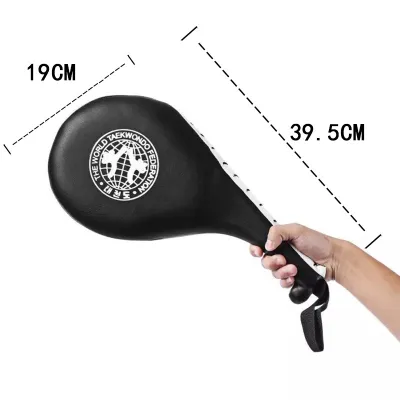
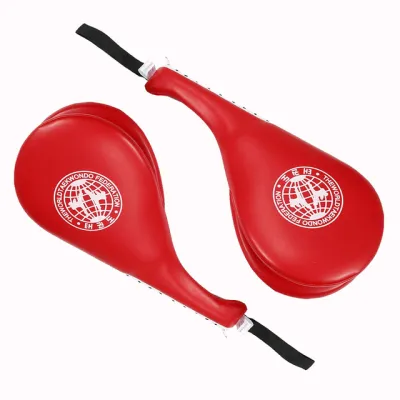
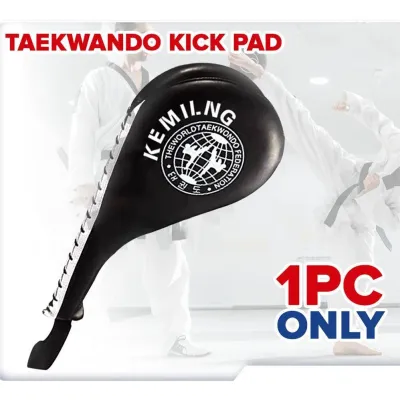
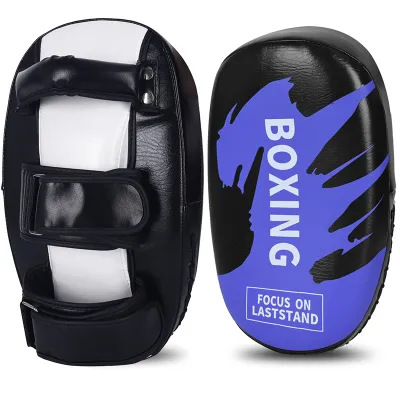
For those starting their martial arts journey, flat square pads or classic double-clapper paddles are highly recommended. These designs typically utilize medium-density foam, which provides a forgiving surface for unconditioned feet. The primary goal at this stage is to build confidence and muscle memory without causing bruising or joint soreness from overly stiff targets.
These beginner-friendly pads are exceptionally lightweight, allowing instructors, parents, or fellow students to hold them for long periods without experiencing rapid shoulder fatigue. The low weight also makes it easy for the holder to quickly adjust the target height, helping the beginner practice transitioning between low, middle, and high-section kicks.
One of the most valuable features of a classic beginner paddle is its distinct, loud “smack” sound upon impact. This auditory feedback is incredibly helpful for new students, as a crisp sound confirms that they hit the target with the correct flat part of the instep rather than a dragging toe. It serves as an immediate, rewarding indicator of proper technique.
Intermediate Pads: Balancing Speed, Power, and Durability
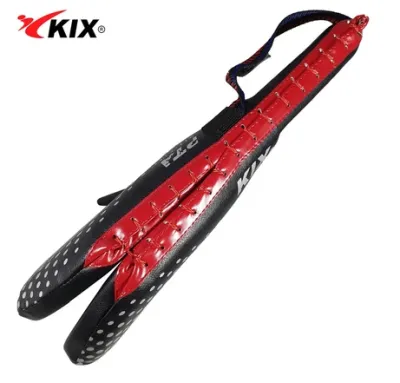
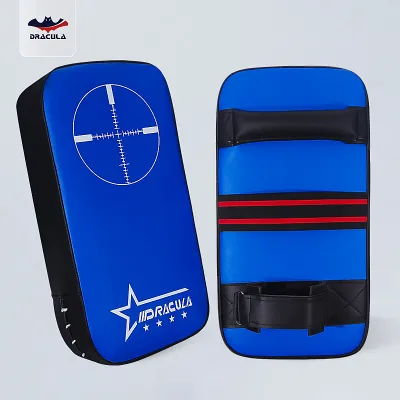
As practitioners transition into intermediate training, their kicks gain significant power, and their combinations become faster and more complex. At this stage, curved shield pads or thicker rectangular targets become necessary. The curved surface is anatomically designed to catch roundhouse kicks cleanly, preventing the kicker’s foot from sliding off the edge and straining the ankle.
These pads feature reinforced double-stitching along the seams and utilize multi-layered foam cores to handle moderate to heavy impact. The intermediate pad must be robust enough to absorb repeated daily strikes while remaining light enough for the holder to reposition it quickly during rapid-fire combinations, such as a fast double-kick or a roundhouse-to-back-kick sequence.
To manage this increased force, intermediate pads require secure dual-strap systems. A combination of a solid metal-buckle forearm strap and a reinforced hand grip prevents the pad from rotating or slipping when hit by heavy hook kicks or powerful turning kicks. This stability keeps the target exactly where the kicker expects it to be, reducing the risk of missed strikes.
Advanced Pads: Maximum Shock Absorption and Heavy Power Training
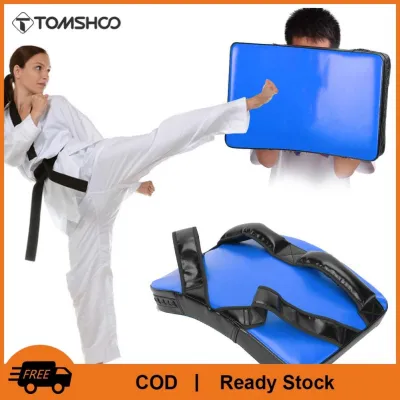
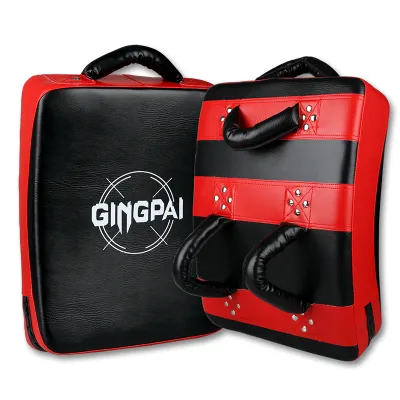
Advanced practitioners, black belts, and active competitors generate immense force that can easily damage standard training gear. For this level, thick, high-density curved shields or specialized full-body chest targets are mandatory. These heavy-duty shields are built specifically to withstand maximum-effort power training, including explosive back kicks, 360-degree turning kicks, and jumping spinning heel strikes.
To protect the holder from these high-energy impacts, advanced shields must feature ergonomic forearm sleeves, heavily padded handles, and thick shock-dispersion layers. These elements work together to shield the holder’s elbows, shoulders, and wrists from the jarring vibrations of full-power strikes. Without these professional-grade features, holding for an advanced kicker can quickly lead to joint injuries.
Before purchasing an advanced pad, always verify the internal core specifications provided by the manufacturer. Look for high-density compressed foam cores that are explicitly rated for heavy impact. If the manufacturer does not specify the foam density or construction layers, the pad may not be safe for high-level power training. Always prioritize structural integrity and proven shock absorption over aesthetic designs.
Protecting the Pad Holder: Ergonomics and Safety Boundaries
Holding a kick pad is an active, demanding skill that requires proper body mechanics and structural support. Poorly designed pads with flat backings or awkward handle placements force the holder’s wrists into weak, bent positions. When a heavy kick lands, this lack of alignment causes the wrist to hyperextend, transferring the shock directly into the elbow and shoulder joints, which can lead to chronic tendonitis or acute sprains.
To prevent these issues, look for pads featuring contoured backings that mirror the natural curve of the human forearm. This design allows the pad to rest flush against the arm, distributing the kinetic energy evenly across the larger muscle groups of the forearm and upper arm rather than concentrating the force on a single joint. This structural alignment dramatically improves the holder’s stability and comfort.
Additionally, inspect the area directly behind the grip handle. High-quality pads feature a thick protective foam barrier between the handle and the main body of the pad. This barrier prevents the holder’s knuckles from being crushed against their own arm or chest when catching deep, penetrating kicks. If a pad lacks this knuckle protection, even a moderate kick can cause painful hand bruising.
It is vital to establish a strict safety boundary during training. If you are holding a pad and feel sharp joint pain, tingling in your hands, or severe elbow strain, stop the drill immediately. Check your holding stance, ensure you are bracing your core and stepping into the impact, and inspect the equipment. Protective gear is designed to assist your training, but it can never replace proper bracing technique, physical conditioning, and the joint decision to stop when safety is compromised.
Matching Pad Shapes to Specific Taekwondo Kicks
To help you select the most effective tool for your daily training, the table below maps common pad shapes to their ideal applications based on biomechanical principles and training goals.
| Pad Shape | Best For | Impact Level | Holder Mobility |
|---|---|---|---|
| Paddle / Clapper Pad | Fast instep snaps, double roundhouse kicks, high-speed combination drills | Light | High |
| Flat Square Pad | Basic front kicks, side kicks, beginner technique correction | Light to Medium | Medium |
| Curved Kick Shield | Heavy roundhouse kicks, spinning back kicks, power combinations | Medium to Heavy | Medium |
| Body / Barrel Shield | Full-power heavy heel strikes, charging combinations, tactical sparring simulation | Heavy | Low |
Using this matrix allows you to match your specific daily workout focus—whether it is high-speed sparring footwork or raw power conditioning—with the pad shape that maximizes safety and performance.
Frequently Asked Questions (FAQ)
Can I use a Muay Thai banana pad for Taekwondo training?
While a long Muay Thai banana pad is excellent for low shin kicks and knee strikes, it is not ideal for the fast, high-angle, and spinning kicks typical in Taekwondo. Banana pads are heavy, rigid, and designed to rest against the holder’s leg, which severely restricts the rapid upper-body target adjustments needed for Taekwondo combinations. For optimal results and safety, invest in dedicated Taekwondo paddles or curved kick shields that allow high mobility and quick target transitions.
How do I clean and maintain a synthetic leather kick pad in a humid climate?
To maintain your synthetic leather pad in the humid Philippine climate, wipe it down immediately after every training session with a damp cloth and mild, diluted soapy water to remove sweat and skin oils. Never submerge the pad in water or use harsh chemical bleach, as this will degrade the internal foam and ruin the stitching. Always air-dry the pad completely in a shaded, well-ventilated indoor area; never leave it in direct sunlight or locked inside a hot car trunk, as extreme heat will cause the synthetic cover to peel, crack, and rot.
Community discussion
Share your experience or ask a question. Comments are reviewed before publication.