
Finding the right TaylorMade driver requires aligning your physical swing characteristics with the club’s engineering. Instead of simply picking the newest model off the shelf, you must evaluate how your swing speed, tempo, and skill level interact with specific clubhead shapes, loft angles, and shaft profiles. Making an informed decision ensures you gain the optimal balance of distance, accuracy, and forgiveness on the course. By understanding the key variables that influence ball flight, you can confidently navigate the brand’s diverse offerings to find the perfect match for your game.
Assessing Your Swing Speed and Skill Level
To begin your selection process, you need an accurate assessment of your clubhead speed. The most reliable method is using a high-quality launch monitor at a local fitting center or driving range. If a launch monitor is unavailable, you can estimate your speed using your average total driving distance. For instance, a total distance of under 200 yards typically indicates a slower swing speed (under 85 mph), while a carry distance consistently exceeding 250 yards suggests a faster swing speed (100 mph or higher). Knowing this baseline helps narrow down your shaft and loft requirements immediately.
Your skill level, often reflected in your handicap, dictates whether you should prioritize forgiveness or workability. High-handicap players and beginners generally benefit from maximum forgiveness, as their strike patterns vary across the face. A forgiving clubhead stabilizes off-center hits, keeping the ball on a tighter line even when you miss the sweet spot. Intermediate and advanced players, who strike the ball more consistently, may prioritize workability, allowing them to intentionally curve the ball or control its trajectory to match the layout of the course.
Products mentioned in this guide
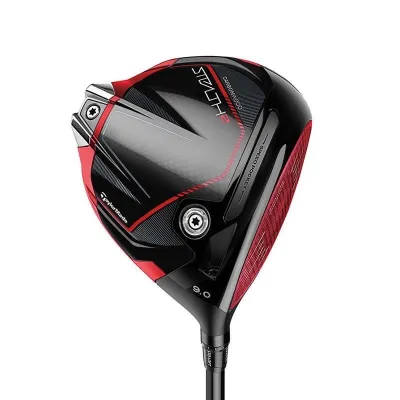





Prices are valid at publication and may change. Please refer to the product page for the latest price.
Beyond raw speed, your swing tempo and transition smoothness play a critical role in how a driver performs. A smooth, deliberate transition from the backswing to the downswing requires a different shaft loading profile than a quick, aggressive transition. Additionally, your angle of attack—whether you strike the ball on a downward or upward path—directly influences the optimal loft and spin characteristics you need from a driver head. Golfers who hit down on the ball often need more loft to prevent low, diving shots, while those who hit up can utilize lower lofts.
Matching Driver Specifications to Your Swing Profile
Selecting the correct loft angle is essential for optimizing your launch conditions and maximizing carry distance. Golfers with slower swing speeds generally require higher lofted drivers, such as 10.5 or 12 degrees, to help get the ball airborne and maintain sufficient spin for stable flight. Conversely, players with high swing speeds generate natural lift and spin, often requiring lower lofts like 8 or 9 degrees to prevent the ball from ballooning into the wind. Finding the right balance prevents the ball from falling short due to a lack of lift or losing distance from excessive drag.

The shaft is often called the engine of the driver, and matching its flex to your swing speed is vital for timing and consistency. Shaft flexes range from Senior (A-flex) and Regular (R-flex) for slower to moderate speeds, to Stiff (S-flex) and Extra Stiff (X-flex) for faster, more aggressive swings. Choosing a shaft that is too stiff can result in a low, right-biased ball flight for right-handed golfers, while a shaft that is too flexible can cause high, erratic dispersion. The weight of the shaft also matters, as lighter shafts can help increase speed, while heavier shafts offer more control.
Modern TaylorMade drivers feature adjustable hosels that allow you to alter the loft, lie angle, and face angle of the club. This adjustability is a powerful tool for fine-tuning your ball flight and correcting persistent miss patterns like a slice or a hook. Many models also incorporate movable weight tracks, enabling you to shift the center of gravity toward the heel to promote a draw, or toward the toe to encourage a fade. These adjustments allow you to customize your ball flight without forcing you to make drastic changes to your natural swing mechanics.
Evaluating TaylorMade Driver Profiles for Your Game
TaylorMade typically designs its driver lineups with three distinct head profiles to cater to different player archetypes. The standard model is engineered to offer a balanced blend of distance, moderate spin, and high forgiveness, making it highly versatile for a broad range of golfers. For players seeking maximum stability, the high-MOI (Moment of Inertia) variant features a larger footprint and weight positioned deep in the clubhead to resist twisting on off-center hits. This design is highly beneficial for players who struggle with consistent face contact.
For highly skilled players or those with exceptionally fast swing speeds, the low-spin variant is the preferred choice. These models feature a forward center of gravity that reduces spin rates, helping fast swingers achieve a more penetrating, wind-resistant trajectory. When evaluating these profiles, you should check the manufacturer’s specifications for center of gravity placement and face technologies, such as Twist Face, which is designed to correct face curvature on toe and heel mis-hits. Understanding these design elements helps you select a head that complements your typical miss.
It is important to evaluate how these design choices affect your overall ball flight stability and dispersion rather than focusing solely on raw distance claims. A driver that delivers an extra five yards on a perfect strike but misses the fairway by thirty yards on a mis-hit will ultimately hurt your score. Prioritizing a tight dispersion pattern and consistent ball speed across the entire face will yield much better on-course results under real playing conditions. Look for a head profile that instills confidence when you look down at it at address.
The Importance of Professional Fitting and On-Course Testing
While understanding static specifications is a great starting point, validating these details through dynamic testing is crucial. Utilizing launch monitor data allows you to analyze critical metrics such as ball speed, launch angle, spin rate, and smash factor. Smash factor, which is ball speed divided by clubhead speed, serves as an excellent indicator of how efficiently you are transferring energy to the ball with a given driver setup. A professional fitting session helps you optimize these numbers to achieve the most efficient flight path possible.
When scheduling a fitting session in the Philippines, look for authorized golf retailers or specialized fitting facilities equipped with premium tracking systems. Testing clubs in local tropical conditions is highly beneficial, as high humidity and warm temperatures affect both air density and physical stamina. A professional fitter can help you test different shaft and head combinations to find the exact configuration that maintains performance even when you tire during a humid round. They can also advise on grip materials that resist slipping in wet or sweaty conditions.
Investing in a premium driver is a significant financial commitment, with high-end models in the Philippines often priced from ₱30,000 to ₱45,000 or more. Understanding your budget allows you to decide whether a standard stock setup meets your needs or if investing in a custom shaft, specific length adjustment, or specialized grip is worth the additional cost. A proper custom fit ensures that your investment translates directly into lower scores and greater confidence on the tee, saving you money on unnecessary upgrades later.
Frequently Asked Questions (FAQ)
How often should I upgrade my TaylorMade driver?
You should consider upgrading your driver when your physical capabilities change or when your current equipment shows signs of wear. Significant changes in your swing speed, flexibility, or strength may mean your current shaft flex or loft is no longer optimal. Additionally, structural wear, such as micro-cracks in the face or a worn-out shaft, can compromise performance. While manufacturers introduce new designs annually, substantial technological leaps in forgiveness and face construction typically occur every three to five years, making that a realistic timeline for an upgrade.
Can I just change the shaft instead of buying a new driver head?
Yes, changing the shaft is a highly effective and budget-friendly way to refresh your driver if your current clubhead still suits your eye and provides adequate forgiveness. If your launch monitor data shows that your spin rates or launch angles are off, but your off-center hits are still well-controlled, a new shaft can optimize your ball flight. You should consult a qualified local club builder to ensure the new shaft is compatible with your driver’s adapter, properly swing-weighted, and installed with high-quality epoxy to withstand tropical heat and humidity.
Community discussion
Share your experience or ask a question. Comments are reviewed before publication.