
Selecting a three-layer fishing net requires balancing the physical characteristics of your target catch with the specific conditions of your fishing environment. To make an effective choice, you must match the inner mesh size to the girth of the fish, select a net length and depth that fits your local waters, and choose a durable material that resists tropical UV exposure and saltwater wear. Understanding these technical specifications ensures your gear performs efficiently while remaining compliant with local conservation guidelines.
Using the wrong net specifications can lead to empty catches, damaged gear, or accidental violations of local fishing laws. By evaluating how these multi-paneled nets function and how different materials behave in the water, you can select a configuration that optimizes your harvest and stands up to demanding coastal or freshwater conditions.
Understanding the Three-Layer Net Structure
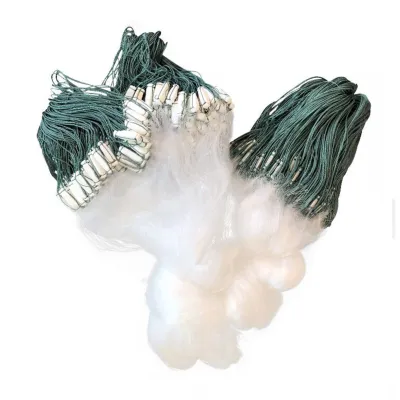
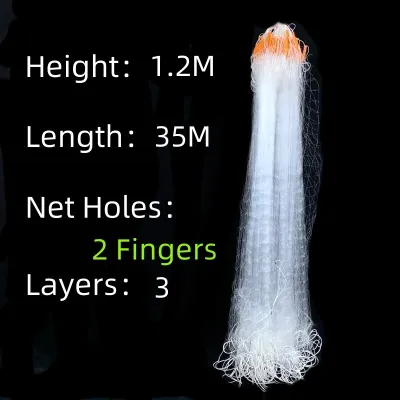
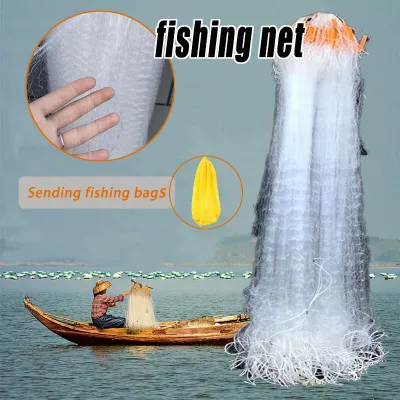
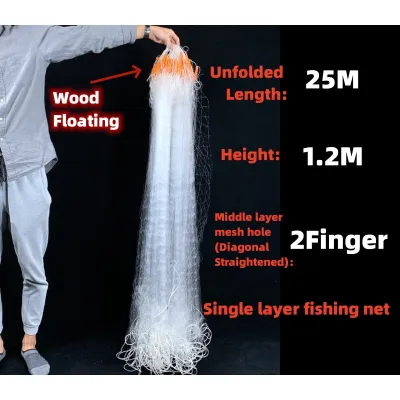
A three-layer fishing net, commonly known as a trammel net, utilizes a multi-paneled design to entangle fish rather than gill them. The structure consists of two outer walls of large-mesh netting sandwiching a single inner panel of loose, fine-mesh netting. This configuration allows the net to capture a wider variety of fish sizes than a standard single-panel gill net, which relies on a highly specific mesh-to-girth ratio.
Products mentioned in this guide
Prices are valid at publication and may change. Please refer to the product page for the latest price.
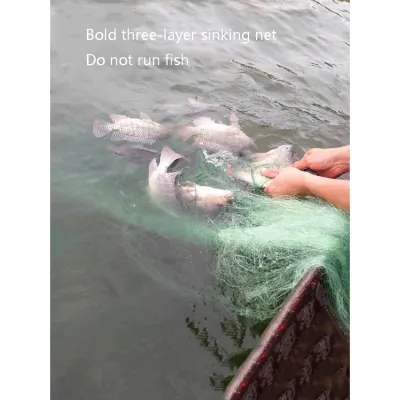
When a fish swims through the large outer mesh, it encounters the slack inner panel. As the fish continues forward, it pushes this loose inner netting through the opposite outer mesh panel, creating a secure pocket or bag. The fish becomes trapped within this self-formed pouch, unable to back out or swim forward. This pocketing mechanism is highly effective for catching bottom-dwelling species and active swimmers alike.
This design excels in still or slow-moving waters where fish can swim naturally into the panels. Because the net relies on entanglement rather than wedging the fish’s gills, it can successfully secure both small and large species in a single set. However, this high efficiency requires careful handling, as removing entangled fish and clearing debris from three separate layers of netting takes more time and effort than clearing a single-panel net.
Selecting Mesh Size Based on Target Catch
Choosing the correct mesh size is the most critical decision when configuring a three-layer net. Mesh measurements are typically presented in two ways: stretched mesh and knot-to-knot (or bar) measurements. Stretched mesh refers to the distance between two opposite knots when the mesh is pulled tight, while knot-to-knot represents the length of a single side of the mesh square. Always clarify which measurement a manufacturer is using before making a purchase.

To target specific species, the inner mesh must be small enough to prevent the fish from swimming straight through, yet large enough to allow its head and pectoral fins to pass so it can engage the pocketing mechanism. For example, targeting smaller species like tilapia or local freshwater catch requires a much tighter inner mesh than targeting larger coastal species like groupers or snapper. If the inner mesh is too small for the target species, the fish will simply bounce off the net without becoming entangled.
Compliance with local regulations is essential when selecting your mesh size. In the Philippines, the Bureau of Fisheries and Aquatic Resources (BFAR) and local municipal ordinances enforce strict minimum mesh size limits to protect juvenile fish and maintain sustainable marine populations. Using a net with an illegally small inner mesh can result in heavy fines and confiscation of gear, so always verify current local guidelines for your specific fishing zone before selecting your net.
Determining Net Length and Drop Depth
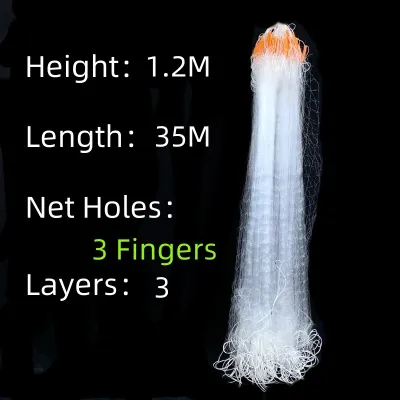
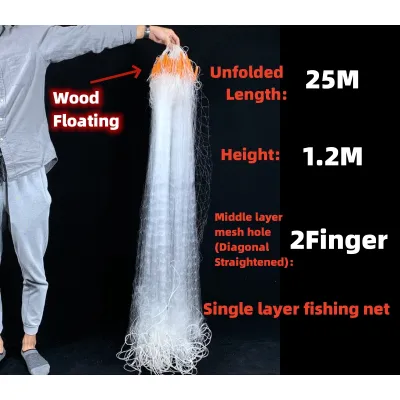
The physical footprint of your net must match both your deployment method and the physical characteristics of the water body. For shoreline wading, casting in shallow estuaries, or fishing in narrow rivers, shorter nets ranging from 10 to 20 meters are highly manageable. These shorter lengths allow a single fisher or a small team to deploy, monitor, and retrieve the gear safely without becoming overwhelmed by the weight of the net.
Boat-based deployment in open bays or larger lakes allows for much longer nets, but this requires adequate deck space and proper storage containers. The drop depth of the net—how far it hangs down into the water column—must be matched to the actual depth of the water. If the net is too deep, excess netting will bunch along the bottom, collecting heavy debris, rocks, and crabs that can tear the delicate inner mesh. Conversely, a net that is too shallow allows target fish to swim completely under the lead line.
Keep in mind that a wet three-layer net is significantly heavier and bulkier than a dry one. As the net sits in the water, the fibers absorb moisture, and the panels collect organic debris, seaweed, and fish. You must balance your desire for maximum coverage area with your physical ability to haul the wet weight back into your boat or onto the shore safely, especially when operating in challenging weather conditions.
Evaluating Netting Material and Twine Thickness
Modern three-layer nets are primarily constructed from either monofilament nylon or multifilament nylon. Monofilament consists of a single, clear plastic strand that is nearly invisible underwater, making it highly effective in clear coastal waters or during daytime fishing. It also sheds water and debris easily, which simplifies the cleaning process. However, monofilament can be stiff, prone to kinking, and less forgiving when packed into tight storage spaces.
Multifilament nylon is made from multiple tiny strands twisted or braided together. This material is incredibly soft and flexible, allowing the inner panel to drape loosely and form highly secure pockets around trapped fish. While multifilament is stronger and more resistant to abrasive wear, it is more visible in clear water and absorbs more moisture and mud, making it heavier to handle and more difficult to clean thoroughly.
Twine thickness, often measured in denier or millimeter ratings, directly impacts the net’s durability and water drag. Thicker twine resists tears from sharp fish teeth, crab claws, and underwater obstructions, but it increases water resistance and makes the net more visible to fish. When selecting a net, check manufacturer specifications to ensure the netting material has received UV-stabilization treatments, which are vital for preventing the intense tropical sun from degrading and weakening the nylon fibers over time.
Matching Specifications to Your Fishing Environment
Your final gear selection must account for the movement of the water and the structure of the bottom. In still waters like lakes or calm lagoons, standard float and lead line ratios work well. However, if you are fishing in tidal estuaries or areas with moderate currents, you need a net with a heavier lead line. Without sufficient weight, the current will sweep the bottom of the net upward, flattening the three-layer pocket structure and allowing fish to escape underneath.
Bottom conditions dictate how rugged your net’s lower section needs to be. Sandy or muddy bottoms are ideal for standard lead lines that rest directly on the substrate. If you are fishing near rocky areas, coral reefs, or sunken timber, a standard net is highly susceptible to snagging and severe tearing. In these environments, look for nets featuring a raised lead line or a reinforced bottom selvage—a strip of heavy-duty mesh at the bottom that protects the delicate inner panels from snagging on obstructions.
Before deploying any three-layer net, perform a thorough physical inspection of the float line, lead line, and panel attachments. Ensure that the floats provide adequate buoyancy to keep the top of the net upright while the lead weights keep the bottom anchored. Matching these physical specifications to your local environment not only improves your catch rate but also protects your investment from premature damage and wear.
Frequently Asked Questions (FAQ)
How do I properly clean and store a three-layer fishing net?
To maintain the lifespan of your net, always rinse it thoroughly with clean fresh water immediately after use to remove salt, mud, organic debris, and fish slime. Hang the net to dry completely in a well-ventilated, shaded area, as direct tropical sunlight can rapidly degrade the nylon fibers and cause them to become brittle. Once dry, store the net loosely in a cool, dry container or hanging bag away from direct sunlight and pests like rodents, which may chew through the netting.
Is a three-layer net suitable for catch-and-release fishing?
No, three-layer nets are not suitable for catch-and-release fishing. The pocketing and entanglement mechanism wraps the fish tightly in multiple layers of mesh, which can damage protective slime coats, dislodge scales, and restrict gill movement during the struggle. This process causes high stress and physical trauma, resulting in low survival rates after release. If your primary goal is catch-and-release, use a hand-held landing net with rubberized mesh or a single-panel net designed for quick extraction.
Community discussion
Share your experience or ask a question. Comments are reviewed before publication.