
To find the best fitness equipment for a small condominium in the Philippines, you must balance a compact physical footprint with the power and safety features required for your routine. For tight living spaces, the ideal setup typically involves folding treadmills with a total footprint under 150 centimeters in length, or low-profile walking pads that slide under a bed or sofa. Prioritizing space-saving features like hydraulic folding systems, integrated transport wheels, and noise-dampening deck cushioning allows you to maintain a consistent indoor running or walking routine without crowding your living area or disturbing your neighbors. By understanding your specific space constraints and fitness goals, you can select a machine that integrates seamlessly into your daily condo life.
Measuring Your Condo Space and Understanding Treadmill Dimensions
Before browsing online marketplaces or visiting showrooms to purchase treadmills, you must accurately measure your designated workout spot. Use a metal measuring tape to map out the length and width of the floor area, keeping in mind that the machine requires extra clearance on all sides during operation. Do not forget to measure your ceiling height, especially if you plan to use incline features. To calculate the necessary vertical clearance, add the treadmill’s deck step-up height to your own height, and then add an extra 15 to 20 centimeters of headroom to ensure you do not strike the ceiling at the peak of your stride.
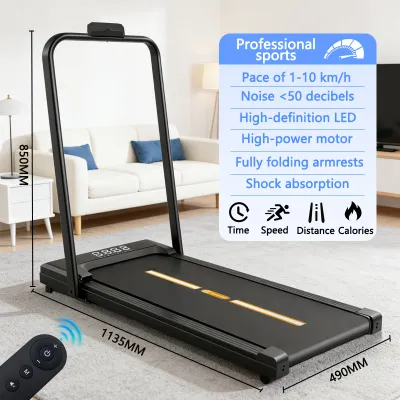
It is crucial to distinguish between a treadmill’s running surface and its overall physical footprint. The running surface, or belt size, refers only to the usable area where your feet land, which is always smaller than the machine’s actual frame. A compact running belt might measure 120 centimeters long by 40 centimeters wide, but the total physical frame of the machine will be significantly larger due to the motor cover, side rails, and front console. Always check the product manual for exact dimensional diagrams rather than relying solely on marketing summaries to avoid layout surprises.
Products mentioned in this guide
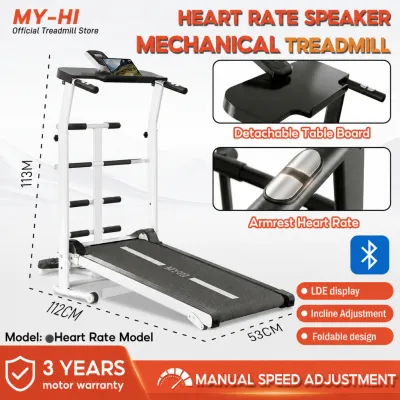
![[COD] Foldable Manual Home Treadmill with Adjustable Slope LED Display Anti-Slip Running Belt Free Twist Disc & Resistance Rope Space Saving Walking Machine for Home Fitness Exercise](https://img.lazcdn.com/g/p/1446617c7dcf63717d1a1640b68a647e.jpg_400x400q80.jpg_.webp)
Prices are valid at publication and may change. Please refer to the product page for the latest price.
Equally important is measuring the path the machine must take to reach your unit. Condo living in urban areas like Metro Manila often involves navigating tight elevator doors, narrow hallways, sharp corners, and standard entryway frames. Before ordering, verify the boxed dimensions of the machine and compare them against the clearance of your building’s service elevator and your front door. If a fully assembled or heavily boxed treadmill cannot clear these tight passages, you may face expensive return shipping fees or be forced to unbox the unit in a public hallway, risking damage to the delicate electronic console.
Essential Space-Saving Features for Condo Treadmills
When space is at a premium, the folding mechanism determines how easily you can reclaim your living area after a workout. Hydraulic drop-fold systems, often marketed as soft-drop or gas-assist mechanisms, are highly recommended for multi-purpose rooms. These systems allow the heavy deck to lower slowly and safely to the ground with a simple kick of a lever, preventing sudden drops that could damage your flooring. Manual folding models require you to lift and lock the deck yourself, which can be physically demanding and may lead to accidental drops if the locking pin is not securely engaged.

Mobility features are another non-negotiable requirement for high-density residential living. Look for treadmills equipped with integrated transport wheels that roll smoothly on typical condo flooring, such as ceramic tiles, engineered wood, or vinyl laminate. These wheels allow a single person to tilt and roll the folded machine into a corner or closet without scraping the floor. Additionally, adjustable leveling feet are essential for stabilizing the frame on slightly uneven condo floors, preventing the machine from rocking or shifting during high-intensity workouts.
Selecting the right motor size requires balancing your fitness needs with the physical constraints of a compact frame. Continuous Horsepower (CHP) is the standard measure of a motor’s ability to maintain speed under a load over time. For walking and light jogging, a motor of 1.5 to 2.0 CHP is generally sufficient and allows for a smaller motor housing. If you plan to run regularly, you will need a motor of 2.5 CHP or higher, which typically requires a larger, heavier frame to house the more robust motor and prevent overheating during extended sessions.
Living in a multi-story condominium means your workouts can easily affect the comfort of your neighbors. The impact of your feet striking the deck creates low-frequency vibrations that travel through concrete floors and walls, leading to noise complaints. To maintain good relations with those living below you, prioritize treadmills with advanced deck cushioning systems, such as elastomeric shock absorbers or spring-loaded suspension. These systems not only protect your joints by absorbing impact but also significantly dampen the acoustic transfer of sound through the building structure.
Choosing the Right Compact Treadmill Type for Your Layout
Finding the right balance between structural stability and space-saving design depends heavily on your daily fitness routine and how much floor space you can permanently dedicate to exercise equipment.
Traditional Folding Treadmills
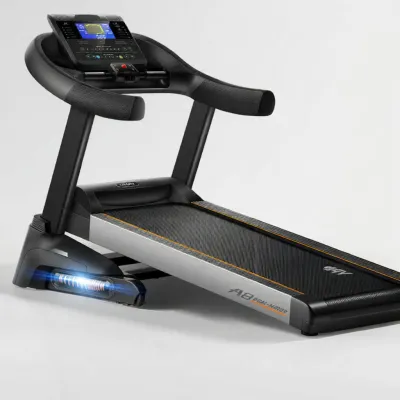
Traditional folding treadmills are the best choice for users who prioritize a full running experience with robust console features, built-in workout programs, and motorized incline options. These machines feature a sturdy upright frame and a heavy deck that folds upward toward the console, reducing the horizontal footprint by roughly half when not in use. While they offer superior stability and higher maximum speeds suitable for intense running, they still require a dedicated corner of your living room or bedroom, as the folded unit remains upright and cannot be easily hidden out of sight.
Flat-Folding and Wall-Mounted Models
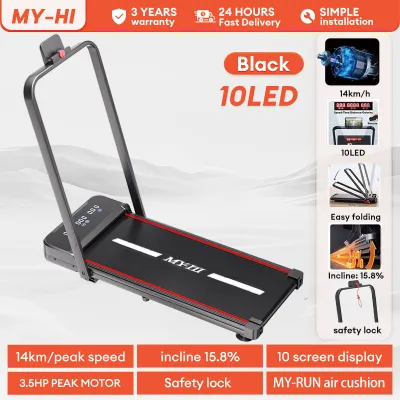
Flat-folding and wall-mounted models are designed for highly constrained spaces where the floor must be completely cleared after every exercise session. These innovative treadmills feature consoles and handrails that fold completely flat, parallel to the running deck, allowing the entire machine to be stored horizontally under a bed or vertically against a wall or inside a closet. While they offer excellent space efficiency, they often feature smaller motors and lighter frames, which can result in a less stable feel during fast runs. If you choose a model designed for vertical wall storage, always verify the structural integrity of your condo’s partition walls and use heavy-duty mounting hardware to prevent tipping hazards.
Under-Desk and Walking Pads
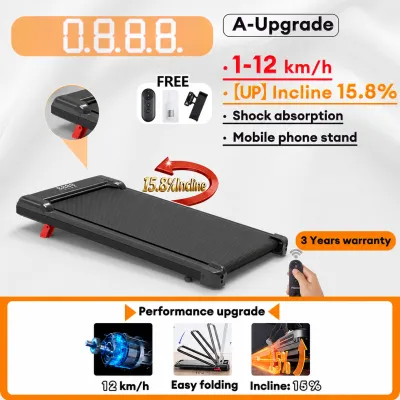
Under-desk walking pads are ultra-low-profile, handle-less machines designed specifically for low-intensity movement while working or watching television. These lightweight units can easily slide under a sofa or standing desk, making them highly popular for small studio apartments. However, they have strict limitations: they lack safety handrails, have lower maximum weight capacities, and feature shorter, narrower belts that restrict your stride to walking or very light jogging. Attempting to run on a walking pad is highly dangerous due to the lack of physical support and the limited belt area, which increases the risk of stepping off the moving surface.
Avoiding Common Sizing Mistakes and Safety Clearance Errors
One of the most dangerous mistakes condo residents make is squeezing a treadmill into a tight corner without leaving adequate safety clearance. Manufacturers recommend maintaining 1.5 to 2 meters of completely empty space directly behind the belt. If you slip or fall, this rear clearance ensures you are safely ejected onto the floor rather than trapped and friction-burned against a wall or furniture. Never place the rear of the machine flush against a wall.
Ceiling height is another frequently overlooked constraint, particularly when choosing treadmills with high step-up deck heights or manual incline adjustments. A treadmill deck can sit anywhere from 15 to 30 centimeters off the floor before you even begin to factor in the incline angle. If your condo has standard 2.4-meter ceilings, a tall user running on a high-deck machine with a 10% incline may find their head dangerously close to light fixtures or ceiling fans. Always calculate your total height while standing on the elevated deck before finalizing your purchase.
Compromising on weight capacity to secure a smaller machine is a recipe for premature equipment failure and potential injury. Compact and budget-friendly models often have lower maximum user weight limits, sometimes capping out at 90 to 100 kilograms. Operating a treadmill near or above its rated weight capacity strains the motor, wears out the deck lubrication rapidly, and can cause the belt to stutter or slip during your stride. Always choose a machine with a maximum weight capacity that exceeds your body weight by at least 15 to 20 kilograms to ensure smooth operation and longevity.
Finally, placing your machine too close to walls or heavy drapes can restrict natural arm swing and block critical motor ventilation ports. Treadmill motors generate significant heat during operation, which must be dissipated through vents located at the front or sides of the motor cover. Blocking these vents by pushing the front of the machine tight against a wall or inside a cramped closet can cause the motor controller board to overheat and shut down mid-workout. Maintain at least 30 to 50 centimeters of clear space around the front and sides of the machine to ensure proper airflow and a natural, unrestricted running posture.
Maintaining and Storing Your Treadmill in a Humid Climate
The tropical climate of the Philippines presents unique challenges for mechanical and electronic fitness equipment, as high relative humidity can accelerate rust and degrade sensitive console circuitry. Avoid placing your treadmill near open balconies, large windows exposed to direct afternoon sunlight, or adjacent to bathroom doors where steam can accumulate. If you must store the machine in a semi-outdoor area like a covered patio, the fluctuating moisture levels can lead to corrosion on the frame bolts and internal motor components, which may void your manufacturer’s warranty.
Routine visual checks are essential for keeping your compact machine running smoothly in a dusty, humid environment. Dust and pet hair can easily accumulate under the motor hood, clinging to the static-charged belt and clogging the cooling fan of the motor. Every few months, unplug the machine, remove the motor cover, and gently vacuum away any accumulated debris. Additionally, because compact treadmills are frequently folded, rolled, and repositioned, you should regularly verify that the running belt remains perfectly centered and has not drifted to one side, which can cause the edges to fray against the side rails.
When storing your treadmill in its folded position for extended periods, avoid using heavy plastic sheets or non-breathable covers that can trap ambient moisture underneath. Trapped moisture creates an ideal breeding ground for mold and mildew on the textured running belt and wooden deck, which can ruin the material and cause unpleasant odors in your living space. Instead, opt for a breathable, lightweight canvas or fabric cover that shields the machine from dust while allowing air to circulate freely.
To keep friction low and prevent motor strain, consult your product manual for specific belt lubrication intervals. High ambient humidity and warm temperatures can alter the viscosity of silicone treadmill lubricants, causing them to dry out or gum up faster than they would in cooler climates. As a general rule, check the dry feel of the underside of the belt every 30 hours of use or every three months. Always follow the manufacturer’s instructions regarding the exact type of 100% silicone lubricant to apply, as using incorrect oils can permanently damage the deck’s low-friction coating.
Frequently Asked Questions (FAQ)
Do I need an equipment mat for my condo treadmill?
Yes, using a dedicated high-density rubber or PVC equipment mat is highly recommended for any condo treadmill setup. A quality mat serves three crucial functions: it absorbs the high-frequency vibrations that would otherwise travel through your floor and disturb your neighbors, it protects delicate condo floor surfaces like laminate or vinyl from scratches, and it prevents static electricity from pulling floor dust up into the treadmill’s motor compartment.
Can compact treadmills handle running, or are they only for walking?
Whether a compact treadmill can handle running depends entirely on its motor specifications and belt length. Ultra-compact models and walking pads with motors under 2.0 CHP and belt lengths under 120 centimeters are strictly designed for walking or light jogging, as they lack the power to sustain high speeds and do not offer enough space for a long running stride. If you plan to run, look for a compact folding model that features at least a 2.5 CHP motor and a running belt that is at least 130 centimeters long to accommodate your natural stride safely.
Community discussion
Share your experience or ask a question. Comments are reviewed before publication.