
Finding the right thread mill exercise machine for a compact condominium requires balancing a small physical footprint with your actual fitness goals. For most small condo units, a treadmill with a running belt width of 40 to 45 centimeters and a total setup length under 150 centimeters offers the best balance of safety and space. Fully flat-folding designs that store vertically or slide under a bed are ideal for multi-use rooms, while hydraulic soft-drop folding models work best if you have a dedicated corner. Prioritizing a machine that matches your physical space constraints ensures you can maintain an active lifestyle at home without turning your living room into an unusable obstacle course.
How to Measure Your Condo Space for a Treadmill
Before purchasing a thread mill exercise machine, map out the physical limits of your condo. Measure the exact floor area where you plan to place the machine. Do not rely solely on folded dimensions; compare your floor space against the treadmill’s maximum operational dimensions when fully unfolded.
Safety clearances are critical when operating fitness equipment in tight quarters. Manufacturers typically recommend leaving at least 2 meters of clear, unobstructed space behind the running belt and at least 0.5 meters on both sides. This safety zone is essential to prevent severe injury if you lose your balance, slip, or need to make an emergency stop. Blocking these zones with walls, sofas, or TV consoles increases the risk of collision during a fall.
Products mentioned in this guide
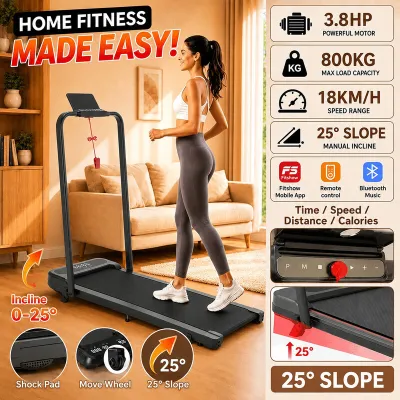
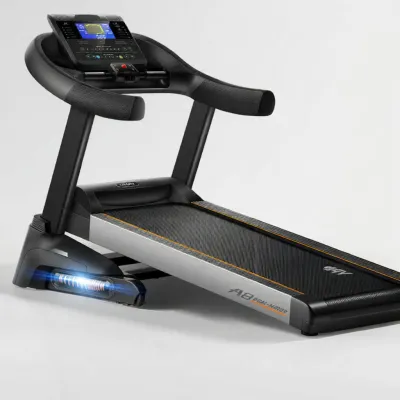
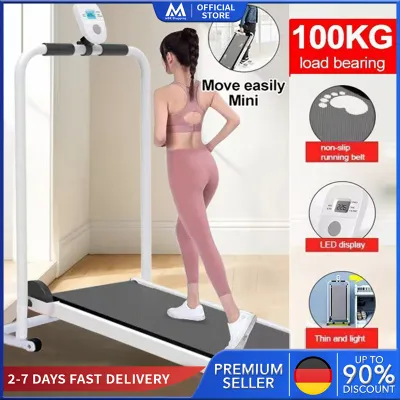
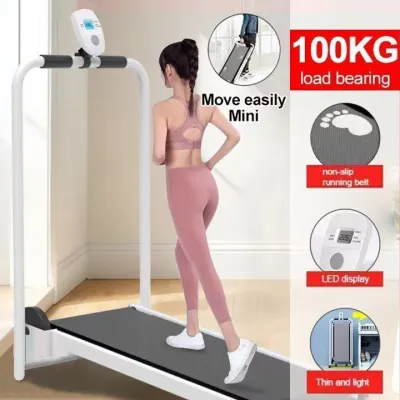
![[COD] Foldable Manual Home Treadmill with Adjustable Slope LED Display Anti-Slip Running Belt Free Twist Disc & Resistance Rope Space Saving Walking Machine for Home Fitness Exercise](https://img.lazcdn.com/g/p/1446617c7dcf63717d1a1640b68a647e.jpg_400x400q80.jpg_.webp)
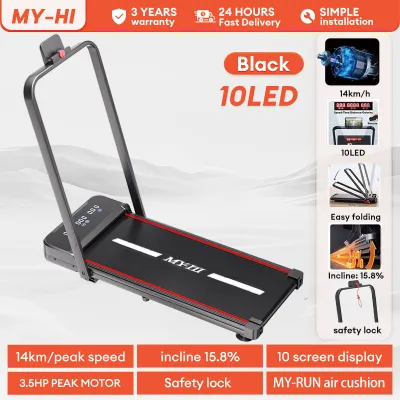
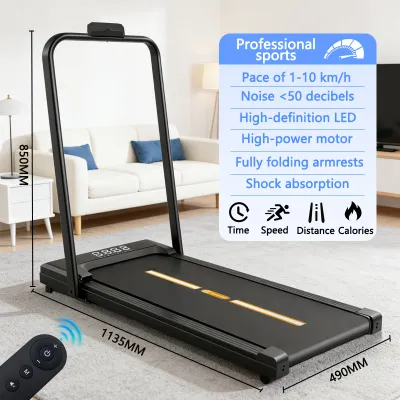
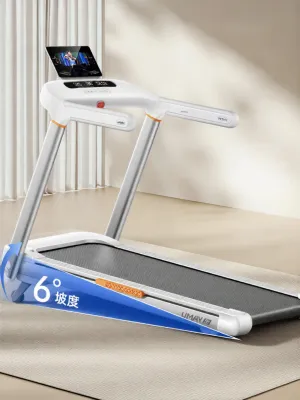
Prices are valid at publication and may change. Please refer to the product page for the latest price.
Next, trace the physical path the equipment must take to reach your unit. Measure the width of entry doors, interior doorways, hallway turns, and the building’s elevator. Many pre-assembled fitness machines cannot clear tight, ninety-degree turns in narrow corridors or fit inside standard elevators. Verifying these clearances beforehand prevents delivery failures.
Finally, calculate your ceiling height relative to the treadmill’s deck height. A treadmill’s step-up height—the distance from the floor to the running surface—typically ranges from 15 to 25 centimeters. If you plan to use an incline feature, this elevates your body even higher. Ensure that your height plus the machine’s maximum deck elevation leaves at least 30 centimeters of clearance from the ceiling to avoid bumping your head during high-intensity workouts.
Understanding Treadmill Dimensions and Footprints
Understanding the difference between a treadmill’s total footprint and its actual running surface is key. The overall footprint includes the motor hood, side rails, and console frame, which add bulk. In contrast, the running belt is the usable area where your feet land. For walking, a belt length of 120 centimeters is usually sufficient, but running safely requires at least 140 centimeters to accommodate your natural stride.

Choosing a compact motor housing often involves a direct trade-off with the size of the running belt. Smaller, space-saving machines designed for light use typically feature narrower belts and smaller motors. While these compact designs fit easily into tight corners, they may feel restrictive if you have a wide running gait or a long stride. If your primary goal is high-speed running, you will need to allocate more floor space to accommodate a wider, more stable deck.
You must also verify the manufacturer’s specified weight capacity and structural stability before buying. Compact, lightweight frames designed for easy storage often have lower weight limits than their heavy-duty, non-folding counterparts. Operating a treadmill near or above its structural limit can cause the frame to flex, leading to excessive noise, belt slippage, and premature wear on the motor. Check the product specifications carefully to ensure the frame can safely support your body weight during active use.
Evaluating Folding Mechanisms and Storage Options
Folding mechanisms vary in physical effort and space savings. Manual folding models require you to lift the heavy deck yourself. Hydraulic soft-drop systems use gas-assist shocks to help lift the deck and lower it slowly and safely to the floor. Fully flat-folding designs allow the console and handrails to fold completely flat against the deck, enabling you to slide the unit under a bed or stand it upright against a wall.
When evaluating these options, check the stability of the locked position and the quality of the transport wheels. A folded treadmill stored vertically must have a reliable locking pin or latch to prevent it from accidentally tipping over, especially in homes with children or pets. Transport wheels should be sturdy and multi-directional, allowing you to roll the machine across condo flooring without scratching the tiles or tearing the laminate.
Additionally, consider the wall-clearance and ventilation requirements of your stored machine. Storing a folded treadmill too close to walls or inside tight closets can trap heat around the motor housing. If you fold the machine immediately after a long workout, ensure there is adequate airflow around the motor cover to allow the components to cool down naturally. Blocking these ventilation pathways can lead to electrical issues or shorten the lifespan of the internal wiring.
Balancing Performance Features With Space Constraints
Balancing performance with a small footprint requires prioritizing key features. The motor’s continuous horsepower (CHP) dictates how hard the machine can work. Compact treadmills often feature smaller motors under 2.0 CHP, which are excellent for walking or light jogging but may overheat during prolonged, high-speed running. If you plan to train intensely, look for a higher CHP rating in a streamlined frame.
The design of the console also affects how much space the machine occupies when in use. Fixed consoles with large screens and deep accessory trays can protrude significantly into your living space, making the room feel cramped even when the treadmill is unfolded. Folding consoles or minimalist control panels reduce this bulk, though they may offer fewer built-in workout programs or smaller display screens. Decide whether you prefer a high-tech entertainment screen or a simpler, space-saving interface.
In a multi-unit condominium, noise and vibration reduction are essential for maintaining good relations with your neighbors. The impact of your feet hitting the deck can send low-frequency vibrations through the concrete floor, disturbing residents below. Look for a thread mill exercise machine equipped with high-quality shock absorbers or elastomeric dampening cushions under the deck. Placing a thick, high-density rubber equipment mat beneath the machine is also highly recommended to absorb vibrations and protect your condo’s flooring.
Common Space-Matching Mistakes to Avoid
One common mistake is ignoring the “in-use” length of the treadmill. Many buyers measure space based solely on folded storage dimensions, only to find the fully extended machine blocks walkways or doors. Always plan your room layout around the fully extended operational length of the machine, keeping safety clearance zones completely clear.
Another frequent error is placing the treadmill too close to walls, curtains, or furniture. This blocks the air vents located near the motor hood at the front of the deck. Without proper airflow, the motor can quickly overheat during a workout, triggering automatic thermal shut-offs or causing permanent damage to the control board. Ensure there is at least a 30-centimeter gap between the front motor cover and any adjacent walls or furniture.
Finally, do not overlook the importance of floor leveling and load distribution. Condominium floors are not always perfectly level, and operating a heavy treadmill on an uneven surface can warp the frame and cause the running belt to drift to one side. Always use the adjustable leveling feet on the bottom of the machine to stabilize it. Additionally, never place the treadmill directly on bare flooring without a dedicated equipment mat, as the concentrated weight and constant vibration can crack tiles or dent wooden planks. Investing a few thousand ₱ in a high-density rubber mat is a simple way to protect your property.
Frequently Asked Questions (FAQ)
Can I keep a treadmill on a condo balcony?
Storing or using a thread mill exercise machine on a condo balcony is highly discouraged due to environmental and structural risks. The tropical climate in the Philippines brings high humidity, heavy rain, and intense direct sunlight, all of which can rapidly corrode metal frames, degrade running belts, and short-circuit sensitive electronic consoles. Most manufacturers explicitly state that outdoor or semi-outdoor storage voids the product warranty. Furthermore, you must check your condominium association’s house rules, as many buildings prohibit placing heavy fitness equipment on balconies due to strict structural weight limits and potential noise disturbance to neighboring units.
Do under-desk treadmills save more space than folding models?
Under-desk treadmills, often called walking pads, generally save significantly more space than traditional folding treadmills, but they serve a different fitness purpose. These compact units feature a very low profile and lack bulky upright consoles or handrails, allowing them to slide easily under a sofa or bed when not in use. However, they are designed strictly for low-speed walking or light jogging and typically lack incline features, robust shock absorption, and the high-speed motors required for running. If your primary goal is intense cardiovascular training or running, a traditional folding treadmill is a safer and more effective choice, provided you have the clearance to store it.
Community discussion
Share your experience or ask a question. Comments are reviewed before publication.