
Selecting the right Winmax knee support depends entirely on the specific physical demands of your sport. Because different athletic activities place unique stresses on your joints, a sleeve that excels on the basketball court may feel restrictive during a heavy gym session or bulky on a long run. To find the ideal balance of compression, stability, and mobility, you must match the structural features of the support—such as open-patella designs, flexible side stabilizers, or lightweight elastic sleeves—to your primary movement patterns.
Understanding Your Sport's Knee Demands
Basketball is a high-impact sport defined by sudden lateral movements, explosive jumps, and rapid deceleration. These actions place immense stress on the ligaments and tendons surrounding the knee joint, particularly when playing on hard concrete outdoor courts or polished indoor hardwood. Players often require a support that offers robust lateral stability to guard against sudden twisting forces, alongside sufficient cushioning to absorb the impact of repeated landings.
Running, by contrast, is a repetitive, linear activity where the knee moves primarily in a single plane. The main challenges for runners are managing the constant, rhythmic shock of foot strikes and ensuring proper patellar tracking over long distances. In the humid tropical climate of the Philippines, runners typically benefit from lightweight, highly breathable compression sleeves that offer mild joint warmth and proprioceptive feedback without adding unnecessary bulk or trapping excessive sweat.
Products mentioned in this guide
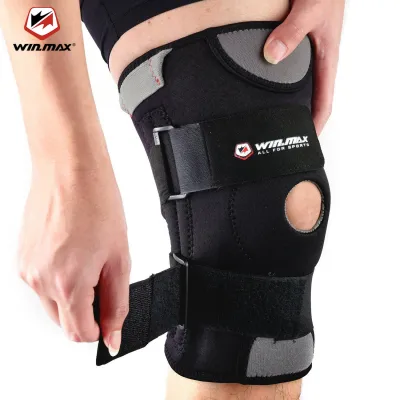
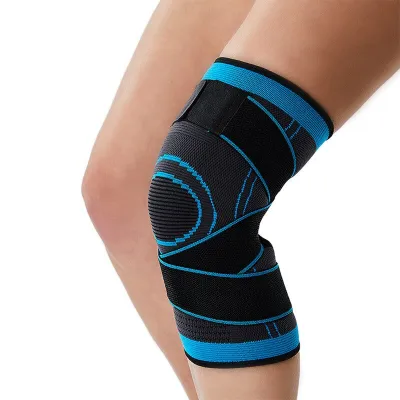
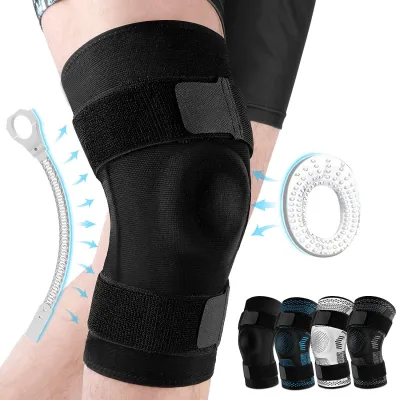
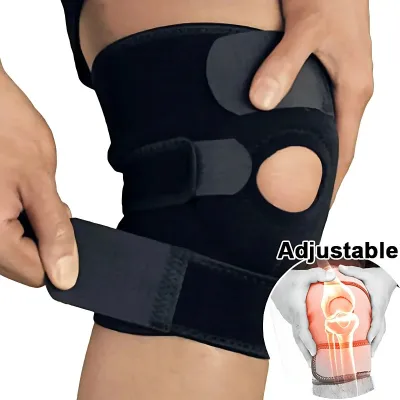
Prices are valid at publication and may change. Please refer to the product page for the latest price.
Gym workouts, such as weightlifting, cross-training, or high-intensity interval training (HIIT), present a different set of biomechanical needs. Exercises like deep squats, lunges, and leg presses require a full, unrestricted range of motion while demanding joint warmth to keep synovial fluid flowing smoothly. Gym-goers need a versatile support that provides firm compression under heavy loads but remains flexible enough to allow deep knee flexion without pinching or bunching behind the joint.
Matching Winmax Design Features to Athletic Scenarios
When browsing Winmax options on an ecommerce platform, you will encounter various designs, starting with the choice between pull-on compression sleeves and adjustable wraps. Compression sleeves provide uniform pressure across the entire joint, which is excellent for promoting blood flow and enhancing joint awareness during steady-state running or general gym workouts. Adjustable wraps, featuring hook-and-loop straps, allow you to customize the tightness and target specific areas, making them highly suitable for sports like basketball where you might need extra reinforcement around the patella or ligaments.

Structural additions like patella gel pads and flexible side stays serve distinct protective functions. A built-in patella pad helps stabilize the kneecap, dispersing the shock of impact and keeping the patella aligned during repetitive forward strides. Side stabilizers, often made of flexible coiled springs, offer lateral reinforcement that helps guide the knee through its natural plane of motion, which can be highly beneficial during the quick cuts and defensive slides of basketball.
Material composition is another critical factor, especially when training in warm, humid environments. Neoprene supports offer excellent heat retention and firm structural support, which is ideal for keeping joints warm during rest periods in air-conditioned gyms. However, for outdoor running or intense basketball games under the sun, lightweight knit fabrics or moisture-wicking nylon blends are preferable to prevent heat buildup, skin irritation, and slippage caused by heavy sweating.
Verifying Fit, Compression, and Mobility Before Committing
To ensure your knee support performs effectively without causing discomfort, you must verify the fit before your first workout. Start by measuring your leg circumference using a flexible tape measure, typically at a specific distance above and below the center of your kneecap as indicated by the manufacturer’s sizing guide. Avoid guessing your size based on standard clothing dimensions, as athletic supports require precise measurements to deliver the intended level of compression.
Once you receive the support, perform a quick movement test at home to identify any fit issues before heading to the court or gym. Put the sleeve or wrap on and perform a few bodyweight squats, high knees, and lateral steps. Watch out for red flags such as the material sliding down your thigh, pinching or bunching in the sensitive area behind your knee, or any tingling sensations that suggest restricted blood circulation.
Finally, assess how the support affects your mobility during sport-specific movements. A basketball player should feel secure when making quick lateral cuts, while a runner should feel no restriction in their stride length. If the support limits your ability to hit your desired depth in a squat or causes you to alter your natural running gait, you may need to adjust the straps or try a different size or model.
Can One Winmax Knee Support Cover Multiple Sports?
If your weekly routine includes a mix of basketball, running, and gym sessions, you might wonder if a single hybrid knee support can handle all three. A versatile, medium-weight compression sleeve with mild lateral reinforcement can serve as a decent all-rounder for moderate, multi-discipline training. This hybrid approach works well for general fitness enthusiasts who engage in light jogging, moderate weightlifting, and casual recreational sports without pushing extreme limits in any single category.
However, high-intensity training or specialized athletic pursuits often demand dedicated gear. For instance, the heavy-duty, highly structured support needed to stabilize the knee during competitive basketball games will likely feel too heavy, hot, and restrictive for a long-distance road run. Conversely, a minimalist, ultra-breathable running sleeve will not provide the lateral stability or impact protection required to safeguard your joints during explosive court movements.
For recovery days or light cross-training, a basic, lightweight elastic compression sleeve is often the most practical choice. It provides gentle warmth and increases blood flow to help soothe minor soreness without restricting your natural movement. Assess your primary athletic focus and the intensity of your workouts to decide whether a single versatile sleeve is sufficient or if investing in sport-specific supports is necessary to protect your joints.
Frequently Asked Questions (FAQ)
How tight should a Winmax knee sleeve feel during a workout?
A properly fitting knee sleeve should feel snug and supportive, applying even pressure across the entire joint without causing pain or restricting your movement. It should stay securely in place during active movement without sliding down. If you experience numbness, tingling, coldness in your foot, or visible skin bulging at the edges of the sleeve, the support is too tight and you should size up immediately to prevent circulation issues.
Do I need a knee support with a patella pad for running?
A patella pad is highly beneficial if you experience discomfort around the kneecap or require assistance with patellar tracking during repetitive forward strides. The pad helps absorb shock and keeps the kneecap centered in its groove. However, if you do not have specific patellar issues and simply want mild joint warmth and improved proprioception, a standard, lightweight compression sleeve without a pad is often more comfortable and less bulky for running.
How often should I wash my knee support to maintain its elasticity?
You should wash your knee support after every two to three uses, or after any workout that causes heavy sweating, to prevent bacteria buildup and maintain the fabric’s elasticity. Hand wash the support in cool water using a mild detergent, and avoid using fabric softeners or bleach, which can degrade the elastic fibers. Always air dry the support flat or hang it up away from direct sunlight; never use a clothes dryer, as high heat can warp the materials and ruin any silicone grip strips.
Community discussion
Share your experience or ask a question. Comments are reviewed before publication.