
To start playing golf in the Philippines, a beginner should look for a complete boxed set that emphasizes maximum forgiveness, lightweight shafts, and a simplified club selection. Navigating the local golf scene—from humid driving ranges in Metro Manila to windy courses in Cavite or Tagaytay—requires equipment that helps you establish a consistent swing without the overwhelming complexity of building a custom set from scratch. Choosing the right gear early on prevents frustration and ensures you develop proper mechanics from your very first swing.
As a novice, your primary goal is to make consistent contact with the ball and get it airborne. The equipment you choose should work with your physical build and current strength, rather than forcing you to compensate for clubs that are too heavy, too stiff, or too difficult to hit. By focusing on user-friendly designs, you can transition smoothly from practice bays to the actual fairways.
Understanding Golf Club Set Types for Beginners
Every golf club in a bag serves a distinct purpose, designed to send the ball a specific distance or handle a particular lie on the course. A standard full setup consists of woods for long-distance tee shots, hybrids and irons for fairway progression, wedges for short-range accuracy around the green, and a putter for the final strokes on the green. For a beginner, understanding how these components interact is the first step toward making an informed purchase.
Products mentioned in this guide
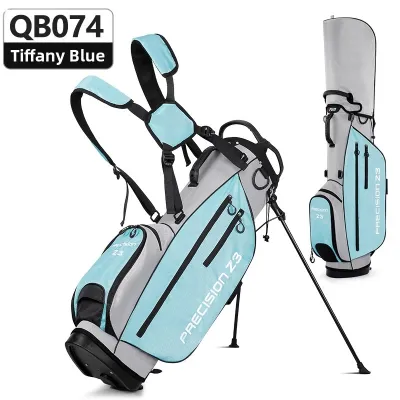
Prices are valid at publication and may change. Please refer to the product page for the latest price.
Complete Boxed Sets vs. Custom Assemblies
Complete boxed sets are pre-packaged collections designed by manufacturers to offer an all-in-one solution for new players. These sets are highly cost-effective because they bundle the essential clubs, headcovers, and a golf bag into a single purchase. The clubs within a boxed set are engineered to have matching shaft weights, flexes, and grip sizes, ensuring a uniform feel as you transition from a driver to an iron. This uniformity is incredibly beneficial for beginners who are still developing their muscle memory and swing tempo.
Building a custom bag club-by-club, on the other hand, involves purchasing the driver, woods, irons, wedges, and putter separately. While this approach allows for precise personalization, it requires a deep understanding of your swing dynamics, which most beginners have not yet established. Custom assemblies are also significantly more expensive and can easily double or triple your initial investment. For those starting out, the convenience and balanced configuration of a boxed set far outweigh the marginal benefits of a custom-built bag.
Standard beginner packages typically include a driver, a fairway wood (usually a 3-wood or 5-wood), one or two hybrids, a selection of irons (typically ranging from a 6-iron to a pitching wedge), a sand wedge, and a putter. This selection covers all the essential distance gaps you will encounter on a standard course. It eliminates the confusion of having too many options, allowing you to focus on mastering a few versatile clubs first.
Men's, Women's, and Junior Configurations
Manufacturers design golf sets in distinct demographic configurations to match differences in average height, physical strength, and swing mechanics. Men’s beginner sets generally feature longer shafts, heavier overall weights, and stiffer shaft materials to accommodate faster swing speeds. These configurations assume a standard physical build, but players who are taller or shorter than average should always verify the physical dimensions of the clubs before buying.
Women’s beginner sets are specifically engineered to be shorter, lighter, and more flexible. They typically feature graphite shafts to help players generate more clubhead speed with less effort. Additionally, women’s clubs often have higher loft angles on the driver and woods, which helps launch the ball higher into the air. Junior configurations are scaled down even further, categorized by age or height brackets, utilizing ultra-lightweight materials to prevent injury and encourage proper swing development in younger players.
To ensure you select the correct configuration, always check the manufacturer’s sizing charts against your physical measurements. Do not rely solely on gender or age labels; a taller woman may find a lightweight men’s senior set more comfortable, while a shorter man might benefit from a set with slightly shorter shafts. Measuring your height and your wrist-to-floor distance provides a reliable baseline for matching your physical build to the right club length.
Key Specifications to Match Your Skill and Build
When evaluating beginner golf sets, looking past the brand name and focusing on the technical specifications is crucial. Manufacturers adjust several key design variables to make clubs more forgiving and easier to swing for players who do not hit the center of the clubface consistently.

Clubhead Design and Forgiveness
Forgiveness is the single most important attribute of a beginner’s golf club. In drivers and fairway woods, this is achieved through oversized clubheads, which maximize the physical size of the sweet spot. An oversized driver, typically measuring the maximum legal limit of 460cc, features a large face that minimizes distance loss and twisting when you strike the ball off-center. This design helps keep your tee shots reasonably straight, even on poor swings.
For irons, beginners should prioritize cavity-back designs. These clubs feature a hollowed-out rear section, which redistributes the clubhead’s weight to the outer perimeter. This perimeter weighting stabilizes the clubface during impact, reducing the severe slicing or hooking that often occurs with off-center hits. Cavity-back irons also feature wider soles, which prevent the club from digging too deeply into the turf, a common error known as “fat” shots.
Hybrids play a vital role in beginner sets by replacing traditional long irons, such as the 3-iron and 4-iron, which are notoriously difficult to hit. Hybrids combine the forgiving, hollow-core head design of a wood with the shorter shaft length of an iron. This combination provides a lower center of gravity, making it much easier to launch the ball high out of various turf conditions, including the thick, humid rough often found on tropical courses in the Philippines.
Shaft Flex and Material Options
The shaft is often referred to as the engine of the golf club, as its weight and bending profile directly influence your timing, distance, and accuracy. Shafts are primarily made of either graphite or steel. Graphite shafts are incredibly lightweight and excellent at dampening vibrations, making them highly suitable for beginners, seniors, and players looking to maximize their swing speed. Steel shafts are heavier and offer more precise feedback and control, but they require more physical strength to swing effectively.
Shaft flex refers to the amount the shaft bends during your swing, rated from Ladies (L), Senior (A), Regular (R), Stiff (S), to Extra Stiff (X). Beginners with moderate or slower swing speeds should generally opt for graphite shafts with a Regular or Senior flex. A flexible shaft acts like a spring, bending during the backswing and snapping straight at impact to help launch the ball farther without requiring excessive physical force.
If you have a naturally fast, athletic swing from other sports, a Regular flex steel shaft or a Stiff flex graphite shaft might be necessary to keep your shots on target. Using a shaft that is too stiff for your swing speed will result in low, short shots that tend to curve to the right. Conversely, a shaft that is too flexible can cause inconsistent contact and wild, unpredictable ball flights.
Grip Sizing and Comfort
Grip sizing is an frequently overlooked specification that directly impacts your control over the clubface. Standard beginner sets come with standard-sized grips, but these may not be suitable for everyone. If your hands are exceptionally large or small, using the wrong grip size can cause excessive hand tension or unwanted wrist movement during your swing, leading to inconsistent shot shapes.
To determine your ideal grip size, measure your hand from the crease of your wrist to the tip of your middle finger. Players with larger hands often benefit from midsize or oversize grips, which allow the fingers to rest comfortably without digging into the palm. In the hot and humid climate of the Philippines, selecting a grip with a textured, moisture-wicking pattern is also essential to prevent the club from slipping out of your hands during sweaty afternoon practice sessions.
Planning Your Budget for a First Set
Establishing a realistic budget is a critical step in purchasing your first golf club set. Beginner sets in the local market generally fall into three distinct price tiers, and understanding what each tier offers helps you balance quality with long-term value. Note that these price ranges are general market estimates that you should verify at the time of purchase.
Entry-level boxed sets typically range from ₱15,000 to ₱30,000. These packages are highly accessible and usually include all the essential clubs, a basic stand bag, and headcovers. While they utilize simpler materials, they are excellent for casual players who want to try the sport without a heavy financial commitment. Mid-tier sets range from ₱30,000 to ₱60,000, offering upgraded shaft materials, more durable bag construction, and clubhead designs that incorporate advanced game-improvement technology. Premium beginner sets cost upwards of ₱60,000, featuring high-end materials and designs from major global golf brands that can easily last you several years as your skills improve.
When evaluating a set, consider the value of the included golf bag. Stand bags feature built-in retractable legs, making them highly versatile for walking the course or practicing at the driving range. Cart bags are larger, lack stand legs, and are designed specifically to sit securely on a golf cart. Since many courses in the Philippines require the use of golf carts and caddies, a cart bag is highly practical, but a lightweight stand bag remains the most versatile option for solo practice sessions.
If you are on a tight budget, purchasing a high-quality used set from a reputable brand is often more economical than buying a brand-new, low-quality entry-level set. Premium brands construct their clubs to withstand years of use, meaning a second-hand set can offer superior performance and durability at a fraction of its original cost. When buying used, always inspect the clubfaces for deep grooves or dents, check that the shafts are perfectly straight, and ensure the grips do not feel slick or dried out.
Where to Buy and Verify Authenticity in the Philippines
Finding genuine golf equipment requires shopping through reliable channels and knowing how to spot counterfeit products. The local market has several established retail avenues, each offering different advantages for first-time buyers.
Authorized brand boutiques located in major shopping malls across Metro Manila, Cebu, and Davao offer the highest level of security. Purchasing from these official stores guarantees that your equipment is genuine and fully covered by the manufacturer’s warranty. Pro shops located at local golf courses are another excellent option; they are staffed by knowledgeable PGA professionals who can offer immediate advice and sometimes allow you to test demo clubs on the driving range before making a decision. Established multi-brand sporting goods retailers also provide a wide selection of beginner sets with reliable customer service.
Counterfeit golf clubs are a significant issue, particularly on online marketplaces and unauthorized discount shops. To protect your investment, look out for common red flags. Unusually low prices—such as a premium brand set offered at 70% off retail—are a primary indicator of a counterfeit. Inspect the clubs closely for missing or poorly etched serial numbers, misaligned logos, cheap paint finishes, and strong chemical odors from the rubber grips. Genuine clubs feature clean, precise branding and high-quality finishes that do not chip easily.
Before finalizing your purchase, always verify the warranty terms and return policies. Authorized local distributors typically offer a one-year warranty covering manufacturing defects, such as a cracked clubhead or a loose shaft joint. Ensure you receive an official receipt and ask the retailer about their process for handling warranty claims, as having a local point of contact is invaluable if your equipment requires repair or replacement.
Essential Accessories to Pair With Your First Set
To transition successfully from the driving range to the golf course, you will need a few essential accessories alongside your club set. Having the right supplementary gear ensures you can play safely, protect your equipment, and respect course etiquette.
First, you will need to select appropriate golf balls. Beginners should avoid expensive, high-spin tour-level balls, as these will exaggerate any slices or hooks in your swing. Instead, opt for low-compression, two-piece distance balls. These balls are designed to fly straight, offer excellent durability, and are highly cost-effective, which is important since you are likely to lose several balls in water hazards or deep rough during your first few rounds.
Your golf bag should be functional and comfortable to transport. Look for a bag with a comfortable dual-strap system if you plan to carry it, and ensure it has adequate dividers to keep your clubs organized and prevent them from clashing against each other. In the tropical climate of the Philippines, having an insulated pocket to keep your water cold is a highly practical feature, along with a reliable rain hood to protect your clubs during sudden afternoon downpours.
Finally, assemble a small pouch of on-course necessities. This should include wooden or plastic tees of various heights, a divot repair tool to fix your ball marks on the putting green, and a high-quality golf glove. A glove is essential for maintaining a secure grip on the club, especially in hot, humid weather when sweaty hands can cause the club to slip. Keep a microfiber towel clipped to your bag to wipe away sweat, mud, and grass from your clubfaces after every shot.
Frequently Asked Questions (FAQ)
How many clubs do I actually need in my first set?
While the official rules of golf allow you to carry up to 14 clubs in your bag, beginners rarely need that many. Carrying a full 14-club set often leads to decision fatigue, as you may struggle to choose between clubs with very similar distances. A simplified set of 9 to 11 clubs—consisting of a driver, a hybrid, a few mid-to-short irons, a pitching wedge, a sand wedge, and a putter—is more than enough to cover all your distance needs. This streamlined setup allows you to focus on mastering a consistent swing with a few versatile clubs before gradually adding more specialized equipment to your bag.
Should I get fitted for my first beginner golf club set?
For an absolute beginner, a highly detailed dynamic club fitting is generally not necessary, as your swing mechanics will change rapidly during your first few months of practice. Instead, a basic static fitting is highly recommended. A static fitting involves taking simple physical measurements, such as your total height and wrist-to-floor distance, to ensure that the club length and shaft lie angle are appropriate for your physical build. Once you have developed a consistent swing and established a stable swing speed, investing in a professional dynamic fitting using launch monitors will be highly beneficial for your next set of clubs.
Community discussion
Share your experience or ask a question. Comments are reviewed before publication.