
For a beginner diver, the very first scuba diving gauge you should buy is a Submersible Pressure Gauge (SPG), either as part of a dual analog console or paired with an entry-level wrist-mounted dive computer. While rental gear is widely available at dive resorts across the Philippines, owning your primary monitoring instrument is a critical step toward safety and confidence. A personal gauge ensures you are intimately familiar with its display layout, measurement units, and performance history, eliminating the dangerous confusion that can arise when using unfamiliar rental gear in challenging underwater environments.
In the tropical waters of the Philippines, where dive sites range from shallow coral gardens in Anilao to deep drop-offs in Balicasag, monitoring your life-support systems is a non-negotiable aspect of every dive. Your gauge is your direct link to critical survival data: how much breathing gas you have left and how deep you are. Making the right choice as a beginner involves understanding how these instruments function, assessing your personal diving goals, and selecting a configuration that balances reliability, ease of use, and long-term value.
Understanding the Core Types of Dive Gauges
To make an informed purchase, you must first understand the distinct roles of the three primary instruments used to monitor a dive. Each serves a specific safety function, and together they provide the data necessary to manage your dive profile and avoid decompression sickness or out-of-air emergencies.
Products mentioned in this guide
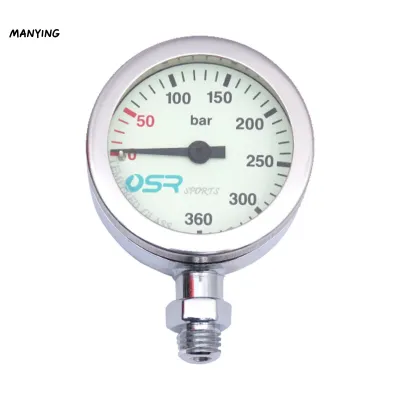
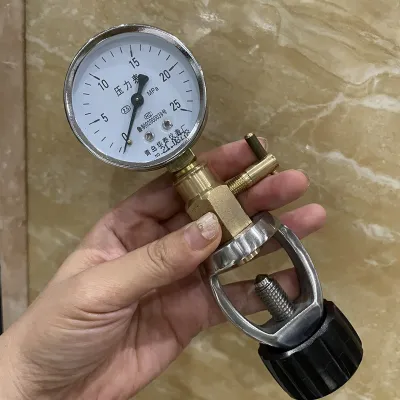
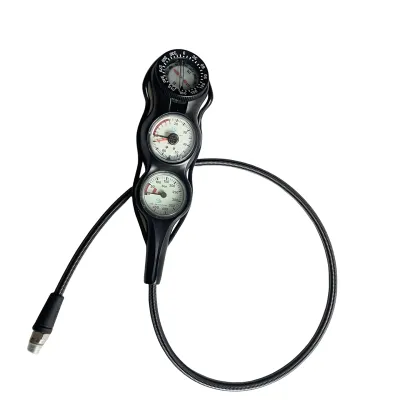
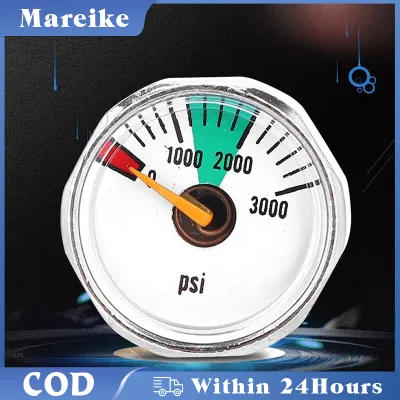
Prices are valid at publication and may change. Please refer to the product page for the latest price.
The Submersible Pressure Gauge (SPG) is the most critical instrument in your gear bag. Connected directly to your regulator’s first stage via a high-pressure hose, the SPG displays the remaining air pressure in your scuba cylinder. This reading is typically shown in bar or pounds per square inch (psi). Because it is a mechanical instrument utilizing a curved copper tube (known as a Bourdon tube) that straightens under pressure, a high-quality analog SPG is incredibly reliable and does not depend on battery power to function. It is an absolute safety requirement for every single dive, regardless of your certification level.
An analog depth gauge monitors your current and maximum depth throughout the dive. It operates using either a diaphragm or a oil-filled capillary tube that compresses as ambient water pressure increases. Knowing your exact depth is essential for maintaining your planned dive profile, managing your buoyancy, and executing mandatory safety stops—typically at a depth of 5 meters for three to five minutes before surfacing. While simple and highly durable, analog depth gauges require you to manually track your elapsed dive time using a separate underwater watch to calculate your nitrogen absorption.
Multi-function dive computers represent the modern standard for dive monitoring. These digital devices integrate a depth sensor, a digital timer, and advanced decompression algorithms to calculate your remaining no-decompression limit (NDL) in real time. By continuously tracking your depth and time, a dive computer provides a dynamic reading of how much longer you can safely remain at your current depth without requiring decompression stops. Many modern dive computers also offer wireless air integration, allowing them to perform the duties of an SPG, depth gauge, and dive timer on a single digital screen.
Assessing Your Diving Needs and Frequency
Choosing your first scuba diving gauge requires an honest evaluation of how often you plan to dive, where you will be diving, and your long-term commitment to the sport. Gear ownership is an investment, and matching your equipment to your actual diving habits prevents overspending on unnecessary features while ensuring you do not outgrow your gear too quickly.

If you are an occasional vacation diver who only blows bubbles once or twice a year during trips to popular destinations like Boracay or Panglao, your needs will differ from someone living close to the coast who plans to dive regularly. For vacation divers, a simple, highly durable analog console is often the most practical choice. It is easy to pack, requires virtually no maintenance beyond rinsing, and will perform reliably even after months of storage. Conversely, if you plan to dive local sites multiple times a month, investing in an entry-level dive computer early on will streamline your progression and make logging your frequent dives much more convenient.
Budget allocation is another major factor for beginners. Setting up your first complete set of dive gear can be costly, and you must decide how to distribute your funds. A basic analog console consisting of an SPG and a depth gauge is highly budget-friendly, often costing only a fraction of the price of a mid-range dive computer. This allows you to allocate more of your budget to other essential personal gear, such as a high-quality mask, a comfortable wetsuit, or a reliable regulator set. However, if you have the financial flexibility, purchasing an entry-level wrist-mounted dive computer alongside a simple brass SPG offers the best balance of modern safety technology and mechanical redundancy.
While renting gear is a viable option for your first few post-certification dives, relying on rental gauges long-term carries distinct disadvantages. Rental equipment is subjected to heavy daily use, frequent salt exposure, and sometimes indifferent maintenance. Dials can become scratched and difficult to read, and calibration can drift over time. Owning your own gauge ensures that the instrument has been cared for properly, rinsed thoroughly in fresh water, and stored safely, giving you peace of mind when you look down to check your remaining air at 20 meters.
Comparing Gauge Configurations for Beginners
When you are ready to purchase, you will generally choose between three primary configurations. Each setup has distinct advantages and trade-offs regarding durability, convenience, and cost.
The basic analog console, which typically houses an SPG and an analog depth gauge in a heavy-duty rubber boot, is the traditional starting point for many divers. The primary advantage of this setup is its rugged simplicity. Because it is entirely mechanical, you never have to worry about battery failures, software glitches, or screen glare in bright tropical sunlight. The trade-off is that you must carry a separate dive watch or timer and manually consult dive tables to track your nitrogen loading. This manual tracking increases your cognitive load underwater, which can be challenging for beginners who are still mastering buoyancy control.
An entry-level wrist-mounted dive computer represents the digital alternative. By wearing your primary depth and time monitor on your wrist, you keep your hands free and can check your critical dive data with a simple flick of your arm. These computers automate all safety calculations, provide clear visual and audible alarms if you ascend too quickly, and automatically log your dive profiles for easy digital transfer. The primary drawback is the higher initial cost and the reliance on battery power. If your computer battery dies on a remote dive boat in El Nido, your dive day is over unless you have a backup instrument or a replacement battery on hand.
For most beginners, a hybrid setup offers the ideal combination of safety, reliability, and modern convenience. This configuration pairs a simple, streamlined analog SPG console (attached to your regulator) with a basic wrist-mounted dive computer. The analog SPG serves as your dedicated, fail-safe air monitor, while the wrist computer tracks your depth, time, and decompression limits. This setup provides excellent redundancy: if your digital computer should fail underwater, you can safely abort the dive using your buddy’s computer as a guide while still knowing exactly how much air you have left via your mechanical SPG.
Essential Safety Checks and Operational Limits
No matter which gauge configuration you choose, your equipment is only as reliable as your pre-dive preparation and maintenance. Developing strict inspection habits before you enter the water is essential for preventing equipment malfunctions and ensuring a safe dive.
Before every dive, perform a thorough visual and physical inspection of your gauge assembly. Pressurize your regulator system by slowly opening your cylinder valve while facing the gauge dial away from your face—a safety precaution in the rare event of a gauge face failure. Listen closely for any hissing sounds that indicate a leak, particularly around the high-pressure hose connections and the swivel spool O-rings. Verify that the analog needle or digital display reads zero before the system is pressurized, and check that it accurately reflects your cylinder’s fill pressure once the valve is fully open. If you notice a slow drop in pressure while the cylinder valve is closed, or if you see micro-bubbles escaping from the hose, do not enter the water until the issue is resolved by a qualified technician.
Redundancy is a core principle of dive safety. If you choose to rely on a digital dive computer as your primary instrument, always ensure you have a secondary method of tracking your dive profile. This can be a backup computer, an analog depth gauge and watch, or a highly disciplined dive buddy who stays close to you throughout the dive. If your primary computer fails, freezes, or displays an error code underwater, you must immediately signal your buddy and begin a slow, controlled ascent to the surface, including a conservative safety stop if your depth and remaining air permit.
Finally, it is vital to remember that advanced technology can never replace proper training, physical fitness, and sound underwater judgment. A dive computer or a high-end gauge console is simply a tool to assist your decision-making; it cannot control your buoyancy, manage your air consumption, or navigate you back to the boat. Always dive within the limits of your certification, maintain a conservative dive profile, and never rely on an instrument to push you beyond your comfort zone or training boundaries.
Frequently Asked Questions (FAQ)
Do I need to buy a dive gauge before my first certification course?
No, you do not need to purchase a dive gauge before starting your open-water certification course. Standard entry-level training courses almost always include the use of all necessary rental equipment, including a regulator set equipped with an analog gauge console or a basic dive computer. Using the school’s rental gear during your training is actually highly beneficial, as it gives you hands-on experience with basic equipment configurations before you spend any money. Once you complete your certification and decide that you want to continue diving regularly, purchasing your own gauge or dive computer should be one of your first gear investments to ensure consistency and familiarity on future dives.
Can I use a standard smartwatch instead of a dedicated dive computer?
No, you should never use a standard consumer smartwatch as a substitute for a dedicated dive computer. While many modern smartwatches claim high levels of water resistance, they are typically rated only for surface swimming or shallow snorkeling and are not built to withstand the sustained pressure of scuba diving. More importantly, standard smartwatches lack the specialized pressure sensors, depth-tracking accuracy, and certified decompression algorithms (such as the Buhlmann ZHL-16C model) required to calculate nitrogen absorption in your body. Relying on a non-certified wearable for scuba diving poses severe safety risks, including the potential for decompression sickness due to inaccurate or missing safety stop calculations.
How should I maintain my dive gauges after saltwater exposure?
Proper post-dive care is essential for protecting the sensitive sensors and mechanical parts of your gauges from the corrosive effects of saltwater and high tropical humidity. After every dive day, soak your gauge console or dive computer in clean, warm fresh water for at least 15 to 20 minutes to dissolve salt crystals that can build up around buttons, depth sensors, and hose connections. Gently press any buttons while the unit is submerged to flush out trapped salt and sand. After soaking, dry the equipment thoroughly in a shaded, well-ventilated area. Never store your gauges in direct sunlight, hot gear bags, or airtight plastic containers, as extreme heat and trapped moisture can damage digital screens, degrade rubber hoses, and cause premature battery drain.
Community discussion
Share your experience or ask a question. Comments are reviewed before publication.