
Selecting the right rod holder for fishing is a critical decision that directly impacts both your gear’s safety and your vessel’s structural integrity. Whether you are navigating a small motorized bangka along coastal reefs, paddling a molded plastic kayak through mangrove channels, or piloting a fiberglass sportfishing boat, the way you secure your rods determines how effectively you can troll, drift, or bait fish. The three primary mounting styles—clamp-on, flush mount, and rail mount—each serve distinct structural purposes, offering varying levels of stability, portability, and installation complexity.
Matching the mount to your specific fishing environment prevents costly gear loss and hull damage. A mount that slips under the drag of a powerful tropical sportfish can send an expensive rod and reel setup into the depths, while an improperly sealed permanent mount can allow saltwater to compromise your boat’s deck. By understanding how these systems distribute load and interface with different hull materials, you can establish a secure, reliable setup tailored to your target species and vessel configuration.
How Clamp-On, Flush, and Rail Mounts Actually Work
Each mounting style relies on a distinct mechanical interface to secure your fishing rod to the vessel. Clamp-on rod holders utilize adjustable jaws, typically tightened via a threaded T-bar or hex bolt, to pinch the edge of a gunwale, transom, or bench seat. This design relies entirely on friction and clamping pressure to resist the rotational force exerted when a fish strikes or during active trolling.
Products mentioned in this guide
![[COD] EHBqna 1Pc 360 Degree Adjustable Aluminum Alloy Fishing Rod Holder Folding Fish Pole Stand For Fishing Ground Support](https://img.lazcdn.com/g/p/0ec3de21a25246ebfcff676012c00e99.jpg_400x400q80.jpg_.webp)
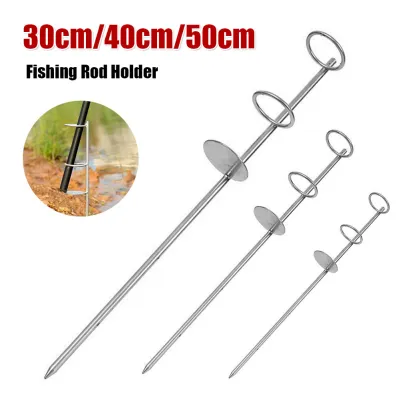
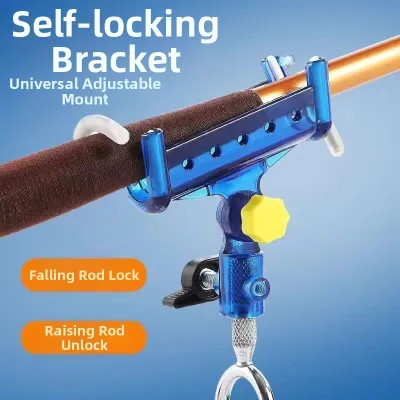
Prices are valid at publication and may change. Please refer to the product page for the latest price.
Flush mount rod holders, by contrast, are recessed directly into the flat surfaces of the boat’s deck or gunwale. They require cutting a substantial hole through the hull material so the cylindrical holder tube can sit below the deck line, leaving only a low-profile flange visible on the surface. This design transfers the leverage and torque of a fighting fish directly to the surrounding deck structure, making it highly stable.
Rail mount rod holders use a split-collar or bracket system that wraps around existing cylindrical metal tubing, such as bow rails, T-tops, or bimini supports. These brackets are clamped tightly using stainless steel screws, distributing the load across the circumference of the rail. Compatibility depends heavily on matching the precise outer diameter of your rails to the inner diameter of the mounting bracket.
Clamp-On Rod Holders: Best for Kayaks and Temporary Setups
Clamp-on rod holders are the go-to choice for anglers who prioritize portability and non-destructive installation. These systems are highly favored by kayak fishers, those who rent local boats for weekend trips, or anglers who frequently change their deck layouts. Because they require no drilling, you can attach them to kayak gunwales, small aluminum utility boat transoms, or the bench seats of traditional wooden outriggers without leaving permanent marks.

The primary advantage of a clamp-on system is its sheer convenience. You can mount, adjust, and remove the holder in a matter of minutes, allowing you to pack your gear away securely at the end of the day to protect it from tropical humidity and salt spray. This portability also makes it easy to test different rod positions on your vessel before committing to a permanent setup.
However, clamp-on mounts have distinct physical limitations. Because they rely solely on clamping friction, they are prone to twisting or slipping under heavy drag settings, especially when trolling for fast-running coastal species like talakitok (trevally). They also add physical bulk to narrow gunwales, which can interfere with paddling or rowing strokes. Furthermore, they require a flat, parallel surface of a specific thickness to clamp securely; curved or highly tapered edges can cause the mount to work loose over time.
Flush Mount Rod Holders: Ideal for Clean Decks and Permanent Use
For serious anglers seeking maximum strength and a seamless deck profile, flush mount rod holders are the industry standard. These holders are permanently integrated into the fiberglass or aluminum gunwales of larger fishing boats. Because the entire body of the holder is recessed beneath the deck, they offer an exceptionally clean aesthetic and minimize the risk of fishing lines, cast nets, or clothing snagging on exposed hardware during active fishing.
The structural stability of a flush mount is unmatched. When a large fish strikes a trolled lure, the leverage is distributed along the entire length of the recessed tube and absorbed by the boat’s gunwale. This makes flush mounts the preferred choice for heavy-duty trolling, deep-sea bottom fishing, or holding heavy rod setups.
The trade-off for this stability is a highly invasive installation process. Installing a flush mount requires drilling a large-diameter hole directly into your boat’s hull, a process that can be intimidating and carries the risk of structural damage if done incorrectly. It also requires access to the underside of the deck to secure backing plates and run drainage tubes, as water entering the open holder must be directed safely into the bilge or out through the scuppers. Once installed, these holders cannot be repositioned, making careful planning essential.
Rail Mount Rod Holders: Perfect for Adjustable and Railing-Equipped Boats
Rail mount rod holders offer an excellent middle ground, combining the high stability of a semi-permanent installation with the flexibility of easy adjustment. These holders are designed specifically for vessels equipped with stainless steel or aluminum guard rails, grab handles, or overhead T-tops. They are highly popular on center consoles, walkarounds, and larger utility boats where rail space is abundant.
The standout benefit of rail mounts is their infinite adjustability along the horizontal or vertical plane of the rail. You can easily slide the holder to different positions or rotate the angle to optimize your trolling spread depending on wind, current, and the number of lines in the water. Because they clamp onto existing structures, they require zero drilling into the fiberglass hull, preserving your boat’s gelcoat and structural integrity.
Despite their versatility, rail mounts are entirely dependent on the quality and strength of your boat’s existing railings. If the rail itself is thin-walled or poorly anchored to the deck, the leverage from a heavy strike can bend the metal or tear the rail mounts from the fiberglass. Additionally, poorly positioned rail mounts can obstruct walkways or interfere with crew movement when moving from bow to stern during a catch.
Comparing Stability, Installation, and Adjustability
To choose the right rod holder for fishing, you must weigh the physical demands of your target species against the structural limits of your vessel. Heavy trolling for large pelagic fish requires a mount that can withstand immense sudden torque, whereas light drifting or bait fishing in calm estuaries allows for lighter, more adjustable setups.
The installation process also varies wildly across these three types. While a clamp-on holder requires only hand-tightening, a flush mount demands specialized tools, marine-grade sealants, and precise measurements. Rail mounts fall in between, requiring basic hand tools like hex keys or screwdrivers to achieve a secure fit.
| Feature | Clamp-On Mounts | Flush Mounts | Rail Mounts |
|---|---|---|---|
| Installation Effort | Extremely Low (No tools required) | High (Drilling, sealing, backing plates) | Moderate (Basic hand tools) |
| Vessel Modification | None | Permanent (Large hull cutouts) | None (Clamps to existing rails) |
| Holding Power | Low to Moderate (Friction-dependent) | Extremely High (Direct hull integration) | Moderate to High (Rail-dependent) |
| Adjustability | High (Easy to move and rotate) | Fixed (Angle determined at installation) | High (Slides and rotates along rails) |
| Deck Profile | Bulky (Sits entirely above gunwale) | Low-Profile (Recessed below deck) | Moderate (Sits along existing rails) |
Decision Guide: Which Mount Fits Your Boat or Kayak?
Selecting the ideal configuration requires matching your vessel’s physical characteristics with your primary fishing methods.
Choose Clamp-On Mounts if:
- You fish primarily from a molded plastic kayak, a rented boat, or a small utility bangka where permanent modifications are not permitted.
- You need a highly portable setup that can be easily removed to prevent theft or exposure to harsh tropical weather.
- Your target species are smaller estuary or reef fish that do not exert extreme drag forces on your gear.
Choose Flush Mounts if:
- You own a fiberglass or aluminum boat with wide, flat gunwales and have clear access to the underside of the deck.
- Your primary fishing style involves heavy trolling, deep-dropping, or targeting large, powerful game fish.
- You prioritize a clean, uncluttered deck space where fly lines or cast nets will not get snagged on protruding hardware.
Choose Rail Mounts if:
- Your vessel is already equipped with sturdy, high-quality stainless steel or aluminum handrails, T-tops, or bimini frames.
- You want the ability to frequently adjust your rod angles and positions to fine-tune your trolling spread or adapt to changing weather conditions.
- You want to keep your rods elevated and completely out of the walking paths of your passengers and crew.
Before making any purchase, always verify that your vessel’s material and thickness can support the specific mounting style. For instance, thin plastic kayak hulls may warp under the concentrated pressure of a clamp-on mount, while cored fiberglass decks require specialized sealing techniques during flush mount installation to prevent water from rotting the inner core.
Pre-Installation Checks to Protect Your Vessel and Gear
Before you begin mounting any rod holder for fishing, conducting thorough pre-installation checks is vital to protect both your vessel’s structural integrity and your expensive fishing tackle. For flush mounts, always map out the area beneath the deck before drilling. Ensure there are no electrical wiring harnesses, fuel lines, steering cables, or steering linkages running directly beneath your target installation point. Use a small pilot hole or an inspection camera to verify the clearance, and ensure you have enough physical space to install a heavy-duty backing plate to distribute the load.
If you are opting for clamp-on mounts, inspect the contact surfaces carefully. Molded plastic or thin aluminum can easily crush or deform under high clamping pressure. Always use protective rubber or neoprene pads between the clamp jaws and your boat’s surface; this not only prevents scratches and gelcoat cracks but also significantly increases friction to prevent the mount from slipping under load, avoiding costly repairs that can run upwards of ₱5,000 for fiberglass patching.
For rail mounts, use a caliper to measure the exact outer diameter of your rails. Most marine rails are standard sizes, but even a millimeter of clearance difference can cause the mount to slide or rotate when a fish strikes. Additionally, inspect the mounting points where your rails connect to the deck; if the rail stanchions show signs of play, rust, or loose bolts, reinforce those connections before adding the leverage of a rod holder. If you are ever unsure about your hull’s core material, structural backing requirements, or how to properly seal a cutout against tropical humidity and saltwater, stop immediately and consult a qualified marine technician.
Frequently Asked Questions (FAQ)
Can I mix different rod holder mount types on the same boat?
Yes, mixing different mounting styles is highly practical and allows you to optimize your deck layout for different fishing scenarios. Many offshore anglers install permanent flush mounts along the stern gunwales for heavy trolling, while utilizing rail mounts on the bow or T-top for rod storage and drift fishing. This hybrid approach keeps your active lines securely positioned while keeping spare rods elevated, dry, and completely out of the way of the crew. When mixing setups, ensure that the weight is distributed evenly across the vessel to maintain stability and that the placement does not block essential walkways or safety equipment.
Do these mounts fit all fishing rod handles?
Not all rod holders are universally compatible with every rod handle design. While the mounting base secures the holder to your boat, the actual holder tube must match the diameter and style of your rod butt. Standard utility rod holders easily accommodate light spinning and baitcasting rods, but heavy trolling rods with thick foam grips or curved aluminum butts require specialized, wider-diameter tubes with integrated gimbal pins. Before finalizing your setup, verify that the inner diameter of the holder tube is wide enough for your thickest rod handle and check if your rods require a gimbal pin at the bottom of the tube to lock them in place and prevent rotation.
Community discussion
Share your experience or ask a question. Comments are reviewed before publication.