
Quick Answer: Is Cmoco Right for Your Philippine Reef Dives?
Choosing a cmoco diving flashlight for your underwater adventures in the Philippines requires matching the specific model’s technical specifications with the exact demands of your planned diving environment. The suitability of this gear depends entirely on whether its depth rating, lumens, and seal construction align with your dive profile.
For recreational divers focusing on shallow coral reefs, a cmoco diving flashlight can serve as a practical, budget-friendly primary light or a reliable backup. This is conditional on the chosen model carrying a verified IPX8 depth rating and robust double O-ring seals. If these baseline safety standards are met, the light is suitable for typical recreational depths.
However, if your dive profile involves technical diving, deep wall exploration, or overhead environments like caves and wrecks, relying on established professional brands with rigorous third-party certifications and global support networks is the safer path. No piece of equipment can replace proper dive training, situational awareness, and sound underwater judgment. Always verify your gear’s limits before entering the water.
Products mentioned in this guide
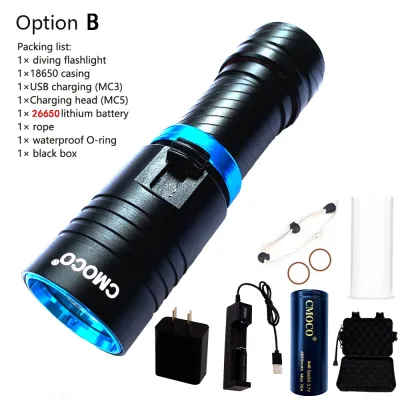
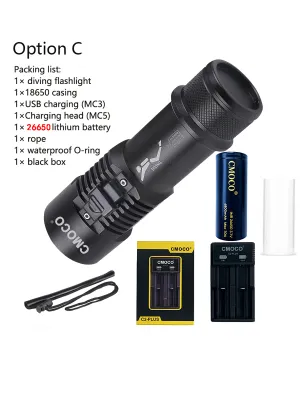
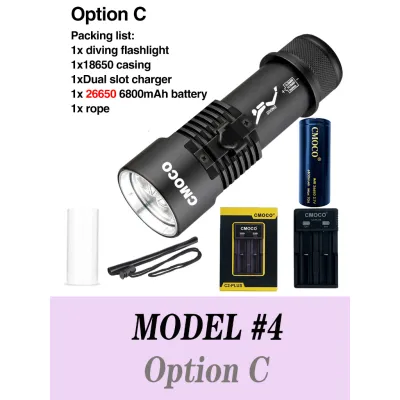
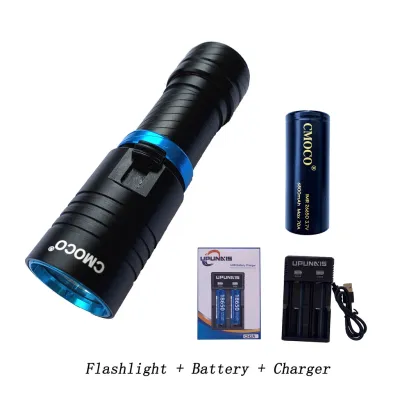
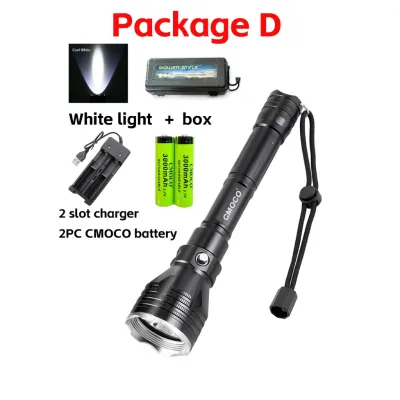
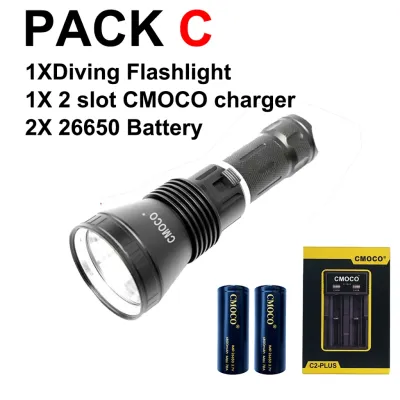
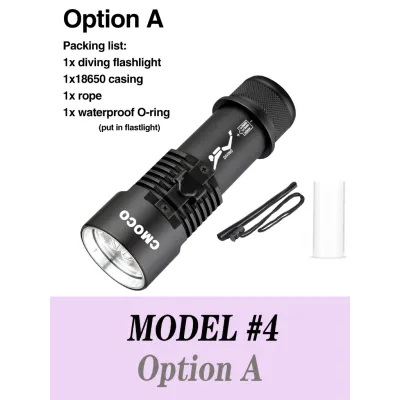
Prices are valid at publication and may change. Please refer to the product page for the latest price.
Critical Specs to Compare for Coral Reef Environments
Diving in the warm, tropical waters of the Philippines presents unique environmental challenges that differ significantly from cold-water or freshwater diving. High salinity accelerates electrochemical corrosion, while the intense tropical sun can rapidly degrade rubber seals and plastic components during surface intervals on open-deck outrigger boats, locally known as bancas. Additionally, gear must withstand the physical impacts of being transported on rocky shores or sliding across fiberglass boat decks during rough surface crossings.

To select a light that will survive these demanding conditions, you must look past generic marketing claims and carefully evaluate the technical specifications printed on the product label. Comparing these specifications against industry standards allows you to determine whether a light is built for serious underwater exploration or merely temporary water resistance.
Brightness, Beam Angle, and Color Temperature
As light travels through water, the aquatic medium acts as a natural filter, absorbing different wavelengths of the color spectrum at varying depths. Red is the first color to disappear, fading at depths as shallow as 5 meters, followed by orange, yellow, and green, leaving the underwater world looking monochromatic and blue. A high-quality dive light restores these lost wavelengths, allowing you to appreciate the vivid pinks of soft corals and the bright patterns of reef fish.
When comparing light beams, you must choose between a wide flood beam and a narrow spot beam, as each serves a distinct operational purpose:
- Flood Beams: Typically ranging from 60 to 120 degrees, flood beams distribute light evenly across a wide area without creating harsh hot spots, making them indispensable for wide reef scanning, maintaining buoyancy references, and capturing underwater video.
- Spot Beams: Narrowing down to 5 to 15 degrees, spot beams concentrate light into a tight, intense column that can pierce through turbid water, highlight tiny macro critters hidden in reef crevices, or be used to signal your dive buddy.
Color rendering is another critical factor that separates entry-level lights from professional-grade illumination. The Color Rendering Index (CRI) measures how accurately a light source reveals the true colors of an object compared to natural sunlight. Standard cool-white LEDs often have a low CRI and a color temperature exceeding 6500 Kelvin, which can make underwater scenes look washed out and increase backscatter by reflecting off suspended organic matter. Opting for a light with a high CRI (90 or above) or a warmer color temperature (between 4000K and 5000K) provides a much more natural and visually pleasing view of the reef.
When examining a cmoco diving flashlight, pay close attention to the listed lumen output and compare it to the standard requirements for tropical reef diving. A reliable primary night-diving light should deliver a sustained output of at least 1000 to 1200 lumens. Be cautious of budget models that advertise extraordinarily high lumen ratings (such as 5000 or 10000 lumens) at exceptionally low price points, as these figures often represent theoretical LED capacities rather than the actual, thermally regulated output the light can sustain underwater without overheating.
Depth Rating and Seal Integrity
Waterproof ratings can be highly misleading for consumers unfamiliar with the physics of diving. Many general-use outdoor flashlights carry an IPX7 rating, which means they can survive temporary immersion in water up to 1 meter deep for 30 minutes. Under the hydrostatic pressure experienced during scuba diving, however, an IPX7 light will fail almost instantly as water is forced past the seals. For actual diving, you must verify that the light has an IPX8 rating accompanied by an explicit depth certification, such as 60 meters (196 feet) or 100 meters (328 feet).
The primary defense against water ingress is the O-ring seal system. High-quality dive lights utilize a double O-ring design at every joint, providing a redundant barrier that ensures water cannot reach the battery compartment or internal electronics even if the primary outer seal fails. These O-rings must be seated perfectly in precision-engineered grooves and compressed evenly when the light housing is tightened.
The type of switch mechanism also plays a major role in maintaining seal integrity over time. Mechanical push-button or sliding switches require a physical shaft to pass through the light’s outer casing, creating potential leak points that rely on internal dynamic seals. Magnetic switches, whether rotary collars or push-buttons, operate by using magnetic fields to activate internal sensors through a solid, unbroken metal wall, eliminating a common point of failure and significantly reducing the risk of flooding.
Before packing your gear, you must also consider how the switch behaves when the light is stored. High-power dive lights generate extreme heat when operated in the open air, creating a severe fire hazard and risking permanent damage to the light’s internal circuitry. Ensure the light you choose features a physical lock-out mechanism or an electronic lock-out sequence to prevent the switch from accidentally activating inside your dive bag or gear crate during transit to remote diving destinations.
Build Quality and Saltwater Resistance
The material composition of a dive light directly dictates its durability and resistance to the corrosive nature of marine environments. Premium dive lights are typically constructed from aircraft-grade aluminum alloy (such as 6061-T6) that has undergone Type III hard anodizing. This electrochemical process creates a thick, durable oxide layer that protects the underlying metal from galvanic corrosion, scratches, and impacts.
Some budget-friendly diving lights utilize heavy-duty polycarbonate or plastic bodies, sometimes paired with an aluminum head to dissipate heat. While plastic bodies are completely immune to saltwater corrosion and are lightweight, they are far more susceptible to structural cracking if dropped onto a hard surface, such as a concrete pier or the wooden deck of a banca boat. They may also degrade and become brittle over time when exposed to the intense ultraviolet radiation of the tropical Philippine sun.
Ergonomics and physical design elements should not be overlooked when comparing brands. A well-designed dive light should feature deep knurling or a rubberized grip that allows for secure handling, even when your hands are wet or you are wearing thick neoprene gloves. An anti-roll bezel—a faceted or squared-off design around the light head—is highly practical on a moving boat, preventing the light from rolling off tables or benches and falling to the deck.
Lastly, consider the long-term ownership experience, particularly regarding the availability of replacement parts. In the Philippines, diving often takes place in remote island municipalities where specialized dive shops are non-existent. Choosing a brand that utilizes standard, widely available O-ring sizes, common battery configurations, and easily sourced replacement parts ensures that a simple lost seal or damaged charger does not permanently sideline your equipment.
Decision Framework: Cmoco Diving Flashlight vs. Established Dive Brands
Choosing between a budget-oriented option like a cmoco diving flashlight and established premium brands requires a clear assessment of your diving frequency, typical dive profiles, and safety requirements. Below is an actionable framework to help you determine which category of equipment aligns with your needs.
Choose a Cmoco model if:
- Your dive profile consists entirely of recreational, shallow-water day dives (under 20 meters) where the light is used primarily to peek into dark crevices or restore color to nearby corals.
- You are looking for an affordable backup light to carry in your BCD pocket during daytime or shallow night dives, providing a redundant safety margin without a significant financial investment.
- Your budget is a primary constraint, and you prefer an entry-level light in the ₱1,500 to ₱3,500 price band, allowing you to allocate more resources toward dive travel, boat fees, or professional instruction.
- You are a seasonal diver who logs only a few dives per year and does not require heavy-duty, commercial-grade equipment for frequent, demanding underwater use.
Choose established alternative brands if:
- You regularly participate in deep wall dives, current-heavy drift dives, or night dives in challenging environments where a sudden loss of primary light could lead to disorientation or separation from your group.
- You are training for or actively conducting technical dives, wreck penetrations, or cave diving, where equipment failure carries severe, life-threatening risks and requires rigorously certified gear.
- You require a guaranteed global warranty, access to authorized service centers, and the peace of mind that comes with third-party laboratory testing and verified depth ratings.
- You need specialized features such as canister lights with extended burn times, high-CRI video lights with wide, perfectly even beam spreads, or advanced thermal regulation systems.
Verify these factors before making your purchase:
- Confirm the exact battery requirements of the light; some models require specific high-drain button-top batteries, while others are compatible with standard flat-top cells.
- Check if the manufacturer or local distributor provides a clear warranty policy and whether replacement parts, such as custom-molded silicone O-rings, are easily obtainable online or in local dive shops.
- Examine the physical switch for any signs of play or loose fitting, and ensure that the battery compartment threads are clean, sharp, and free of manufacturing debris.
No matter which brand or model you ultimately choose, you must adhere to the fundamental safety rule of underwater exploration: never rely on a single light source. For any dive where a light is necessary for safety—such as a night dive or a deep wreck exploration—always carry a fully charged, independent backup light that is easily accessible and can be operated single-handedly in total darkness.
Essential Pre-Dive and Post-Dive Maintenance
It is a common misconception among novice divers that purchasing an expensive, high-end dive light guarantees immunity from flooding. In reality, the longevity and reliability of any underwater light depend far more on your post-dive maintenance habits than on the brand name printed on the housing. Meticulous care is the only way to ensure your equipment functions flawlessly when you need it most.
The most critical step in post-dive care is the freshwater soak. When seawater dries, it leaves behind microscopic salt crystals that are highly abrasive and chemically corrosive. Over time, these crystals can build up around buttons, switches, and threads, tearing delicate rubber seals or causing mechanical switches to stick. After every saltwater dive, submerge your light in a tub of clean, warm freshwater for at least 15 to 30 minutes, and repeatedly actuate the switches while submerged to flush out any trapped salt.
O-ring maintenance is a delicate process that requires regular attention. Periodically open the light and inspect the O-rings for any signs of wear, flattening, cracks, or embedded debris like sand, hair, or lint. Remove the O-rings using a plastic card or a specialized blunt O-ring removal tool; never use sharp metal objects like knives or dental picks, which can easily gouge the aluminum sealing surfaces and create permanent leak paths. Clean both the O-ring and the channel with a lint-free microfiber cloth, apply a very thin film of high-quality, manufacturer-approved silicone grease to keep the rubber supple, and reinstall the seal carefully without twisting it.
Proper battery management is equally vital for safety and equipment longevity. If you plan to store your light for more than a few weeks, or if you are preparing for air travel, always remove the batteries from the housing. This simple precaution prevents slow parasitic drain, eliminates the risk of accidental activation inside a tight gear bag, and protects the internal electronics from being ruined by corrosive chemicals in the rare event of a battery leak. Store the light in a cool, dry, and shaded environment, as prolonged exposure to high temperatures and direct sunlight can dry out the silicone seals and accelerate the aging of the internal electronics.
Frequently Asked Questions (FAQ)
Can I use a regular tactical flashlight for reef diving?
No, you should never use a standard tactical flashlight for scuba diving. While many tactical lights carry water-resistant ratings like IPX7 or IPX8, they are designed only to withstand temporary rain or shallow submersion near the surface. Scuba diving subjects equipment to intense, continuous hydrostatic pressure that increases by 1 atmosphere for every 10 meters of depth. A tactical light lacks the reinforced lenses, double O-ring seals, and pressure-resistant housing required to withstand this force, leading to immediate flooding, electrical shorting, and a sudden loss of light underwater.
What is the best battery type for dive flashlights in remote areas?
For diving in remote areas of the Philippines where electricity may be intermittent or limited to generator hours, rechargeable lithium-ion batteries—specifically standard sizes like 18650 or 21700—are the most practical choice. These batteries offer high energy density, long runtimes, and consistent voltage output throughout their charge cycle. When traveling to off-grid destinations, it is highly recommended to bring a multi-slot USB battery charger that can be powered by portable power banks or solar panels, ensuring you can recharge your gear even when main grid power is unavailable.
Community discussion
Share your experience or ask a question. Comments are reviewed before publication.