
To select a competitive volleyball net with antenna, you must prioritize strict regulatory compliance, structural tension, and player safety. For official tournaments and high-level training, a standard recreational net will not suffice. The net must maintain a rigid, sag-free boundary under high tension, and the antennas must clearly define the legal crossing space.
Before finalizing any purchase, verify the specific tournament guidelines of your organizing body, such as the Philippine National Volleyball Federation (PNVF) or local collegiate leagues, which align closely with international standards. An official competitive setup requires a net height of 2.43 meters for men’s play and 2.24 meters for women’s play. The net itself must feature a 10×10 cm square mesh, 5cm wide boundary tapes, and 1.80-meter flexible antennas.
When shopping, prioritize heavy-duty tensioning systems (like steel or Kevlar cables) and robust safety padding over lightweight portability. Investing in a high-quality volleyball net with antenna ensures fair play, accurate refereeing, and a safer environment for athletes during intense rallies.
Products mentioned in this guide
Prices are valid at publication and may change. Please refer to the product page for the latest price.
Net Dimensions, Mesh, and Tension Systems
Standard dimensions for a competitive net are 9.5 to 10 meters in length and 1 meter in depth when tensioned. To accommodate different age groups and genders on a multi-use court, look for systems with tool-free, rapid-adjust mechanisms. Heavy-duty worm-gear winches or high-tension ratchets allow you to transition smoothly between the men’s height of 2.43 meters, the women’s height of 2.24 meters, and junior heights without losing structural stability.
The mesh must consist of a 10×10 cm square pattern to comply with competitive standards. For high-level play, the material of choice is high-density polyethylene (HDPE) or treated nylon. In the tropical climate of the Philippines, outdoor courts are highly susceptible to moisture damage and UV degradation. Choosing UV-stabilized, weather-resistant synthetic fibers ensures the mesh does not stretch, rot, or fray under intense tropical sun and heavy rain.
A saggy net ruins competitive play by altering ball rebounds and net-touch calls. To prevent this, top-tier nets utilize an internal tension cable made of galvanized steel or Kevlar running through the top horizontal band. Kevlar is highly favored for its exceptional tensile strength and lightweight handling, while steel offers unmatched long-term durability. The bottom of the net should also feature a tension cable or high-tensile rope to keep the entire 1-meter vertical plane perfectly flat and rigid.
Antennas and Boundary Markings
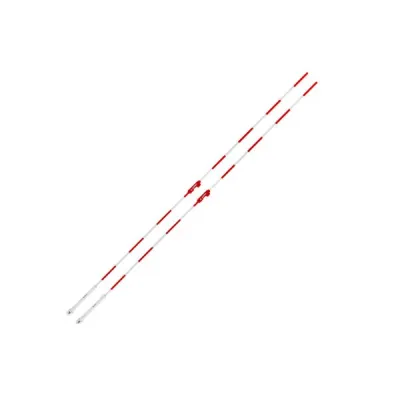
The antenna acts as a vertical projection of the sideline, allowing referees to make precise calls on whether a ball crossed within or outside the legal crossing space. Official specifications dictate that each antenna must be 1.80 meters long and 10 millimeters in diameter. They are typically made of flexible fiberglass, which can absorb high-velocity ball impacts during a spike without shattering or permanently bending.

To ensure high visibility against varying gym backgrounds, the top 80 centimeters of the antenna—which extends above the net—must be marked with alternating 10-centimeter bands of contrasting colors, typically red and white. The remaining 1 meter of the antenna is fastened securely to the net along the outer edge of each side line.
Secure mounting is critical to prevent the antenna from shifting during play. Look for nets that feature dedicated antenna sleeves or heavy-duty, adjustable Velcro fastening systems. If the antenna slips or tilts even slightly, it compromises the integrity of referee decisions during fast-paced rallies.
The boundary tapes themselves are highly functional. A competitive net requires 5-centimeter-wide white horizontal bands at the top and bottom, along with vertical side bands of the same width. These vertical bands must be positioned directly above the court’s sidelines. Ensure these tapes are constructed from heavy-duty canvas or reinforced PVC with double- or triple-stitching. In tropical conditions, inferior stitching quickly rots and unravels under sweat and ambient humidity.
Poles, Padding, and Safety Hardware
No matter how premium your net is, its performance relies entirely on the support poles. For competitive play, poles must withstand hundreds of kilograms of tension without bending or deflecting. Aluminum poles are highly popular for indoor multi-use gymnasiums because they are lightweight and easier to set up and remove. Steel poles, while heavier, offer maximum rigidity and are excellent for permanent outdoor installations.
The anchoring method depends heavily on your venue. Permanent ground sleeves, which are flush-mounted into concrete subfloors, are the gold standard for dedicated sports complexes. For multi-sport halls, weighted floor plates or heavy-duty portable base systems are used, though you must verify that the bases can be anchored securely to prevent any movement under full net tension.
Player safety is paramount in high-level volleyball, where athletes frequently dive or run out of bounds to save loose balls. Official rules require thick, impact-absorbing pole padding that extends to a height of at least 1.7 meters. This padding must fully encase the poles, winches, and tensioning cables. Exposed metal poles or raw tensioning hardware can cause severe injuries and are grounds for immediate disqualification in sanctioned matches.
Examine the tensioning hardware closely before buying. Look for enclosed winch systems or safety-shielded ratchet mechanisms. Enclosed hardware prevents players’ uniforms or fingers from getting caught during play and protects the mechanical parts from sweat, dust, and humidity. Always consult the manufacturer’s installation instructions for your specific pole and anchoring system to ensure safe tensioning.
Non-Essential Features to Skip
When shopping for a competitive setup, you will encounter many marketing gimmicks designed for recreational backyard play. To maximize your budget, skip aesthetic variations. Official competitive nets must feature a dark mesh (usually black) with clean white border tapes. Brightly colored nets or neon boundary lines are not permitted in official tournaments and can distract players during high-speed tracking.
Additionally, avoid paying extra for built-in accessories like integrated scoreboards, cup holders, or ball-return systems. These add-ons are fragile, prone to breaking under competitive impact, and are completely irrelevant to an official court setup.
Finally, do not prioritize ultra-lightweight portability. While a lightweight, collapsible set with a simple carrying bag is convenient for a quick beach trip, it lacks the heavy-duty poles, ground anchors, and rigid tensioning systems required for competitive play. True tournament-grade equipment is heavy, robust, and designed for permanent or semi-permanent installation.
Frequently Asked Questions (FAQ)
Do local tournaments strictly require FIVB-certified nets?
While FIVB certification guarantees that a net meets the absolute highest standards for international play, most local, school, and regional tournaments in the Philippines do not strictly require an official FIVB stamp. Instead, local organizing bodies (such as those managing barangay leagues or collegiate meets) require the net to match the exact dimensional and safety specifications outlined in the rulebook. If your net meets the correct height, mesh size, boundary tape dimensions, and safety padding requirements, it is generally accepted for competitive play.
Can I add aftermarket antennas to a standard recreational net?
Yes, you can physically attach aftermarket antennas to a recreational net using Velcro straps or clamp-on sleeves, but this setup is rarely suitable for competitive play. Recreational nets typically lack the thick, reinforced side tapes and high-tension internal cables (like steel or Kevlar) needed to keep the net taut. Without extreme tension, the net will sag, causing the antennas to tilt inward or wobble during play, which violates competitive rules and disrupts accurate refereeing.
Community discussion
Share your experience or ask a question. Comments are reviewed before publication.