
Choosing the right shelter can make or break your outdoor experience, especially when you are facing unpredictable weather, uneven ground, and varying transport limitations. The choice between a cot tent and a regular ground tent hinges primarily on your transport method, campsite terrain, and comfort priorities.
A cot tent is highly recommended for car camping, overlanding, or base camping on uneven, rocky, or damp ground where elevated sleep and robust back support are your main goals. Because the sleeping platform is integrated into an elevated frame, you do not need to spend time clearing away rocks, roots, or mud to secure a comfortable night’s rest.
Conversely, a regular ground tent is the superior choice for backpacking, lightweight travel, high-wind environments, or group trips where maximizing interior space is necessary. These traditional shelters pack down to a fraction of the size of a cot tent, making them easy to carry over long distances inside a backpack. Neither option is universally superior; the right choice depends entirely on the logistics of your upcoming trip and how you plan to reach your campsite.
Products mentioned in this guide
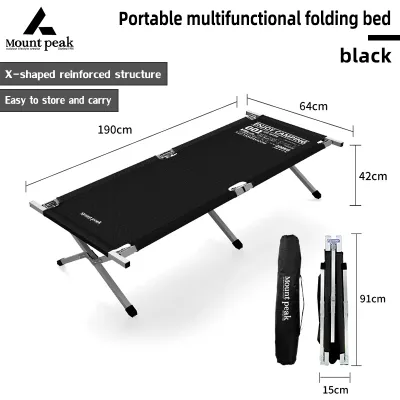
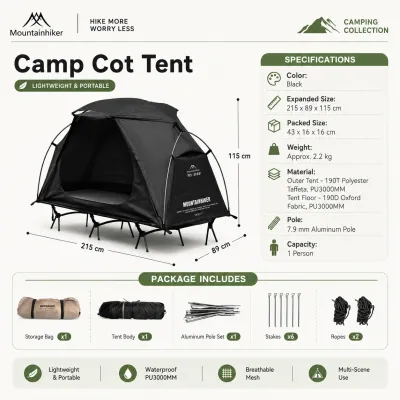
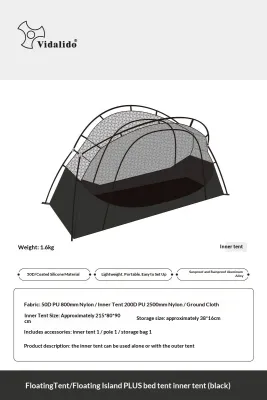
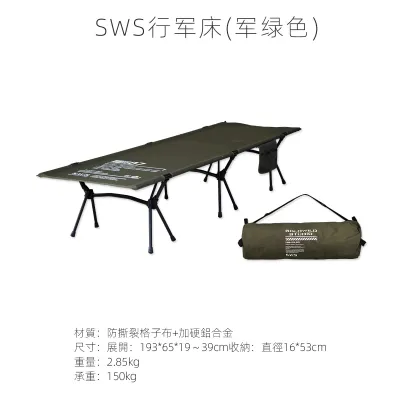
Prices are valid at publication and may change. Please refer to the product page for the latest price.
The Basics: What Defines a Cot Tent vs a Regular Tent?
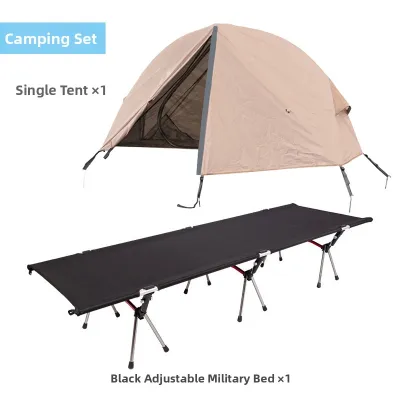
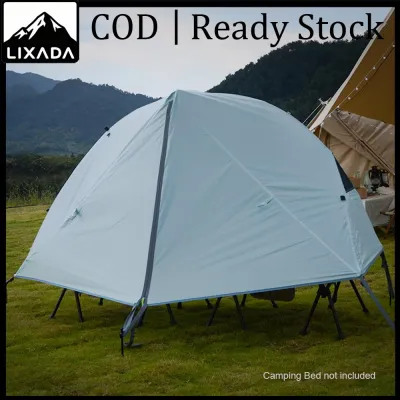
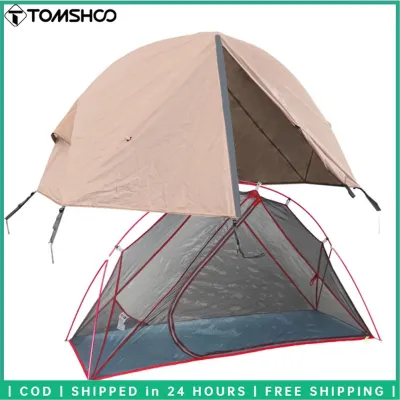
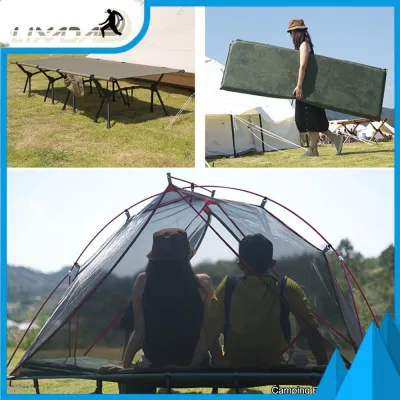
To make an informed decision, it is essential to understand the structural differences that define these two distinct styles of outdoor shelter. A cot tent is a hybrid system that integrates an elevated sleeping surface—consisting of a folding metal frame and a tensioned fabric bed—with a matching tent canopy. This design lifts the sleeper completely off the ground, typically between 15 to 30 centimeters, creating a self-contained sleeping platform that functions independently of the earth below it.
A regular tent is a traditional floor-based shelter that relies on a system of flexible poles, stakes, and a heavy-duty groundsheet. In this setup, the tent floor rests directly on the earth, and campers must use separate sleeping pads, air mattresses, or closed-cell foam mats to provide cushioning and insulation from the cold or damp ground.
This structural distinction becomes particularly important when camping in humid or tropical conditions, such as those found across the Philippines. During the rainy season, the ground quickly becomes saturated, and high humidity can cause moisture to rise directly through a tent floor. By lifting you off the damp soil, a cot tent allows air to circulate freely beneath your body, which can significantly reduce condensation and keep you cooler during warm, muggy nights.
Core Comparisons: Comfort, Terrain, and Logistics
Evaluating how each shelter performs across different categories will help you determine which one aligns with your physical needs and camping habits.

Sleep Quality and Ground Isolation
Sleeping elevated on a cot tent offers a physical experience that closely mimics a traditional bed. The tensioned fabric of the cot supports your body evenly, eliminating the pressure points on your shoulders and hips that often occur when sleeping on a thin pad. This elevation also provides a physical barrier against damp soil, pooling rainwater, and crawling insects like ants or centipedes, which can easily find their way around a ground-level tent footprint.
Regular tents, while closer to the earth, offer a different kind of comfort characterized by space and versatility. Inside a traditional ground tent, you have the freedom to arrange your sleeping area however you like, whether that means laying down a massive double air mattress, sleeping side-by-side with a partner, or sharing the space with pets and children. The vertical walls of a larger ground tent also provide more headroom, allowing you to sit up, stretch, and move around without feeling restricted by a low canopy.
When evaluating these options, it is crucial to check the manufacturer’s specifications for weight capacity and dimensions. Cot tents have strict weight limits, often ranging from 100 to 150 kilograms, which must not be exceeded to prevent the frame from bending or collapsing. Additionally, if you plan to use a sleeping pad inside either tent, you must verify that its width and thickness are compatible with the narrow dimensions of a cot frame.
Terrain Adaptability and Weather Defense
One of the greatest advantages of a cot tent is its ability to conquer challenging terrain. Because the shelter is supported by individual legs rather than a flat floor, you can set it up over rocky, root-filled, muddy, or slightly sloped ground without feeling a single bump beneath your back. This terrain independence opens up campsite possibilities that would be completely unusable for a traditional ground tent, saving you the time and physical effort of clearing away debris.
However, regular tents hold a distinct advantage when it comes to severe weather defense. Traditional ground tents feature low-profile, aerodynamic shapes designed to shed wind and channel heavy rain away from the structure. When properly staked and guyed out, a high-quality dome or tunnel tent can withstand strong gusts that would easily destabilize a taller, heavier cot tent.
Because cot tents stand high off the ground, they act like a sail in high-wind environments. Strong gusts can get underneath the elevated platform, creating upward lift that can tip the shelter over or bend the metal frame. To ensure your safety in wet conditions, always verify the hydrostatic head rating of the rainfly on both tent types; a rating of 1,500mm to 3,000mm is generally recommended to withstand heavy tropical downpours.
Weight, Packability, and Transport Realities
The physical weight and packed size of your shelter will largely dictate how you can travel with it. Cot tents are inherently heavy and bulky because they require a robust steel or aluminum frame to support a sleeper’s weight above the ground. A typical single-person cot tent can weigh anywhere from 8 to 15 kilograms and folds down into a long, rigid carrying bag that takes up significant space in a vehicle trunk.
This weight and bulk make cot tents almost exclusively suited for vehicle-accessible camping, such as overlanding, car camping, or backyard gatherings. Trying to carry a cot tent on a multi-day hiking trail is highly impractical and physically exhausting.
Regular tents are engineered with packability in mind. Backpacking-specific ground tents utilize lightweight materials like nylon and high-strength aluminum poles, allowing them to weigh as little as 1 to 3 kilograms. They compress into compact stuff sacks that fit easily inside or on the outside of a standard hiking backpack, making them the only viable option for remote trekking, mountain climbing, or long-distance trail travel.
Setup Process and Campsite Convenience
The mechanical assembly of a cot tent is quite different from pitching a traditional ground tent. Setting up a cot tent requires unfolding a heavy metal frame and locking the tension bars into place, which often demands a fair amount of physical leverage and upper-body strength. Once the frame is locked, the canopy is typically secured using integrated poles or clips, resulting in a highly stable, self-contained unit that does not strictly require stakes to stand.
While a cot tent requires very little ground preparation, it can be difficult to reposition once fully assembled due to its rigid, heavy frame. If you realize you have placed it in an inconvenient spot, you will likely need to lift the entire heavy structure to move it.
Regular tents require you to clear the ground of sharp rocks, twigs, and debris to protect the thin fabric floor from punctures. The setup process involves threading flexible fiberglass or aluminum poles through fabric sleeves or securing them with plastic clips, followed by staking out the corners and guy lines to achieve proper tension. While this requires more ground preparation, regular tents integrate seamlessly with standard campsite accessories, such as overhead tarps, gear vestibules, and gear loft organizers, allowing you to customize your living space.
At-a-Glance Feature Comparison
To help you quickly compare the practical differences between these two shelter styles, the table below summarizes their performance across key camping categories.
| Feature | Cot Tent | Regular Ground Tent |
|---|---|---|
| Best Camping Style | Car camping, overlanding, solo base camps | Backpacking, group camping, high-altitude trekking |
| Weight & Bulk | Heavy and bulky (typically 8–15 kg) | Lightweight and compact (typically 1.5–5 kg) |
| Ground Preparation | Minimal; can span rocks, mud, and minor slopes | High; requires flat, cleared, and dry ground |
| Wind Resistance | Low to moderate; high profile catches wind | Moderate to high; low, aerodynamic profile |
| Setup Complexity | Moderate; requires frame tensioning | Low to moderate; requires pole routing and staking |
| Interior Space | Limited to the cot width; low headroom | Versatile; options for multiple sleepers and gear |
How to Decide: A Practical Camping Framework
To make your final decision, evaluate your upcoming trip against this practical, condition-based framework.
Choose a cot tent if:
- You are traveling by car, SUV, or motorcycle with ample storage space, and weight is not a limiting factor.
- You suffer from back pain, joint stiffness, or find it physically difficult to crawl in and out of a tent at ground level.
- You frequently camp in muddy, rocky, or highly uneven coastal areas where finding a flat, cleared patch of dry earth is unlikely.
- You prioritize staying elevated away from ground moisture, humidity, and crawling insects.
Choose a regular tent if:
- You are backpacking, hiking, or traveling light, and must fit your entire shelter inside a backpack.
- You are camping with a partner, family, or pets, and need a shared interior space with high headroom.
- You expect to camp on exposed ridges, windy peaks, or in areas prone to severe tropical storms where wind resistance is critical.
- You want a highly customizable shelter system that can be easily paired with footprints, tarps, and gear vestibules.
Verify first if:
- You are planning to camp in a protected national park, forest reserve, or private campsite. Always check local regulations beforehand, as some managed areas restrict the use of heavy, wide-legged cot frames to protect sensitive ground vegetation or prevent soil erosion.
Community discussion
Share your experience or ask a question. Comments are reviewed before publication.