
Climbing is an inherently high-risk activity where equipment cannot replace professional training, experienced judgment, and proper technique. Before you ever leave the ground, you must understand that your safety depends on verifying the exact specifications of your gear. A “heavy duty” label on a carabiner is meaningless unless it is backed by certified safety standards and matched correctly to your specific climbing environment.
In tropical climbing destinations, such as the crags around the Philippines, environmental factors like high humidity, salt air, and sudden downpours add extra variables to gear safety. Moisture and grit can quickly compromise poorly maintained equipment. Therefore, knowing how to evaluate, inspect, and verify your carabiners is a fundamental skill that every climber must master before tying into the rope.
Decoding Strength Ratings and Safety Certifications
To ensure a carabiner is safe for climbing, you must first look at its spine for official certification markings. Look for the CE (Conformité Européenne) mark followed by a four-digit number, or the UIAA (International Climbing and Mountaineering Federation) logo. These stamps prove the carabiner has passed rigorous, standardized safety testing for mountaineering equipment. If a carabiner lacks these visible stamps, or if the markings have worn away and are no longer legible, retire it immediately and never use it for climbing.
Products mentioned in this guide
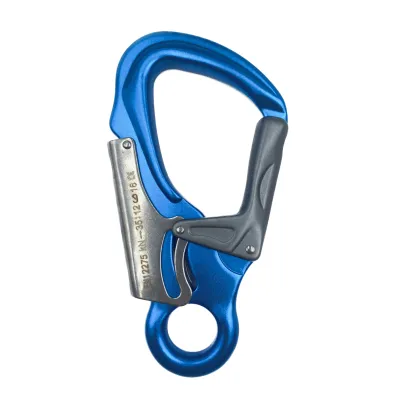
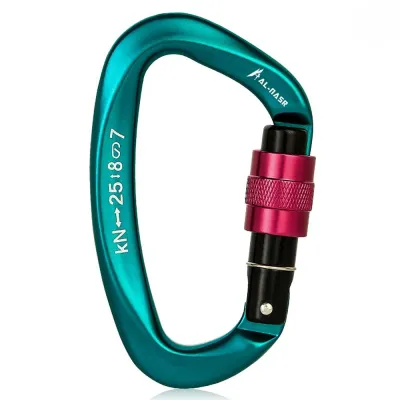
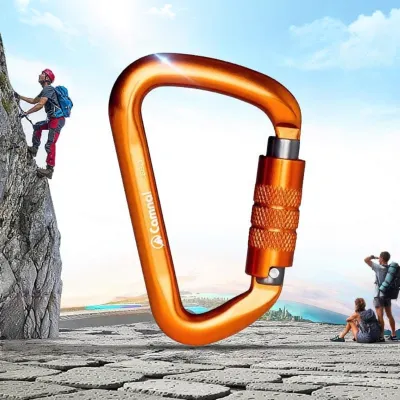
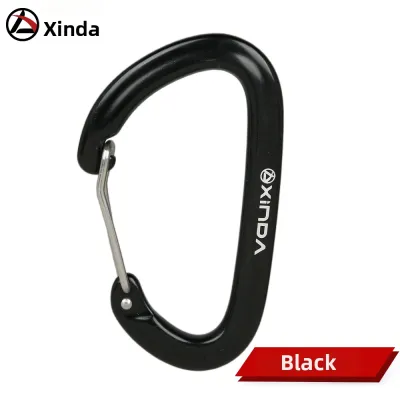
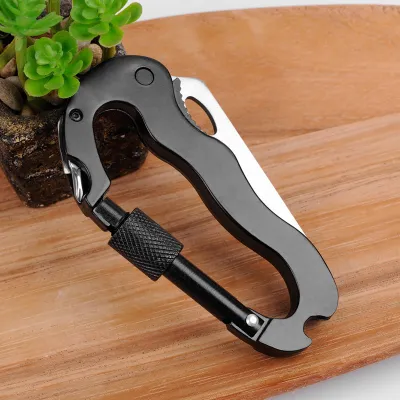
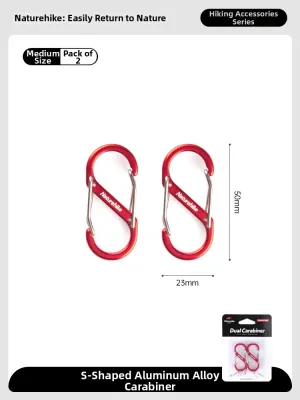
Prices are valid at publication and may change. Please refer to the product page for the latest price.
The markings on the spine also indicate the carabiner’s rated strength in kilonewtons (kN) across three distinct loading scenarios. The major axis rating represents the strength when the carabiner is loaded end-to-end along its spine, which is the strongest and safest orientation. The minor axis rating indicates the strength when cross-loaded side-to-side, while the open-gate rating shows the strength if the gate accidentally swings open during a fall.
Because a carabiner is significantly weaker when cross-loaded or when the gate is open, maintaining proper alignment along the major axis is critical. During your safety checks, always verify that the rope and protection are seated correctly along the spine. Never subject a carabiner to multi-directional forces or allow it to press against an edge, as these configurations can cause sudden failure at loads far below the rated major axis strength.
Selecting the Right Locking Mechanism for Your Climbing Task
Matching the locking mechanism to your specific task is essential for building a secure climbing system. Locking carabiners generally fall into two categories: manual locking screwgates and auto-locking gates. Screwgates require you to manually spin a threaded sleeve to lock the gate, making them highly reliable, lightweight, and less prone to jamming in muddy or dusty conditions. However, they require discipline to ensure you actually lock them after every manipulation.

Auto-locking carabiners, such as twist-lock or magnetic-lock designs, automatically spring into a locked position as soon as the gate closes. These are excellent for high-consequence points like belay devices, where an unlocked gate could lead to catastrophic failure. The trade-off is that they can be more complex to operate with one hand and may occasionally trap tropical grit or salt residue within their spring mechanisms, requiring diligent cleaning.
Non-locking snapgates have a very specific, limited role in climbing and must never be used for critical single-point connections. They are designed primarily for the rope-end and bolt-end of quickdraws, where fast clipping is necessary. You should never use a non-locking carabiner to secure a belay device, construct a master point on an anchor, or connect yourself directly to an anchor system, as the rope can easily unclip itself through a process known as back-clipping.
Before purchasing or using any carabiner, perform a physical function check on the gate. Press the gate open and let it snap shut; it should close completely and instantly without sticking. Spin the locking sleeve to ensure it moves smoothly along the threads without catching, and verify that the auto-locking spring snaps back into the fully locked position every time.
Evaluating Materials and Shapes for Weight and Handling
The material of your carabiner dictates its weight, durability, and suitability for different climbing scenarios. Aluminum is the standard choice for most recreational climbing because it is exceptionally lightweight, reducing the physical burden when carrying a full rack up a long route. However, aluminum wears down faster when subjected to constant rope friction or contact with steel bolts.
Steel carabiners are much heavier but offer superior resistance to abrasion and wear. Because of their weight, they are rarely carried on a harness during a climb; instead, they are typically reserved for top-rope anchor points, fixed rescue stations, or hauling heavy gear. In humid tropical climates, steel carabiners require careful monitoring to prevent rust, though stainless steel options offer better resistance to wet environments.
The physical shape of the carabiner also influences how it handles forces and ropes. D-shaped and offset-D carabiners are engineered to naturally guide the rope toward the stronger major axis, making them highly efficient for quickdraws and anchors. HMS or pear-shaped carabiners feature a wider top opening designed to accommodate bulky knots, such as the Munter hitch, and provide ample clearance for belay devices.
It is important to understand that a “heavy duty” designation does not simply mean a thicker, heavier piece of metal. Instead, it refers to a carabiner engineered with optimized cross-sections that place material where wear is highest, such as the rope-bearing surfaces, while shaving weight elsewhere. This engineering allows the gear to withstand high-use scenarios without adding unnecessary bulk to your climbing kit.
Inspecting for Wear and Knowing When to Retire Your Gear
Regular gear inspection is a non-negotiable habit that every climber must practice to maintain safety. Before and after every climbing session, examine each carabiner for visible signs of structural damage. Look closely for deep grooves worn into the metal by the rope, hairline cracks, sharp edges, or any physical deformation of the body or gate. If you find any of these defects, the carabiner must be retired immediately.
It is crucial to distinguish between normal cosmetic wear and structural compromise. Surface scratches, minor scuffs, and the loss of the colored anodized coating are normal results of regular use and do not affect the safety of the carabiner. However, if a rope groove exceeds the depth specified by the manufacturer—typically more than one millimeter—or if the gate fails to align perfectly with the nose, the gear is no longer safe to use.
Finally, always adhere to the specific lifespan and retirement guidelines provided by the manufacturer. Even if a carabiner looks pristine, internal micro-fractures can develop over time from repeated hard drops onto rocky ground. If you know a piece of gear has sustained a severe impact, or if you have any doubt about its history and integrity, err on the side of caution and replace it.
Frequently Asked Questions (FAQ)
Can I use a heavy steel carabiner for lead climbing?
While steel carabiners are incredibly durable, using them for lead climbing is highly impractical due to the severe weight penalty. Carrying a rack of heavy steel carabiners up a route will rapidly increase physical fatigue, compromising your climbing performance and safety. Steel carabiners are best utilized at fixed belay stations, top-rope anchor setups, or hauling systems where gear weight is not carried directly on your harness.
Does a higher strength rating always mean a better carabiner?
A higher numerical strength rating does not automatically make a carabiner better or safer for your climb. Any carabiner that carries a valid UIAA or CE certification is fully capable of handling the forces generated during a standard climbing fall. Carabiners with excessively high strength ratings often achieve those numbers by adding extra metal, resulting in a heavier and bulkier design that offers no practical safety advantage for normal climbing activities.
Community discussion
Share your experience or ask a question. Comments are reviewed before publication.