
The best kicking shield for your taekwondo training depends on your primary training focus—curved shields excel at dispersing heavy impact during partner drills, flat shields offer a uniform surface for high-speed accuracy, and rectangular shields provide a large, stable target for power development and solo conditioning. Choosing the right shape requires balancing the striker’s need for realistic feedback with the holder’s safety and comfort, especially in hot, humid tropical environments where sweat can affect grip and control.
In taekwondo, where kicks are exceptionally fast and powerful, the interaction between the striker and the holder is dynamic. A poorly chosen shield can lead to wrist fatigue, joint strain, or missed targets, while the correct choice enhances training efficiency and safety. Before purchasing, practitioners must evaluate their current skill level, their training environment, and the specific drills they perform most frequently.
Whether you are training in a local dojang in the Philippines or practicing drills at home, understanding how different shield geometries handle force is the first step toward a safer, more productive workout. Equipment alone cannot replace proper technique and holding form, so selecting a shield that complements your physical limits and training goals is essential.
Products mentioned in this guide
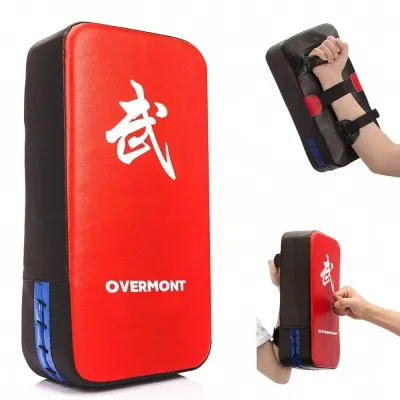
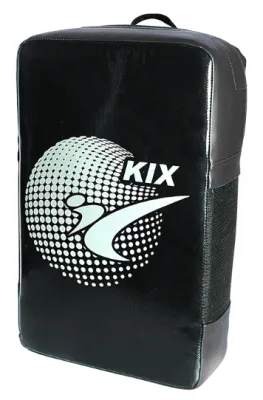
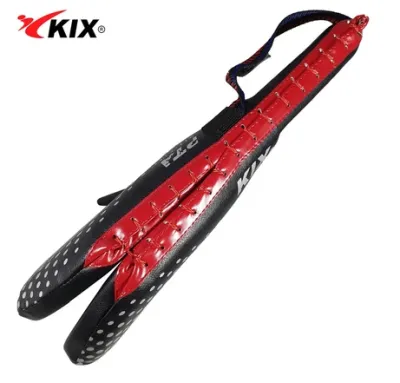
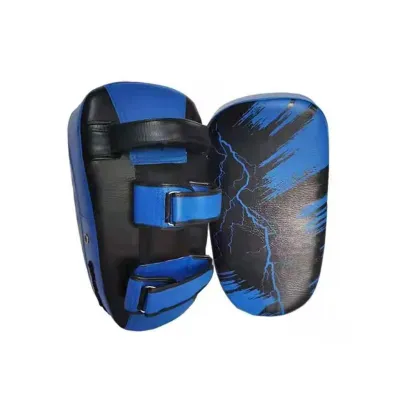
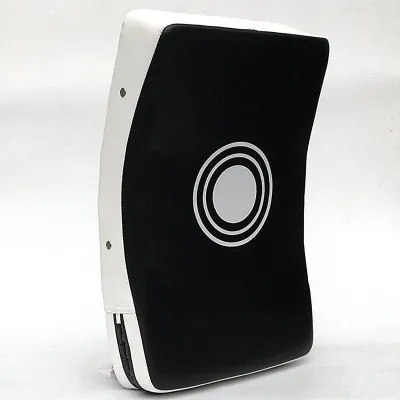
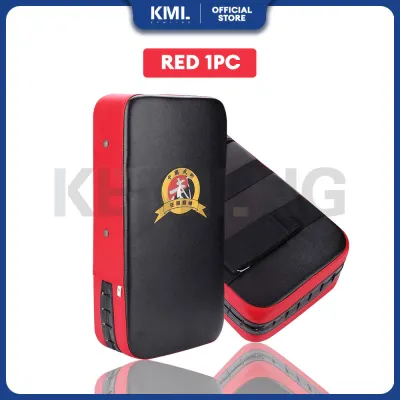
Prices are valid at publication and may change. Please refer to the product page for the latest price.
Understanding the Core Shapes of Taekwondo Kicking Shields
Curved shields are designed to wrap slightly around the holder’s arm, which helps disperse the impact of a kick outward and away from the holder’s joints. When a striker lands a powerful roundhouse kick, the curved surface guides the force along the contour of the shield rather than driving it straight back into the holder’s forearm. When evaluating a curved shield, always check for secure strap placement and forearm contouring to ensure your arm fits snugly against the back padding without slipping.
Flat shields offer a direct, uniform striking surface that provides immediate, realistic feedback to the striker. Because the surface is completely flat, any off-center or angled kick will feel distinct, helping the martial artist correct their foot positioning and striking angle. To ensure a flat shield is safe for heavy use, verify the padding density by pressing firmly on the center and the edges; the resistance should feel consistent across the entire surface without any soft spots or bottoming out.
Rectangular shields provide a much larger target area, making them highly suitable for varied strikes, including low-to-high combinations and linear power kicks. Their blocky structure allows for thick, multi-layered padding, but this also makes them heavier and bulkier than other designs. Before choosing a rectangular shield, inspect the corner reinforcement and overall weight distribution to ensure that holding it for extended periods will not cause premature shoulder or back fatigue.
Matching Shield Shapes to Your Training Scenarios
Selecting the optimal shield shape requires matching the gear to your specific taekwondo training routines and partner dynamics. Training intent dictates the required shield profile, balancing holder safety with striker feedback. A shield that works perfectly for rapid-fire double kicks may fail to protect a holder during heavy back-kick practice, making scenario-specific selection vital for injury prevention.

Partner Drills and Power Kicking
During high-impact partner drills, protecting the holder’s joints is just as important as giving the striker a solid target. Evaluate curved shields for wrapping around the forearm to protect the holder’s joints during heavy roundhouse kicks (dollyo chagi). The curved design helps distribute the shock across the entire forearm rather than concentrating it on a single point, reducing the risk of wrist hyperextension or elbow strain.
For linear power strikes like front kicks (ap chagi) and push kicks (mireo chagi), assess rectangular shields. The broad, flat surface area of a rectangular shield prevents the striker’s foot from slipping off the edge, which is crucial when practicing high-impact linear movements that drive straight forward. The extra thickness typical of rectangular designs provides the deep shock absorption needed to handle maximum-effort kicks from heavier training partners.
Regardless of the shield shape, always check the holder’s comfort and arm fatigue limits during extended power sessions to prevent training injuries. In warm, humid environments common in tropical regions, sweat can quickly make handles slippery, compromising the holder’s grip. Holders must monitor their grip strength and stop the drill immediately if they feel their wrists buckling or if their forearm muscles fatigue, as improper holding technique can lead to joint hyperextension.
Speed, Accuracy, and Combination Drills
When the focus shifts to fast-paced footwork and rapid kicking combinations, maneuverability becomes the top priority. Compare flat and smaller curved shields for quick target transitions and snapping kicks. When practicing fast combinations like consecutive roundhouse kicks (narae chagi), a bulky shield slows down the holder’s response time, making it difficult to present the target at the correct height and angle in rapid succession.
Verify the shield’s weight to ensure the holder can move dynamically without delaying the striker’s rhythm. A heavy shield causes rapid shoulder fatigue, leading to dropped targets and disrupted training flow. Lighter, compact shields allow the holder to mimic the movement of an opponent, flashing the target quickly to test the striker’s reaction time and agility.
Additionally, look for clear center target markers, such as printed circles or contrasting colors, to help the striker focus on accuracy during high-speed sequences. These visual aids are essential when executing rapid kicks where split-second precision is required, helping the martial artist develop the muscle memory needed to land clean strikes on the center of the target every time.
Solo Practice and Conditioning
If you are training alone at home or in a space without a regular partner, your equipment needs to adapt to solo setups. Review rectangular or thick flat shields for stable wall mounting or heavy bag-style repetitive striking. Some practitioners secure a shield to a pillar, wall, or heavy bag stand using adjustable straps to practice repetitive kicking drills without needing a partner to hold the target.
When setting up a solo training station, check the backing material to ensure it will not damage walls, paint, or training mats when pressed tightly against them. Rough canvas, exposed metal rivets, or hard plastic buckles can easily scratch or dent household surfaces. Opt for shields with smooth vinyl or synthetic leather backings and recessed hardware to protect your training environment.
Confirm handle configurations that allow for secure one-handed or self-held gripping during solo drills. Some shields feature multi-point strap systems that let you hold the shield against your own thigh or torso for low-kick conditioning. However, self-held drills carry a higher risk of self-injury; always start with low-intensity strikes to verify your grip and body positioning before attempting full-power kicks.
Key Factors to Check Before Buying a Kicking Shield
Before purchasing a kicking shield, a thorough inspection of its construction and materials is necessary to ensure durability and safety. Inspect the outer material for tear resistance and easy wipe-down cleaning after sweaty sessions. High-grade synthetic leather, such as polyurethane (PU) or heavy-duty vinyl, is highly recommended for tropical climates, as it resists moisture absorption, prevents sweat from soaking into the inner foam, and resists mold and odor buildup.
Test the handle and strap system for a secure grip, checking for adjustable hook-and-loop wrist supports to prevent holder strain. The handles should have reinforced, cross-stitched seams where they meet the main body of the shield; weak seams can rip under heavy impact, posing an immediate safety risk to both the holder and the striker. If you plan to invest in a quality mid-range shield, prices in local sports equipment retailers typically range from ₱1,500 to ₱3,500, so verifying these physical details ensures you get excellent value for your budget.
Verify the internal padding specifications on the product label rather than relying on visual thickness alone. A thick shield filled with low-density, soft foam will bottom out easily under a heavy kick, failing to protect the holder. Look for high-density EVA foam or multi-layered foam structures that offer superior shock absorption and shape retention over time, even if the shield profile appears relatively thin.
Finally, assess the overall weight relative to the holder’s strength and the intended training duration. A shield that feels manageable during the first five minutes of a workout can feel incredibly heavy after half an hour of continuous holding. Choose a weight that matches the physical capacity of your regular training partners to ensure that everyone can maintain proper holding posture throughout the entire training session.
Cross-Scenario Compatibility: Can One Shield Do It All?
For many martial artists, owning multiple specialized shields is not practical due to budget or storage constraints. Identify medium-sized curved shields as a common compromise for mixed speed and power drills in general classes. These versatile options offer a balanced combination of shock absorption and maneuverability, allowing you to transition from power roundhouse kicks to fast combination drills without switching gear.
However, it is important to recognize when specialized training requires dedicated rectangular or thick flat shields for maximum impact absorption. If you are preparing for heavy contact sparring, practicing breaking techniques, or training with heavyweight partners, a standard medium-sized shield will not provide adequate protection. In these scenarios, using a specialized, extra-thick rectangular shield is necessary to safeguard the holder’s joints and prevent impact-related injuries.
Plan a progressive gear upgrade path based on the practitioner’s advancing skill level and changing drill requirements. Beginners can safely start with a versatile, medium-sized curved shield to master foundational kicks and holding techniques. As your kicking power, speed, and technical complexity increase, you can gradually expand your training arsenal by adding specialized flat speed targets and heavy-duty rectangular shields to match your evolving training demands.
Frequently Asked Questions (FAQ)
How do I maintain and clean my kicking shield?
Wipe down the surface with a damp cloth and mild soap after each session to remove sweat and dirt. This is especially important in humid climates to prevent mold and bacterial growth.
Air dry the shield in a well-ventilated area away from direct sunlight to prevent material cracking and fading. Never leave a damp shield sealed inside a gym bag.
Check the manufacturer’s care label before applying any chemical disinfectants or leather conditioners, as harsh chemicals can degrade the synthetic outer shell or weaken the stitching.
What size kicking shield is best for beginners?
Prioritize lighter, medium-sized shields that allow the holder to maintain proper posture and avoid joint strain. Beginners often struggle with the physical demands of holding a heavy shield correctly.
Ensure the target area is large enough to build the striker’s confidence and basic accuracy. A tiny target can lead to missed kicks, resulting in accidental contact with the holder’s hands or arms.
Consult the instructor or training partner to verify the shield matches the beginner’s current height, weight, and kicking reach, ensuring a safe and productive introduction to partner drills.
Community discussion
Share your experience or ask a question. Comments are reviewed before publication.