
Choosing the right treadmill for your home gym in the Philippines requires balancing your fitness objectives with the realities of your living space. While a traditional flat treadmill has long been the standard for home cardio, the curved treadmill has emerged as a compelling, self-powered alternative. The right choice depends on whether you prioritize high-intensity athletic training, low-maintenance durability in humid tropical climates, or budget-friendly, motorized convenience. With unpredictable weather patterns, from intense summer heat to heavy monsoon rains, having a reliable indoor running option is essential for maintaining a consistent fitness routine.
Core Differences in Design and Mechanics
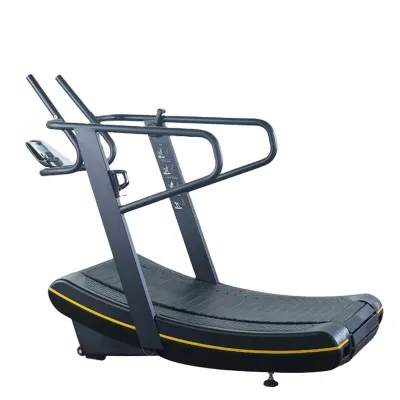
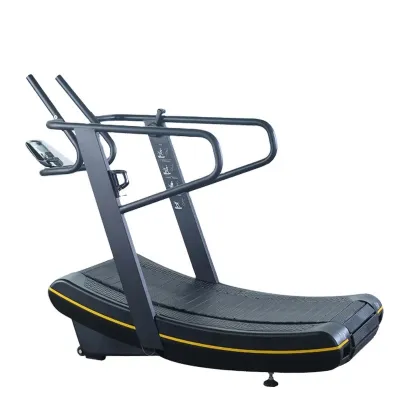
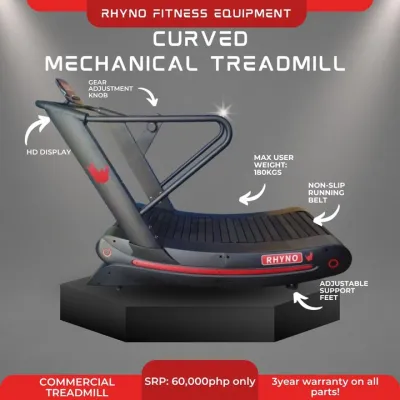
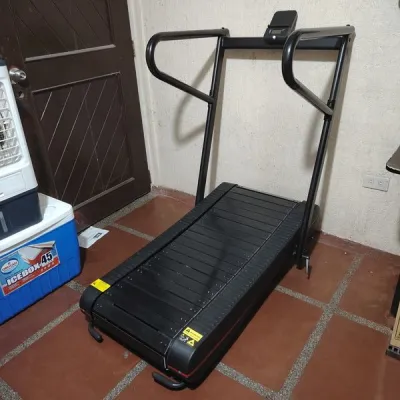
At the heart of this comparison lies the drive mechanism. A flat treadmill typically relies on an electric motor to pull a continuous belt over a flat deck, forcing you to match the machine’s pre-set speed. In contrast, a curved treadmill is entirely self-powered, featuring a curved, U-shaped running surface made of interlocking slats. This fundamental difference in propulsion changes how you interact with the machine and how your muscles engage during a run.
This curved geometry fundamentally alters your running mechanics. When you step forward on a curved deck, your foot strikes the upward slope, and your body weight pulls the belt downward and backward. This design encourages a natural midfoot or forefoot strike, reducing the heel-striking pattern often associated with flat-surface running. By shifting the impact away from the heels, many runners find that the curved design naturally promotes a more upright posture and better joint alignment.
Products mentioned in this guide
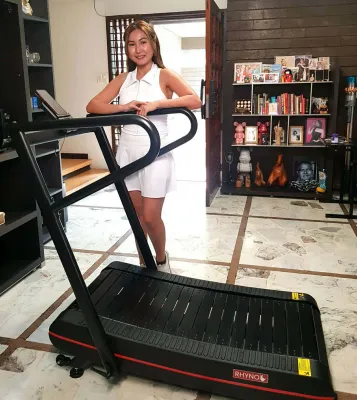
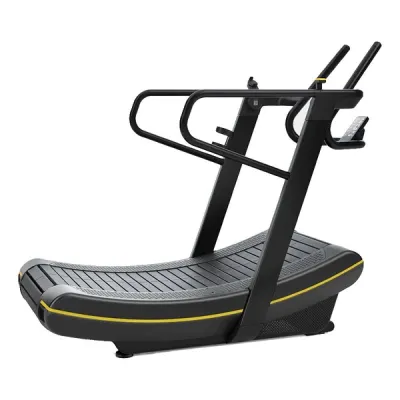
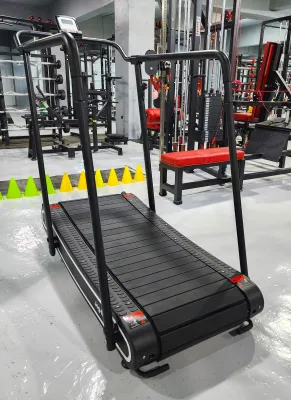
Prices are valid at publication and may change. Please refer to the product page for the latest price.
Because there is no motor assisting the belt’s movement, you must actively engage your hamstrings, glutes, and core to initiate and maintain momentum. On a flat motorized treadmill, the belt moves beneath you, requiring less posterior chain activation to propel your body forward. This means the curved design demands more physical effort from the user to achieve and sustain the same speed, turning every run into an active, self-driven workout.
Comparing Key Decision Factors for Home Use
Selecting a treadmill for a residential space involves evaluating how each design aligns with your daily routine, physical environment, and long-term financial planning.

Fitness Goals and Workout Intensity
Your training style is a primary determinant of which machine will serve you best. Curved treadmills excel at high-intensity interval training (HIIT) and sprinting because they respond instantly to your physical output. There are no buttons to press or motors to wait for; if you sprint, the belt speeds up immediately, and if you slow down, the belt decelerates with you. This makes them highly favored by competitive athletes, cross-training enthusiasts, and those focusing on explosive power.
For steady-state cardio, recovery walks, or long-distance endurance training, flat motorized treadmills offer a distinct advantage. The motor maintains a precise, consistent pace, allowing you to focus on breathing and form without constantly adjusting your effort to keep the belt moving. This makes flat models highly suitable for marathon preparation, casual daily steps, or active recovery sessions where consistency is key.
Incline variation is another critical factor. Most flat motorized treadmills feature automated incline adjustments, allowing you to simulate hill climbs at the touch of a button to target different muscle groups. Curved treadmills generally lack adjustable incline mechanisms, as the curve itself dictates the resistance and running angle, limiting your ability to perform flat-surface incline training.
Space, Noise, and Setup Requirements
Integrating a heavy piece of fitness equipment into a home requires careful spatial planning, especially in compact urban dwellings or multi-story townhouses. Curved treadmills are typically bulkier, heavier, and require greater vertical clearance due to the raised front and rear sections of the deck. You must measure your ceiling height to ensure your head will not clear the ceiling during the peak of your running stride, particularly if you are a taller runner.
Electrical infrastructure is another practical consideration. Flat motorized treadmills require a dedicated, grounded electrical outlet and can be sensitive to power fluctuations or sudden brownouts. A curved treadmill requires no electrical outlet whatsoever, allowing you to position it anywhere—even on a covered balcony or in a garage gym without worrying about extension cords, power surges, or energy consumption.
Operational noise and vibration can impact both your household and your neighbors. Motorized flat treadmills produce a consistent hum from the motor, alongside the thud of your feet hitting the deck. Curved treadmills, while lacking motor noise, produce a distinct rhythmic clicking sound as the heavy rubberized slats roll over the internal bearings. In multi-story homes with wooden floors, both types can transmit significant vibrations downward, making high-quality equipment mats essential.
Budget and Long-Term Maintenance
The financial commitment of a home treadmill extends far beyond the initial purchase price. Curved treadmills generally sit in a premium price bracket in ₱, reflecting their heavy-duty commercial construction and specialized bearing systems. Flat treadmills span a much wider spectrum, from highly affordable entry-level motorized units to premium commercial-grade models, making them more accessible for diverse budgets.
Maintenance requirements differ significantly between the two designs. Flat treadmills require regular deck lubrication, belt tension adjustments, and occasional motor or electronic console troubleshooting, which can be accelerated by tropical humidity and dust. Curved treadmills, being mechanical and motor-free, are highly durable but require periodic inspection of the slat bearings and debris removal from beneath the belt.
Before purchasing, always verify the manufacturer’s warranty terms. Pay close attention to the coverage duration for the frame, the belt, and, in the case of flat treadmills, the motor and electronic console. A robust warranty is a crucial safeguard against the corrosive effects of humid environments on electrical components, ensuring your investment remains protected over years of use.
Feature Comparison Matrix
To help you quickly compare the core specifications of both treadmill types, the table below outlines their primary operational differences.
| Feature | Curved Treadmill | Flat Motorized Treadmill |
|---|---|---|
| Drive Mechanism | Self-powered slat belt | Motor-driven continuous belt |
| Power Source | None (user-powered) | Standard electrical outlet |
| Speed Control | Manual (user pace) | Electronic console buttons |
| Incline Adjustability | Fixed curve | Automated motorized incline |
| Primary Maintenance | Bearing inspection & cleaning | Belt lubrication & motor care |
How to Choose the Right Treadmill for Your Needs
To finalize your decision, evaluate your home gym setup against these specific scenarios.
Choose a curved treadmill if you prioritize athletic performance, explosive sprinting, and high-intensity interval training. It is the ideal choice if you want a highly durable, self-powered machine that operates independently of electrical outlets and forces you to maintain active, natural running mechanics. This option is particularly beneficial for those who want to avoid electrical wear and tear in humid environments and are willing to invest in a premium, long-lasting piece of equipment.
Choose a flat treadmill if your fitness routine centers on steady-state endurance running, walking, or precise pace control. This option is best if you require automated incline adjustments to vary your workouts, prefer a lower initial investment in ₱, or need a machine that can fold away to save floor space when not in use. It is also highly suitable for households where multiple users of varying fitness levels need a straightforward, customizable workout experience.
Verify first if your home gym has the structural capacity to support these machines. Check your ceiling height to ensure adequate clearance, assess the noise tolerance of your household, and consult a medical professional if you are recovering from joint injuries, as the unique mechanics of a curved deck may require a structured transition period.
Frequently Asked Questions (FAQ)
Can beginners use a curved treadmill safely?
Yes, beginners can use a curved treadmill, but it requires a deliberate adaptation period. Because the belt moves solely in response to your body weight and foot placement, the initial sensation can feel unstable compared to a motorized flat deck. Novice users should start by holding the handrails and walking slowly near the center of the curve to understand how their positioning affects the belt’s speed.
To stop safely, gradually slow your stride and drift toward the rear of the curve, or step onto the side rails while holding the handrails firmly. Never attempt to sprint immediately. If you experience dizziness, loss of balance, or unusual joint discomfort, stop the workout immediately and consult a certified fitness trainer or a healthcare provider.
Do curved treadmills burn more calories than flat ones?
Calorie expenditure is fundamentally determined by your heart rate, effort level, and the duration of your workout, rather than the machine itself. However, because a curved treadmill is self-powered, it requires you to perform all the physical work to move the belt, whereas a motorized flat treadmill assists by pulling the belt beneath your feet. This lack of motor assistance generally demands more physical effort at any given speed.
To accurately track your energy expenditure, rely on a personal heart rate monitor or fitness wearable rather than the treadmill’s built-in console. The console estimates are based on generalized algorithms and may not reflect your actual metabolic rate or the extra effort required to drive a manual slat belt.

Community discussion
Share your experience or ask a question. Comments are reviewed before publication.