
Choosing the right training gear is a pivotal decision that directly shapes your progression, safety, and overall performance in Taekwondo. Among the most essential tools in any practitioner’s arsenal is the kick pad, a piece of equipment designed to absorb high-velocity impacts while providing a clear target. When selecting a pad, you will inevitably face the choice between two primary designs: the traditional flat pad and the modern curved pad. Each shape serves a distinct purpose in martial arts training, influencing how you strike, how your partner holds the target, and how effectively you can develop specific techniques.
To make an informed decision, you must first align your choice with your primary training objectives. Flat pads excel at developing precision, speed, and the traditional “snap” of classic Taekwondo kicks, offering a uniform surface that demands exact foot placement. Conversely, curved pads are engineered to support powerful rotational strikes and enhance holder ergonomics, using their contoured shape to catch heavy impacts securely. By evaluating your technique focus, holder comfort, and training environment, you can select the design that best supports your daily practice.
In tropical training environments, such as a typical local dojang where high humidity and intense heat lead to rapid sweat buildup, this choice becomes even more critical. Moisture on a pad’s surface can significantly alter traction, making the physical shape of the target a key factor in preventing slips and joint strain. Understanding how these two geometries interact with your feet and your partner’s joints will help you optimize your training sessions, whether you are preparing for a local tournament or refining your forms at home.
Products mentioned in this guide
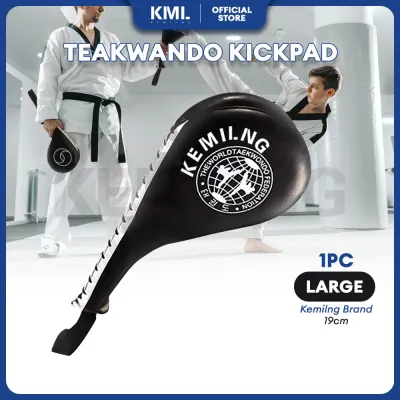
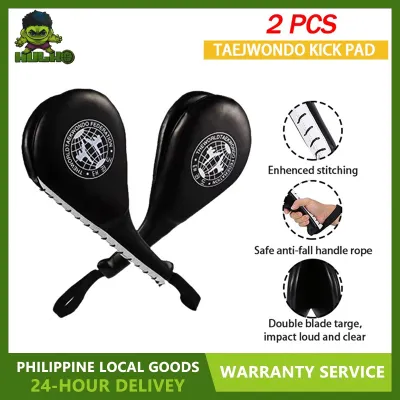
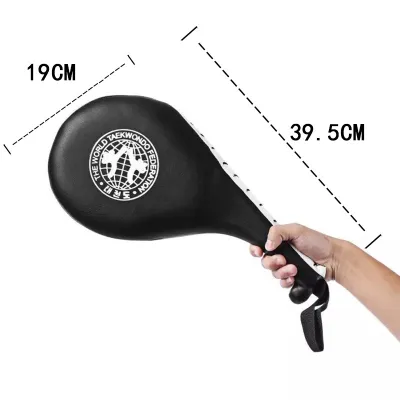
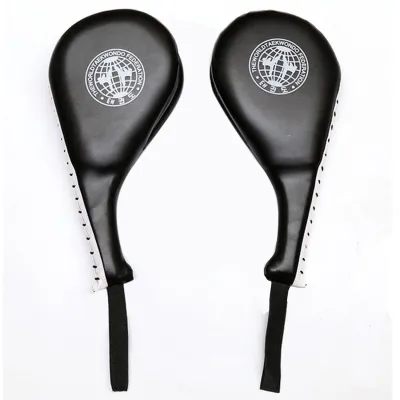
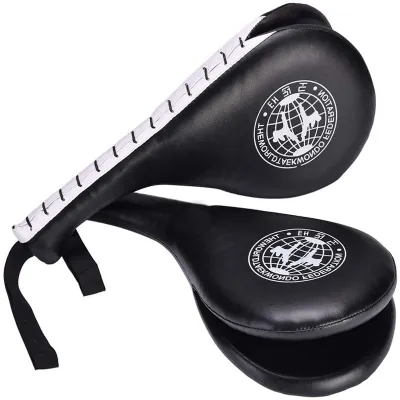
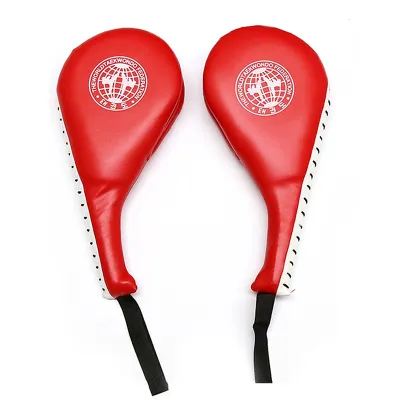
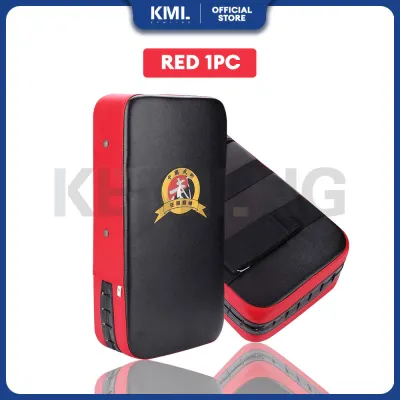
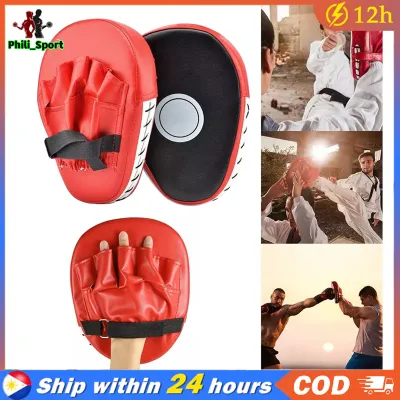
Prices are valid at publication and may change. Please refer to the product page for the latest price.
Core Structural Differences and Striking Impact
The fundamental difference between flat and curved kick pads lies in their physical geometry and how they manage the kinetic energy of a strike. A flat kick pad features a completely level, uniform striking surface from edge to edge. This classic design presents a consistent plane to the kicker, requiring the foot to land flush against the surface to achieve a clean, solid impact. Because there are no contours to guide the foot, flat pads provide immediate, unfiltered feedback on the angle and alignment of your strike, making any deviation in your footwork instantly noticeable.
Curved kick pads, on the other hand, feature an ergonomic, concave contour that mimics the natural arc of rotational kicks. This curved geometry is specifically designed to “cup” or pocket the foot upon impact, channeling the force toward the center of the pad. When a roundhouse kick connects with a curved surface, the raised edges of the pad help prevent the foot from sliding off the sides, which is particularly beneficial during high-speed combinations or when training in humid conditions where sweat can make surfaces slick. This pocketing effect also helps distribute the impact force more evenly across the internal foam layers.
To ensure you are getting the right level of protection, it is crucial to verify the padding density and structural integrity of either design. High-quality pads typically utilize multi-layered, high-density foam that absorbs shock without bottoming out under heavy strikes. When inspecting a pad, press firmly on the center to check for resistance; it should feel firm yet resilient, rather than soft or easily compressed. Checking the manufacturer’s specifications for terms like “multi-layered EVA foam” or “shock-absorbing gel integration” can help you verify that the pad’s internal structure matches its outward shape to provide adequate protection for both the kicker and the holder.
Matching Pad Shape to Specific Taekwondo Techniques
Your choice of kick pad should directly reflect the specific techniques and drills that dominate your training syllabus. Flat pads are highly effective for linear, straight-line kicks where precision and speed are the primary focus. Techniques such as the front kick (ap chagi), side kick (yop chagi), and push kick (mireo chagi) require a flat, stable target to ensure the sole or heel of the foot connects cleanly. Training with a flat pad forces you to maintain strict control over your striking angle, as any slight misalignment will cause the foot to glance off the surface, providing an immediate cue to correct your form.

For rotational and high-impact kicks, curved pads offer a distinct advantage by accommodating the natural trajectory of the leg. The roundhouse kick (dollyo chagi), hook kick (huryeo chagi), and spinning back kick (dwi chagi) involve significant rotational force that can easily slide off a flat surface if the angle of entry is slightly off. The concave design of a curved pad acts as a natural catcher’s mitt, securing the instep or heel and reducing the risk of missed-strike slips. This secure contact point allows you to commit fully to the power of your rotational kicks without worrying about your foot glancing off and straining your knee or ankle.
When planning your equipment purchases, take a close look at your current training routine and long-term goals. If your sessions consist primarily of rapid-fire speed drills, paddle-style targets, and precision sparring combinations, a flat pad will help you build the sharp, snappy accuracy required for competitive point sparring. However, if your focus is on power development, self-defense applications, or heavy breaking preparation, the curved pad’s ability to handle high-impact rotational forces makes it the more suitable choice. Balancing these factors ensures your gear actively supports, rather than hinders, your technical development.
Holder Comfort and Joint Stress Considerations
While much attention is paid to the person kicking, the physical toll on the pad holder is an equally important factor in equipment selection. Holding pads for extended periods, especially against powerful kicks, subjects the wrists, elbows, and shoulders to repetitive shock and joint stress. Flat pads, due to their straight profile, transfer impact force directly along a linear path. If the holder does not align their joints perfectly behind the pad, this direct transfer of energy can lead to wrist hyperextension or shoulder fatigue over the course of a long training session.
Curved pads are specifically engineered to alleviate this joint stress by improving how impact force is distributed and absorbed. The curved surface naturally disperses the kinetic energy outward and away from the center, reducing the concentrated shock transmitted to the holder’s hands and arms. Additionally, the ergonomic shape allows the holder to maintain a more natural, neutral wrist position, which significantly reduces the leverage that a heavy kick can exert on the joints. This design makes curved pads highly beneficial for instructors, parents, or training partners who hold targets for multiple rounds.
To maximize safety and comfort, always check the handle, strap, and grip configurations of the pad before use. Look for reinforced, riveted handles that offer a secure grip, along with adjustable hook-and-loop forearm straps that keep the pad firmly aligned with the holder’s arm. A secure fit prevents the pad from shifting or twisting upon impact, which is a common cause of wrist sprains. If the holder begins to experience joint fatigue, tingling, or persistent soreness, it is a clear sign to stop training, adjust their holding stance, or switch to a more supportive, shock-absorbing pad design.
Key Specifications to Verify Before Purchasing
Before investing in a new Taekwondo kick pad, it is essential to evaluate several key specifications to ensure the gear meets your specific training needs. First, consider the physical dimensions, thickness, and weight of the pad. Younger practitioners and beginners generally benefit from smaller, lighter pads that are easy to maneuver and hold, allowing them to focus on form and accuracy. Advanced martial artists, who generate significantly more power, require thicker, heavier pads with dense foam cores capable of absorbing maximum impact without transferring shock to the holder.
The durability of the cover material is another critical factor, particularly in warm, humid climates where moisture and sweat can accelerate wear and tear. Look for pads constructed from high-grade synthetic leather, such as polyurethane (PU) or engineered microfiber, which offer excellent resistance to cracking, tearing, and moisture absorption. Inspect the seams to ensure they feature heavy-duty, reinforced double-stitching, as single-stitched seams are prone to splitting under the high pressure of repeated kicks. Additionally, verify that the forearm straps are wide and securely stitched to the body of the pad to prevent tearing over time.
Finally, evaluate the multi-purpose utility of the pad to determine if it can accommodate different types of strikes. While Taekwondo is primarily known for its dynamic kicking techniques, comprehensive training often includes hand strikes, elbows, and knee strikes. A versatile pad should have a surface texture and density that is safe for both gloved and bare-hand strikes. Checking these specifications online or testing the gear in-store allows you to verify that the pad will withstand the rigors of your specific training regimen while keeping both you and your partner safe.
Decision Framework: Choose Curved, Flat, or Both?
To finalize your decision, it helps to map your training needs to a clear decision framework based on your skill level, training goals, and environment. If your primary focus is on developing pinpoint accuracy, rapid footwork, and the traditional, crisp technique required for forms (poomsae) or Olympic-style sparring, a flat kick pad is your best option. Its uniform surface will hold you accountable for every strike, ensuring you develop the precise control and clean contact necessary to score points and execute techniques flawlessly.
If your training emphasizes raw power, heavy impact conditioning, and maximum safety for your training partner, a curved kick pad is the superior choice. The ergonomic contour and superior shock distribution make it ideal for practicing full-power roundhouse kicks and complex rotational combinations without placing undue stress on the holder’s wrists and shoulders. This design is particularly well-suited for heavy hitters, adult practitioners, and those who train frequently at high intensities where joint protection is a top priority.
For a truly comprehensive training setup, especially in a dojang or a well-equipped home gym, utilizing a mixed set of both flat and curved pads offers the ultimate flexibility. This approach allows you to switch gear depending on the focus of the drill, using flat pads for warm-ups, speed work, and precision training, and then transitioning to curved pads for power development and high-impact combinations. By matching the pad shape to the specific demands of each drill, you can optimize your technical growth while ensuring long-term safety and comfort for everyone involved.
Frequently Asked Questions (FAQ)
Can I use boxing focus mitts instead of a dedicated taekwondo kick pad?
While boxing focus mitts are excellent for hand strikes and high-speed punching combinations, they are generally not suitable or safe for dedicated Taekwondo kick training. Focus mitts feature significantly less padding density, thickness, and surface area compared to specialized kick pads. Because Taekwondo kicks generate far more kinetic energy than punches, attempting to absorb these heavy impacts on small focus mitts puts the holder at a high risk of wrist, hand, and shoulder injuries. Additionally, the small target area increases the likelihood of the kicker missing the pad entirely, which can lead to hyperextended joints or accidental contact with the holder.
How do I clean and maintain synthetic leather kick pads?
To extend the lifespan of your synthetic leather kick pads and maintain a hygienic training environment, especially in humid climates, proper maintenance is essential. After every training session, wipe down the entire surface of the pad with a damp cloth and a mild, non-abrasive soap solution to remove sweat and dirt. Avoid using harsh chemical cleaners or soaking the pads, as excess moisture can seep into the seams and degrade the internal foam. Always allow the pads to air dry completely in a well-ventilated indoor area away from direct heat sources or intense sunlight, which can cause the synthetic leather to dry out, crack, and peel. Regularly inspect the straps, handles, and stitching for any signs of wear before you begin training.
Community discussion
Share your experience or ask a question. Comments are reviewed before publication.