
Finding the right rotor for bike mtb setups often comes down to balancing stopping power, heat management, and physical compatibility with your frame and fork. If you are experiencing brake fade on long descents or struggling to slow down quickly, upgrading your rotor diameter is one of the most effective ways to boost performance. To choose the correct size, you must identify your bike’s physical clearance limits, match the diameter to your riding style and total system weight, and select the appropriate mounting adapters.
How Do You Check Your Frame and Fork Rotor Limits?
To check your frame and fork rotor limits, you must consult the manufacturer specifications for your specific frame and suspension fork models to find the maximum allowable disc diameter. Component manufacturers design these parts with structural limits in mind, and exceeding the maximum recommended rotor size can put excessive leverage on the mounting tabs, potentially leading to catastrophic failure under heavy braking. Most cross-country forks are limited to 180mm rotors, while trail, enduro, and downhill forks can typically handle 200mm, 203mm, or even larger options.
You must also identify your frame and fork mounting standard, which is typically either Post Mount or International Standard. Post Mount systems feature threaded holes pointing directly toward the wheel, allowing the caliper to bolt on parallel to the rotor, while International Standard systems use unthreaded tabs perpendicular to the wheel. Most modern mountain bikes utilize Post Mount, where the native mount size dictates the smallest rotor you can run without an adapter, while larger sizes require specific spacer brackets to push the caliper outward. Additionally, you must verify whether your wheel hubs use a 6-bolt or Center Lock mounting interface to ensure your new rotors can be physically installed on your wheels.
Products mentioned in this guide
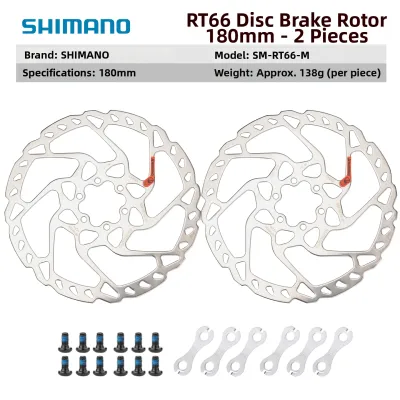
6 Lazada user ratings
🔨Durability:Goods 🔌Compatibility:All Bicycle 🛠️Ease of Installation:very easy Legit naman guys. Thank You Seller Thank You Lazada.
Goods maganda ang pag ka balot goods quality 1 💯 percent 160 kaso 180 ang isa need ko dalawa 160 heheh
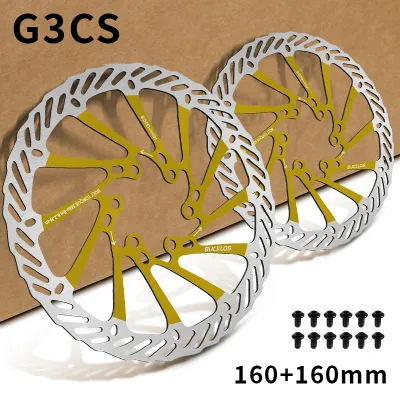
113 Lazada user ratings
🔨Durability:good 🔌Compatibility:good 🛠️Ease of Installation:good 160mm size option, Multiple color options,
Precise thickness control, Smooth braking performance, Includes 6 bolts, Easy installation design,
hindi kupa, nakakabit , pero ok naman sya.. mukhang maganda ang kapit nto..
thank you seller and rider,good items or products na narecieve ko
nice product! mukhang madali matanggal kulay yellow ng rotor.
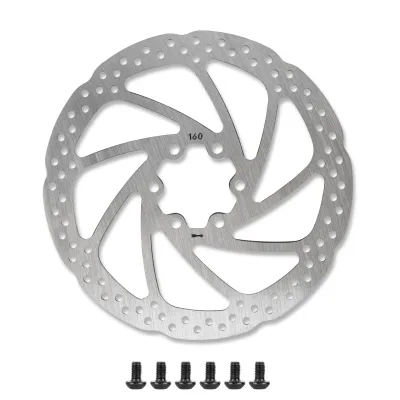
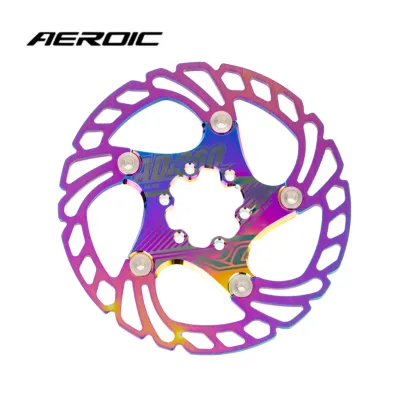
8 Lazada user ratings
🔨Durability:goods 🔌Compatibility:goods 🛠️Ease of Installation:gooods
🔨Durability:good 🔌Compatibility:compatible
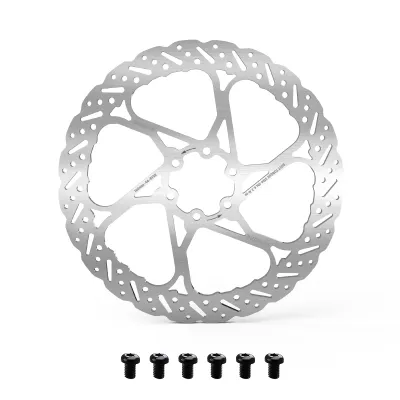
6 Lazada user ratings
legit! looks solid.
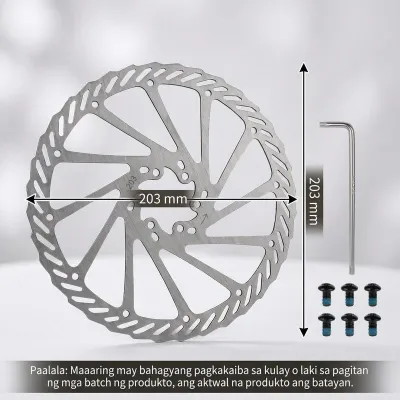
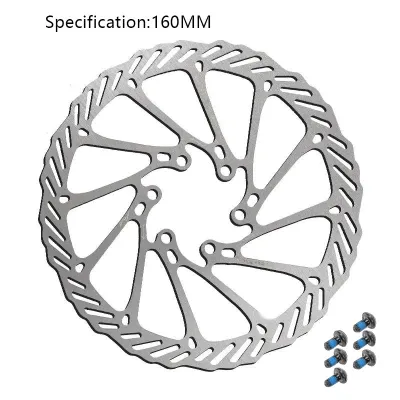
435 Lazada user ratings
Efficient and responsive braking system, High-quality material ensures long-lasting use, Improved stopping power on the road, Durable and re…Read full reviewShow less
Efficient and responsive braking system, High-quality material ensures long-lasting use, Improved stopping power on the road, Durable and reliable braking performance,
fast delivery, already received the item, the item is nice in just low price, compatible to my mtb project... thank seller and also to Lazad…Read full reviewShow less
fast delivery, already received the item, the item is nice in just low price, compatible to my mtb project... thank seller and also to Lazada....
Perfect fit for my BMX bike, High-quality material ensures long-lasting use, Efficient and responsive braking system,
Perfect fit for my BMX bike, Provides smooth and precise braking, High-quality material ensures long-lasting use,
Improved stopping power on the road, Efficient and responsive braking system, Great value for money,
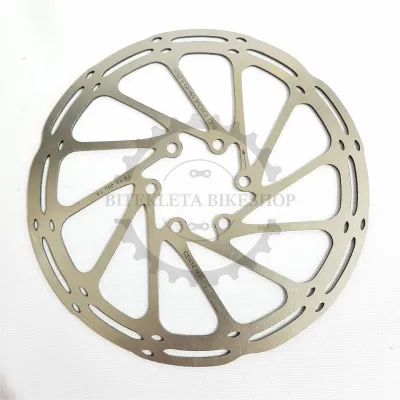
701 Lazada user ratings
I’m very satisfied with this purchase! The product arrived safely and was packed properly, so there were no damages or issues upon receiving…Read full reviewShow less
I’m very satisfied with this purchase! The product arrived safely and was packed properly, so there were no damages or issues upon receiving it. The quality is good and it looks just like the pictures posted by the seller. It works well and is definitely worth the price. Shipping was also fast, and the seller was responsive and accommodating. I appreciate the effort in making sure the item was securely packed. Overall, I’m happy with my purchase and would definitely recommend this product to others. Thank you, seller! I will surely consider buying again next time. Five stars for this product!
High-quality rotor material, Impressive stopping performance, Impressive stopping performance, Easy to install with included rotor bolts, Ea…Read full reviewShow less
High-quality rotor material, Impressive stopping performance, Impressive stopping performance, Easy to install with included rotor bolts, Easy to install with included rotor bolts, Excellent heat dissipation, Excellent heat dissipation, Great braking power!, Smooth and consistent braking, Durable and long-lasting, Perfect fit for my mountain bike,
Compatibility:Fits all bike types, Durability:Lasts a long time, Safety:Enhances safety, Perfect fit for my mountain bike, Durable and long-…Read full reviewShow less
Compatibility:Fits all bike types, Durability:Lasts a long time, Safety:Enhances safety, Perfect fit for my mountain bike, Durable and long-lasting, High-quality rotor material, Impressive stopping performance,
Smooth and consistent braking, Easy to install with included rotor bolts, Impressive stopping performance, High-quality rotor material,
Item received in good condition, well packed and on time. Fit to a Giant Trance Advanced 2016 woth no issues.
Prices are valid at publication and may change. Please refer to the product page for the latest price.
Physical clearance is another critical check when planning a rotor upgrade. A larger rear rotor can rub against the chainstay or seatstay tubes, while a larger front rotor might interfere with the fork lowers or the caliper bracket itself. You must also ensure that the caliper, once moved outward with an adapter, does not contact the wheel spokes or the hub shell. If you observe less than a few millimeters of clearance between any part of the braking assembly and the frame or wheel components, you should stick to a smaller, fully compatible rotor size to avoid frame damage or wheel lockups.
What Do the Standard MTB Rotor Diameters Mean for Your Braking?
Standard mountain bike rotor diameters—typically 160mm, 180mm, and 200mm or 203mm—directly dictate the mechanical leverage and thermal capacity of your braking system. A larger rotor provides a longer moment arm, which increases braking torque and allows you to slow down with less physical effort at the brake lever. At the same time, the increased surface area of a larger disc dissipates heat much more rapidly, keeping your brake pads and fluid within their optimal operating temperature ranges during long descents.

A 160mm rotor is lightweight and highly responsive, making it ideal for cross-country riding where weight savings and rapid acceleration are prioritized over extreme stopping power. Because of its smaller surface area, a 160mm disc heats up quickly under sustained braking, which can lead to reduced stopping power if used on steep, technical descents. It is well suited for lighter riders or those who ride on flatter, less demanding trails.
Stepping up to a 180mm rotor provides a highly versatile middle ground that serves as the standard for general trail riding. This size offers a significant increase in stopping torque and heat dissipation compared to a 160mm rotor, without adding excessive rotating weight to your wheels. The larger surface area allows the rotor to shed heat more efficiently, keeping your brake pads within their optimal operating temperature range during moderate descents and preventing premature brake fade. For the majority of mountain bikers, a 180mm front rotor combined with a 180mm or 160mm rear rotor provides an excellent balance of control and efficiency.
For maximum stopping power, 200mm and 203mm rotors are designed to handle extreme thermal loads and high-speed deceleration. These large diameters generate substantial mechanical leverage, allowing you to slow down with less finger effort at the brake lever. The increased mass and surface area are essential for heavy riders, electric mountain bikes, and gravity-focused disciplines where brakes are applied heavily and continuously. Additionally, the increased leverage of larger rotors can alter brake pad wear rates, often leading to more even wear across the pad surface because you do not need to squeeze the levers as hard to achieve the same stopping force.
How Should Your Riding Discipline and Weight Influence Rotor Size?
To match your rotor size to your riding discipline and weight, you must evaluate the typical steepness of your trails and the total system weight of your bike, gear, and body. Heavier riders and steeper terrain generate significantly more kinetic energy, which your brakes must convert into heat, requiring larger rotors to prevent overheating. Conversely, lighter riders on flatter trails can safely run smaller rotors to save weight and maintain a more agile bike feel.
For cross-country and light trail riding on relatively flat or rolling terrain, smaller rotors like a 160mm rear and a 160mm or 180mm front are usually sufficient. These disciplines focus on efficiency, and smaller rotors help keep the bike nimble and easy to accelerate out of corners. The braking demands in these scenarios are typically short and intermittent, giving smaller discs plenty of time to cool down between uses.
If your adventures take you into enduro or aggressive trail riding, where you encounter long, technical descents and steep gradients, a mixed setup is highly effective. Running a 180mm rotor in the rear and a 200mm or 203mm rotor in the front balances the need for high stopping power where weight transfer occurs during braking with reliable heat management at the rear. This configuration ensures that you maintain consistent lever feel and strong deceleration throughout extended descents without carrying unnecessary weight on flatter trail sections.
For downhill racing, bike park riding, and heavier riders, maximizing rotor size is critical for maintaining control and preventing brake failure. Total system weight directly increases the kinetic energy your brakes must convert into heat; therefore, heavier riders or those on heavy e-bikes require the greater heat capacity of 200mm or 203mm rotors on both wheels. Without this thermal mass, the braking system can quickly overheat, causing the brake fluid to boil and leading to a sudden, dangerous loss of braking power.
When Is It Time to Upgrade or Change Your Current Rotor Size?
You should upgrade your rotor size when you experience physical symptoms of inadequate braking performance, such as brake fade, discolored rotors, or glazed brake pads. Brake fade occurs when the brake lever pulls all the way to the handlebar or feels mushy during a long descent, indicating that your rotors are overheating and can no longer dissipate heat effectively. Other warning signs include persistent squealing, a distinct burnt smell after a descent, or rotors that warp and rub against the pads due to extreme heat cycles.
Before purchasing larger rotors to solve these issues, you must verify that your current frame and fork can safely accommodate the upgrade. Check the manufacturer specifications to ensure the larger diameter does not exceed the structural limits of your components. You will also need to purchase the correct caliper adapters that match your frame’s mount type and the specific rotor size increase, ensuring the brake pads align correctly with the rotor’s braking track.
If you encounter conflicting information regarding your bike’s maximum rotor limits, or if you are unsure about adapter compatibility, stop and consult a qualified local bike mechanic or contact the manufacturer directly. Installing a rotor that is too large for your fork or frame can cause structural damage under heavy braking, putting your safety at risk. Taking the time to verify compatibility helps maintain reliable, powerful, and predictable braking performance on your rides.

Community discussion
Share your experience or ask a question. Comments are reviewed before publication.