
When selecting a volleyball, technical specifications are not just numbers on a spec sheet—they directly dictate how the ball behaves when you serve, pass, set, and spike. The Mikasa V330W is a prominent fixture in club training sessions and school leagues, serving as a bridge between recreational play and professional-grade performance. Understanding what these specifications mean in practice allows you to align your gear with your playing style, court conditions, and skill level.
For players navigating the high-humidity environments of the Philippines, choosing the right ball involves balancing grip, durability, and tactile feedback. A ball that performs beautifully in an air-conditioned indoor arena might behave differently on an open-air court where sweat and humidity come into play. By decoding the material composition, panel construction, and official certifications of the V330W, you can make an informed decision that elevates your performance and protects your investment.
Understanding Material, Weight, and Size Specifications
To evaluate the Mikasa V330W, start by verifying its physical parameters. The official weight of a standard indoor volleyball ranges between 260 and 280 grams, with a circumference of 65 to 67 centimeters. You can verify these specifications by checking the markings printed near the inflation valve or on the original packaging. Maintaining a standard weight is critical for developing consistent muscle memory; a ball that is even slightly too heavy can alter your setting trajectory and accelerate arm fatigue during long training drills.
Products mentioned in this guide
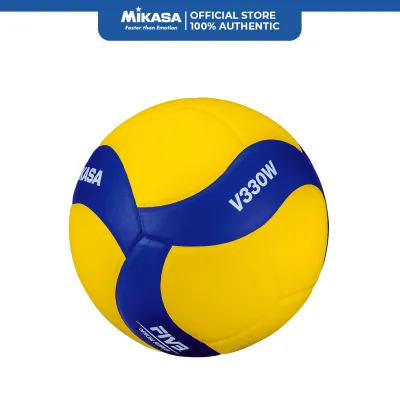
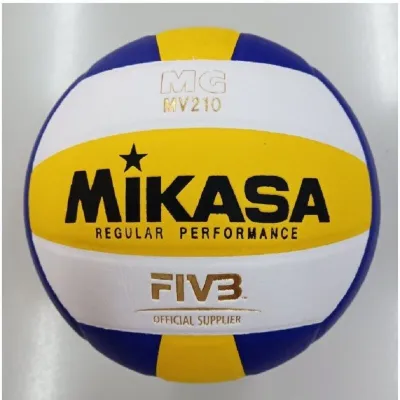
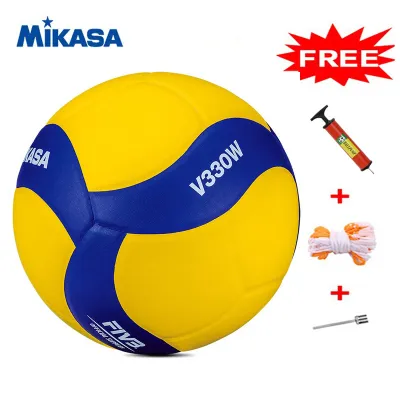
Prices are valid at publication and may change. Please refer to the product page for the latest price.
The cover material of the V330W is made of high-quality synthetic leather. Unlike genuine leather, which can absorb moisture and become heavy, synthetic leather is engineered to resist moisture absorption while maintaining a soft touch. In tropical climates, where sweat is a constant factor on the court, this material helps maintain a consistent weight throughout intense rallies. However, players should still monitor the ball’s surface, as heavy sweat can temporarily reduce grip, requiring a quick wipe-down between plays.
Skin comfort is another vital aspect of the material specification. The synthetic leather cover is designed to minimize the sharp sting often associated with cheaper rubber or low-grade composite balls. This makes the ball highly suitable for extended defensive drills, allowing players to focus on their digging form and platform control without experiencing excessive forearm irritation.
Evaluating Panel Construction and Surface Texture
The visual design of the V330W features an 18-panel aerodynamic configuration. When inspecting the ball, you will notice that these panels are laminated—meaning they are securely glued to an internal nylon-wound bladder rather than stitched. This laminated construction creates a highly uniform spherical shape, which is essential for predictable bounces and clean contact off the setter’s hands.

Surface texture plays a major role in how a volleyball cuts through the air. While elite-tier match balls feature deep double-dimple patterns to maximize grip and stabilize flight, the V330W utilizes a smoother, more streamlined synthetic surface. This design still offers excellent tactile feedback but behaves slightly differently in flight. Players practicing float serves should observe how the ball reacts to wind resistance, especially in semi-open gymnasiums where drafts can influence the ball’s trajectory.
Beneath the synthetic leather cover lies a specialized cushioning layer. You can test this by applying firm thumb pressure to the surface of the ball. This underlying cushion absorbs the high-impact energy of spikes and blocks, converting a hard, fast-moving object into a controllable pass. A well-cushioned ball allows defenders to absorb the force of a hard hit, keeping the ball in play and setting up a clean transition offense.
Checking Official Certifications for Match Eligibility
Before bringing any volleyball to a competitive match, it is essential to verify its official certifications. The V330W features distinct certification markings on its surface, typically indicating its status as an “FIVB Official Method” or “FIVB Approved” ball. These stamps confirm that the ball has undergone rigorous testing by the Fédération Internationale de Volleyball to ensure it meets strict standards for weight, roundness, bounce height, and pressure retention.
Understanding the distinction between match-grade and training-grade balls is crucial for team managers and players alike. While the absolute top-tier models are reserved for international tournaments, certified training balls like the V330W offer a highly comparable feel at a more accessible price point. In local sports shops across the Philippines, where a premium match ball might represent a significant investment, the V330W serves as a cost-effective alternative that does not compromise on official dimensions or weight standards.
Training with a certified ball is particularly important for school varsity players and club athletes transitioning to official tournament environments. If you train with a non-standard, uncertified ball, the sudden shift to an official match ball can disrupt your timing, serving accuracy, and passing angles. Using a ball that matches official specifications ensures that your hard-earned skills translate seamlessly to the tournament court.
Deciding if the V330W Fits Your Playing Context
Deciding whether the Mikasa V330W is the right fit for your game depends heavily on where and how you play. This model is primarily designed for indoor court surfaces, such as polished wood, synthetic rubber, or smooth taraflex. The laminated synthetic leather panels are highly durable under indoor conditions, but they are susceptible to damage on rougher surfaces.
In many local communities, volleyball games are frequently held on outdoor concrete courts or paved barangay plazas. If you choose to use the V330W in these environments, be aware that abrasive concrete, dirt, and pebbles can quickly scuff the synthetic leather cover and weaken the laminated seams. For dedicated outdoor play, a stitched outdoor ball or a specialized beach volleyball is generally a more durable choice that can withstand rough surfaces and exposure to the elements.
From a skill-level perspective, the V330W is an exceptional match for intermediate players, high school varsity teams, and recreational club leagues. It provides the precise handling and weight distribution needed to develop advanced setting and hitting techniques without the steep price tag of a professional-tier match ball. However, if you are a beginner looking for a highly forgiving, ultra-soft ball to learn the absolute basics, or a professional athlete requiring the exact double-dimple texture of international match play, you may want to explore other specialized models in Mikasa’s lineup.
Frequently Asked Questions (FAQ)
How should I break in a new synthetic leather volleyball?
Check the manufacturer’s care instructions before conditioning your new ball. New synthetic leather can feel slightly stiff or slick out of the box. Gently wipe the surface with a soft, slightly damp microfiber cloth to remove any factory residue. Avoid using harsh chemical detergents, alcohol, or abrasive scrubbers, as these can permanently strip the grip coating and damage the laminated seams.
What is the correct air pressure for the Mikasa V330W?
Locate the recommended inflation pressure printed directly around the inflation valve. For standard indoor volleyballs, this is typically between 4.26 to 4.61 psi (0.30 to 0.325 kgf/cm²). Always use a reliable pressure gauge and moisten the pump needle with a bit of glycerin or soapy water before inserting it to prevent tearing or damaging the internal bladder.
Community discussion
Share your experience or ask a question. Comments are reviewed before publication.