
When you step onto a badminton court, the tube of shuttlecocks you pull from your gear bag dictates the entire rhythm of your game. For players familiar with Aeroplane shuttlecocks, the prominent red label on the packaging is a familiar sight. The red color designation on an Aeroplane shuttlecock tube primarily serves as a manufacturer indicator for specific product lines or speed categories, helping players quickly identify the gear suited for their playing environment. However, because color-coding systems can vary across different production batches, the color label should always be paired with the printed speed number on the tube cap to ensure an accurate match for your local court conditions.
Understanding the Red Color Designation
Manufacturers of premium badminton gear use color-coded labels on packaging tubes to help players quickly identify product tiers and flight characteristics. On Aeroplane shuttlecock tubes, a red label typically signifies a specific product line—often associated with tournament-grade performance—or a designated speed range. This visual shorthand allows players to grab the correct tube from a storage room or retail shelf without reading fine print under dim court lighting.
While the red label provides a quick visual cue, it is not the sole indicator of flight behavior. To confirm the exact flight characteristics, locate the specific speed number printed on the tube cap. These numbers, typically ranging from 76 to 79, represent the weight and aerodynamic drag of the shuttlecock. A red-labeled tube containing speed 77 shuttlecocks will perform differently from one containing speed 78, making the numerical value the ultimate reference point.
Products mentioned in this guide


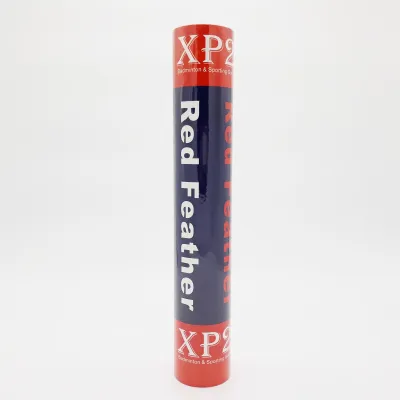
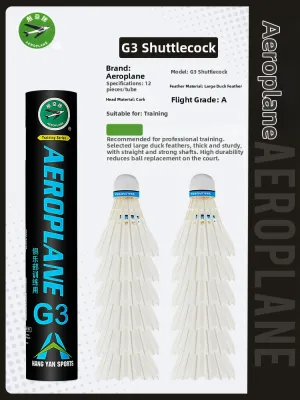
Prices are valid at publication and may change. Please refer to the product page for the latest price.
How Speed Grades Affect Flight and Playability
The speed grade of a shuttlecock directly influences its aerodynamic trajectory and how it responds to your racket face. In badminton terminology, a “faster” shuttlecock travels a greater distance across the court when struck with the same amount of force as a “slower” model. This variation is determined by the weight of the shuttlecock and the flare of its feathers, which affect how much air resistance it encounters during flight.

When playing with a speed grade that is too fast for your environment, standard clears easily sail past the baseline, forcing you to hold back on your strokes. Smashes will travel with intense velocity, reducing defensive reaction time but making it difficult to control delicate net drops. Conversely, a shuttlecock that is too slow requires excessive physical effort to push from baseline to baseline, which can lead to early muscle fatigue or shoulder strain.
Ultimately, shuttlecock speed is not a measure of manufacturing quality, but rather a tool for environmental calibration. A premium shuttlecock will still feel sluggish and heavy if the speed grade is too low for the playing conditions, while a perfectly constructed shuttlecock will feel wild and uncontrollable if the speed is too high. Matching the speed grade to your physical stroke mechanics ensures that the shuttlecock lands precisely where your technique intends.
Choosing the Right Speed for Local Court Conditions
Selecting the correct shuttlecock speed requires understanding how local weather conditions affect aerodynamics. In the tropical climate of the Philippines, high temperatures and elevated humidity levels are common fixtures of daily life, whether playing in a specialized sports complex or a local community court. These environmental factors significantly alter air density, which changes how much drag the shuttlecock experiences.
Hot air is less dense than cold air, meaning there are fewer air molecules to slow down the shuttlecock as it flies. High humidity further reduces air density because water vapor is lighter than dry air. Consequently, shuttlecocks fly faster and travel further in hot, humid conditions than in cool, dry environments. To compensate for this natural boost in speed, players in the Philippines generally need to select a slightly slower speed grade, such as speed 76 or 77, to maintain optimal control and keep rallies within court boundaries.
Before investing your hard-earned ₱ in a bulk purchase of shuttlecock tubes, perform a simple on-court test. Open a single tube during warm-ups and have a player stand on the back boundary line to hit a full underhand clear. Observe where the shuttlecock lands relative to the opposite double-tax line; if it consistently flies long, you may need to step down to a slower speed grade.
Verifying Authenticity and Pre-Play Inspection
Because Aeroplane is a highly regarded brand among badminton enthusiasts, counterfeit products occasionally find their way onto generic online marketplaces. Playing with counterfeit shuttlecocks leads to inconsistent flight paths, rapid feather breakage, and a frustrating court experience. To protect your investment, inspect the packaging for official security features, such as high-quality holographic stickers, crisp logo printing, and authorized distributor seals on the tube caps.
Once you have verified the packaging, perform a quick physical inspection of the shuttlecocks before starting your match. Gently examine the feathers to ensure they are uniform, unbroken, and securely bound by the thread lines. The cork base should feel firm and show no signs of crumbling or separation from the leather cover. If the feathers feel exceptionally dry or brittle—often a result of improper storage during shipping—they will crack quickly upon impact, severely shortening the lifespan of the shuttlecock.
To minimize the risk of purchasing substandard gear, make your purchases exclusively through authorized sports retailers, established pro shops, or official brand outlets. These sellers maintain proper inventory controls and storage conditions, ensuring that the shuttlecocks you buy retain their factory-spec moisture levels and structural integrity.
Frequently Asked Questions (FAQ)
Can I alter the speed of a red-labeled shuttlecock if it flies too fast?
Yes, you can make minor, temporary adjustments to the speed of a shuttlecock directly on the court. If a shuttlecock is flying too fast for your conditions, the standard method is to gently fold the very tips of the feathers inward, pointing toward the cork. This increases the aerodynamic drag, causing the shuttlecock to slow down slightly mid-flight. Conversely, bending the tips outward will reduce drag and speed up the flight.
However, avoid irreversible modifications such as trimming the feathers with scissors or attempting to alter the weight of the cork base. These actions permanently ruin the shuttlecock’s balance, leading to a wobbly flight path and reduced durability. While tipping the feathers is a useful temporary fix during a casual game, selecting the correct factory speed grade remains the best solution for consistent play.
Does the red color indicate a specific feather material or durability?
No, the red label on the tube does not automatically guarantee a specific type of feather material or a set level of durability. While some manufacturers reserve red packaging for their premium goose feather lines, the actual materials used—such as premium goose feathers versus duck feathers—are determined by the specific model number and product specifications.
To evaluate the durability and intended use of a shuttlecock, look closely at the product details rather than relying solely on the tube color. Premium tournament models typically feature high-grade goose feathers and natural cork bases, which offer superior flight consistency and impact resistance. To maximize the lifespan of any shuttlecock, store the tubes vertically in a cool, humidified environment, or use a specialized steaming device before play to restore moisture to the feathers.
Community discussion
Share your experience or ask a question. Comments are reviewed before publication.