
The Wilson RF 01 Pro represents a highly specialized class of tennis rackets designed to meet elite performance standards. Understanding its physical specifications—such as weight distribution, head size, and string pattern—is essential for determining how the frame will behave on the court. Rather than relying on marketing promises, players must analyze how these physical dimensions interact with their personal swing mechanics, local playing conditions, and physical conditioning.
By decoding the technical details printed on the frame, you can make an informed decision about whether this racket aligns with your current skill level. Evaluating these specifications systematically allows you to anticipate the racket’s on-court performance before you ever play a match.
Key Specifications That Define the RF 01 Pro's Performance
Static weight and swingweight are two distinct physical concepts that dictate how a racket feels in your hand versus how it feels in motion. Static weight is the total mass of the frame, which you can verify by checking the manufacturer’s printed label on the throat. A higher static weight generally provides more stability and plow-through when blocking back fast serves, but it requires more physical effort to initiate your swing.
Products mentioned in this guide
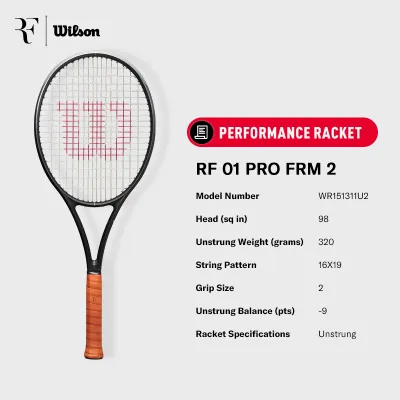
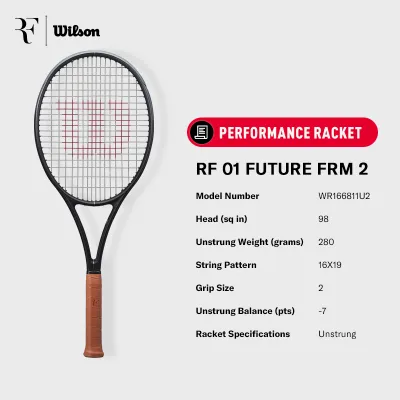
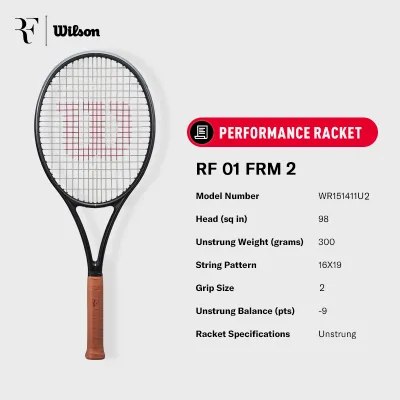
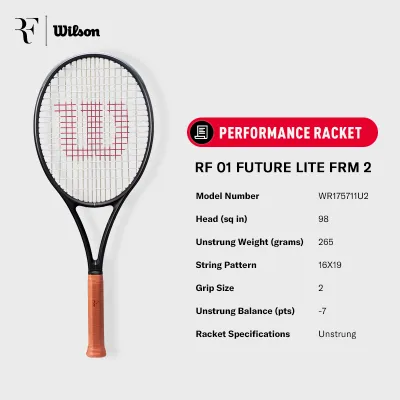
Prices are valid at publication and may change. Please refer to the product page for the latest price.
Swingweight measures the resistance of the racket to rotation as you swing it through the air. This value is heavily influenced by how the weight is distributed between the handle and the hoop. A racket with a high swingweight can generate massive power and depth, but it demands excellent timing and preparation. Players should look at the printed specifications on the frame to identify these baseline measurements before customizing their setup.
Head size directly dictates the surface area available for ball contact and the overall size of the sweet spot. A smaller head size, typically categorized under 100 square inches, offers a highly concentrated sweet spot that provides exceptional directional control for precise ball striking. However, smaller head sizes offer less forgiveness on off-center hits, meaning slight timing errors can result in a significant loss of depth and increased vibration.
String pattern density refers to the spacing of the main and cross strings within the hoop. A denser pattern increases the number of contact points with the ball, which limits string movement and provides a flatter, highly predictable trajectory. Conversely, a more open pattern allows the strings to deflect and snap back more easily, which aids in spin generation and offers a softer feel upon impact.
Translating Specs to On-Court Feel and Playstyle
Heavier frames offer excellent stability against heavy incoming balls, preventing the racket from twisting during off-center contact. However, swinging a heavy frame over a multi-set match demands significant physical conditioning. In hot and humid tropical climates, such as afternoon sessions in the Philippines, physical exhaustion sets in much faster. A heavy racket that feels manageable during a brief warm-up can quickly lead to late contact, dropped swing speeds, and increased muscle fatigue as the match progresses.

Balance points alter how maneuverable a racket feels at different areas of the court. Head-light rackets concentrate their mass toward the handle, making them highly maneuverable for quick volleys at the net and fast reaction shots. Head-heavy rackets assist in generating momentum from the baseline, helping players hit deep groundstrokes with less physical effort. Finding the right balance point is crucial for maintaining consistent swing timing and clean contact.
Control-oriented, dense string patterns and heavier frames are generally optimized for advanced players with established, full-swing mechanics. These players generate their own power through proper footwork and body rotation, relying on the racket primarily to keep the ball within the court boundaries. Players who prefer short, compact swings or who rely on the racket to generate depth may find these specifications overly demanding and restrictive.
What to Check on the Label and During Playtesting
Before purchasing, always inspect the inner throat or the butt cap of the racket. Manufacturers print the exact unstrung weight, balance point, head size, and recommended string tension directly on these areas. Verifying these printed specifications ensures you are getting the exact model variation intended for your skill level, as regional distributions can sometimes feature slight differences in naming or weight classes.
Because static numbers on a label cannot fully capture how a racket behaves in motion, a comprehensive playtest is highly recommended. Demoing the racket under actual match conditions allows you to evaluate its real-world swingweight, comfort, and vibration dampening. Pay close attention to how your wrist and elbow feel after hitting off-center shots, and observe whether you can comfortably maintain your swing speed during extended rallies.
The interaction between the frame and the strings heavily influences performance. Consult a professional stringer to select a string material and tension that complement the racket’s specific pattern and stiffness. A professional can help adjust tension to account for local humidity and temperature variations, ensuring your setup remains consistent and safe for your joints.
Frequently Asked Questions (FAQ)
Is this racket profile suitable for beginners?
Generally, a heavy, control-oriented racket profile is not recommended for beginners. Novice players typically lack the refined stroke mechanics and forearm strength required to swing a heavier frame consistently, which can lead to poor habits and acute injuries like tennis elbow. Developing players should look for lighter, more forgiving frame categories with larger head sizes to help them build proper technique safely.
How does string choice interact with the RF 01 Pro's pattern?
The choice of string material significantly alters how a dense or controlled pattern behaves. Stiff polyester strings maximize control and spin potential but can feel harsh on the arm when paired with a stiff frame. Multifilament strings offer superior comfort, tension maintenance, and power, making them excellent choices for players seeking a softer feel. Always check the manufacturer’s recommended tension range printed on the frame before stringing to avoid damaging the racket structure.
Community discussion
Share your experience or ask a question. Comments are reviewed before publication.