
The Yonex Astrox 77 Pro is designed to deliver explosive power for attacking players, but its on-court performance depends entirely on how its technical specifications align with your physical capabilities. Rather than relying on marketing buzzwords, you must look at the racket’s weight, balance point, shaft stiffness, and tension limits as a unified system. When these metrics match your swing speed and technique, the racket acts as an extension of your arm; when they mismatch, you risk inconsistent shots and physical strain.
Weight and Balance: Translating Mass to Smash Power
To understand how this racket behaves in the air, start by looking at the weight classification printed on the cone, typically designated by a “U” number. In badminton standards, a higher U number indicates a lighter racket frame, with 4U being lighter and more maneuverable than a 3U model. Choosing between these options is your first decision point, as a lighter frame assists with quick defensive recovery while a heavier frame provides more raw mass behind each strike.
This weight is paired with a head-heavy balance, meaning a larger portion of the racket’s mass is concentrated toward the top of the frame. When you swing overhead, this distribution utilizes centrifugal force to generate natural momentum, amplifying the power of your smashes and deep clears. For players who love to dominate from the backcourt, this head-heavy design reduces the physical effort required to hit deep, driving shots.
Products mentioned in this guide
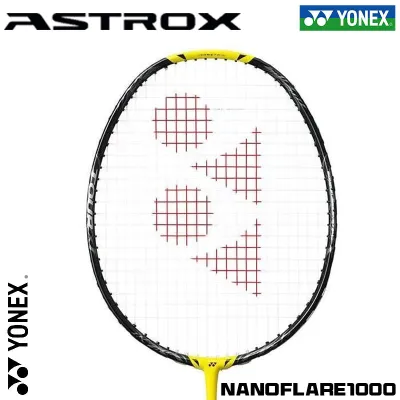
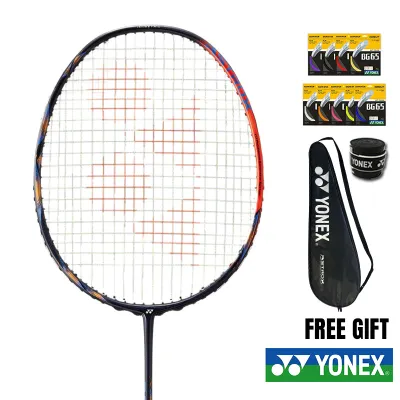
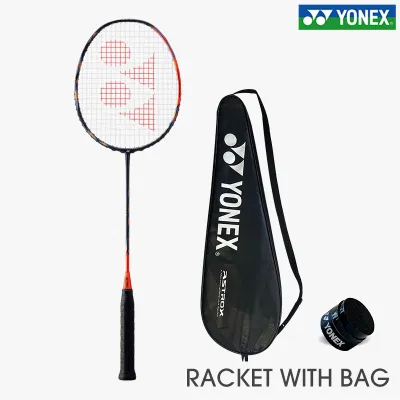
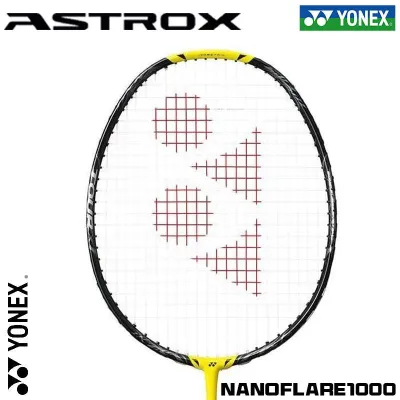

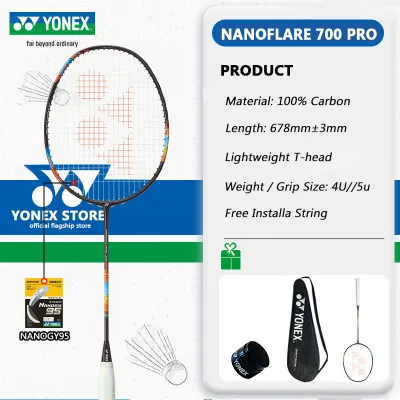
Prices are valid at publication and may change. Please refer to the product page for the latest price.
However, this power comes with a distinct trade-off in defensive scenarios and fast-paced flat exchanges. In the humid environment of indoor courts in the Philippines, where heavy air can increase drag, a head-heavy racket can feel sluggish during rapid drive exchanges or quick net play. If your defensive reaction time is a critical part of your doubles game, the extra weight at the top of the frame may lead to premature wrist fatigue and late contact points.
Shaft Stiffness: Matching Flex to Your Swing Speed
The stiffness of the shaft dictates how energy is transferred from your body to the shuttlecock during a swing. The Yonex Astrox 77 Pro features a medium-to-stiff shaft profile, which requires a specific level of swing speed and technical execution to utilize effectively. When a player with a fast, explosive swing and proper forearm pronation uses this racket, the shaft flexes slightly and snaps back rapidly at the point of impact, maximizing shuttle acceleration.

If your swing speed is still developing, or if you rely primarily on arm movement rather than wrist snap, a stiff shaft can actually hinder your performance. Without the necessary speed to bend the shaft, the racket will feel like a rigid plank, resulting in short clears and a loss of power. Furthermore, the energy that should have gone into flexing the shaft is instead transmitted back down into your hand, which can cause uncomfortable vibrations in your elbow and shoulder.
To assess whether this stiffness profile suits your game, observe your timing and contact quality during high-clear rallies. If you consistently struggle to find depth without straining your shoulder, or if your shots lack crispness, your swing speed may not yet match this racket’s stiffness. Players transitioning from flexible recreational rackets should expect an adjustment period to refine their timing and wrist release.
String Tension Limits: Balancing Control and Frame Safety
String tension is the final variable that dictates how the racket face interacts with the shuttlecock, and it is governed by strict manufacturer limits printed on the shaft. These limits, usually expressed in pounds (lbs), represent the safe structural capacity of the high-modulus carbon frame. Staying within this recommended range is essential for preserving the structural integrity of your racket under the high stress of impact.
Adjusting your tension within the recommended boundaries allows you to customize the racket’s feel to match your skill level. Stringing at the higher end of the limit increases control and provides a crisp, immediate repulsion, which is highly favored by advanced players who can consistently hit the sweet spot. However, high tension shrinks the sweet spot and reduces the trampoline effect of the string bed, requiring more physical power from your arm to generate depth.
Conversely, stringing at the lower end of the recommended range enlarges the sweet spot and provides more effortless depth, making it far more forgiving for intermediate players. Exceeding the manufacturer’s maximum tension limit is highly discouraged, as it unevenly deforms the frame and significantly increases the risk of cracking during off-center hits or accidental partner clashes. Additionally, operating outside these specified limits will void the manufacturer’s warranty.
Verifying Your Racket's True Specifications
Before taking your racket to the court, it is important to verify its physical specifications and authenticity. Genuine Yonex rackets feature clean, laser-engraved serial numbers on the shaft and cone, along with a high-quality hologram sticker on the cone that changes color under different angles. Checking these visual markers ensures you are playing with a genuine frame designed to meet the exact engineering standards of the Astrox line.
It is also crucial to recognize that the factory specifications represent a bare frame, and the actual playing specifications will shift once the racket is prepared for use. Adding strings, a replacement grip, or a soft overgrip alters both the total weight and the balance point of the racket. For instance, wrapping a thick overgrip around the handle adds weight to the bottom, shifting the balance point downward and making the racket feel slightly less head-heavy than its unstrung rating suggests.
If you find that your racket feels exceptionally heavy, stiff, or unbalanced compared to standard retail models, consult an authorized local sports retailer or a professional stringer. They can measure the actual weight and balance point using specialized diagnostic tools, helping you adjust your grip and string setup to achieve the precise on-court feel you desire.
Frequently Asked Questions (FAQ)
Is the Yonex Astrox 77 Pro suitable for beginners?
The Yonex Astrox 77 Pro is generally not recommended for absolute beginners due to its head-heavy balance and medium-to-stiff shaft. Beginners typically lack the forearm strength and pronation technique required to flex a stiffer shaft, which can lead to poor shot depth and increased risk of wrist or elbow strain. Developing players are usually better off starting with an even-balance, flexible racket to master their swing mechanics before transitioning to an attacking frame.
How does adding an overgrip change the balance point?
Adding an overgrip adds physical weight directly to the handle of the racket, which pulls the overall balance point closer to your hand. This modification makes a head-heavy racket feel slightly more headlight or even-balanced during quick defensive maneuvers. While this improves maneuverability and reduces wrist fatigue during fast drive exchanges, it also slightly reduces the natural momentum generated during overhead smashes, requiring you to use more personal physical power to achieve the same smash velocity.
Community discussion
Share your experience or ask a question. Comments are reviewed before publication.