
A specialized flashlight for diving is not merely a land-based torch with improved rubber seals. It is a critical piece of safety equipment engineered to withstand extreme hydrostatic pressure, cut through high-density aquatic environments, and operate reliably where a gear failure could lead to disorientation or decompression risks. Understanding the technical specifications of underwater lighting is essential for selecting a tool that matches your specific dive profile, environment, and skill level.
While casual snorkelers might only need a light that survives a quick splash, certified scuba divers require gear designed for sustained submersion. Evaluating specifications like depth ratings, beam angles, and regulated runtimes ensures you invest in a reliable tool rather than a generic waterproof light that will fail when you need it most.
Why Standard Waterproof Flashlights Fail: The Need for a True Flashlight for Diving
Many outdoor enthusiasts assume that an IPX7 or IPX8 water-resistance rating is sufficient for underwater exploration. This is a dangerous misconception that can lead to sudden equipment failure at depth. Standard IPX ratings are tested under static, shallow conditions—typically up to 1 or 2 meters of water for a maximum of 30 minutes. They are designed to survive heavy rain, accidental drops in a puddle, or brief surface swims, not the continuous, crushing force of deep water.
Products mentioned in this guide
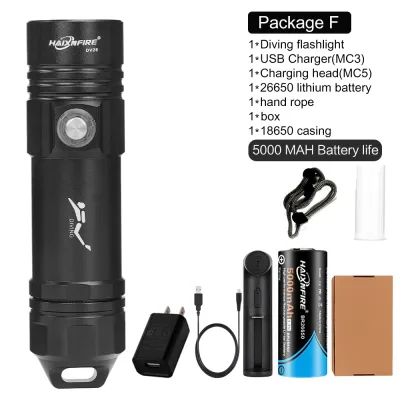
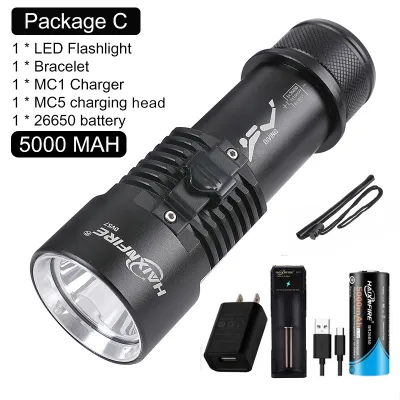
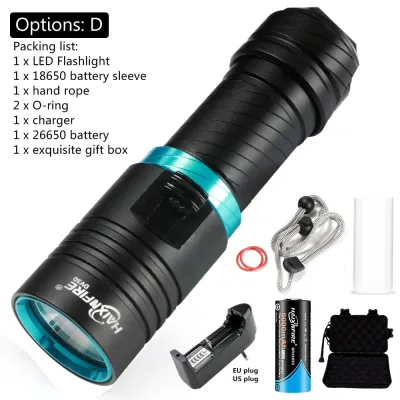
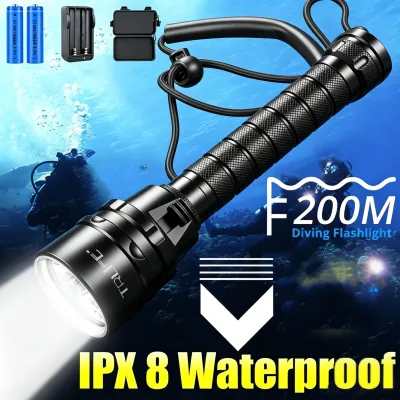
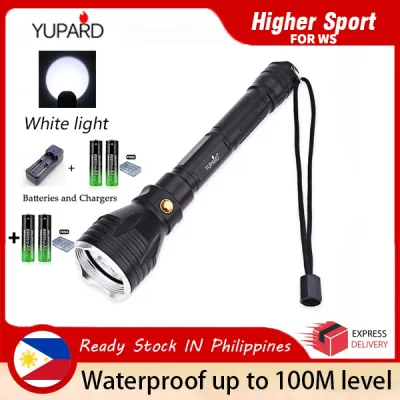
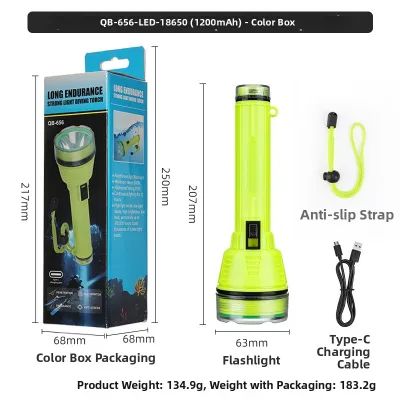
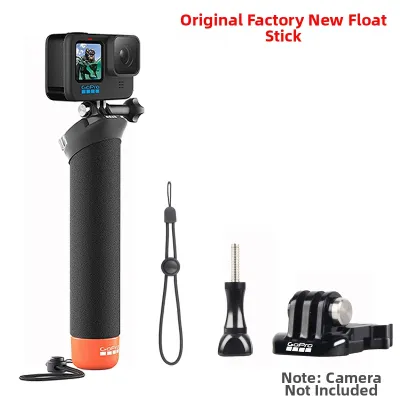
Prices are valid at publication and may change. Please refer to the product page for the latest price.
When you submerge with a non-diving light, hydrostatic pressure increases by 1 atmosphere (ATM) for every 10 meters of depth. At just 20 meters, the pressure is three times greater than at the surface. Under this immense force, standard seals compress, thin glass or plastic lenses implode, and water is forced past weak threads directly into the battery compartment. The resulting short circuit instantly kills the light and can cause the battery to vent gas rapidly.
An authentic flashlight for diving is built with thick-walled anodized aluminum or titanium, high-impact tempered glass lenses, and robust sealing systems specifically engineered to equalize or resist these deep-water forces. Utilizing anything less puts your dive safety at risk, especially during low-visibility or night dives where a reliable light source is your primary means of navigation and buddy communication.
Depth Ratings and Sealing: Matching Pressure to Your Dive Profile
To select the right light, you must match its depth rating to your certification level and target environments. Manufacturers of genuine diving lights specify depth limits in meters, feet, or atmospheres (ATM). Recreational divers limited to 18 to 30 meters should look for a light rated to at least 60 meters to provide a safe engineering margin. Technical, wreck, or cave divers operating beyond 40 meters require heavy-duty lights rated to 100 meters or deeper.

- Recreational Scuba (Up to 30m): Requires a minimum rating of 60m to 100m. These lights are typically compact, hand-held, and cost between ₱3,000 and ₱8,000.
- Technical & Deep Diving (Beyond 40m): Requires ratings of 150m to 200m+. These often utilize canister systems where the heavy battery pack is mounted on the harness, costing upwards of ₱20,000.
These extreme depth ratings are made possible by advanced mechanical sealing. High-quality dive lights utilize double or triple O-ring seals at every joint. These elastomeric rings sit in precision-machined grooves, creating a redundant barrier against water ingress. Some deep-rated lights also feature pressure-relief valves to safely vent any internal gas buildup caused by battery off-gassing under compression.
Never rely on vague marketing terms like “waterproof to deep water” without an explicit, numerical depth rating certified by the manufacturer. Additionally, remember that depth ratings assume pristine seal conditions. Saltwater, sand, and tropical humidity degrade rubber over time. Divers must inspect, clean, and verify the integrity of their O-rings before every single splash to prevent catastrophic flooding.
Lumens and Beam Angles: Compensating for Underwater Light Loss
Water absorbs and scatters light far more aggressively than air. Red wavelengths disappear in the first 5 meters, followed by orange, yellow, and green, leaving deep underwater environments looking washed out and blue. A high-lumen dive light is necessary to restore these lost colors and reveal the true vibrancy of marine life. However, raw lumens do not tell the whole story; how that light is focused determines its practical utility.
Narrow Beam (Spot) Lights
Featuring a beam angle of 5 to 15 degrees, spot lights concentrate their lumen output into a tight, intense column of light. This design is highly effective at cutting through murky water, silt, and suspended particulate matter without causing excessive backscatter. Spot beams are the industry standard for buddy signaling, exploring deep crevices on a reef wall, and navigating dark overhead environments like caves or shipwrecks.
Wide Beam (Flood) Lights
With a beam angle of 60 to 120 degrees, flood lights distribute light evenly across a wide area without a harsh central hot spot. This soft, expansive illumination is ideal for close-up coral reef observation, night snorkeling, and underwater photography or videography. However, in low-visibility or silty water, a wide beam will illuminate the suspended particles directly in front of your mask, creating a blinding glare.
When evaluating brightness, prioritize lights with regulated output circuitry. Standard flashlights gradually dim as the battery drains, which can leave you with a uselessly weak glow halfway through a dive. Regulated circuits maintain a constant, pre-set lumen level throughout the battery cycle, dropping sharply only when the cell is nearly exhausted to signal that it is time to ascend.
Battery Types and Burn Time: Managing Power in Cold Water
Power management is a critical safety consideration for any underwater activity. Dive lights generally rely on one of two power configurations: rechargeable lithium-ion (Li-ion) batteries or primary disposable batteries (such as alkaline or lithium CR123 cells). Your choice should depend on how often you dive and where you travel.
- Rechargeable Lithium-Ion (e.g., 18650, 21700 cells): Highly cost-effective for active divers, offering high energy density and consistent voltage. They are the preferred choice for regular weekend diving.
- Primary Disposable Batteries: Excellent for remote liveaboard trips in areas with limited power infrastructure, such as isolated islands in the Philippines, where charging multiple devices overnight can be challenging.
Water temperature plays a massive role in battery performance. Even in tropical climates, crossing a thermocline at depth can cause water temperatures to drop suddenly. Cold water slows down the chemical reactions inside a battery, which can reduce its effective capacity and voltage. A battery that provides 90 minutes of burn time in warm surface waters may only last 60 minutes when exposed to cold deep-water currents.
Always verify the manufacturer’s burn-time specifications at your intended output level. A light advertised with a “10-hour runtime” may only achieve that duration on its lowest 100-lumen setting; running it at a maximum of 2000 lumens might drain the battery in under an hour. To mitigate the risk of sudden darkness, never dive without a compact, fully independent backup light tucked into your BCD pocket.
Materials and Switches: Durability and Glove-Friendly Operation
Underwater gear must endure highly corrosive marine environments and physical impacts against rocks or boat ladders. The two most common body materials are hard-anodized aluminum and titanium. Aluminum (Type III hard anodizing) offers excellent heat dissipation—crucial for preventing high-power LEDs from overheating—but requires meticulous freshwater rinsing after every dive to prevent galvanic corrosion. Titanium is virtually immune to saltwater corrosion and incredibly light, but its high manufacturing cost makes it a premium option.
Equally important is the switch mechanism. Standard tail-cap push buttons can be incredibly difficult to depress at depth because hydrostatic pressure pushes against the rubber boot. Furthermore, wearing neoprene gloves reduces your finger dexterity. Look for these glove-friendly switch designs:
- Magnetic Slide or Rotary Switches: These utilize external magnets to trigger internal electronic sensors, eliminating physical holes through the flashlight body and dramatically reducing potential leak points.
- Twist Bezel (Rotary Heads): A simple mechanical twist of the light head turns the unit on or off. This design is virtually foolproof and highly resistant to accidental activation in your gear bag, though it often requires two hands to operate.
Marketing Gimmicks: Specs You Can Safely Ignore
When shopping for a dive light, it is easy to get distracted by complex feature lists designed for land-based tactical use. Features like customizable smart-memory modes, infinite brightness ramping, and multi-colored RGB auxiliary lights are unnecessary complications underwater. They create complex menu pathways that are difficult to navigate under stress or while wearing thick gloves.
Similarly, multiple strobe or SOS patterns are rarely useful for standard recreational diving and can easily confuse or panic your dive buddy if activated accidentally. A simple, robust interface offering high, medium, low, and a single emergency signal mode is far safer and more practical. Focus your budget on build quality, reliable sealing, and regulated output rather than flashy software features.
Frequently Asked Questions (FAQ)
How do I properly maintain the O-rings on my diving flashlight?
To maintain a watertight seal, always rinse your sealed flashlight thoroughly in clean, warm fresh water immediately after every saltwater dive to dissolve salt crystals. Once the light is completely dry, open the battery compartment and use a plastic tool—never a metal knife or screwdriver—to gently remove the O-rings. Wipe the rings and their matching grooves with a lint-free microfiber cloth to remove sand, hair, or salt residue. Apply a tiny, rice-grain-sized dot of pure silicone grease to your fingertips and pull the O-ring through to coat it lightly before reinstalling. Avoid petroleum-based lubricants like Vaseline, which will chemically degrade the rubber seals.
Can I use a diving flashlight for night snorkeling or shallow freediving?
Yes, a diving flashlight is highly suitable for night snorkeling and shallow freediving due to its exceptional waterproofing and durable construction. However, you must manage its heat output. Many high-power dive lights rely on the surrounding water to cool their aluminum bodies; operating them continuously on land or at the surface can cause them to overheat and trigger thermal throttling. Additionally, be highly mindful of your beam direction at the surface. Avoid shining high-intensity, concentrated beams directly into the eyes of marine life, nesting sea turtles, or your snorkeling buddies, as this can cause temporary blindness and distress.
Community discussion
Share your experience or ask a question. Comments are reviewed before publication.