
When evaluating the dl40 diving flashlight, the specifications that actually dictate its underwater performance are its real-world lumen output, beam angle, depth-rating safety margins, and battery runtime management. While marketing sheets emphasize peak brightness, a diver’s safety and visibility depend on how these specifications translate into challenging, high-scatter marine environments.
Diving in tropical waters, such as the rich marine sanctuaries of Anilao or Moalboal in the Philippines, presents unique lighting challenges. High humidity, suspended organic matter, and rapid light absorption at depth mean your primary light must be reliable, corrosion-resistant, and optically suited to your specific diving style.
Brightness and Beam Type: Seeing Clearly with the DL40 Diving Flashlight
The manufacturer specifies a maximum output of 5,000 lumens for the dl40 diving flashlight, powered by multiple LED emitters. However, raw lumens do not guarantee perfect visibility. Underwater, water absorbs light rapidly—starting with red wavelengths—and suspended particles like plankton or silt create backscatter, reflecting bright light directly back into your eyes.
Products mentioned in this guide
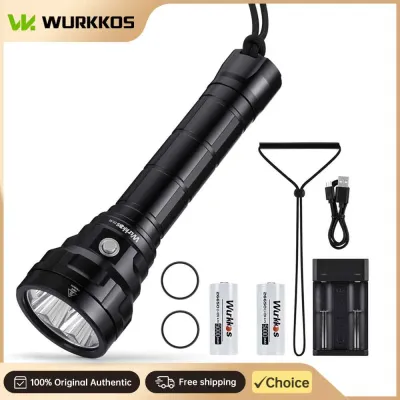
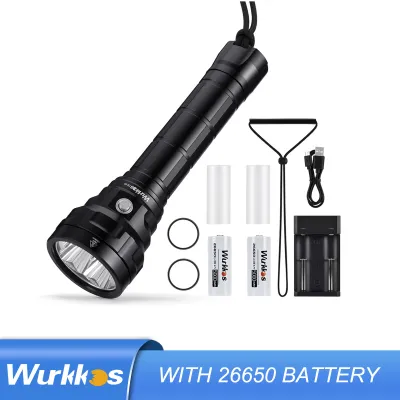
Prices are valid at publication and may change. Please refer to the product page for the latest price.
To counter backscatter, understanding the beam type is essential. A narrow spot beam (typically 10 to 15 degrees) acts like a searchlight, cutting through murky water to signal your buddy or peer into deep crevices. In contrast, a wide flood beam (60 degrees or more) distributes light evenly, which is ideal for wide-angle photography or illuminating an entire reef wall without harsh hot spots.
The DL40 uses a combination of quad emitters to balance these needs, providing a relatively wide beam with a defined center hotspot. This hybrid profile allows you to navigate open water while still having enough peripheral flood to appreciate soft corals and macro life.
Color temperature is another critical metric. The DL40 typically features a neutral white output (around 5000K), which mimics natural sunlight better than cold blue-white lights. This neutral rendering is vital at depths below 10 meters, where the water column has already filtered out red and orange wavelengths, helping restore the vibrant, natural colors of the marine environment.
Depth Rating and Build Quality: Safety Margins in the Deep
The DL40 is officially rated for depths up to 150 meters, a specification that places it well within the limits of recreational and technical diving. However, a depth rating is a laboratory measure of static pressure resistance, not a guarantee of indefinite real-world performance.

For your safety, always maintain a conservative safety margin. Pushing a flashlight to its maximum rated depth ignores dynamic factors such as rapid pressure changes during descent or the thermal shock of moving from warm tropical surface waters to a cold thermocline. Over time, physical impacts, salt buildup, and aged seals will naturally reduce this pressure tolerance.
The build quality of the DL40 directly influences its longevity under pressure. It is constructed from 6061 aerospace-grade aluminum alloy with a hard-anodized finish. This material is highly resistant to the corrosive effects of saltwater, which is particularly aggressive in warm, humid climates like the Philippines.
Before every dive, verify the physical integrity of the flashlight body. Look for deep scratches that penetrate the anodized coating, as exposed aluminum will oxidize rapidly in marine environments. Never assume the light is ready for a deep dive simply because it survived a shallow rinse or a surface test; check the seals systematically.
Battery Life and Power Management: Reliable Runtime
The DL40 is powered by two high-capacity 26650 lithium-ion batteries. While the manufacturer lists runtimes extending several hours, these figures are calculated using lower brightness modes. Running the light continuously on its highest setting will drain the batteries in a fraction of that time, often within an hour.
Water temperature plays a key role in battery efficiency. Cold water reduces the chemical activity inside lithium-ion cells, leading to shorter runtimes. While this is less of a concern in the warm waters of the Philippines, where sea temperatures often range from 26°C to 30°C, proper storage is still critical to prevent heat-induced degradation before you even enter the water.
To prevent sudden darkness, the DL40 utilizes step-down dimming. Rather than shutting off abruptly when the battery is depleted, the internal driver gradually lowers the lumen output. This power management feature ensures you have a low-intensity “get-home” light to complete your safety stop and ascend safely.
Battery safety inside a sealed tube is paramount. Always use high-quality, protected button-top cells that feature built-in overcharge and over-discharge protection circuits. Unprotected cells or mismatched batteries can vent gas under load, building up dangerous pressure inside the completely sealed aluminum housing of the flashlight.
Specs That Matter Less for Everyday Diving
When comparing dive lights, some specifications on the box are purely academic. For example, “peak beam distance” or “throw” is measured in air and has no relevance underwater. In real diving conditions, visibility is governed by water clarity, and even the most powerful beam cannot penetrate beyond a few meters of turbid water.
Similarly, overly complex user interfaces and excessive tactical modes are a liability. A light with multiple strobe patterns, SOS modes, or complicated double-click menus is difficult to operate underwater, especially when wearing thick neoprene gloves or managing buoyancy in a current.
For practical diving, a simple magnetic rotary switch or a large, tactile tail switch is far superior. The DL40 features a magnetic side switch that allows for straightforward, one-handed operation. This design minimizes the risk of water ingress compared to mechanical switches that require physical shafts penetrating the flashlight body.
Frequently Asked Questions (FAQ)
Can I use the DL40 for night diving?
Yes, the DL40 is highly suitable for night diving due to its high lumen capability and reliable battery capacity. However, you should never rely on a single light source during a night dive; always carry a compact, independent backup light in your BCD pocket to assist you in the event of a primary light failure.
How do I maintain the O-rings after saltwater dives?
After every saltwater dive, soak the flashlight in fresh water to dissolve salt deposits, then dry it completely before opening. Remove the O-rings carefully, inspect them for cracks, sand, or hair, and apply a thin coat of manufacturer-approved silicone grease. Never use petroleum-based lubricants, as they will degrade the rubber seals and cause the flashlight to flood.
Community discussion
Share your experience or ask a question. Comments are reviewed before publication.