
A divot board is a highly useful diagnostic tool if you struggle with inconsistent ball-striking, fat or thin shots, or an unpredictable swing path with your irons and wedges. However, it is not a magic cure-all. It serves as an instant visual feedback mechanism, showing you exactly where your club face interacts with the ground.
If your swing issues stem from fundamental posture flaws, poor grip, or a lack of physical flexibility, a divot board alone won’t fix them. It is best used as a diagnostic aid alongside structured practice rather than a standalone solution. Understanding how to interpret its feedback is key to deciding if this tool belongs in your golf bag.
How a Divot Board Works and What It Fixes
A divot board works by capturing the exact moment your golf club makes contact with the ground. Most models use a specialized surface—often featuring directional sequins, fabric fibers, or pressure-sensitive materials—that shifts color or texture when swiped by a club sole. This shift leaves a clear, temporary visual trail of your swing path and the precise spot where your club first touched the turf.
Products mentioned in this guide
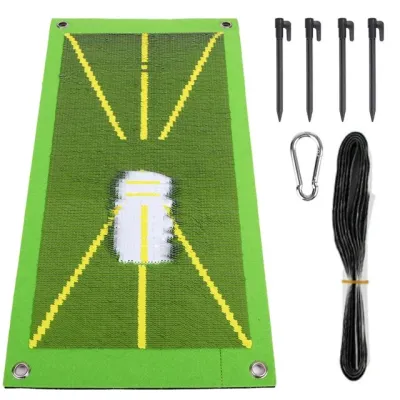
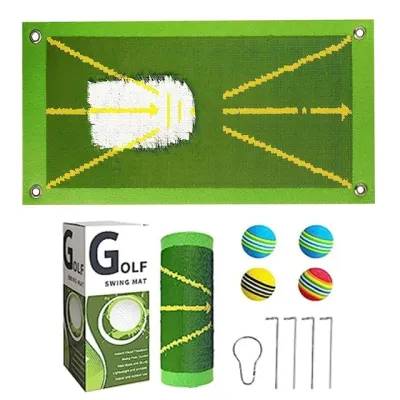
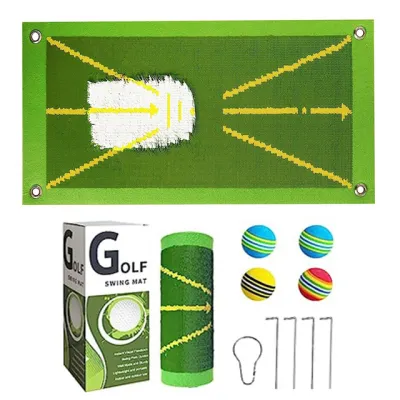

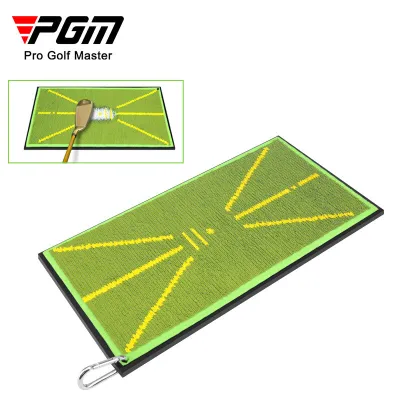
Prices are valid at publication and may change. Please refer to the product page for the latest price.
By analyzing this trail, you can instantly see your club’s low point and attack angle. If the mark begins before the ball’s position, you are hitting behind the ball. If the mark starts after the ball and points straight down your target line, you have achieved the coveted ball-first contact that characterizes clean iron play.
However, it is crucial to understand the limitations of this feedback. The board shows you what your club did at impact, but it cannot tell you why your body made that movement. It does not measure your hip rotation, wrist hinge, or weight transfer. It is a diagnostic mirror for your club head, not a biomechanical coach that automatically corrects your swing mechanics.
Self-Diagnosis: Signs You Need a Divot Board
To determine if a divot board is worth your investment, you must first analyze your typical ball-striking patterns on the course or driving range. One of the most common signs that you could benefit from this tool is consistently hitting “fat” shots. When you hit a fat shot, your club digs into the turf before making contact with the ball, resulting in a loss of distance and a muddy club face. A divot board helps you visualize exactly how many inches behind the ball your club is bottoming out.

Another clear indicator is a highly inconsistent swing path, which manifests as divots pointing severely left or right of your target. In tropical, humid conditions, playing on lush fairway grasses can sometimes mask minor path errors because the soft ground is highly forgiving. A divot board strips away this margin of error, showing you if your swing is excessively out-to-in (leading to slices) or in-to-out (leading to hooks).
Finally, if you struggle to compress the golf ball with your mid-irons and wedges, you likely have a shallow or upward attack angle at impact. To achieve proper compression, you must strike the ball with a descending blow, hitting the ball first and then the turf. If your shots constantly fly high and short without leaving any divot at all, the board will visually confirm your lack of turf interaction, prompting you to work on a downward strike.
When to Skip the Divot Board and Try Alternatives
While a divot board is an excellent diagnostic tool, it is not suitable for every golfer or every swing issue. If your primary struggles are rooted in fundamental setup errors—such as an improper grip, poor posture, or severe physical limitations—a ground-feedback board will only frustrate you. These foundational issues require professional coaching and physical conditioning rather than a tool that merely records the bad results of a flawed setup.
Additionally, a divot board is virtually useless for practicing with your driver, fairway woods, or putter. These clubs are designed to sweep the ball off the tee or glide across the top of the grass without taking a divot. If you spend most of your practice time trying to cure a driver slice, investing in a tool designed specifically for iron turf interaction is a poor allocation of your golf budget.
Before spending money on a specialized board, consider whether simpler, lower-cost alternatives can address your needs. For instance, placing a small hand towel a few inches behind your golf ball during practice serves as a highly effective low-point indicator; if your club strikes the towel, you have hit a fat shot. Similarly, inexpensive alignment sticks can help you visualize your swing path, while impact tape applied to your club face can reveal exactly where you are making contact.
What to Look for When Buying a Divot Board
If you decide that a divot board is the right tool for your training, you should carefully evaluate several structural features before making a purchase. First, examine the surface material and feedback mechanism. High-quality boards typically feature durable, replaceable sequin pads or specialized fabric layers that can withstand hundreds of high-velocity club impacts. Avoid cheap, non-replaceable plastic models that scratch easily and lose their visual clarity after just a few practice sessions.
Portability is another critical factor, especially if you frequently travel to local driving ranges or golf clubs. Look for a board with compact dimensions and a lightweight design that easily slides into the side pocket of your golf bag. A heavy, bulky board is likely to be left at home, defeating its purpose as a regular practice companion.
Finally, consider how the board integrates with your typical practice environment. You need to verify whether the board is designed for use with real golf balls, foam practice balls, or no balls at all. Additionally, check if the base of the board has non-slip rubber backing for stable use on driving range mats, or if it includes outdoor turf spikes to secure it firmly into real grass without sliding during your swing.
Safe Practice Setup and Club Protection
To get the most out of your training aid without risking injury or equipment damage, you must set it up correctly. Position the board flat on the ground, ensuring that the designated ball placement marker aligns properly with your natural stance. If the board is elevated too high above your feet, it can alter your swing plane and lead to inaccurate low-point feedback, potentially causing you to develop bad habits when you transition back to the natural turf of the course.
You must also monitor the condition of your golf clubs during use. Repeatedly striking a hard, artificial surface can place extra stress on your club’s hosel, shaft, and sole. Periodically inspect the leading edges and soles of your irons for any signs of excessive wear, scratches, or structural stress, especially if you are practicing with forged carbon steel irons, which are softer and more susceptible to cosmetic damage than cast steel.
Proper maintenance of the board itself is essential, particularly in warm, humid climates. Sweat, dirt, and grass clippings can quickly clog the feedback fibers or sequins, reducing the clarity of the visual marks. Wipe the surface clean with a damp cloth after each session, and always store the board flat in a cool, dry place. Leaving a plastic or composite board in the trunk of your car under intense tropical heat can cause it to warp, rendering the flat hitting surface uneven and unusable.
Frequently Asked Questions (FAQ)
Is a divot board suitable for high-handicap beginners?
For high-handicap beginners, a divot board can sometimes offer too much information too quickly, leading to confusion. Beginners are often still developing basic swing mechanics, grip consistency, and physical balance. Trying to analyze minute path deviations and low-point marks can cause analysis paralysis. If you are a beginner, it is highly recommended to use this tool under the guidance of a teaching professional who can help you interpret the feedback and translate it into actionable, step-by-step swing adjustments.
Can practicing on a divot board damage my iron soles?
While most divot boards are engineered to withstand standard club-to-ground interaction, repeated high-impact strikes on rigid plastic bases can accelerate wear on your iron soles over time. This is particularly true for softer forged irons or if you have a very steep, aggressive attack angle. To protect your equipment, ensure you are using a board with a cushioned shock-absorbing layer, practice with a smooth and controlled tempo rather than excessive force, and regularly inspect your club heads for any signs of wear.
Community discussion
Share your experience or ask a question. Comments are reviewed before publication.