
Selecting the right golf bag is one of the most practical decisions you will make for your game, directly impacting your physical energy, pace of play, and overall comfort on the course. If you primarily ride in a motorized golf cart, use a manual push cart, or rely on a caddie who utilizes a trolley, a dedicated golf cart bag is your best option. These bags prioritize maximum storage, superior club organization, and specialized utility features over lightweight portability.
Conversely, if you prefer walking the course and carrying your clubs on your back to get some exercise, a golf cart bag is not suitable. Its heavy construction and lack of retractable stand legs will cause unnecessary physical fatigue and back strain. For walking golfers, a dedicated stand bag or an ultra-lightweight carry bag is the correct choice. Your decision should ultimately align with your dominant course habits, physical preferences, and the specific playing conditions of your local courses.
Understanding the 3 Main Types of Golf Bags
To make an informed purchase, you must first understand the structural and functional differences between the three primary categories of golf bags available on the market today. Each type is engineered for a specific style of play and transportation method.
Products mentioned in this guide

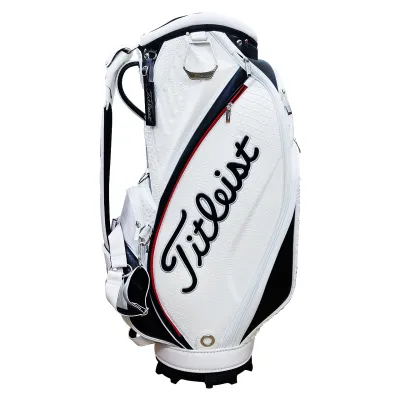
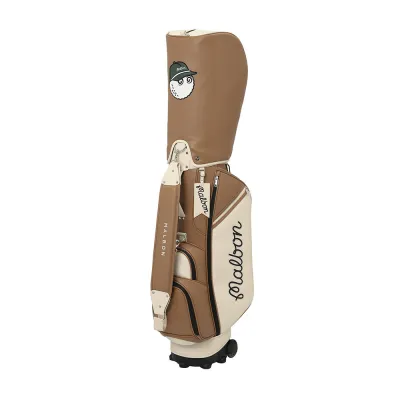
Prices are valid at publication and may change. Please refer to the product page for the latest price.
Golf Cart Bags
A golf cart bag is designed specifically to remain stationary on a motorized golf cart or a push trolley throughout your round. Because these bags are not meant to be carried over long distances, manufacturers prioritize storage capacity and structural protection over weight reduction.
These bags typically weigh between 2.5 and 4 kilograms when empty. They are characterized by a flat, symmetrical base that sits securely on cart platforms, forward-facing pockets that remain fully accessible when the bag is strapped in, and individual 14-way or 15-way full-length club dividers. Additionally, they often feature specialized compartments, such as large insulated cooler pockets that are highly practical for staying hydrated during hot, humid rounds in the Philippines.
Stand Bags
Stand bags are highly versatile options built for golfers who prefer to walk the course but still want a moderate amount of storage. The defining feature of a stand bag is its pair of integrated, retractable carbon fiber or aluminum legs. These legs automatically deploy when the base of the bag is placed on the ground, keeping your clubs upright and off the turf.
Equipped with dual, backpack-style shoulder straps, stand bags distribute weight evenly across your shoulders to minimize fatigue. While they can be strapped to a motorized cart when needed, their storage capacity is smaller than that of a cart bag, and the leg mechanism can sometimes prevent the bag from sitting perfectly flat on a cart tray.
Carry (Sunday) Bags
Carry bags, often referred to as Sunday bags, represent the minimalist end of the spectrum. These ultra-lightweight bags are designed for maximum simplicity, typically featuring a flexible, unstructured body with little to no rigid internal framing.
Because they lack heavy stand mechanisms and large pocket arrays, they usually weigh under 1.5 kilograms. They are best suited for quick trips to the driving range, par-3 courses, or casual nine-hole rounds where you only need to carry a half-set of clubs. They offer very limited protection against wet ground and minimal storage for extra gear.
Self-Diagnosis: Match Your Bag to Your Course Habits
To determine which bag type fits your lifestyle, evaluate your typical playing scenarios, regional weather conditions, and how you physically navigate the fairways.

Scenario 1: The Rider or Caddie-Assisted Player If you play almost all of your rounds riding in a motorized golf cart, or if you regularly play at courses where caddies handle your equipment using push carts, a golf cart bag is the logical choice. In the Philippines, where high heat and humidity make riding or using a caddie highly popular, having a larger bag allows you to pack extra towels, change of clothes, multiple hydration bottles, and umbrella gear without worrying about the physical weight.
Scenario 2: The Walking Purist If your primary goal on the golf course is to walk the fairways while carrying your own clubs on your back, do not buy a cart bag. Carrying a cart bag for 18 holes is physically punishing. Because cart bags lack stand legs, you would have to lay the bag flat on the grass every time you play a shot. During the rainy season, laying your bag on wet, muddy turf will quickly ruin the fabric and allow moisture to seep into your pockets, damaging your valuables and grips.
Scenario 3: The Hybrid Player If you walk and carry your clubs about 70% of the time but occasionally ride in a cart when playing longer resort courses, a versatile stand bag is your best investment. Buying a dedicated cart bag for occasional cart use will leave you with an unusable bag for your walking rounds. A premium stand bag with a cart-strap pass-through channel offers the necessary flexibility for both styles of play.
Scenario 4: The Frequent Traveler If you regularly travel by air to play golf in different regions, consider the empty weight and physical dimensions of your gear. Cart bags are bulky and heavy. When packed with a full set of 14 clubs, balls, shoes, and accessories, a cart bag can easily exceed standard airline weight limits of 20 kilograms, resulting in expensive oversize baggage fees. A lighter stand bag is generally much easier to pack into a travel cover and transport through airports.
Key Features to Evaluate in a Golf Cart Bag
If your self-diagnosis confirms that a golf cart bag is the correct fit for your playing style, you should compare specific design features to ensure you select a model that delivers maximum utility on the course.
- Club Organization: Look for a top cuff with 14-way or 15-way full-length dividers. Full-length dividers run all the way down to the base of the bag, keeping each club shaft isolated. This prevents your club grips from tangling and rubbing against each other at the bottom of the bag, which makes drawing and replacing clubs effortless and protects expensive graphite shafts from cosmetic wear.
- Pocket Layout and Accessibility: Because your bag will be strapped to a cart, all essential pockets must face outward. Ensure the bag features a velour-lined, waterproof valuables pocket for your phone and watch, large apparel pockets for rain jackets, and an easily accessible ball pocket. An insulated cooler pocket with drainage grommets is highly recommended to keep drinks cold during hot afternoon rounds.
- Cart Strap Pass-Through: This is a crucial feature that distinguishes high-quality cart bags. A dedicated pass-through channel allows you to run the cart's heavy nylon strap behind the pockets rather than over them. This ensures that when the bag is tightly secured to the cart, the strap does not crush your gear or block your access to your pocket zippers.
- Base and Stability: Inspect the bottom of the bag. A high-quality cart bag should feature a molded, non-slip rubber base designed to lock into the lower brackets of motorized carts and push trolleys. This prevents the bag from twisting or sliding sideways when driving over bumpy cart paths or uneven terrain.
- Weight and Grab Handles: Although you will not carry the bag on the course, you still need to lift it in and out of your car trunk, locker, or travel bag. Look for integrated, heavy-duty grab handles at the top cuff and a sturdy fabric strap at the base. Verify that the empty weight of the bag is manageable for your physical lifting capacity.
When to Choose a Stand or Carry Bag Instead
Despite the storage benefits of a golf cart bag, there are clear scenarios where you should actively avoid purchasing one. Knowing these boundaries will save you from an expensive purchasing mistake.
If you have any history of lower back pain, shoulder injuries, or neck strain, a cart bag may prove too cumbersome to lift and load independently. The effort required to hoist a fully loaded, 15-kilogram cart bag out of a deep SUV trunk can easily trigger physical discomfort before your round even begins.
Furthermore, if your home course is a walking-only facility that does not allow motorized carts on the fairways, or if you frequently play quick, spontaneous nine-hole practice sessions after work, a large cart bag is highly impractical. The sheer volume of the bag makes it a hindrance for fast, minimalist play. In these instances, a premium hybrid stand bag—which offers the structured organization of a cart bag but retains lightweight carrying straps and stand legs—is a far more logical and rewarding investment.
Frequently Asked Questions (FAQ)
Can I use a cart bag on a push cart?
Yes, you can use a cart bag on a manual or electric push cart, but you must verify the compatibility of the bases. Because cart bags have wider, heavier bottom molds, some smaller or older push cart models may have brackets that are too narrow to hold the bag securely. This can cause the bag to twist or slide during your round. Before purchasing, check that your push cart’s upper and lower cradles can accommodate a wide, cylindrical bag base.
Can I use a stand bag on a motorized golf cart?
Yes, stand bags can be strapped onto motorized golf carts, but they present minor trade-offs. The foot pedal mechanism at the bottom of many stand bags, which deploys the legs, can prevent the bag from sitting completely flat on the cart’s metal tray. This often causes the bag to twist sideways during transit, making it difficult to access your clubs. To resolve this, look for stand bags that feature leg-lock straps and a flat, cart-friendly base design.
Community discussion
Share your experience or ask a question. Comments are reviewed before publication.