
Choosing between a hinged knee support and a regular compression sleeve depends entirely on your joint stability needs and the mechanical demands of your activities. A regular sleeve provides uniform compression, warmth, and mild proprioceptive feedback, making it suitable for general ache management and linear movements. In contrast, a hinged knee support incorporates rigid or semi-rigid uprights to restrict unnatural lateral motion and hyperextension, which is necessary for ligament instability, post-operative protection, or high-impact pivoting sports. Use this self-assessment to determine which level of mechanical intervention your body actually requires.
Assess Your Knee Symptoms and Stability Needs
Understanding the specific signals your joint sends is the first step in choosing the correct gear. General muscle fatigue, mild swelling, and a dull ache after a long day of walking are typically soft-tissue issues. These symptoms respond well to uniform compression, which helps manage localized swelling and keeps the joint warm. In tropical climates where humidity is high, a lightweight sleeve can offer this basic support without trapping excessive heat or causing severe skin chafing during daily commutes.
Structural instability, however, is a completely different mechanical problem that compression alone cannot resolve. If you experience your knee “giving way” when turning, feel a distinct looseness inside the joint, or suffer sharp pain during sudden lateral shifts, your ligaments may require physical reinforcement. These sensations indicate that the joint is struggling to maintain its proper alignment under load. A regular sleeve lacks the structural rigidity to stop these abnormal lateral movements, leaving the joint vulnerable to further strain.
Products mentioned in this guide
Prices are valid at publication and may change. Please refer to the product page for the latest price.
To identify what your knee requires, observe how it behaves during simple daily movements. Stand on one leg and notice if your knee wobbles outward or inward, or if you feel an instinctive fear of the joint collapsing. If you feel secure during straight-line movements but unstable when stepping sideways off a curb or turning to greet someone, your knee is signaling a need for rigid lateral support. A hinged brace provides physical barriers on the sides of the joint to prevent these exact movements, whereas a sleeve only hugs the skin.
It is crucial to remember that while a brace manages symptoms and provides mechanical aid, it does not replace professional medical diagnosis, tissue healing, or targeted rehabilitation. Wearing a support can help you stay active and protect a vulnerable joint, but it should be paired with exercises that strengthen the surrounding muscles, such as the quadriceps and hamstrings. Relying solely on a brace without addressing the root cause of the weakness can lead to long-term muscle imbalances.
Match Your Movement Patterns to the Right Support
Your daily activities and sports participation dictate the mechanical forces your knees must endure. Low-impact, linear activities involve movements that occur primarily in a single plane. Walking along flat streets, light cycling, and straight-line jogging do not subject the knee to sudden twisting or side-to-side forces. For these activities, a compression sleeve is generally sufficient because its primary role is to improve proprioception—your brain’s awareness of the joint’s position—and to promote blood flow.

High-impact, pivoting, or heavy-load activities introduce complex forces that can easily compromise an unstable knee. Sports like basketball, tennis, badminton, and football require rapid changes of direction, sudden deceleration, and jumping. These actions subject the knee to intense lateral and rotational stress. Similarly, heavy squats or lifting weights on uneven surfaces can push a compromised joint past its safe range of motion. In these scenarios, the mechanical uprights of a hinged support are necessary to absorb lateral forces and prevent hyperextension.
Choosing between these two options also involves weighing practical trade-offs regarding comfort, weight, and wear duration. Hinged braces are inherently heavier, bulkier, and more restrictive than simple slip-on sleeves. In hot and humid weather, the thick neoprene and metal hinges of a structured brace can trap sweat, leading to skin irritation if worn for extended periods. A compression sleeve is highly breathable, fits easily under standard trousers, and can be worn comfortably throughout a busy day of running errands or working at a desk.
Furthermore, a hinged brace requires a more deliberate fitting process to ensure the mechanical hinges align perfectly with your knee’s natural pivot point. If the brace is misaligned, it can fight against your natural stride, causing discomfort and reducing the effectiveness of the support. A sleeve, by contrast, is highly forgiving and simply slides into place. If your routine consists mostly of desk work punctuated by occasional walks, the simplicity of a sleeve is highly practical, whereas an active lifestyle involving court sports or heavy lifting makes the structural security of a hinged brace worth the extra bulk.
Compare the Mechanics: Hinged Support vs. Compression Sleeve
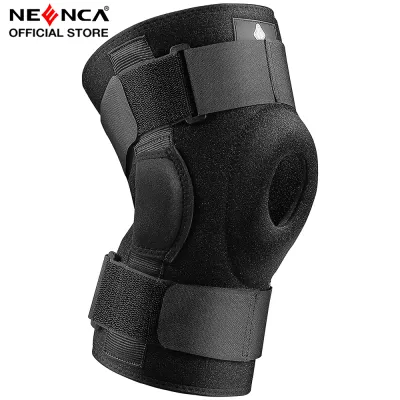
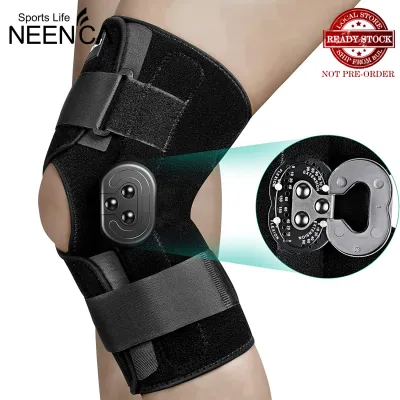
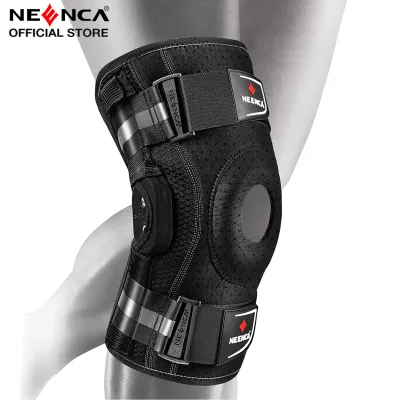
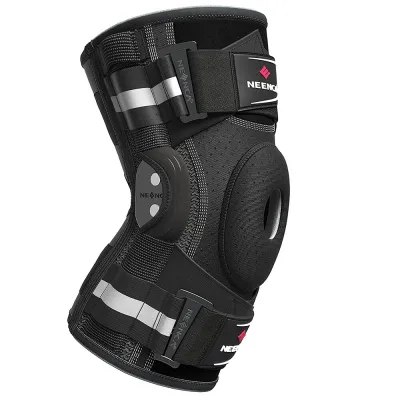
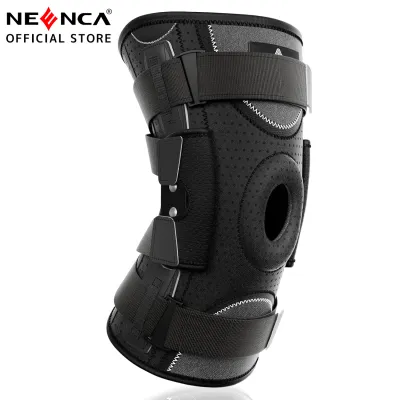
To make an informed decision, it helps to contrast how these two types of support interact with your joint anatomy. A hinged knee support relies on rigid or semi-rigid side stays connected by a mechanical hinge that mimics the knee’s natural bending motion. This design physically blocks the knee from bending sideways (varus or valgus deviation) and can prevent the joint from straightening too far backward (hyperextension). The straps above and below the kneecap anchor the rigid frame firmly to your thigh and calf, transferring external forces away from your vulnerable ligaments.
A standard compression sleeve operates on a completely different biomechanical principle. It does not have rigid components to block movement; instead, it applies continuous, gentle pressure to the soft tissues surrounding the joint. This compression increases local blood circulation, which can help reduce minor swelling and keep the joint lubricated. Additionally, the constant pressure on your skin stimulates sensory receptors, helping your nervous system coordinate muscle movements more efficiently. This subtle feedback can make your knee feel more stable, even though there is no physical structure holding it in place.
The physical profile of each option also dictates how and when you can wear them. A sleeve is typically made of knitted elastic fabric or thin neoprene, allowing it to slide easily under slim-fit jeans or athletic wear. It is virtually invisible under clothing and allows for an unrestricted range of motion. A hinged support, with its metal or plastic uprights, thick straps, and prominent hinges, is highly visible and usually must be worn over clothing or with loose-fitting athletic shorts. It deliberately restricts certain movements to keep you safe, which can make it feel stiff or awkward at first.
To help you visualize where your needs fall, consider this quick-reference mapping of common scenarios and the appropriate support type:
| Scenario | Recommended Support | Primary Biomechanical Goal |
|---|---|---|
| Mild joint stiffness after sitting | Compression Sleeve | Retain warmth and improve local circulation |
| Returning to basketball or tennis after a ligament sprain | Hinged Knee Support | Prevent lateral twisting and hyperextension |
| Long-distance running on flat pavement | Compression Sleeve | Enhance proprioception and manage minor swelling |
| Heavy squatting or powerlifting with mild instability | Hinged Knee Support | Provide mechanical reinforcement under heavy loads |
| Daily walking and commuting in humid weather | Compression Sleeve | Lightweight comfort and basic joint awareness |
Recognize Red Flags and Seek Professional Guidance
While self-assessment is a valuable starting point, certain symptoms indicate that self-selection of a knee brace is insufficient or potentially risky. If you experience a sudden “popping” sound accompanied by immediate swelling, find yourself completely unable to bear weight on the leg, or notice a visible deformity in the joint, you must seek immediate medical evaluation. These are signs of severe structural damage, such as a complete ligament tear or bone fracture, which cannot be safely managed by an over-the-counter support.
Using a hinged brace incorrectly can also lead to secondary complications. If the mechanical hinges are not aligned precisely with the natural axis of your knee joint, the brace will resist your natural movement. This misalignment can cause friction against your skin, leading to painful chafing or blisters, especially in hot and humid conditions. More seriously, an improperly fitted hinged brace can alter the biomechanics of your stride, transferring unwanted stress to your hip or ankle joints and potentially causing new pain elsewhere in your body.
Before purchasing a highly structured support, it is highly recommended to consult a physical therapist, orthopedic specialist, or a qualified medical fitter. These professionals can accurately measure your joint laxity, identify specific muscle weaknesses, and recommend the exact level of bracing required for your condition. They can also ensure that your brace is sized correctly and teach you how to adjust the straps to maintain proper alignment during movement, ensuring your recovery remains on the right track.
Frequently Asked Questions (FAQ)
Can I wear a hinged knee support all day?
It is generally not recommended to wear a hinged knee support all day unless specifically instructed by a medical professional. Prolonged use of a highly structured brace can lead to skin irritation, heat rash, and restricted circulation, particularly in warm and humid environments. More importantly, relying on a rigid brace for extended periods can cause your supporting muscles to become inactive, leading to muscle dependency and weakness over time. It is best to wear the brace during high-risk activities or periods of heavy movement, and remove it during rest to allow your muscles to engage and your skin to breathe.
How do I measure my leg for a proper brace fit?
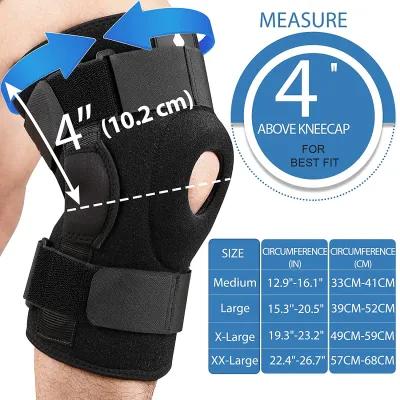
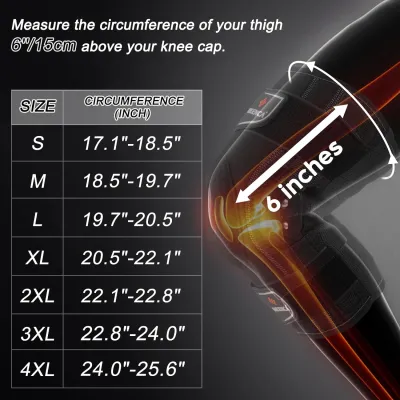
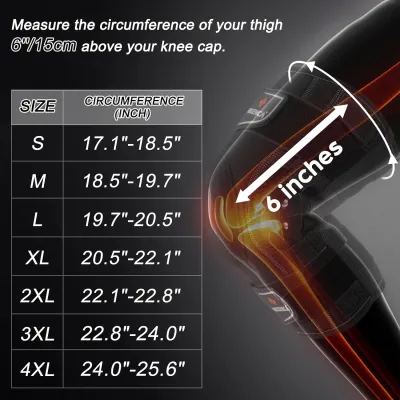
Measuring for a knee support depends heavily on the type of gear you are choosing. For a standard compression sleeve, you typically only need to measure the circumference of your leg at the center of your kneecap, or slightly above it, using a flexible measuring tape. For a hinged knee support, the process is much more precise. You will usually need to measure the circumference of your thigh (typically 15 centimeters above the kneecap) and your calf (typically 12 centimeters below the kneecap) to ensure the rigid frame and straps can anchor securely. Accurate measurements prevent the brace from sliding down during movement and ensure the mechanical hinge aligns perfectly with your knee’s natural pivot point.
Community discussion
Share your experience or ask a question. Comments are reviewed before publication.