
Struggling with persistent lower back pain that shoots down your leg can make daily life incredibly challenging. If you have been searching for relief, a lumbar traction bed might be on your radar. However, whether you actually need one depends entirely on whether your pain stems from structural spinal compression or simple muscle fatigue. Lumbar traction is a highly targeted mechanical intervention designed for specific disc and nerve issues, not a general tool for everyday back stiffness.
To make an informed decision, you must understand the underlying mechanics of spinal decompression, recognize the specific symptoms that respond to this therapy, and identify the critical safety red flags that make traction dangerous. Comparing traction to other popular recovery tools like foam rollers and massage guns will help you choose the right path toward lasting pain relief.
How Lumbar Traction and Spinal Decompression Work
When you lie on a lumbar traction bed, a controlled mechanical pull is applied to your pelvis while your upper body remains anchored. This tension acts directly on the lumbar spine, specifically targeting the segments from L1 down to L5-S1. The primary mechanical goal is spinal decompression: separating the vertebral bodies to reduce pressure on the intervertebral discs.
Products mentioned in this guide
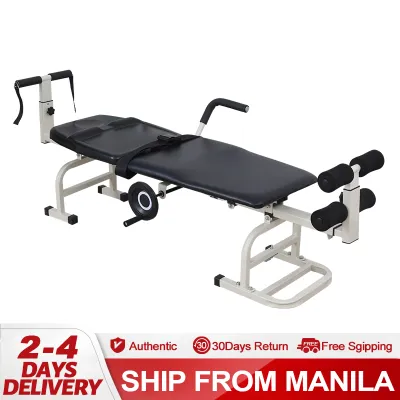

![[UEB Mall] Back Stretcher Adjustable Lumbar Spine Lounger for Men Women Lower Back](https://img.lazcdn.com/g/p/7ab18cb648295cf9c8dfeb597a2a1532.jpg_400x400q80.jpg_.webp)
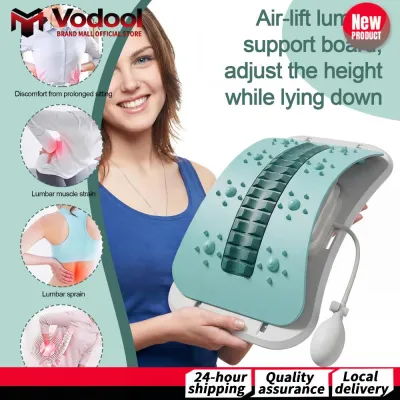
![[Vodool Tool Outlet] Back Stretcher Adjustable Back Massager Airbag for Men Women Lower Back](https://img.lazcdn.com/g/p/3c7ebc17df192e4055749494b3737d98.jpg_400x400q80.jpg_.webp)
![[Auto Vktech] Back Stretcher Ergonomic Adjustable Lumbar Spine Lounger with Massage Points Fitness Stretching Equipment for Home Office](https://img.lazcdn.com/g/p/d599471f9ecd304a985deedf5c783bbb.jpg_400x400q80.jpg_.webp)
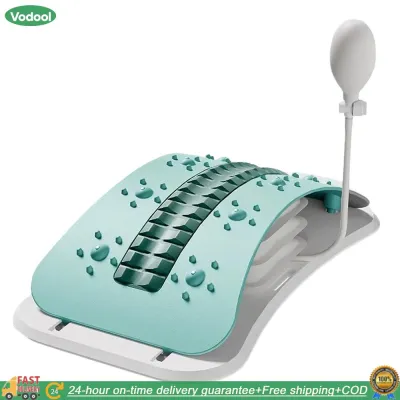
![[Ueb Wholesale Center]Back Stretcher Adjustable Lumbar Spine Lounger Fitness Stretching Equipment for Home Office](https://img.lazcdn.com/g/p/95fa28aadfa0c6faa6ea91e039c2f550.jpg_400x400q80.jpg_.webp)
Prices are valid at publication and may change. Please refer to the product page for the latest price.
In a healthy spine, discs act as shock absorbers. When compressed due to poor posture, heavy lifting, or age-related wear, these discs can bulge or herniate, pressing against the spinal cord or exiting nerve roots. Traction stretches the surrounding spinal muscles and ligaments, creating a negative intradiscal pressure—essentially a vacuum effect. This negative pressure can help draw herniated disc material back toward the center of the disc, while simultaneously drawing in nutrient-rich fluids, oxygen, and water to promote tissue healing.
However, it is crucial to understand the difference between clinical-grade decompression and consumer-grade home devices. In a rehabilitation clinic or hospital in the Philippines, physical therapists use motorized traction tables. These computerized systems are highly sophisticated; they apply pull-and-release cycles (intermittent traction) designed to bypass your body’s natural muscle guarding. If a machine pulls too hard or too suddenly, your lower back muscles will instinctively spasm to protect the spine. Clinical machines prevent this by ramping the tension up and down gently.
In contrast, home-use lumbar traction beds or manual traction frames typically rely on static tension. You manually crank a lever or use a strap system to apply a continuous pull. While these can offer symptomatic relief, they lack the adaptive feedback and safety mechanisms of clinical systems. Furthermore, traction is a highly specific, structural intervention. It is designed to target mechanical compression of the joints and discs, not to serve as a general tool for everyday relaxation or muscle pampering.
Symptoms That Suggest You Might Benefit from Traction
How do you know if your lower back pain is structural enough to warrant spinal decompression? The most common indicator is nerve-root compression, often presenting as sciatica. This is not a dull, localized ache in your lower back. Instead, it is a sharp, shooting, or electric pain that travels from your lower back, through your glutes, and down the back or side of your leg, sometimes reaching your foot. You might also experience localized numbness, a “pins and needles” sensation, or muscle weakness in your leg or foot. These symptoms suggest that a bulging disc or a narrowed spinal canal (stenosis) is physically pinching a nerve.

Postural patterns also provide critical clues about whether your spine will respond well to traction. Pay close attention to how your body reacts to different positions:
- Pain that worsens with prolonged standing or walking: When you stand, gravity naturally compresses your lumbar spine, and the lumbar curve (lordosis) increases, narrowing the space for your nerves. If walking or standing for more than 15 minutes makes your legs feel heavy, weak, or painful, you may have spinal stenosis or facet joint compression.
- Pain that is relieved by lying flat or bending forward: If sitting down, leaning forward over a desk, or lying flat on your back with your knees bent brings immediate relief, your spine favors flexion (opening up the back of the spinal canal). Traction mimics this opening effect by physically separating the vertebrae.
In the Philippines, these symptoms are often exacerbated by daily lifestyle factors. Spending hours commuting in a cramped car or public utility vehicle along congested roads like EDSA compresses the spine continuously. Combined with sitting in poorly designed office chairs in highly air-conditioned offices, your spinal discs lose hydration and struggle to recover.
While these symptoms point toward a potential benefit from decompression, they are not a green light to purchase a home lumbar traction bed immediately. They are indicators that you should schedule an evaluation with a specialist. Self-diagnosing based on radiating pain can be dangerous, as nerve pain can sometimes stem from non-spinal issues, such as piriformis syndrome or vascular conditions, which traction will not resolve.
Red Flags: When Traction Is Unsafe and You Need a Doctor
Spinal traction applies significant mechanical force to your skeletal structure. While this force can relieve compressed nerves, it can cause catastrophic damage if your spine is structurally compromised or unstable. There are absolute contraindications where a lumbar traction bed must never be used.
First, individuals with severe osteoporosis must avoid traction entirely. Because osteoporosis weakens the internal bone density of the vertebrae, the pulling force of a traction bed can actually trigger a vertebral compression fracture. Similarly, if you have spinal instability, such as spondylolisthesis (where one vertebra slips forward over another), traction can worsen the slippage and severely injure the spinal cord. Other absolute contraindications include:
- Recent spinal fractures, severe trauma, or unhealed bone injuries.
- Spinal tumors, metastases, or localized infections (osteomyelitis).
- Advanced rheumatoid arthritis, which weakens the ligaments supporting the spine.
- Pregnancy, as the pelvic harnesses used in traction beds place unsafe pressure on the abdomen and pelvic ligaments are already loosened by the hormone relaxin.
Beyond these chronic conditions, you must watch for emergency “red flag” symptoms. If you experience any of the following, do not seek traction or physical therapy; instead, go to the nearest emergency room immediately:
- Cauda Equina Syndrome: A medical emergency caused by severe compression of the nerve roots at the base of the spinal cord. Symptoms include a sudden loss of bowel or bladder control (either incontinence or the inability to urinate).
- Saddle Anesthesia: Numbness or a profound loss of sensation in the areas of your body that would touch a saddle—your groin, buttocks, perineum, and inner thighs.
- Progressive Leg Weakness: A sudden or rapidly worsening inability to lift your foot (foot drop), or your leg buckling when you attempt to stand or walk.
Using a home traction bed when these red flags are present can lead to permanent nerve damage or paralysis. A traction bed is a supportive recovery tool, not a diagnostic device or a cure for acute medical emergencies.
Traction Beds vs. Foam Rollers and Massage Guns
When lower back pain strikes, it is common to reach for whatever recovery gear is nearby, such as foam rollers, massage guns, or heating pads. However, using the wrong tool for a structural spinal issue can backfire. To make an informed choice, you must understand the difference between deep structural issues and superficial muscle tension.
A lumbar traction bed targets the deep structural components of your spine. It works on the bones, intervertebral discs, deep spinal ligaments, and nerve roots. Its goal is to change the physical spacing of your joints.
In contrast, foam rollers, massage guns, and heat therapy target the superficial soft tissues—specifically your skeletal muscles and fascia. A massage gun uses rapid percussive therapy to increase local blood flow and temporarily desensitize tight muscle fibers. A foam roller utilizes your body weight to perform myofascial release, smoothing out tight fascial sheets and relieving localized muscle knots (trigger points).
To determine which tool matches your needs, use this simple decision framework:
- Deep Structural Pain: If your pain is sharp, shoots down your leg, is accompanied by numbness or tingling, or worsens when standing and improves when lying down, your issue is likely structural. You should seek a professional spinal decompression evaluation.
- Superficial Muscular Pain: If your pain is a dull, aching soreness localized strictly in your lower back muscles, feels like post-workout stiffness, or is triggered by a sudden twist or heavy lift without any radiating leg symptoms, it is likely a muscle strain. This is where massage guns, foam rollers, and heat therapy excel.
| Feature | Lumbar Traction Bed | Foam Roller & Massage Gun |
|---|---|---|
| Primary Target | Discs, nerve roots, joint capsules | Skeletal muscles, fascia |
| Action | Mechanical axial stretching | Compression, percussion, myofascial release |
| Best For | Sciatica, herniated discs, spinal stenosis | Muscle soreness, trigger points, stiffness |
| Risk Level | High (requires professional screening) | Low to moderate (safe for general muscle use) |
A critical warning must be highlighted: if you suspect you have a bulging or herniated disc, do not use a hard foam roller directly under your lumbar spine. Unlike your thoracic spine (upper and mid-back), which is structurally supported and braced by your rib cage, your lumbar spine is highly mobile and lacks lateral bony support. Pressing a hard, dense foam roller directly into your lower back forces your lumbar vertebrae into extreme hyperextension. If a disc is already bulging backward, this hyperextension can pinch the disc further, exacerbating the herniation and causing severe, acute pain.
Action Plan: What to Do Before Using a Traction Bed
If your symptoms point toward a structural spinal issue, your path forward must prioritize professional guidance to avoid injury. Do not start by browsing online marketplaces for home traction equipment.
First, schedule a consultation with a licensed physical therapist, physiatrist, or orthopedic specialist in the Philippines. They will perform a comprehensive physical assessment, testing your reflexes, dermatomes, and muscle strength. If necessary, they will order imaging, such as an MRI or X-ray, to pinpoint the exact source of your pain and confirm whether decompression is safe for your specific spinal anatomy.
Second, always undergo guided, clinical traction sessions first. A physical therapist can safely test your tolerance to spinal decompression in a controlled environment. They will determine the precise pull weight (often starting at a fraction of your body weight) and duty cycle that relieves your pain without triggering muscle spasms. If clinical traction fails to improve your symptoms after several sessions, buying a home device is highly unlikely to help, saving you from a costly and ineffective investment.
Third, if your specialist formally clears you for home traction, carefully verify the specifications of any device you consider purchasing. Ensure the frame has a certified weight capacity that safely exceeds your body weight. Look for adjustable tension limits that allow you to precisely control the pulling force, and verify that the pelvic and thoracic harness straps are highly secure, slip-resistant, and comfortable to use in a humid, tropical environment.
Frequently Asked Questions (FAQ)
Can I use a lumbar traction bed every day?
You should only use a lumbar traction bed as frequently as prescribed by your doctor or physical therapist. Using traction daily without professional guidance can overstretch your spinal ligaments, trigger protective muscle spasms, and lead to joint instability, which ultimately worsens your lower back pain.
Is an inversion table the same as a lumbar traction bed?
No, they function differently. Inversion tables use gravity and your entire body weight at an inverted angle, which stretches your entire spine and increases blood pressure in your head and eyes. A lumbar traction bed allows you to lie flat, using mechanical or motorized force to isolate and stretch only the lower spine.
Will traction cure a herniated disc?
No, traction is not a permanent cure for a herniated disc. It is a symptom-management and recovery tool that temporarily relieves pressure and creates an optimal environment for natural healing. True long-term recovery requires a combination of medical management, core stabilization exercises, and lifestyle adjustments.
Community discussion
Share your experience or ask a question. Comments are reviewed before publication.