
Practicing yoga on a hard surface can quickly turn a peaceful session into a painful test of endurance. For many practitioners, especially those practicing on the polished concrete, tile, or hardwood floors common in tropical homes, joint discomfort is a frequent barrier to a consistent routine. While a standard yoga mat provides a stable surface for standing poses, it often lacks the concentrated cushioning required to protect sensitive joints during floor work. This leaves many yogis facing a common dilemma: should you invest in a dedicated yoga kneeling pad, or is folding your regular mat over itself a sufficient solution?
The answer depends largely on your physical needs, the style of yoga you practice, and the specifications of your current gear. While the folded mat trick is a convenient, zero-cost quick fix, it has distinct structural limitations that can compromise your balance and alignment. A dedicated kneeling pad, on the other hand, offers targeted, high-density support that preserves your posture without disrupting your flow. By understanding how different materials compress under pressure, you can make an informed decision that keeps your practice safe, comfortable, and sustainable over the long term.
Signs Your Current Yoga Mat Isn't Protecting Your Knees
Recognizing when your current setup is failing to protect your joints is the first step toward preventing chronic discomfort. The most obvious signal is localized pain or sharp pressure in your kneecaps during floor-based postures. Poses such as Low Lunge, Camel Pose, or even Tabletop place a significant portion of your body weight onto a very small surface area. If you find yourself constantly shifting your weight, cutting poses short, or feeling a lingering ache in your joints after your practice, your mat is not providing adequate shock absorption.
Products mentioned in this guide
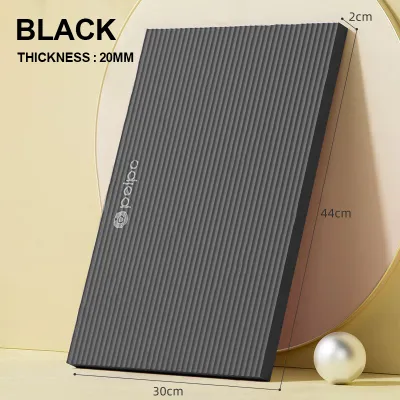
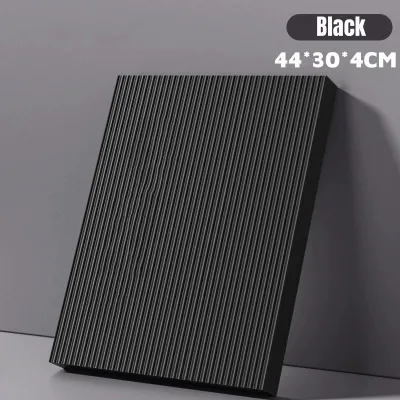
Prices are valid at publication and may change. Please refer to the product page for the latest price.
Another clear indicator is the physical condition of your knees after you step off the mat. Redness, mild bruising, or skin sensitivity on the bony parts of your knees or elbows suggest that your joints are bottoming out. This occurs when the weight of your body compresses the mat completely, leaving your bones resting directly against the hard floor beneath. Even if you do not feel immediate pain during the pose, this repeated micro-trauma can lead to joint inflammation over time.
You should also evaluate the physical state and specifications of your current yoga mat. Standard mats typically range from 3mm to 5mm in thickness, which is often insufficient for joint sensitivity, especially if the mat is made of low-density PVC foam. Over time, all mats experience material fatigue, losing their original elasticity and compression resistance. If you notice permanent indentations, flaking material, or a general thinning in the areas where your hands, feet, and knees normally rest, your mat has reached the end of its supportive lifespan.
The Folded Mat Trick: When It Works and When It Fails
The most common immediate solution to knee discomfort is simply folding your yoga mat over itself to double or triple its thickness. This method is highly effective for quick, static holds where you only need temporary relief. By layering the mat, you increase the physical barrier between your joint and the floor, distributing your weight across a slightly thicker cushion. For occasional use in a gentle hatha or restorative class, this simple adjustment can save you the trouble of carrying extra accessories.

However, the folded mat trick fails when applied to dynamic, flowing styles of yoga such as Vinyasa or Flow. Stopping to fold and unfold your mat during a fast-paced sequence disrupts your mental focus and breaks the physical rhythm of your breath. Furthermore, the folded section creates an uneven surface with raised edges. These edges can easily catch your toes during transitions, presenting a tripping hazard as you step forward from Downward-Facing Dog into a lunge.
Safety and balance are also compromised when you rely on a folded mat. Because the mat is designed to lie flat, folding it can cause the layers to slide against one another, reducing your stability. The sudden increase in height under one part of your body can throw off your overall alignment, placing unnatural lateral stress on your ankles, knees, or wrists. If you find yourself struggling to maintain balance or constantly adjusting your mat mid-flow, the folded mat trick is no longer a safe or practical option for your practice.
How a Dedicated Yoga Kneeling Pad Changes Your Practice
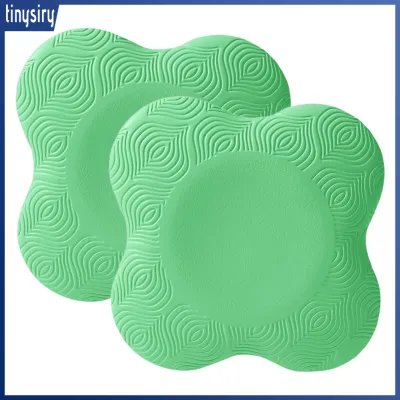
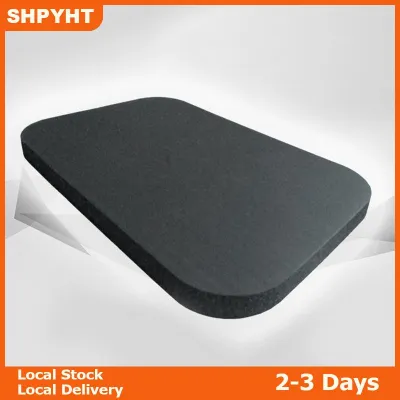
A dedicated yoga kneeling pad is engineered specifically to address the limitations of both thin mats and folded makeshift cushions. Typically constructed from high-density, closed-cell foam such as Thermoplastic Elastomer (TPE) or Nitrile Butadiene Rubber (NBR), these pads are designed to resist deep compression. Unlike standard mats that flatten completely under localized pressure, a high-density pad distributes the concentrated load of your kneecap or elbow across its entire surface, preventing your joint from making contact with the hard floor.
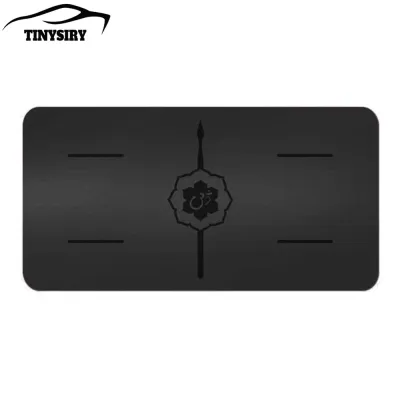
One of the primary advantages of a dedicated pad is its stability and ease of integration into your routine. These pads are designed to sit securely on top of your existing yoga mat, featuring textured, non-slip surfaces on both sides that grip the mat beneath them. This ensures the pad remains firmly in place, allowing you to transition smoothly between poses without worrying about slipping. Because they are small and lightweight, they can be easily slid into position when needed and pushed aside when you return to standing poses.
This accessory is particularly beneficial for specific practitioner profiles. If you are recovering from a joint injury, manage chronic conditions, or naturally have less natural padding around your joints, a kneeling pad can make floor work accessible again. It is also an excellent tool for those who practice yin yoga, where poses are held for several minutes at a time, requiring sustained, reliable cushioning that will not compress or shift over duration.
Decision Guide: Should You Buy a Kneeling Pad or Stick to Your Mat?
To determine the best path forward for your practice, evaluate your pain frequency, the style of yoga you practice, and your budget. If you only experience mild discomfort occasionally during a single pose, you can likely stick to your current mat or use a zero-cost household alternative. A tightly folded cotton towel or a firm, woven blanket can provide excellent localized support. However, these fabric alternatives lack non-slip properties, so they should only be used for static, low-intensity poses where sliding is not a risk.
If you practice regularly and experience knee discomfort in almost every session, investing in a dedicated yoga kneeling pad is a highly practical decision. In the local market, a quality kneeling pad typically costs between ₱250 and ₱800 on major online marketplaces. This is a highly cost-effective upgrade compared to purchasing a premium, ultra-thick professional yoga mat, which can easily cost between ₱3,000 and ₱6,000. Additionally, a separate pad allows you to keep using a lightweight, portable travel mat for your daily commute while still enjoying maximum cushioning when you arrive at the studio.
When shopping for a yoga kneeling pad, perform a few essential verification checks to ensure you select a safe and durable product. First, check the manufacturer’s specifications for material density rather than just thickness; high-density TPE or silicone pads offer much better support than cheap, airy foam. Second, verify the dimensions to ensure the pad is wide enough to support both of your knees simultaneously during wide-stance poses. Finally, inspect the surface texture in product photos to confirm it features a deep, slip-resistant pattern that will grip your mat even when wet with sweat.
Frequently Asked Questions (FAQ)
Can I use a regular household cushion instead of a yoga kneeling pad?
Standard household cushions and decorative pillows are not suitable substitutes for a yoga kneeling pad. These items are filled with soft, loose materials like polyester fiberfill or down, which lack the density required to support your body weight. When you place your knee on a household cushion, it compresses completely, offering virtually no protection against the hard floor. Furthermore, the uneven compression of a soft pillow can cause your joints to tilt at unstable angles, increasing the risk of joint strain or twisting. Household fabrics also lack non-slip backing, meaning the cushion can easily slide out from under you during transitions, creating a serious slipping hazard. Standard cushions should only be used for static, non-weight-bearing practices like seated meditation or restorative savasana.
What thickness should I look for if I decide to buy a kneeling pad?
If you decide to purchase a yoga kneeling pad, look for a thickness between 15mm and 20mm. This range provides the ideal balance between joint comfort and structural stability. If you choose a pad that is excessively thick, such as over 25mm, you may find that it raises your joints too far off the ground, altering your body’s natural alignment and putting strain on your wrists or lower back during poses like Tabletop. It is also critical to look beyond thickness and verify the material density. A high-density 15mm TPE pad will provide significantly better support and longevity than a low-density 25mm cheap foam pad, which will quickly bottom out and degrade under your weight.
Community discussion
Share your experience or ask a question. Comments are reviewed before publication.