
Deciding whether to add a cable crossover machine to your home gym comes down to a balance of training variety, available floor space, and your overall budget. While a dual-cable system is one of the most versatile pieces of strength equipment you can own, it is rarely a strict necessity for a functional home setup. For most lifters, free weights form the foundation of strength, while cables serve as an excellent tool for isolation, constant tension, and joint-friendly movement.
Before making a significant financial and spatial commitment, it is essential to evaluate how this equipment fits into your daily training routine. A cable crossover can elevate your workouts, but only if you have the physical room to use it safely and the specific training goals that justify its presence.
Quick Assessment: Signs You Might Need a Cable Crossover
Evaluating your current training limitations is the first step in deciding if a cable crossover is a worthy addition to your home gym. If you experience any of the following scenarios, your progress may be reaching a point where free weights alone are no longer sufficient:
Products mentioned in this guide
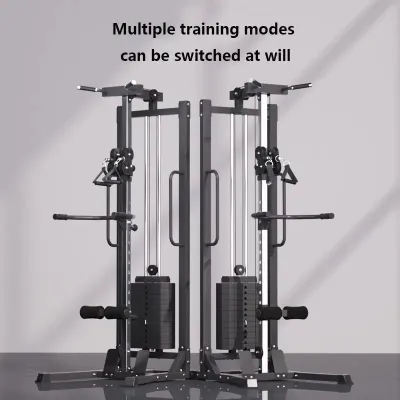
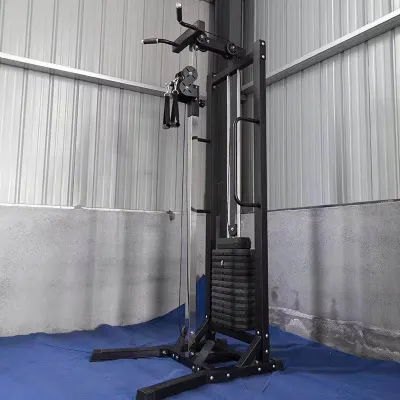
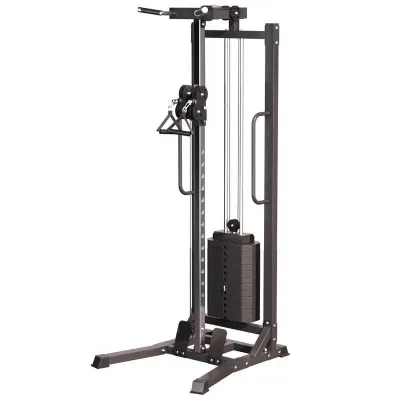
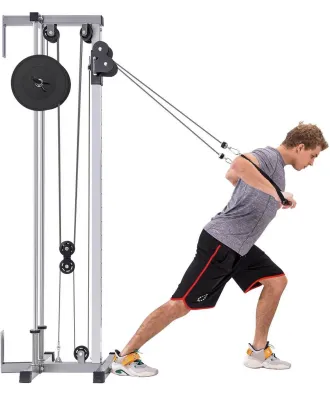
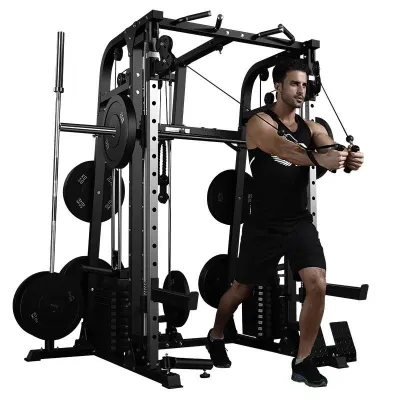
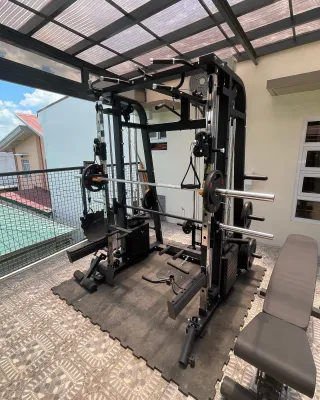
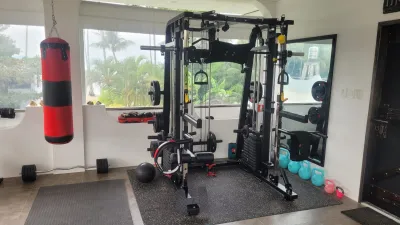
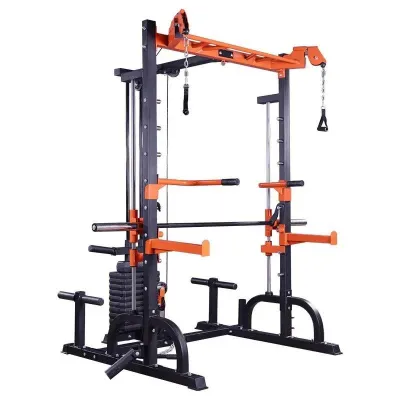
Prices are valid at publication and may change. Please refer to the product page for the latest price.
- Plateauing with free weights: You find that dumbbells and barbells do not provide enough tension at the top or bottom of your movements, limiting your ability to stimulate muscle growth effectively.
- Desire for unilateral movements: You want to perform single-arm or single-leg exercises at precise, functional angles that gravity-dependent free weights cannot replicate.
- Limitations in basic setups: Your current resistance bands or simple single-pulley attachments feel unstable, lack smooth resistance, or no longer offer enough weight capacity for your strength level.
Aligning the Machine With Your Specific Training Goals
A cable crossover machine operates on a dual-pulley system that provides constant tension throughout an exercise’s entire range of motion. Unlike dumbbells, where the resistance profile changes based on gravity, cables pull against you horizontally, diagonally, or vertically, depending on where you set the pulley. This mechanical difference is highly relevant to specific training styles.

If your primary goal is hypertrophy, or muscle building, a cable crossover is highly valuable. Exercises like cable chest flies, lateral raises, and cable pull-overs keep the target muscle under continuous load. This constant time under tension is a primary driver of muscle growth. Conversely, if your training is strictly focused on heavy compound powerlifting, a cable crossover is a secondary luxury. Powerlifters require barbells, heavy plates, and a robust squat rack first, as these tools build the foundational strength needed for the squat, bench press, and deadlift.
For rehabilitation, mobility, and joint health, the smooth, guided path of a cable system is incredibly beneficial. Free weights require significant stabilization, which can sometimes overload healing joints or weak stabilizer muscles. Cables allow you to isolate specific movement patterns, such as external shoulder rotations or gentle hip abductions, with minimal risk of sudden joint jarring.
Furthermore, adjustable pulley heights allow you to train in multiple planes of motion. This is crucial for athletic conditioning, where movements are rarely linear. By adjusting the pulleys to match your natural biomechanics, you can perform rotational woodchops, diagonal punches, and single-leg balance exercises that directly translate to sports performance and daily functional movement.
Space, Footprint, and Installation Realities
Before purchasing a cable crossover, you must carefully measure your training area. These machines are among the largest pieces of fitness equipment available, requiring significant physical clearance not just for the frame itself, but for your body during exercise.
First, measure your ceiling height. Many residential spaces, particularly apartments or older homes in the Philippines, may have lower ceilings that cannot accommodate a standard two-meter-tall frame. You must also account for the height of your hands during overhead exercises like tricep extensions or pull-ups if the machine features an integrated pull-up bar.
Second, consider the width and depth. A full-size freestanding cable crossover can easily span three meters in width. You also need to factor in the operational clearance. When performing chest flies, you will step forward, requiring at least one to two meters of open space in front of the machine.
Structural installation is another critical factor. You must choose between a freestanding unit and a wall-mounted system:
- Freestanding units: These require a perfectly flat, level floor. Because they are heavy and self-supporting, they take up a larger footprint to maintain stability.
- Wall-mounted units: These save space but must be anchored securely. In many local homes, walls are constructed from concrete hollow blocks. Mounting a heavy, dynamic cable system to these walls requires specialized masonry anchors and, often, professional installation to ensure the wall can handle the pulling forces without cracking or failing.
Finally, consider the environmental conditions. The tropical climate and high humidity in the Philippines mean that exposed steel guide rods, cables, and weight plates are highly susceptible to rust. If your home gym is located in a garage, carport, or non-air-conditioned room, you must commit to regular maintenance, including wiping down the guide rods and applying silicone-based lubricants to keep the pulleys gliding smoothly.
Budgeting for a Cable Crossover and Hidden Costs
A cable crossover is a major financial investment. When planning your budget, looking only at the base price of the machine can lead to unexpected expenses down the road.
The first major decision is choosing between a plate-loaded system and a selectorized weight stack system. Plate-loaded machines are more affordable upfront, but they require you to manually load Olympic or standard weight plates onto the carriage. If you do not already own a large collection of weight plates, you will need to purchase them separately, which quickly increases your total ₱ expenditure. Selectorized systems, which use a pin to select weight from an integrated stack, are highly convenient and space-efficient, but they carry a significantly higher initial price tag.
Beyond the machine itself, you must budget for high-quality attachments. While most units come with basic nylon handles, you will likely want to add tricep ropes, straight bars, lat pulldown bars, and ankle straps to fully utilize the machine’s versatility.
In the Philippines, shipping and handling can add substantial hidden costs. Heavy steel frames are expensive to transport, especially if you live outside major metropolitan areas or in a high-rise condominium with strict delivery guidelines. Professional assembly is another cost to consider. If you are not comfortable using heavy tools or do not have a helper, hiring a professional technician to assemble the complex pulley and cable routing system is highly recommended for safety.
Lastly, factor in long-term maintenance. Cables wear down, plastic pulley wheels can crack, and guide rods require specialized lubricants. Ensuring the manufacturer offers a reliable warranty and accessible replacement parts is crucial for protecting your investment over the years.
Exploring Space-Saving and Budget-Friendly Alternatives
If you realize that a full cable crossover machine is too large or expensive for your current home gym setup, several highly effective alternatives can deliver similar training benefits without the massive footprint.
Heavy-duty resistance bands are the most accessible alternative. By using a secure door anchor or wrapping the bands around the uprights of an existing power rack, you can mimic the constant tension and varied angles of a cable machine. While bands do not offer a perfectly linear resistance profile—the tension increases the further the band is stretched—they are incredibly space-efficient and cost a fraction of the price of a steel rig.
Another excellent middle ground is a compact functional trainer or a single-pulley tower. A single-pulley tower takes up only a fraction of the wall space of a full crossover while still allowing you to perform low-to-high and high-to-low movements. While you lose the ability to perform dual-arm exercises like chest flies simultaneously, you can easily perform them unilaterally, one arm at a time.
Finally, you can adapt your free-weight exercises to mimic cable tension. For example, instead of standing dumbbell flies where tension drops to zero at the top of the movement, you can perform chest-supported dumbbell flies on an incline bench or use chest-supported dumbbell rows to keep constant tension on the target muscles throughout a larger portion of the range of motion.
Your Action Plan: Buy, Adapt, or Upgrade Later?
To make your final decision, assess your current training environment and goals against these three clear pathways:
- Proceed with a purchase: If you have a dedicated garage or spare room with adequate ceiling height, a budget of several thousand Pesos (₱) to cover the machine and quality attachments, and a training program focused heavily on hypertrophy, rehabilitation, or athletic conditioning, investing in a full cable crossover is a highly rewarding upgrade.
- Adapt your current setup: If you are limited by space or budget but still want the benefits of constant tension, invest in a high-quality single-pulley tower or a set of heavy-duty resistance bands with secure anchors. This allows you to perform almost all the same exercises unilaterally while preserving your floor space.
- Delay the upgrade: If you are still in the early stages of your fitness journey, focus your budget and energy on mastering compound movements with a solid barbell, a set of adjustable dumbbells, and a sturdy bench. You can always upgrade to a cable system later once you have established a consistent training habit and identified specific plateaus.
Frequently Asked Questions (FAQ)
Can I build muscle effectively using only a cable crossover machine?
Yes, you can build muscle effectively using a cable crossover because it provides constant tension and allows you to target muscles from multiple angles. However, for comprehensive lower-body development and overall raw strength, incorporating free-weight compound movements like squats and deadlifts remains highly beneficial.
What is the minimum ceiling height required for a standard cable crossover?
Most standard residential cable crossover machines require a ceiling height of at least 2.1 to 2.3 meters. It is crucial to check the manufacturer’s exact specifications and measure your space carefully, leaving an extra 10 to 15 centimeters of clearance for assembly and overhead hand movements.
Are weight stacks better than plate-loaded systems for home use?
Weight stacks offer superior convenience and speed when changing resistance, making them ideal for fast-paced workouts and drop sets. Plate-loaded systems are much more budget-friendly and allow you to utilize your existing weight plates, though they require more physical effort and time to adjust between sets.
Community discussion
Share your experience or ask a question. Comments are reviewed before publication.