
Deciding how to build your upper-body strength at home often comes down to a choice between two popular pieces of equipment: the compact doorway pull-up bar and the versatile freestanding pull up station. Both options offer unique advantages, but they cater to very different living situations, fitness goals, and structural environments. Choosing the wrong one can lead to damaged walls, wasted money, or an unstable setup that risks injury during your workout.
To make the right choice, you must evaluate three primary factors: your available floor space, your desired exercise variety, and your home’s structural permissions. Doorway pull-up bars are the go-to solution for renters, individuals with limited space, and those focused strictly on basic pull-ups and hanging core exercises. They require zero floor space and can be stored away easily when not in use.
Conversely, a freestanding pull up station is better suited for fitness enthusiasts who have dedicated floor space and want a comprehensive calisthenics setup. These multi-functional towers allow you to perform dips, push-ups, and vertical knee raises alongside standard pull-ups. Rather than looking for a single winner, you should focus on finding the equipment type that safely fits your specific living environment and aligns with your long-term fitness routine.
Products mentioned in this guide
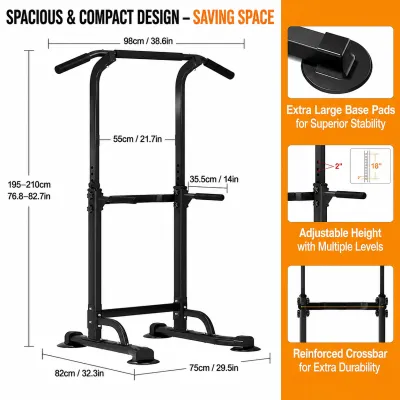
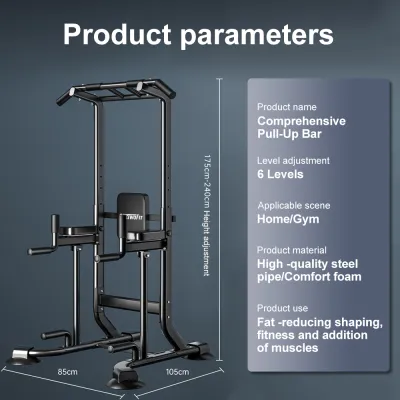
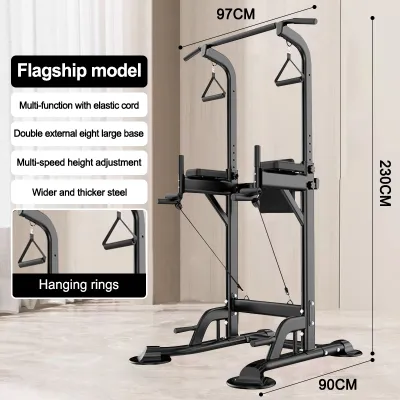
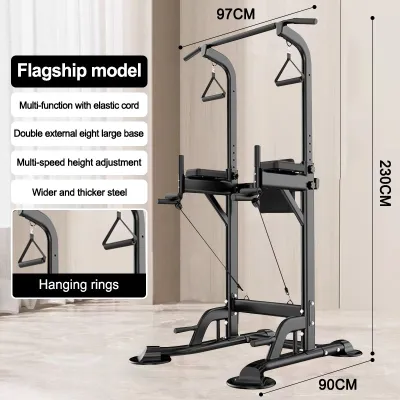
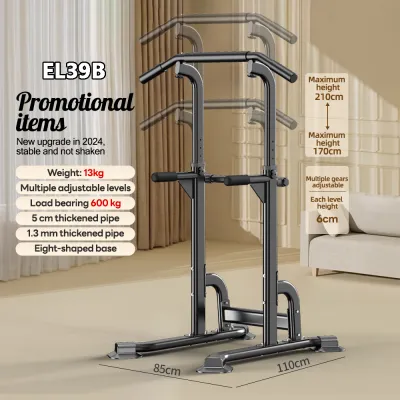
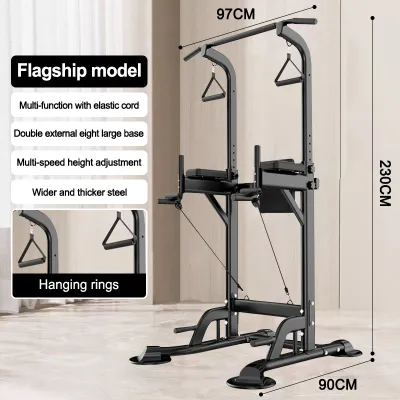
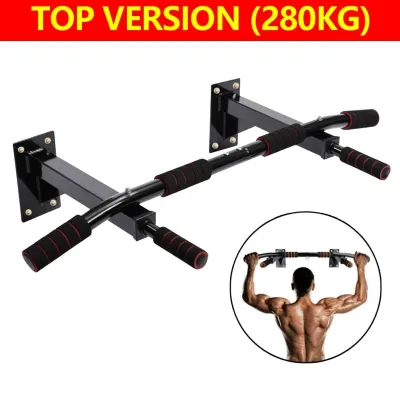
Prices are valid at publication and may change. Please refer to the product page for the latest price.
Space, Installation, and Room Constraints
Before purchasing any fitness equipment, you must carefully assess the physical layout of your home. Doorway pull-up bars and freestanding stations have vastly different spatial requirements and installation demands that can make or break their usability in your daily life.
Doorway Pull-Up Bars
Doorway pull-up bars generally fall into two categories: tension-mounted and leverage-mounted models. Tension-mounted bars extend outward to press firmly against the inside of the door frame, relying entirely on friction and pressure. Leverage-mounted bars, on the other hand, use a cantilever design that hooks over the top of the door trim on one side while pressing against the front of the frame on the other.
Both styles offer a major advantage: they require absolutely zero floor space. This makes them highly popular for compact apartments, condominiums, or shared rooms where floor real estate is at a premium. They are also highly rental-friendly, as they typically do not require drilling permanent screws into the walls.
However, doorway bars come with strict architectural constraints. You must measure your door frame width and trim depth carefully before buying, as leverage bars require a protruding wooden trim of a specific thickness to hook onto safely. Furthermore, you must ensure there is adequate ceiling clearance above the door frame so your head does not strike the ceiling at the peak of your pull-up.
In many modern residential builds, interior door frames are constructed from lightweight aluminum, PVC, or thin MDF (medium-density fiberboard) over hollow drywall. These materials cannot withstand the intense lateral pressure of a tension bar or the concentrated weight of a leverage bar. Installing a bar on these frames can lead to cracked drywall, splintered wood, or bent metal frames.
Freestanding Pull-Up Stations
A freestanding pull up station, commonly referred to as a power tower, requires a dedicated footprint on your floor. These units typically feature a wide, rectangular steel base that occupies roughly one to one and a half square meters of floor space. Because of their size and weight, they are generally intended for permanent or semi-permanent placement in a home gym, garage, or spacious bedroom.
Ceiling height is the most critical measurement when planning for a freestanding tower. Standard residential ceilings in urban apartments often range between 2.4 and 2.7 meters. You must verify that the total height of the station allows you to perform a full pull-up without your head hitting the ceiling, while also ensuring the bar is high enough that your feet do not drag on the floor during a dead hang.
If you live in a tropical climate with high humidity, placement becomes even more important. Placing a steel power tower on an open balcony or in a semi-outdoor utility area exposes the metal to moisture, which can accelerate rust and degrade the structural integrity of the frame over time. You should plan to place the unit in a well-ventilated, dry indoor space.
For rooms that serve multiple purposes, such as a home office that doubles as a workout space, a freestanding tower can dominate the visual environment. Unlike a doorway bar that can be slipped under a bed in seconds, moving a heavy steel tower requires disassembly or significant physical effort, making it a permanent fixture in your living space.
Workout Versatility: Doorway Bars vs a Dedicated Pull Up Station
Your choice of equipment directly dictates the types of exercises you can perform and how you can progress your strength training over time. Understanding the functional limits of each option will help you match the tool to your fitness goals.

Doorway Bars
Doorway pull-up bars are highly specialized tools designed primarily for pulling movements. Depending on the design, they allow you to perform standard pull-ups, chin-ups, and sometimes neutral-grip pull-ups if the bar features extended parallel handles. They are excellent for targeting the latissimus dorsi, biceps, and upper back muscles.
Beyond pulling, doorway bars can serve as anchor points for resistance bands, allowing you to perform assisted pull-ups or high-to-low band pull-downs. You can also use them for hanging core exercises, such as hanging knee raises or toes-to-bar, provided you control your movement to prevent excessive swinging.
However, the physical boundaries of the doorway limit your range of motion. Wide-grip pull-ups can be difficult or impossible if the door frame is narrow, as your hands will hit the sides of the wall. Additionally, the lack of vertical clearance means you cannot perform advanced calisthenics skills like muscle-ups, and the absence of dedicated dip handles limits your ability to train pushing movements on the same apparatus.
Freestanding Stations
A freestanding pull up station functions as a comprehensive, multi-purpose calisthenics gym. Because it is not bound by a door frame, it opens up a wide array of exercise possibilities that target both pulling and pushing muscle groups, allowing for a more balanced upper-body workout.
Most power towers feature integrated dip handles located at chest height. Dips are highly effective for developing the triceps, lower chest, and anterior deltoids. Performing dips on a stable, dedicated station is significantly safer and more comfortable than attempting modified dips on chairs or low benches.
These stations also typically include a vertical knee raise (VKR) section, complete with padded armrests and a supportive backrest. This design isolates the abdominal and hip flexor muscles during leg raises while supporting your spine, making it a highly accessible option for users who struggle with grip strength during hanging leg raises.
At the base of many freestanding towers, you will find angled push-up handles. These handles allow for a deeper range of motion during push-ups while reducing wrist strain by keeping your wrists in a neutral alignment. Some premium models even feature adjustable barbell hooks or suspension trainer anchors, turning the tower into a central hub for weighted strength training.
For those looking to progress to advanced calisthenics skills, the open space around a freestanding tower is invaluable. While you must still verify the stability of the unit, the absence of walls allows you to practice movements like front levers, back levers, and L-sits with far greater freedom of movement than a doorway bar could ever provide.
Safety, Stability, and Weight Capacity Checks
Safety should always be your primary concern when performing bodyweight exercises where your entire body is suspended off the ground. Both doorway bars and freestanding stations require specific safety checks and maintenance routines to prevent structural failures.
Doorway Bar Risks and Checks
The primary safety risk associated with doorway pull-up bars is sudden slippage. If a tension bar loses its grip or a leverage bar slips off a weak door trim, the user can fall directly onto their back or tailbone. To mitigate this risk, you must perform several structural checks before every single workout session.
First, inspect the door frame itself. Ensure the wood is solid, free of rot, and securely nailed to the wall studs. If you are using a leverage bar, verify that the top trim molding is at least 1 to 1.5 centimeters deep and firmly attached; do not use these bars on decorative trim that is merely glued in place.
Second, always check the manufacturer’s stated weight capacity. Most standard doorway bars are rated for weights between 100 and 130 kilograms, but this rating assumes a perfectly sturdy, non-yielding door frame. If the frame flexes, the actual safe weight limit drops significantly.
Finally, avoid dynamic movements. Kipping pull-ups, explosive chin-ups, or rapid swinging generate dynamic forces that can easily exceed the static friction holding a tension bar in place. If you plan to use weighted vests or belts, a doorway bar is generally not recommended due to the increased risk of overloading the frame.
Freestanding Station Risks and Checks
While freestanding stations do not rely on your home’s walls for support, they carry their own safety considerations, primarily centered around tipping and structural wobble. A poorly designed or incorrectly assembled tower can rock back and forth during use, leading to a loss of balance.
When evaluating a freestanding pull up station, look closely at the base construction. A longer, wider base provides a lower center of gravity and superior stability. Look for frames made from heavy-gauge steel (ideally 14-gauge or thicker) and units that feature rubberized, non-slip feet to prevent the station from sliding across tile or wooden floors.
Weight capacity on freestanding towers is typically higher than doorway bars, often ranging from 130 to over 200 kilograms on heavy-duty models. However, you must still verify the specific limit of your unit, especially if you plan to perform weighted dips or pull-ups with heavy iron plates.
Assembly quality is critical for ongoing safety. You must follow the manufacturer’s assembly manual precisely, ensuring all bolts are tightened with the correct tools. Over time, the vibrations from your workouts can cause bolts to loosen slightly. Make it a habit to check and re-tighten all structural joints every few months to maintain a rigid, wobble-free frame.
Budget Tiers and Long-Term Value
Investing in fitness equipment requires balancing your immediate budget against the long-term durability and utility of the product. Understanding how cost correlates with quality in both categories will help you make a financially sound decision.
Doorway Pull-Up Bars
Doorway pull-up bars represent a highly accessible, low-cost entry point into home fitness. Because they require minimal materials and simple manufacturing processes, they are highly affordable.
- Entry-Level Bars: Basic tension-mounted bars can often be found for under ₱1,000. While highly affordable, they often feature thin foam grips that wear out quickly and may lack robust safety locks.
- Mid-Range to Premium Bars: High-quality leverage-mounted bars typically range from ₱1,500 to ₱3,500. These models offer better padding to protect your door frame, multiple grip positions, and heavier steel construction.
While the upfront cost of a doorway bar is low, its long-term value is limited by its single-purpose design. If your fitness goals expand to include dips, core isolation, or advanced calisthenics, you will eventually need to purchase additional equipment, which can increase your overall expenditure over time.
Freestanding Pull-Up Stations
Freestanding stations require a larger initial financial investment, but they offer substantially more value per peso by acting as a comprehensive home gym solution.
- Entry-Level Towers: Budget-friendly power towers range from ₱3,500 to ₱6,000. These units are functional but often feature thinner steel tubing, smaller base footprints, and lighter weight capacities. They are suitable for lighter users performing controlled, slow movements.
- Mid-Range Towers: Priced between ₱6,000 and ₱12,000, these models offer a great balance of stability and features. They typically include thicker steel frames, comfortable high-density foam padding, adjustable height settings, and dedicated VKR stations.
- Premium Heavy-Duty Towers: Costing ₱12,000 to over ₱20,000, these commercial-grade stations feature massive weight capacities, ultra-wide bases, and sometimes integrated squat racks or pulley systems. They are built to last a lifetime and can withstand intense, daily athletic training.
When evaluating long-term value, consider your commitment level. A cheap, unstable tower that wobbles excessively can discourage you from working out or become a safety hazard. Investing in a sturdy mid-range tower often yields better long-term value, as it grows with your strength levels and remains safe to use as you progress to more advanced exercises.
Quick Comparison Matrix
To help you visualize the key differences between these two equipment types, review this comparative breakdown of their core features and requirements.
| Feature | Doorway Pull-Up Bar | Freestanding Pull-Up Station |
|---|---|---|
| Floor Space Required | None (Zero footprint) | Significant (1 to 1.5 square meters) |
| Installation Type | Temporary (Tension or leverage) | Permanent / Semi-permanent assembly |
| Exercise Variety | Pull-ups, chin-ups, hanging core | Pull-ups, dips, knee raises, push-ups |
| Stability for Dynamic Moves | Low (Risk of slipping/damage) | Moderate to High (Model dependent) |
| Ideal User Profile | Renters, compact spaces, beginners | Dedicated home gyms, advanced calisthenics |
| Relative Budget Tier | Low (₱1,000 – ₱3,500) | Moderate to High (₱3,500 – ₱20,000+) |
Final Decision Framework: Which One Should You Buy?
To finalize your purchasing decision, walk through this structured framework to determine which equipment type matches your specific living conditions and fitness aspirations.
Choose a Doorway Pull-Up Bar if:
- You live in a rental or compact apartment: If you cannot drill into walls and have no spare floor space, a doorway bar is the only viable option that keeps your living area clutter-free.
- You have a strict entry-level budget: If you want to start working out immediately without spending more than ₱2,000, a quality leverage bar offers excellent utility for its price.
- Your routine is focused solely on pulling: If you already have a routine for chest and triceps (such as floor push-ups) and only need a tool to target your back and biceps, a simple bar is perfectly sufficient.
Choose a Freestanding Pull-Up Station if:
- You have a dedicated workout space: If you have a spare room, a garage, or a spacious bedroom corner with adequate ceiling height, a power tower can serve as the centerpiece of your home gym.
- You want a full-body calisthenics routine: If you want to perform chest dips, vertical knee raises, and elevated push-ups alongside your pull-ups, the multi-functional design is unmatched.
- You plan to use weighted progression: If you intend to wear weighted vests or dip belts to progressively overload your muscles, the superior stability and weight capacity of a steel tower are essential for safety.
Verify First if:
- You are unsure about your door frames: If your home features modern drywall, thin MDF trim, or lightweight sliding doors, do not buy a doorway bar. You must verify that you have a solid wood or concrete-backed frame before attempting installation.
- Your ceilings are unusually low: If you are tall or live in a space with low-hanging ceilings, measure the distance from the floor to the ceiling. Ensure you have at least 30 to 40 centimeters of clearance above the pull-up bar height before purchasing a freestanding tower.
- You live in a highly humid environment: If you plan to store your equipment in a semi-outdoor area, check the product specifications to ensure the steel frame features a rust-resistant powder coating, and plan to wipe down the grips and metal after every sweaty session to prevent corrosion.
Community discussion
Share your experience or ask a question. Comments are reviewed before publication.