
Quick Answer: Which Pull-Up Bar Type Fits Your Space?
Choosing the right multi-purpose pull-up bar depends on your living situation, available space, and fitness level.
- Doorway pull-up bars are the most accessible option for renters and those with limited space, requiring no drilling or permanent structural modifications.
- Wall-mounted pull-up bars provide the highest stability and weight capacity, making them ideal for dedicated home gyms and advanced athletes performing dynamic movements, provided you have a solid concrete wall or wooden studs.
- Freestanding pull-up bars (power towers) offer excellent multi-exercise versatility, including dips and leg raises, without any wall installation, though they require a significant floor footprint.
Your final choice should balance your home’s structural limits, floor area, and specific training goals.
Key Decision Factors: Space, Rental Rules, and Workout Goals
To build an effective home workout space, you must evaluate three primary constraints: physical space, rental agreements, and your training style.
Products mentioned in this guide
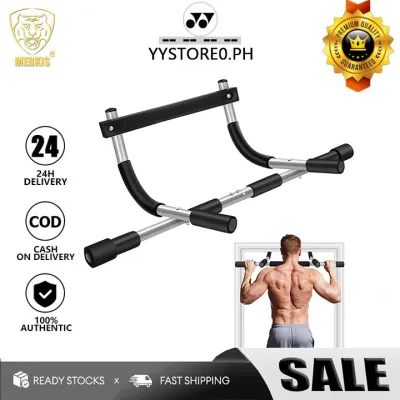
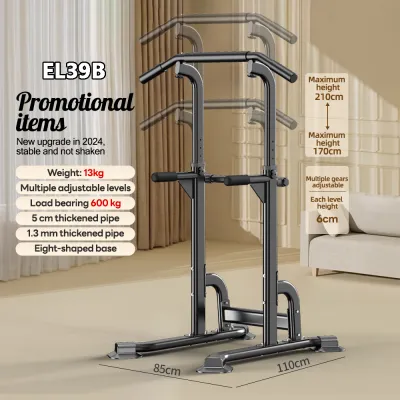
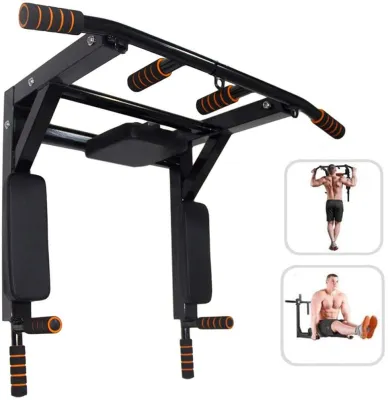
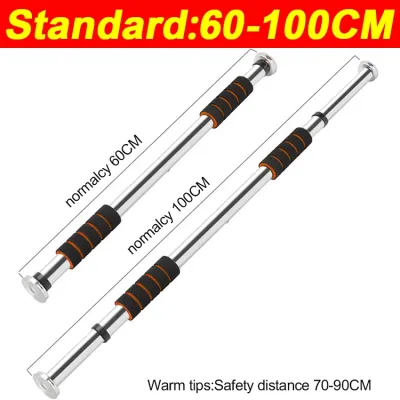
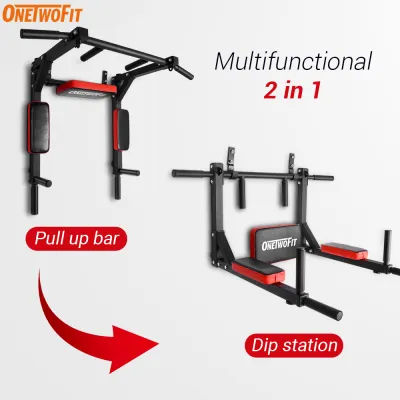
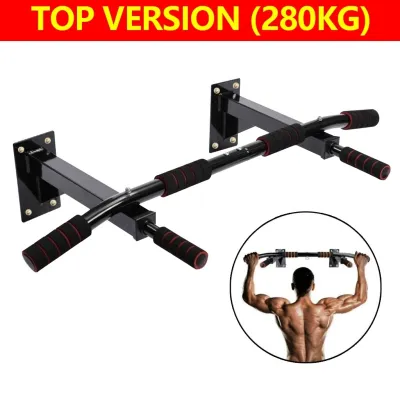
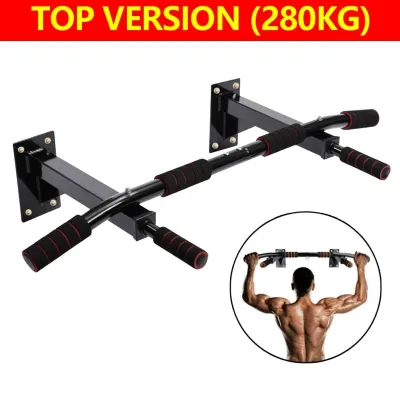
Prices are valid at publication and may change. Please refer to the product page for the latest price.

Space and Overhead Clearance
Unlike dedicated commercial gyms, home workouts must contend with residential layouts. For wall-mounted and freestanding bars, vertical space is just as critical as floor area. In tropical climates where ceiling fans are standard fixtures in living rooms and bedrooms, you must ensure your head and body have clear clearance from rotating blades during the peak of a pull-up. Freestanding units require a flat, stable floor area of at least one square meter, plus additional clearance around the base for safety. Doorway bars require no floor space but demand a structurally sound door frame with sufficient overhead clearance so you do not strike your head on the top jamb.
Rental Constraints and Structural Drilling
If you are renting a condo or an apartment, your lease agreement likely restricts permanent modifications. Drilling deep holes to mount heavy equipment can lead to forfeited security deposits. Wall-mounted bars require heavy-duty expansion bolts anchored into solid concrete, hollow blocks, or structural wooden studs. If you rent, a doorway bar or a freestanding power tower is generally the practical choice. For homeowners, mounting a bar permanently offers unmatched stability but requires careful assessment of your wall material.
Workout Goals and Movement Velocity
Your training style dictates the level of stability your equipment must provide. If your routine consists solely of strict, slow pull-ups and chin-ups, a doorway or tension-mounted bar can suffice. However, if you perform dynamic movements such as kipping pull-ups, muscle-ups, or weighted pull-ups, the lateral and vertical forces increase exponentially. These advanced exercises require a highly stable, anchored system like a heavy-duty wall-mounted bar or a weighted freestanding tower to prevent tipping or structural failure.
Doorway Pull-Up Bars: Best for Renters and Tight Spaces
Doorway pull-up bars are popular for their convenience, low cost, and ease of setup. They generally fall into two categories: leverage-based bars that hook onto the door trim, and telescopic tension bars that wedge between the door jambs.
The Advantages of Doorway Setups
The primary benefit of a doorway multi purpose pull up bar is its non-invasive design. Leverage-based models can be installed and removed in seconds, allowing you to clear the doorway when not in use. They are highly affordable, typically ranging from ₱600 to ₱2,000 in local fitness stores and online marketplaces. Because they require no drilling, they preserve your walls and are highly portable, making them excellent for frequent movers or those living in compact studio apartments.
The Limitations and Structural Risks
Despite their convenience, doorway bars carry notable limitations. Their weight capacity is typically restricted, often capped between 100 kg and 130 kg, depending on the model and the strength of your door frame. Additionally, leverage models rely entirely on the top door trim to support your weight. In many modern residential developments in the Philippines, door frames are constructed from thin plywood, medium-density fiberboard (MDF), or even PVC. These materials can easily crack, splinter, or collapse under load. Tension-based bars can also slip if the door jamb is painted with a glossy, low-friction finish or if the wood bows outward under pressure.
Ideal User Profile
This style is best suited for beginners, casual fitness enthusiasts, and renters who perform strict, controlled movements and have solid, traditional hardwood door frames.
Pre-Purchase Verification Points
Before purchasing, measure your door frame width and trim depth to ensure compatibility with the bar’s specifications. Tap the top trim to verify it is solid wood and securely nailed to the wall studs, rather than hollow or glued MDF. Finally, check that you have at least 30 to 40 centimeters of clearance above the door frame so your head does not hit the ceiling at the top of the movement.
Wall-Mounted Pull-Up Bars: Best for Dedicated Home Gyms
Wall-mounted pull-up bars are the standard for dedicated strength training spaces, offering a rigid, unyielding platform that mimics commercial gym equipment.
The Advantages of Wall-Mounted Bars
The standout advantage of a wall-mounted bar is its structural integrity. When properly installed, these bars can support substantial weight, often rated for 150 kg to 300 kg or more. This high load capacity allows you to safely perform weighted pull-ups, dynamic kipping, and hanging core exercises. They also offer a wider variety of grip positions, including wide, narrow, neutral, and angled grips. Because they are fixed high on the wall, they keep the floor completely clear, maximizing your usable home gym space.
The Installation and Rental Hurdles
The primary drawback is the permanent nature of the installation. You must drill deep holes into your walls to insert heavy-duty expansion bolts (often called dynabolts). This makes wall-mounted bars highly impractical for most renters. Furthermore, improper installation can result in catastrophic failure and severe injury. In many Philippine homes, residential walls are commonly made of hollow concrete blocks covered in plaster. Mounting a heavy load-bearing bar directly into hollow blocks requires specialized sleeve anchors or chemical anchors; standard plastic wall plugs will fail.
Ideal User Profile
This option is ideal for dedicated home gym owners, intermediate to advanced athletes, and anyone training for gymnastics, calisthenics, or functional fitness who demands absolute stability.
Pre-Purchase Verification Points
Verify your wall composition before buying. If you have drywall, you must locate structural wooden studs; never mount a pull-up bar directly into drywall or plasterboard alone. If you have masonry or concrete walls, ensure you have access to a hammer drill and the correct size of masonry drill bits. Always check that the ceiling height allows for a full head clearance at the top of your pull-up.
Freestanding Pull-Up Bars: Best for Versatility Without Drilling
Freestanding pull-up bars, commonly known as power towers, are self-supporting steel frames that require no wall or doorway attachment.
The Advantages of Power Towers
The main benefit of a freestanding multi purpose pull up bar is its multi-functional design. Most power towers are equipped with additional stations, including dip bars, push-up handles, and padded armrests for vertical knee raises. This allows you to perform a complete upper body and core workout using a single piece of equipment. Because they stand on their own base, they can be placed anywhere with a flat surface, such as a garage, a spacious living room, or a covered patio, without damaging your walls or door frames.
The Spatial Footprint and Stability Trade-offs
The trade-off for this versatility is physical size. Power towers have a large footprint, typically requiring at least 1.2 meters of depth and 1 meter of width, plus safety clearance around the unit. They are also tall, often standing between 2.0 and 2.3 meters, which can conflict with low ceilings or ceiling fans. While high-quality towers are stable, budget models can wobble or slide during dynamic movements. Their price is also higher, typically ranging from ₱4,500 to ₱15,000 or more.
Ideal User Profile
This setup is perfect for renters who have extra floor space, individuals who want an all-in-one bodyweight workout station, and those who prefer not to drill into walls or risk damaging their door frames.
Pre-Purchase Verification Points
Check the base configuration of the tower. An H-shaped base generally offers superior stability compared to a simple U-shaped base. Look for models with adjustable height settings to match your room’s ceiling limits. Ensure the frame features thick steel tubing and robust cross-bracing to minimize lateral sway during workouts.
Decision Framework: How to Choose the Right Setup
To narrow down your choices, use this conditional framework based on your specific home environment and fitness objectives:
- Choose a Doorway Bar if: You rent your home, have extremely limited space, perform only strict pull-ups, and have verified that your door frame is made of solid, load-bearing wood.
- Choose a Wall-Mounted Bar if: You own your home, have solid concrete or stud-backed walls, prioritize maximum stability for advanced or weighted exercises, and want to keep your floor space completely clear.
- Choose a Freestanding Power Tower if: You want to perform dips, leg raises, and push-ups alongside pull-ups, have ample floor space, and want to avoid any drilling or door frame strain.
Before making any purchase, always perform a structural check of your intended installation site. If you are unsure about the load-bearing capacity of your walls or door frames, consult a structural engineer or a professional contractor to prevent property damage or personal injury.
Safety, Installation, and Maintenance Checks
Operating any fitness equipment at home requires strict adherence to safety protocols to prevent accidents.
Pre-Use Inspection Routine
Before every workout session, perform a quick visual and physical check of your pull-up bar. For doorway bars, ensure the rubber pads are clean and aligned, and verify that the bar has not shifted. For wall-mounted systems, check for any play or loosening of the expansion bolts. For freestanding towers, ensure all base feet are flat on the floor and the frame does not rock when lightly shaken.
Installation Standards
When installing a wall-mounted bar, always follow the manufacturer’s specified torque settings for all bolts. Use the exact drill bit size recommended for your anchors. Never attempt to mount a bar to hollow drywall, plaster, or decorative wood paneling without structural backing. If installing on concrete, clean the drilled holes of all dust before inserting the expansion anchors to ensure a secure grip.
Environmental Maintenance
The high humidity and tropical climate can accelerate rust and wear on steel fitness equipment. Wipe down the grips and frame after every workout to remove corrosive sweat. If your equipment is kept in a non-airconditioned space, garage, or covered balcony, inspect the welds and joints periodically for signs of oxidation. Apply a thin coat of rust-inhibiting spray or oil to non-grip metal surfaces if you notice early signs of surface rust. Replace worn foam or rubber grips immediately to maintain a secure, slip-free hold.
Frequently Asked Questions (FAQ)
Can I do muscle-ups on a doorway pull-up bar?
No, performing muscle-ups on a doorway pull-up bar is highly dangerous and not recommended. Muscle-ups require significant explosive vertical and horizontal force, along with substantial overhead clearance. Doorway bars lack the physical clearance between the bar and the ceiling, and they do not have the structural stability to handle dynamic lateral forces. Attempting dynamic calisthenics on a doorway bar can cause the bar to dislodge, the door frame to collapse, or lead to severe injuries. For muscle-ups, use a heavy-duty, professionally installed wall-mounted bar with ample ceiling clearance, or a robust, outdoor-anchored calisthenics rig.
How do I find wall studs for a mounted pull-up bar?
To find wooden studs behind drywall, use a magnetic or electronic stud finder, moving it horizontally across the wall until it indicates a stud. Once located, mark the center of the stud, as this is where your mounting screws must be anchored. In many residential walls, however, solid concrete or concrete hollow blocks are used rather than wood studs behind drywall. For concrete walls, you do not need to locate studs, but you must use a hammer drill and heavy-duty masonry expansion bolts to anchor the bracket securely. Never attempt to mount a load-bearing pull-up bar directly into drywall or plasterboard using toggle bolts or hollow wall anchors, as they will pull through the wall under your body weight.
Are tension-mounted doorway bars safe for heavy users?
Tension-mounted doorway bars can be safe for heavier users only if they are rated for the user’s weight, installed correctly, and checked before every single use. These bars rely entirely on friction and outward pressure against the door frame. If the frame is weak, the pressure can cause the wood to bow outward, reducing the friction and causing the bar to slip mid-exercise. If you are a heavier user close to the bar’s rated limit, it is highly recommended to use the safety brackets and screws that typically come with the bar to lock it permanently into the frame, or opt for a wall-mounted or freestanding alternative for absolute security.
Community discussion
Share your experience or ask a question. Comments are reviewed before publication.