
Choosing the right dumbbell connector requires verifying three critical technical specifications: the inner and outer diameter, the total and sleeve length, and the manufacturer-rated weight capacity. A dumbbell connector bridges two individual dumbbell handles to create a temporary barbell, allowing you to expand your home gym exercises without buying bulky new equipment. However, because there is no universal manufacturing standard for home fitness gear, guessing these dimensions can lead to loose connections, stripped threads, or sudden structural failure during a lift. Ensuring a precise physical match between your existing dumbbell bars and the connector is the only way to guarantee a safe, stable workout.
Why Dumbbell Connector Specs Matter for Safety and Fit
A dumbbell connector functions as a mechanical bridge, joining two separate dumbbell bars into a single barbell. This setup is highly convenient for space-saving home gyms, but it introduces new structural dynamics. When you lift a barbell, the weight distribution shifts outward, placing significant bending stress on the center joint where the connector meets the handles. If the connector does not fit perfectly, this joint becomes a major point of failure.
Using a mismatched connector can lead to severe safety hazards. A slight difference in thread pitch or diameter can cause the threads to strip under load, leading to a sudden separation of the bars mid-lift. Insufficient grip length inside the connector means the dumbbell handles do not insert deeply enough, leaving too few threads engaged to support the weight. In high-humidity environments, such as tropical home gyms in the Philippines where sweat and moisture accelerate wear, any structural play can quickly ruin the threads. You must treat your existing dumbbell handle type as the absolute baseline and verify compatibility rather than assuming any standard connector will fit.
Products mentioned in this guide
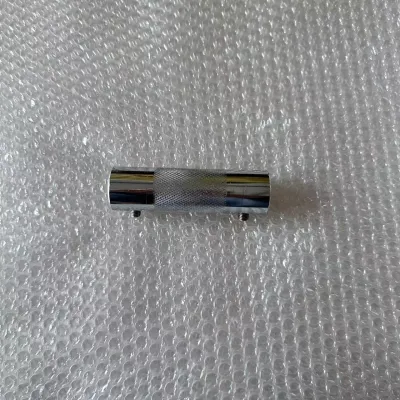
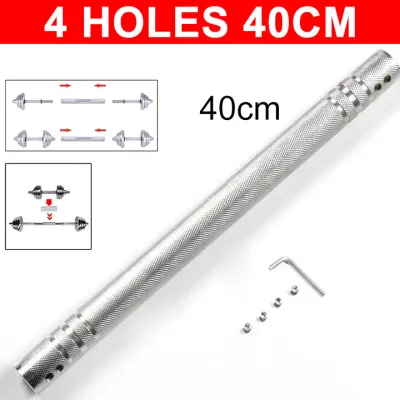
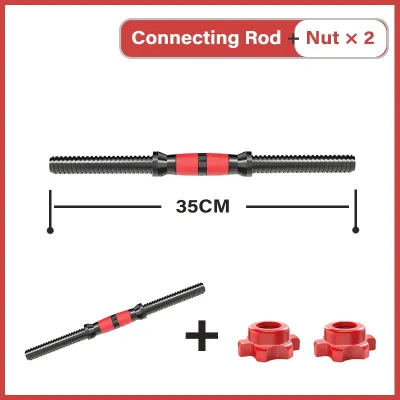
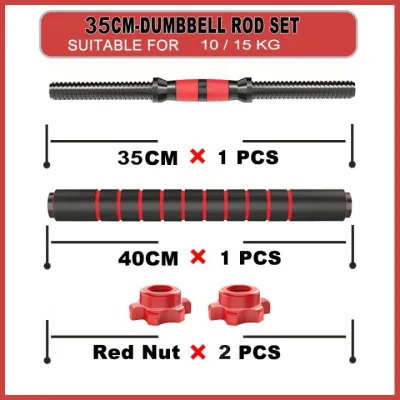
![[HOT]35/40/47CM adhesive coated dumbbell rod accessory hexagonal nut connector conversion to barbell rod](https://img.lazcdn.com/g/p/ad4a2b2877b5ac831b65b1e924ed2037.jpg_400x400q80.jpg_.webp)
Prices are valid at publication and may change. Please refer to the product page for the latest price.
Checking the Diameter: Thread Size and Bar Compatibility
The most common reason dumbbell connectors are returned is a mismatched diameter. To avoid this, you must accurately measure your existing equipment rather than relying on visual estimates. Use a digital caliper or a precise measuring tape to find the exact outer diameter of your dumbbell handle’s threaded or smooth post. Standard home gym dumbbells typically have a nominal diameter of 25mm or 28mm (often referred to as 1-inch bars), while Olympic-style bars feature a 50mm (2-inch) sleeve. Even a one-millimeter discrepancy will prevent the connector from sliding on or threading securely.

Beyond the basic diameter, you must evaluate the thread pitch and style. Most standard adjustable dumbbells use spinlock threads, but different manufacturers use varying thread angles and spacing. A connector with a slightly different thread pitch might start to screw onto your bar but will quickly bind or cross-thread, permanently damaging both pieces of equipment. Before purchasing, check the exact thread specifications provided by your dumbbell manufacturer and compare them directly with the connector’s internal thread details. If the product listing only states “standard fit,” treat this as a verification item and contact the seller to confirm the exact millimeter measurements.
Evaluating the Length: Grip Space and Plate Clearance
The length of the dumbbell connector dictates both your hand placement and how many weight plates you can safely load. To find your ideal connector length, start by measuring your preferred grip width for barbell exercises like chest presses or squats. The connector must be long enough to bridge your dumbbells while leaving a comfortable, shoulder-width grip space in the center. If the connector is too short, your hands will be forced into an awkward, narrow position, which can strain your wrists and shoulders during heavy lifts.
You must also calculate the remaining sleeve space for your weight plates. When the dumbbell handles are fully screwed into the connector, there must be enough exposed bar space on the outer ends to hold your desired weight plates and secure them tightly with collars or spinlock nuts. A longer connector provides more grip versatility and plate clearance, but it also introduces physical trade-offs. As the total length of the assembled barbell increases, the leverage exerted on the center joint multiplies, which can increase structural flex if the connector material is not sufficiently rigid.
Understanding Weight Capacity: Load Limits and Material Strength
Every dumbbell connector has a maximum weight capacity that you must never exceed. This load limit must comfortably accommodate the combined weight of both dumbbell bars, the connector itself, and all the weight plates you plan to load. When reviewing product specifications, look for the manufacturer’s certified maximum load rating. If a connector does not list a clear weight limit, it is best to avoid using it for heavy strength training.
The structural integrity of the connector depends heavily on its material construction and wall thickness. Solid steel connectors offer the highest resistance to bending and shearing forces, making them suitable for heavier lifting. In contrast, hollow steel or plastic-composite tubing is much lighter and should only be used for low-resistance, high-repetition workouts. Keep in mind that the true weight capacity of your setup is determined by its weakest point. Even if the connector body is made of solid steel, thin threads, shallow engagement depth, or low-quality locking screws can fail under sudden stress, causing the barbell to collapse.
Secondary Specs: What You Can Safely Ignore
While diameter, length, and weight capacity are non-negotiable for safety, other specifications have very little impact on performance. For instance, aesthetic finishes like chrome plating, black oxide, or powder coating are primarily designed for rust prevention and visual appeal. While a good coating helps protect the metal from rust in humid tropical climates, it does not add any structural strength to the connector itself.
You can also ignore minor weight differences between different connector models. A connector that weighs a few hundred grams more or less than another will not noticeably affect your training progression or balance. Similarly, disregard proprietary marketing terms that do not translate to standardized, verifiable testing metrics. Focus your decision entirely on physical compatibility and verified structural limits.
Step-by-Step Verification Before You Buy
Before finalizing your purchase, follow this practical verification checklist to ensure a safe and successful setup:
First, measure the outer diameter of your dumbbell handles and the inner diameter of your weight plate center holes using a caliper.
Second, cross-reference these measurements with the connector’s product description, paying close attention to the internal thread diameter and pitch.
Third, if the technical specifications are unclear or missing from the online listing, message the seller or manufacturer directly to ask for the exact millimeter dimensions.
Fourth, once the connector arrives, perform a physical fit test with no weight plates attached. Screw the dumbbell handles completely into the connector to check for smooth thread engagement, binding, or any loose play.
Finally, conduct a low-weight test lift just a few inches off the ground to observe the assembly for any structural flex, sliding, or instability before attempting your regular workout routine.
Frequently Asked Questions (FAQ)
Can I use a dumbbell connector with smooth-handle dumbbells?
Most standard dumbbell connectors are designed specifically for threaded spinlock bars and will not work safely with smooth-handle dumbbells. If your dumbbells have smooth sleeves, you must use a specialized smooth-bore connector that secures via heavy-duty compression clamps or set screws. Always verify that the locking mechanism on a smooth-bore connector is rated for the weight you intend to lift, and check the tightness of the clamps before every single set to prevent the bars from sliding out.
Does a heavier dumbbell connector mean it has a higher weight capacity?
Not necessarily. While a heavier connector often indicates solid steel construction or thicker walls, physical weight alone is not a reliable indicator of load-bearing capacity. The overall strength of the assembly depends on the steel grade, the precision of the thread machining, and the quality of the locking joints. Always rely on the manufacturer’s official maximum load rating and material specifications rather than assuming a heavier connector is automatically safer or stronger.
Community discussion
Share your experience or ask a question. Comments are reviewed before publication.