
Upgrading or replacing an e-bike controller can feel overwhelming when confronted with a wall of technical specifications like voltage, current limits, and wattage. To find a compatible e-bike controller that matches your existing setup, you must align the controller’s voltage rating with your battery’s nominal voltage, ensure its current limits do not exceed your battery’s safe discharge rate, and match its wattage capacity to your motor’s requirements. Understanding these core electrical relationships is the key to restoring or safely enhancing your e-bike’s performance without damaging its sensitive electronics.
How Do Voltage Ratings Affect Your E-Bike Controller Compatibility?
Your e-bike controller’s voltage rating must match the nominal voltage of your battery pack to prevent immediate electrical damage or system shutdown. If the controller’s rated voltage is too low, the higher voltage from a fully charged battery can burn out its internal capacitors and transistors; if it is too high, the controller’s low-voltage cutoff will trigger, preventing the system from turning on at all.
E-bike batteries are typically classified by their nominal voltage, such as 36V, 48V, or 52V, which represents the average operating voltage during a discharge cycle. However, a fully charged battery sits at a significantly higher maximum voltage—for example, a nominal 48V lithium-ion battery actually charges up to around 54.6V. E-bike controllers are engineered with specific voltage ranges to accommodate these fluctuations, utilizing a low-voltage threshold to protect the battery from over-discharging and a high-voltage limit to protect the controller’s internal circuitry.
Products mentioned in this guide
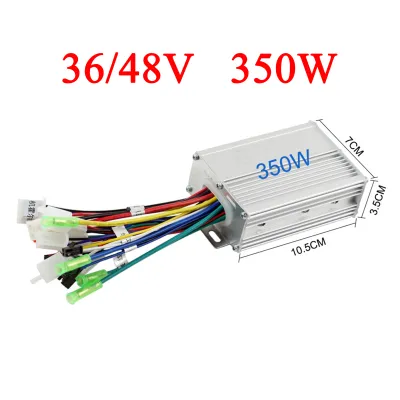
28 Lazada user ratings
Powerful motor for smooth rides, Efficient and reliable motor controller, Easy to install and use, Dual mode for versatile use, Smooth accel…Read full reviewShow less
Powerful motor for smooth rides, Efficient and reliable motor controller, Easy to install and use, Dual mode for versatile use, Smooth acceleration and deceleration, Smooth acceleration and deceleration, Enhances the performance of your e-bike, Provides a comfortable riding experience,
High-quality materials for durability, Enhances the performance of your e-bike, Enhances the performance of your e-bike, Great value for the…Read full reviewShow less
High-quality materials for durability, Enhances the performance of your e-bike, Enhances the performance of your e-bike, Great value for the price, Dual mode for versatile use, Dual mode for versatile use,
Dual mode for versatile use, Great value for the price, Smooth acceleration and deceleration, Easy to install and use, Efficient and reliabl…Read full reviewShow less
Dual mode for versatile use, Great value for the price, Smooth acceleration and deceleration, Easy to install and use, Efficient and reliable motor controller,
Enhances the performance of your e-bike, Efficient power management system, Powerful motor for smooth rides
🔨Durability:good
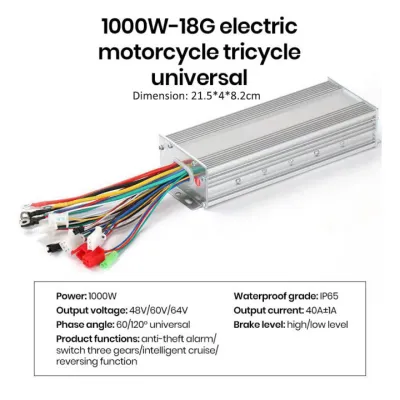
13 Lazada user ratings
si pa na try sna compatable thanks
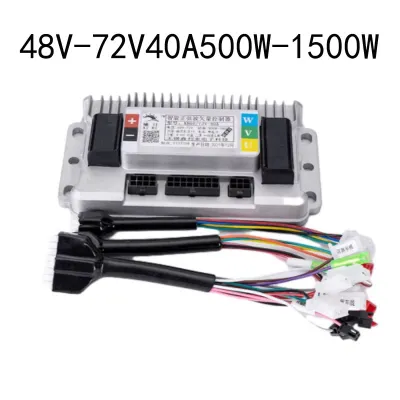
15 Lazada user ratings
arrived in good package. it looks good.. notyet installed . hopefully it will work.. no diagram inclution. . it needs litle research for the…Read full reviewShow less
arrived in good package. it looks good.. notyet installed . hopefully it will work.. no diagram inclution. . it needs litle research for the wiring configuration
The motor controller makes my ebike run faster Soft mode makes it suitable from overheating It fit very well with the brand of my ebike
Supports 48V-72V voltage, My E bike is very smooth to run again. Super ganda na uli ang performance at takbo ng ebike
Smooth and powerful acceleration, Easy to install and use, Provides precise control over motor speed
Perfect for ebike, Lightweight design, High performance, 3-mode sine wave
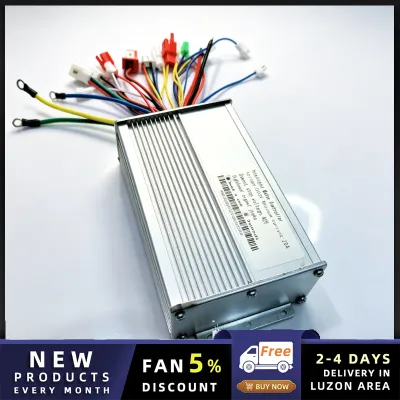
620 Lazada user ratings
ok naman po siya nakabalot naman po ng mabuti...at tama rin po ung items na dumating po sa akin......at da raider naman po na nag deliver ng…Read full reviewShow less
ok naman po siya nakabalot naman po ng mabuti...at tama rin po ung items na dumating po sa akin......at da raider naman po na nag deliver ng items ko po salamat din po....hindi hindi ko pa lng na ikakabit.....
Provides a comfortable riding experience, Efficient and reliable motor controller, Enhances the performance of your e-bike,
Great value for the price, Powerful motor for smooth rides, Provides a comfortable riding experience,
Enhances the performance of your e-bike, Great value for the price, Powerful motor for smooth rides,
okay naman item. properly wrap maganda din may label bawat cable
253 Lazada user ratings
Easy to install and set up, Great value for the price, Versatile compatibility with different voltage options, Efficient and reliable motor …Read full reviewShow less
Easy to install and set up, Great value for the price, Versatile compatibility with different voltage options, Efficient and reliable motor controller, Smooth and responsive acceleration, Durable construction for long-lasting use, Quiet operation for a peaceful riding experience,
Thank you seller for being very responsive . appreciate much. (Recommended) on time delivery. I still have to check the Qual Run if ok. pack…Read full reviewShow less
Thank you seller for being very responsive . appreciate much. (Recommended) on time delivery. I still have to check the Qual Run if ok. packaging is OK Well packed.most impt as of this time product is operating.
Easy to install and set up, Smooth and responsive acceleration, ok na uli takbo ng ebike namin battery naman ang need palitan
Great value for the price, Efficient and reliable motor controller, Enhances the performance of your e-bike,
wala sira hndi may nabasag n parts sa loob nta hndi rin nagamit kc nainet at bigla nasira narin agad
Prices are valid at publication and may change. Please refer to the product page for the latest price.
To verify compatibility, locate the printed label on your battery casing and note its nominal voltage. Next, examine the specification sheet or the physical label on the e-bike controller, which should clearly list its supported nominal voltage or an acceptable input range. Never connect a battery to a controller unless their nominal voltage ratings match exactly, as even a minor mismatch can lead to permanent component failure.
What Is the Difference Between Continuous and Peak Current Limits?
Continuous current represents the maximum steady flow of electricity a controller can safely deliver during normal cruising, while peak current is the brief, maximum burst of power allowed for demanding tasks like climbing hills or accelerating from a complete stop. Understanding this distinction prevents you from choosing a controller that overloads your battery or causes sudden power cut-offs during a ride.

The continuous current rating determines how much heat the controller can dissipate during prolonged operation without damaging its internal components. In contrast, the peak current limit is typically governed by a brief timer or thermal threshold, allowing the system to handle short-term high-load situations. If your controller demands more current than your battery’s Battery Management System (BMS) can safely supply, the BMS will instantly shut down the power flow to protect the battery cells from overheating or degrading.
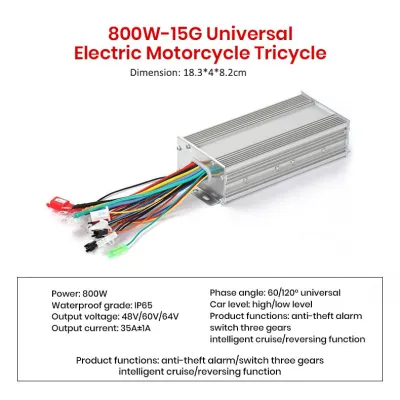
When selecting a replacement e-bike controller, you must cross-reference its maximum current rating (measured in amperes, or Amps) with both your motor’s requirements and your battery’s maximum continuous discharge rate. The controller’s peak current limit should never exceed the maximum safe discharge limit specified by your battery manufacturer. Ensuring this alignment guarantees smooth acceleration and reliable power delivery without triggering safety cut-offs on steep inclines.
How Does Controller Wattage Relate to Motor Performance?
Controller wattage represents the total electrical power the controller can process and deliver to your motor, calculated directly by multiplying the system’s voltage by its current limit. To ensure reliable operation and prevent overheating, your controller’s wattage rating should generally match or slightly exceed the rated wattage of your e-bike motor.
The fundamental electrical formula—Watts equals Volts multiplied by Amps—governs how your e-bike generates power. For example, a 48V controller with a 15A continuous current limit can deliver a continuous output of 720 Watts to the motor. If you pair a low-wattage controller with a high-power motor, the controller will act as a bottleneck, severely limiting the motor’s torque and potentially overheating as it struggles to meet the demand.
However, installing a higher-wattage controller will not automatically increase your e-bike’s top speed. Top speed is primarily limited by the motor’s physical windings, the system voltage, and local speed limiters programmed into the firmware. While a higher-wattage controller can improve acceleration and hill-climbing torque by allowing more current to flow, it will only do so if your battery can safely supply the extra current and your motor can handle the additional heat without burning out its internal copper coils.
How Can You Match a New Controller to Your Existing E-Bike Setup?
Matching a new controller to your existing e-bike requires a systematic verification of electrical limits, physical dimensions, and connector compatibility. Before finalizing any purchase from an online marketplace or local shop, you must confirm that every physical and electrical interface aligns perfectly with your current battery, motor, and display.
To ensure a successful installation, use the following verification checklist:
- Voltage Compatibility: Confirm the controller's nominal voltage matches your battery's nominal voltage (e.g., 36V to 36V).
- Current Limits: Verify that the controller's peak current limit is lower than or equal to your battery's maximum continuous discharge rating.
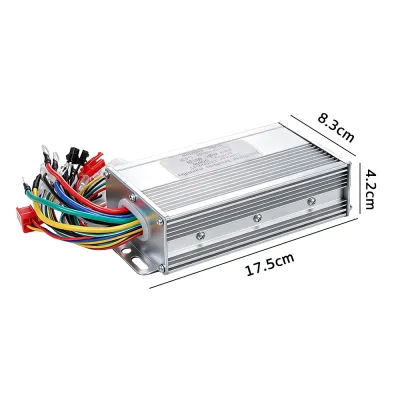
- Connector Types: Inspect the physical plugs for the motor phase wires, hall sensors, throttle, brakes, and display. E-bike manufacturers use various proprietary and standardized connectors, and mismatched plugs will require tedious splicing or adapter cables.
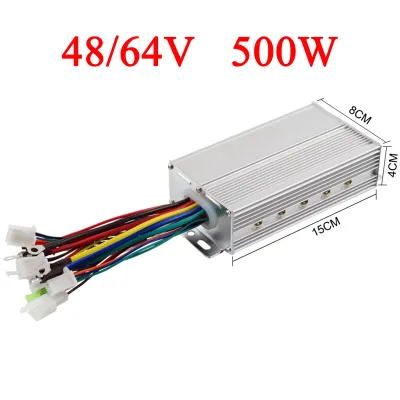
- Physical Dimensions and Mounting: Measure the controller compartment or mounting space on your e-bike frame to ensure the new unit will fit securely.
- Waterproofing Rating: Check the controller's ingress protection (IP) rating to ensure it matches your typical riding conditions, especially if you frequently ride in wet weather.
If you encounter missing labels, conflicting specifications, or if your intended setup exceeds the documented limits of your motor or battery, stop the installation immediately. Operating mismatched electrical components poses a severe risk of thermal runaway, electrical fires, or permanent component destruction. In these situations, always consult your e-bike manufacturer’s official manual or seek assistance from a qualified bicycle technician.
Community discussion
Share your experience or ask a question. Comments are reviewed before publication.