
Choosing your first electric kick scooter can feel overwhelming when confronted with technical jargon and exaggerated marketing claims. To make a smart investment, you must focus on the specifications that directly impact your daily ride: motor power, battery capacity, and tire design. Prioritizing these “big three” ensures you get a reliable vehicle that matches your route, weight, and local road conditions without overpaying for unnecessary features.
Quick Guide: The Big Three Specs for First-Time Buyers
When shopping for an electric kick scooter, three primary specifications will dictate your daily experience: motor wattage, battery capacity (measured in Watt-hours), and tire type. Together, these three metrics determine how fast you can climb hills, how far you can travel before plugging in, and how comfortable you will feel on uneven pavement.
Focusing on these core areas prevents you from overspending on flashy, high-end features that do not contribute to a reliable daily commute. It also helps you tailor your purchase to your specific route, whether you face smooth, flat bike lanes or steep, bumpy roads.
Products mentioned in this guide
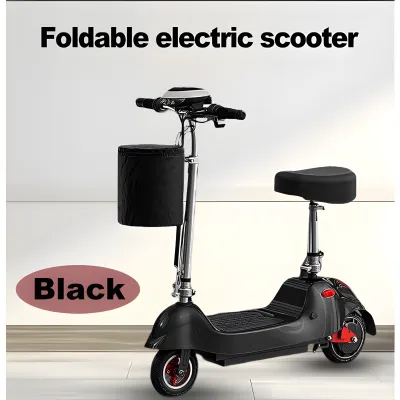
Prices are valid at publication and may change. Please refer to the product page for the latest price.
Be aware that manufacturer spec sheets can be highly misleading. Advertised ranges and speeds are typically recorded under perfect laboratory conditions that rarely match real-world riding. Understanding how to translate these marketing numbers into practical performance is the key to finding a scooter that truly fits your lifestyle.
Motor Wattage and Torque: Matching Power to Your Route
An electric kick scooter’s motor is its beating heart, and its power is measured in watts. When reading spec sheets, you will encounter two different numbers: rated (continuous) power and peak power. Rated power represents the maximum wattage the motor can safely sustain over long periods, while peak power is the temporary burst of energy used for quick acceleration or starting from a complete stop. For a reliable assessment of daily performance, always prioritize the rated power metric.

The motor’s wattage and torque directly influence how well the scooter handles inclines. If your daily route in the Philippines involves navigating urban overpasses, flyovers, or sloped residential streets, a weak motor will struggle and slow to a crawl. Insufficient power forces the motor to run hot, which can degrade internal components over time.
Your physical build and what you carry also play a major role in motor performance. Heavier riders or those who regularly carry heavy backpacks require more torque to maintain steady speeds on hills. A motor that breezes up an incline with a lightweight rider may stall under a heavier load.
Rather than relying on arbitrary wattage rules, always check the manufacturer’s official specifications. Look closely at the stated maximum rider weight limit and the maximum incline grade, which is usually expressed in degrees or percentages. Ensure your weight and the steepest hill on your commute fall well within these certified limits before making a decision.
Battery Capacity and Real-World Range
Battery capacity determines how far your scooter can travel on a single charge, but understanding the metrics is crucial. Manufacturers often list battery capacity in Amp-hours (Ah), but this number is incomplete without the voltage. To get an accurate measure of total energy capacity, look for Watt-hours (Wh), which is calculated by multiplying voltage by Amp-hours (V × Ah). A higher Wh rating directly translates to more stored energy and a longer potential range.
It is important to manage your expectations regarding manufacturer-claimed “maximum range.” These figures are almost always tested under highly idealized conditions: a very light rider, perfectly flat ground, a constant low speed, and no headwind. In reality, your actual range will be significantly lower.
To avoid getting stranded, always factor in a 20% to 30% buffer when estimating your real-world range. Stop-and-go traffic, frequent braking, carrying extra cargo, and climbing overpasses all drain the battery much faster than a continuous, flat cruise. If your round-trip commute is 15 kilometers, look for a scooter with an advertised range of at least 20 to 22 kilometers.
Local environmental factors also play a significant role in battery health. The tropical heat and high humidity of the Philippines can accelerate battery degradation and temporarily reduce efficiency. To protect your investment, look for scooters equipped with a robust Battery Management System (BMS) that monitors temperature, overcharging, and short circuits. Additionally, never plug your scooter into a charger immediately after a long ride; let the battery cool down for at least 30 minutes to prevent heat damage.
Tires and Suspension: Navigating Urban Roads
The quality of your ride depends heavily on how your scooter connects with the ground. You will primarily choose between pneumatic (air-filled) tires and solid (airless) tires. Pneumatic tires offer superior shock absorption and traction, especially on wet or uneven surfaces during the rainy season. However, they require regular pressure checks and are susceptible to punctures from road debris like nails or glass.
Solid tires, on the other hand, are virtually maintenance-free and cannot go flat. The trade-off is a much harsher ride. Solid tires transmit almost every vibration from the road directly into your hands, wrists, and legs, which can lead to fatigue on longer commutes. They also tend to offer less grip on wet asphalt, requiring extra caution when cornering.
To counter road vibrations, some scooters feature mechanical or spring suspension systems. While suspension adds comfort, it also adds weight, complexity, and cost. For a first-time buyer riding on mostly paved, well-maintained urban routes, high-quality pneumatic tires are often sufficient on their own. However, if your daily path includes rough roads, cobblestones, or frequent potholes, a scooter with at least front suspension is highly recommended.
Do not overlook tire size when comparing models. Larger wheels, such as 10-inch tires, roll over bumps, cracks, and small potholes much more easily and safely than smaller 8-inch wheels. Larger tires provide better stability and reduce the risk of the front wheel getting caught in a road gap, which is a common cause of accidents for beginners.
Weight, Folding Mechanism, and Portability
Portability is a critical factor if your commute involves multi-modal transportation or limited storage space. There is a direct, unavoidable trade-off between a scooter’s performance and its weight. Larger motors and high-capacity batteries require more physical space and heavy materials, resulting in a heavier overall vehicle.
A reliable, secure folding mechanism is essential if you plan to carry your scooter. Check how easily the latch operates and whether it locks securely when folded. You must also consider the folded dimensions to ensure the scooter can fit comfortably inside a car trunk, under an office desk, or in the designated luggage areas of public transit systems like the MRT or LRT.
Before purchasing, realistically evaluate the scooter’s weight against your own physical lifting capacity. An entry-level commuter scooter typically weighs between 12 and 15 kilograms, while high-performance models can easily exceed 25 kilograms. If you need to carry the scooter up multiple flights of stairs to your apartment or office, a heavy model will quickly become a daily chore rather than a convenience.
Specs You Can Safely Compromise On
As a first-time buyer, it is easy to get swept up in premium features that drive up the price without adding real value to your daily commute. One of the easiest specs to compromise on is extreme top speed. Most urban areas have strict speed limits for personal mobility devices, and riding faster than 25 km/h in busy traffic is often unsafe for beginners. A scooter that tops out at 25 km/h is more than fast enough for city streets.
You can also save money by skipping complex companion mobile apps, built-in GPS tracking, and excessive customizable RGB underglow lighting. While these features look modern, they do not improve the mechanical reliability or safety of your ride. Similarly, aggressive dual-spring off-road suspension systems are unnecessary if you plan to stick to paved city roads.
Instead of paying a premium for these secondary features, reallocate your budget toward critical safety and durability components. Prioritize a scooter with high-quality mechanical brakes (such as disc brakes), a sturdy frame build, and a larger battery capacity. Investing in these areas will provide a safer, more dependable ride that lasts for years.
Frequently Asked Questions (FAQ)
Do I need a dual-motor electric kick scooter for city commuting?
For most beginners, a single-motor scooter is more than sufficient. Single-motor models are lighter, more affordable, and highly energy-efficient, making them ideal for flat to moderately sloped city streets. Dual-motor scooters are generally reserved for exceptionally steep hills, heavy riders, or off-road terrain. They add significant weight and cost, which can make them impractical for daily multi-modal commuting.
What IP water resistance rating should I look for?
Look for a scooter with at least an IPX4 rating, which protects against water splashes from any direction, or ideally IPX5, which resists low-pressure water jets. However, always check the manufacturer’s specific warranty terms regarding water damage. Even with a high IP rating, riding through deep puddles or in heavy tropical downpours can still allow moisture to penetrate sensitive electronics, and water damage is rarely covered under standard warranties.
Community discussion
Share your experience or ask a question. Comments are reviewed before publication.