
When transitioning from recreational toys to reliable daily commuters, choosing an electric scooter for adult riders requires a shift in focus toward specific performance and structural specifications. Unlike children’s models, adult-use scooters must handle heavier payloads, sustain longer travel distances, and navigate unpredictable road conditions. To find a model that balances performance with daily usability, you must look beyond flashy marketing and evaluate key specifications like motor wattage, battery capacity, weight limits, and tire configurations. Selecting the right machine is not simply about buying the highest numbers on a spec sheet; it is about matching those technical capabilities to your unique route, body size, and storage constraints.
Motor Power and Speed: Matching Watts to Your Route
The motor is the heart of any electric scooter for adult riders, directly dictating acceleration, hill-climbing ability, and overall responsiveness. When examining motor specifications, you will typically encounter two different ratings: nominal (continuous) wattage and peak wattage. Nominal wattage represents the power output the motor can safely sustain over long periods without overheating. Peak wattage is the maximum power the motor can draw for brief intervals, such as when climbing a steep incline. For a reliable assessment of daily performance, always prioritize the nominal wattage rating over the peak rating.
A motor with a nominal rating of 250 to 350 watts is generally sufficient for lightweight riders traveling over flat, well-paved urban surfaces. However, if your daily commute involves elevated flyovers, steep residential hills, or if you carry a heavy backpack, a motor with a nominal rating of 500 watts or higher is highly recommended to prevent sluggish acceleration and motor strain. While manufacturers often highlight high top speeds, practical riding conditions and local regulations usually limit how fast you can safely travel. Riding at maximum speed also drains the battery at an accelerated rate, significantly reducing your overall range. Prioritize controllable acceleration and sufficient hill-climbing power over extreme top speeds that you may never legally or safely reach.
Products mentioned in this guide
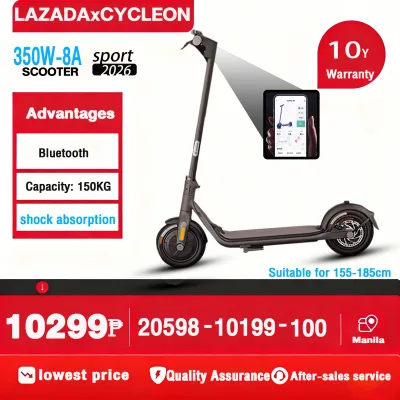
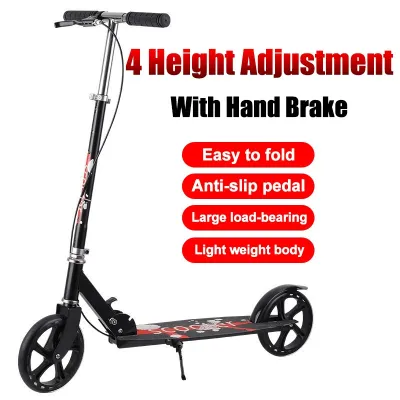
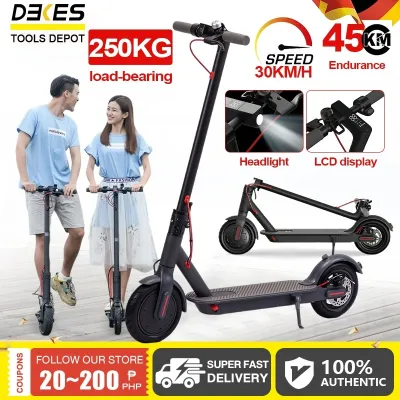
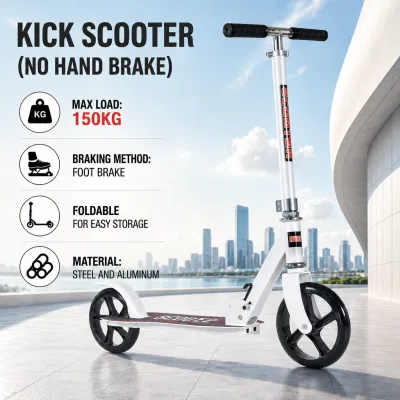
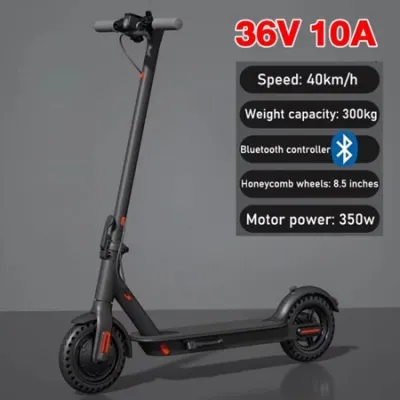
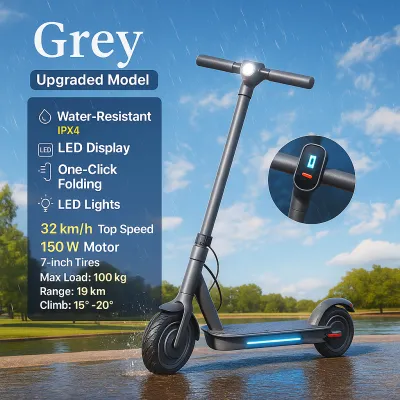
Prices are valid at publication and may change. Please refer to the product page for the latest price.
Battery Capacity and Range: Real-World Distance vs. Claims
Battery specifications are crucial because they determine how far you can ride before needing an electrical outlet. Battery capacity is typically measured in Watt-hours (Wh), which is calculated by multiplying the battery’s Voltage (V) by its Amp-hour (Ah) rating. Voltage can be thought of as the pressure that drives the motor’s speed and power, while Amp-hours represent the size of the fuel tank. A higher Watt-hour rating generally indicates a larger energy reserve, allowing for longer commutes between charges.

However, the advertised range on a product specification sheet rarely reflects real-world riding conditions. Manufacturers typically test range limits under highly controlled, ideal scenarios: a lightweight rider, flat terrain, no wind resistance, mild ambient temperatures, and a constant, low-speed setting. In reality, factors such as stop-and-go traffic, head winds, steep inclines, and carrying a heavy load will significantly decrease the actual distance your scooter can travel on a single charge.
To ensure your scooter can handle your daily commute, calculate your total round-trip distance and add a conservative buffer of 20% to 30%. This buffer accounts for natural battery degradation over time, tropical humidity that can affect battery efficiency, and the extra energy required to navigate unexpected detours or hilly terrain.
Weight Capacity and Build: Ensuring a Stable Electric Scooter for Adult Riders
Every electric scooter for adult riders is designed with a specific maximum weight capacity, which is a critical safety and performance specification. Before purchasing, verify that the scooter’s maximum load limit comfortably accommodates your body weight plus any gear you regularly carry, such as a laptop bag, groceries, or protective riding gear. Standard adult scooters typically offer weight capacities ranging from 100 to 120 kilograms, while heavy-duty models can support up to 150 kilograms.
Exceeding the manufacturer’s stated weight limit compromises both safety and vehicle longevity. An overloaded scooter experiences significantly increased braking distances, making emergency stops more dangerous. It also places excessive strain on the motor and battery, leading to sluggish acceleration, reduced climbing ability, and rapid battery depletion. Beyond weight capacity, pay close attention to the physical dimensions of the deck. A narrow or short deck forces you into a cramped, unnatural stance, which can cause foot fatigue and reduce your balance during long rides. Look for a deck that is wide enough to allow you to place your feet in a comfortable staggered stance, ensuring a stable center of gravity.
Tire Type and Suspension: Navigating Uneven Paths
The type of tires on your scooter dictates how well the vehicle absorbs vibrations and maintains traction on different surfaces. Solid (airless) tires are made of solid rubber or polyurethane, making them completely puncture-proof and virtually maintenance-free. However, because they do not compress like air-filled tires, they transmit almost all road vibrations directly to your feet, ankles, and knees, resulting in a harsher ride on rough asphalt or cobblestones. Solid tires also tend to offer less grip on wet or slippery surfaces.
Pneumatic (air-filled) tires provide superior shock absorption, better traction, and more responsive handling because the compressed air cushions the ride and allows the tire to deform slightly over bumps. The primary trade-off is the risk of punctures and the need for regular maintenance, such as checking tire pressure to prevent pinch flats. For most daily commuters traveling on varied urban roads, pneumatic tires offer a significantly safer and more comfortable experience.
Suspension systems, featuring front, rear, or dual spring or hydraulic shocks, work alongside your tires to smooth out rough terrain. While highly beneficial for navigating cracked pavement or uneven streets, suspension adds noticeable weight and cost. If your route consists entirely of smooth, well-maintained paths, you can opt for a model without dedicated suspension to save on weight and expense.
Braking Systems: The Most Critical Safety Spec
Braking performance is the single most critical safety specification on any adult electric scooter. Because adult riders travel at higher speeds and carry more momentum than children, a reliable, responsive braking system is non-negotiable. Scooters generally utilize a combination of electronic and mechanical brakes to bring the vehicle to a safe stop.
Electronic or regenerative brakes use the electric motor to slow the scooter down, converting some of the kinetic energy back into electrical power to recharge the battery. While electronic brakes reduce wear on mechanical components, they lack the stopping power required for sudden, emergency stops, especially when traveling downhill or carrying a heavy load. Therefore, you should never rely solely on an electronic brake.
Mechanical brakes—such as disc brakes, drum brakes, or foot-activated fender brakes—provide the physical friction needed for rapid deceleration. Disc brakes offer the strongest, most modular stopping power and are highly recommended for adult riders, though they require periodic adjustment and pad replacement. Drum brakes are sealed inside the wheel hub, protecting them from dirt and water, making them durable and low-maintenance. Ensure your chosen scooter features at least one high-quality mechanical brake, preferably a hand-operated disc brake on the rear or both wheels, to guarantee safe stopping distances.
Portability and Folded Dimensions: Commuting and Storage
For many urban commuters, portability is just as important as riding performance. If you need to carry your scooter up office stairs, lift it onto public transit, or store it in a tight apartment closet, you must carefully evaluate the vehicle’s total weight and folded dimensions. Lightweight commuter models typically weigh between 12 and 16 kilograms, making them relatively easy to lift and carry for short distances.
There is a direct engineering trade-off between portability and performance. Scooters with longer ranges, more powerful motors, larger pneumatic tires, and robust suspension systems require larger batteries and heavier structural frames, often pushing the total weight to 20 kilograms or more. While these heavy-duty models offer a smoother, more powerful ride, they can be incredibly difficult to carry up multiple flights of stairs or maneuver in crowded spaces.
Before finalizing your decision, measure your intended storage areas and compare them against the manufacturer’s specified folded dimensions. Additionally, consider your physical lifting capacity to ensure you can comfortably handle the scooter’s weight during your daily routine. Prioritizing a lightweight design is often the wiser choice if your commute involves frequent transitions between riding and carrying. In the local market, highly portable entry-level models often range from ₱15,000 to ₱30,000, while heavy-duty, high-performance scooters can easily exceed ₱45,000.
Frequently Asked Questions (FAQ)
Do I need a high-wattage motor for flat city commuting?
No. A motor with a nominal rating of 250 to 350 watts is highly efficient for flat urban commuting, conserving battery life and reducing the overall weight of the scooter. High-wattage motors (500 watts and above) are primarily necessary if you frequently encounter steep hills, carry heavy loads, or require rapid acceleration.
How long does an electric scooter battery typically last before needing replacement?
Most lithium-ion scooter batteries last between 300 to 500 full charge cycles before capacity degrades to about 70% to 80% of the original rating, translating to two to three years of daily use. You can extend this lifespan by avoiding deep discharges, keeping the charge between 20% and 80%, and storing the scooter in a cool, dry place.
Are solid tires better than pneumatic tires for daily use?
Solid tires are ideal if you prioritize zero maintenance and want to avoid flat tires. However, pneumatic tires are superior for daily use because they provide better shock absorption, comfort, and traction on wet or uneven surfaces. If you choose solid tires, look for a model with a good suspension system to offset the harsh ride.
Community discussion
Share your experience or ask a question. Comments are reviewed before publication.