
Finding the right electric treadmill for a home gym can feel overwhelming when faced with a wall of technical jargon. Manufacturers often highlight flashy features and high numbers that do not actually contribute to a better workout or a longer-lasting machine. To make a smart investment, you need to focus on the core specifications that directly impact performance, safety, and durability: motor power, running surface dimensions, and incline capabilities.
Understanding these key specifications allows you to cut through marketing hype and identify which features are worth paying for. Whether you are setting up a dedicated workout corner in a spacious suburban home or squeezing a compact machine into a high-rise condominium, matching the equipment to your physical needs and environment is essential for long-term satisfaction.
Continuous vs. Peak Motor Power: What You Actually Need
The motor is the heart of any electric treadmill, but its power ratings are frequently misunderstood due to misleading marketing terms. When browsing online marketplaces or fitness catalogs, you will encounter two distinct ratings: Continuous Horsepower (CHP) and Peak Horsepower (HP). Peak HP represents the maximum power a motor can output for a brief, unsustainable burst, whereas CHP indicates the sustained power the motor can safely deliver over a long workout.
Products mentioned in this guide
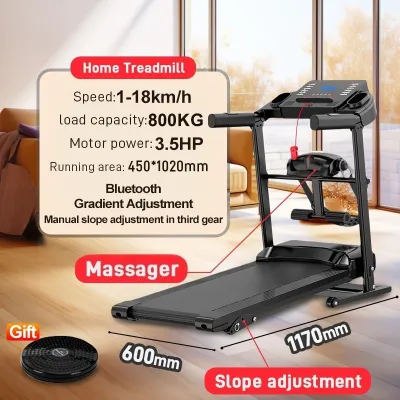
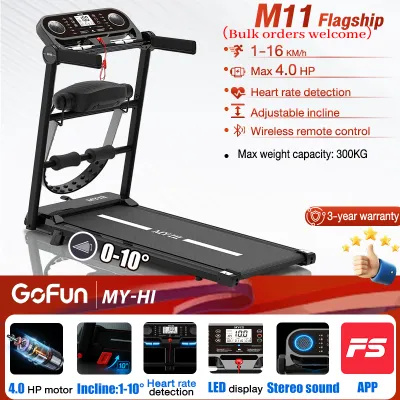
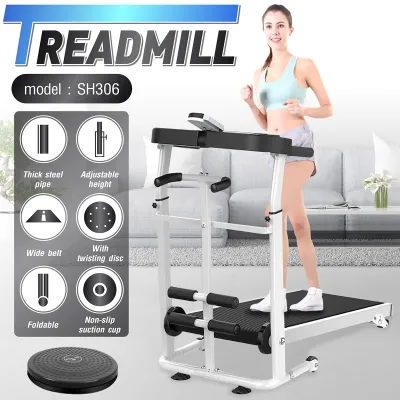
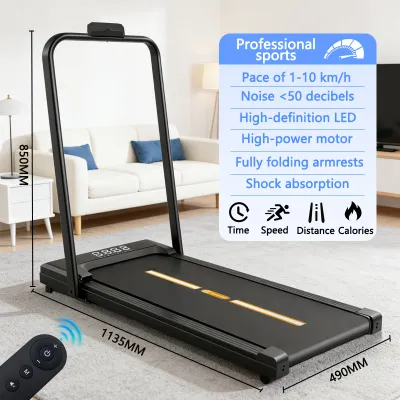
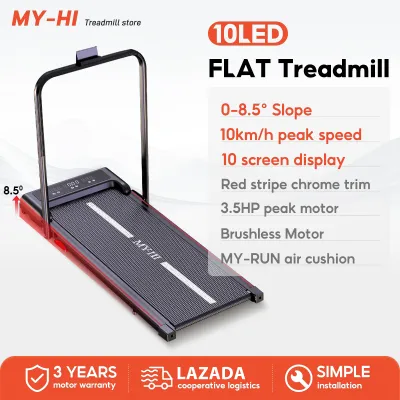
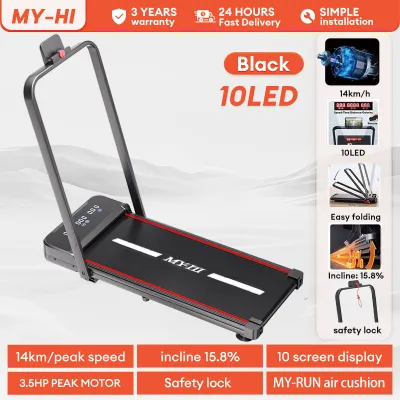
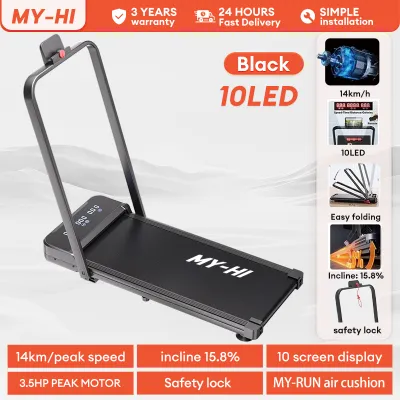
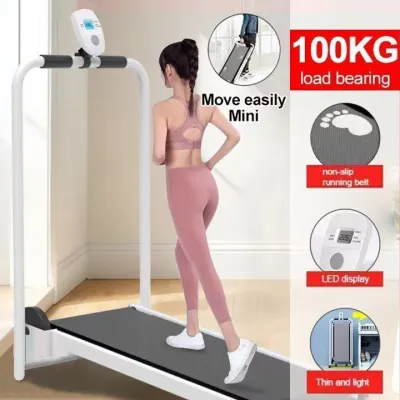
Prices are valid at publication and may change. Please refer to the product page for the latest price.
For home use, you should always base your decision on the CHP rating. A motor that is constantly pushed to its absolute limits will rapidly overheat, leading to premature wear, electrical faults, and eventual burnout. This risk is particularly high in warm, humid tropical environments, where ambient temperatures make heat dissipation more difficult for enclosed motor compartments.
To choose the right motor size, match the CHP rating to your primary workout activity and body weight:
- Walking (Up to 6 km/h): A motor with 2.0 CHP is generally sufficient for daily walking and light activity.
- Jogging (6 to 9 km/h): Look for a minimum of 2.5 CHP to handle the consistent, moderate impact.
- Running (Over 9 km/h): Opt for 3.0 CHP or higher to ensure the belt moves smoothly under rapid, heavy footfalls.
If multiple family members will use the machine consecutively, or if any user weighs close to or over 100 kilograms, always scale up your motor requirements by at least 0.5 CHP. Before purchasing, check the manufacturer’s official specification sheet or user manual to verify the “Continuous” or “CHP” rating, rather than relying on the bolded peak numbers displayed in product titles.
Running Surface Dimensions: Matching Belt Size to Your Stride
The size of the running belt determines how freely you can move without feeling restricted or risking a misstep. If a belt is too short or too narrow, you will constantly worry about stepping off the sides or sliding off the back, which ruins your running form and increases the risk of falls.

Your height and natural stride length dictate the minimum belt length you require. For safety and comfortable movement, consider these general guidelines:
- Under 5'5" (165 cm) Tall: A belt length of 50 inches (127 cm) is typically adequate for walking and light jogging.
- Over 5'5" Tall or Active Runners: Look for a belt length of at least 55 inches (140 cm) to accommodate a natural, extended running stride.
- Tall Runners (Over 6'0" or 183 cm): A 60-inch (152 cm) belt is highly recommended to prevent your feet from clipping the rear roller during fast sprints.
Belt width is equally important for lateral safety margins. A standard width of 20 inches (50 cm) provides comfortable elbow room and side-to-side clearance for most runners, while compact 18-inch (45 cm) belts are better suited for dedicated walking setups.
In urban Philippine homes, especially compact apartments and condominiums in Metro Manila, floor space is at a premium. While a larger running deck offers superior comfort, it also increases the machine’s overall footprint. To balance comfort with space constraints, look for foldable designs that utilize hydraulic assist systems for easy lifting. Always measure your dedicated room space and compare it against the treadmill’s fully assembled and folded dimensions, ensuring you leave sufficient clearance around the unit.
Incline Features: Manual vs. Motorized and Real Workout Impact
Adding an incline to your treadmill workouts is one of the most effective ways to increase cardiovascular intensity and muscle engagement without placing extra stress on your joints. Walking or running on an upward slope shifts the workload to your glutes, hamstrings, and calves while simulating outdoor terrain.
Treadmills offer either manual or motorized incline systems, and choosing between them depends on your budget and training style:
- Manual Incline: This system requires you to stop the treadmill, step off, and manually adjust a pin, lever, or ramp at the back of the deck. While manual models are highly budget-friendly, they disrupt the flow of your workout and prevent you from changing the slope mid-run.
- Motorized Incline: This system allows you to adjust the deck's angle instantly with the press of a button on the console or handrails while you are moving. It is essential for interval training, hill simulation programs, and seamless workout transitions.
If you plan to use your treadmill primarily for steady-state walking, a manual incline or even a fixed-slope machine can save you a significant amount of money. However, if your fitness goals include high-intensity interval training (HIIT) or training for outdoor trail runs, a motorized incline is well worth the extra investment.
When comparing motorized options, check the maximum incline percentage (typically ranging from 10% to 15%) and the increment steps. Precision adjustments of 0.5% or 1% allow for a more controlled progression as your endurance improves.
Overhyped Specs: What You Can Safely Deprioritize
When shopping for a treadmill, it is easy to get distracted by premium features that drive up the price tag without offering much practical value. Identifying these overhyped specifications can help you allocate your budget toward a better motor or a sturdier frame instead.
- Extreme Top Speeds: Many home treadmills boast top speeds of 20 km/h or more. Unless you are an elite competitive athlete or performing short, high-speed sprints, you will rarely need to exceed 12 to 16 km/h. Paying a premium for an excessively high top speed is unnecessary for the vast majority of home users.
- Built-In Touchscreens: Large, integrated touchscreens look impressive in showrooms, but they often rely on proprietary software that can become slow, buggy, or entirely unsupported over time. A simple, sturdy tablet holder is a much more practical and cost-effective solution, allowing you to mount your own tablet or smartphone to stream workouts or entertainment.
- Hundreds of Preset Programs: Brands often market "100+ built-in workouts" as a major selling point. In reality, most users rely on manual mode, a simple custom profile, or external fitness apps. Do not let a massive list of pre-programmed workouts justify a higher price.
Before finalizing any purchase or setting up your new equipment, always read the manufacturer’s manual for specific instructions regarding maximum weight limits, electrical requirements, and proper grounding to protect your home’s circuitry.
Frequently Asked Questions (FAQ)
Is a 1.5 CHP motor enough for running?
No, a 1.5 CHP motor is generally insufficient for sustained running. While it can handle light walking or occasional short jogs for lighter users, running exerts significant impact forces that will quickly strain a low-power motor. For regular running, look for a machine with at least 2.5 to 3.0 CHP to ensure smooth operation and prevent premature motor burnout.
How much clearance do I need around the treadmill?
For safety, you should leave at least 6.5 feet (2 meters) of clear, unobstructed space directly behind the treadmill belt to prevent injury in the event of a slip or fall. Additionally, maintain at least 2 feet (0.6 meters) of clearance on both sides of the machine to allow for safe mounting, dismounting, and proper airflow around the motor cover.

Community discussion
Share your experience or ask a question. Comments are reviewed before publication.