
An emergency whistle is a staple of any outdoor safety or disaster preparedness kit, but relying on it blindly can create a dangerous illusion of security. In a loud disaster environment—such as a severe typhoon, an urban building collapse, or an active landslide—the actual audibility of a whistle drops dramatically. While it remains an essential tool for signaling rescuers, its high-frequency sound can easily be masked by ambient noise, blocked by physical debris, or rendered useless by the physical limitations of the user. Understanding these realistic boundaries allows you to plan more effectively, carry the right complementary gear, and avoid over-relying on a single device when your safety is on the line.
The Core Purpose of an Emergency Whistle in Your Kit
The primary role of an emergency whistle is to serve as an acoustic beacon, attracting the attention of search and rescue teams when visual contact is impossible. Unlike the human voice, which tires quickly and can become hoarse within minutes of shouting, a whistle produces a concentrated, high-frequency sound with minimal physical effort. Shouting rapidly depletes your energy, dries out your throat, and strains your vocal cords, whereas a whistle utilizes a relatively small volume of air to generate a piercing tone that can cut through moderate ambient noise.
To use this tool effectively, you must understand that it is designed solely for signaling, not for complex communication. Standard international distress protocols rely on simple, repetitive patterns that are easy to recognize. The most common signal is a series of three short, sharp blasts, followed by a pause of approximately one minute to listen for a response. This pattern should be repeated continuously until help arrives. Attempting to create custom signals or blow continuously without pausing only wastes your physical energy and prevents you from hearing incoming rescue calls.
Products mentioned in this guide
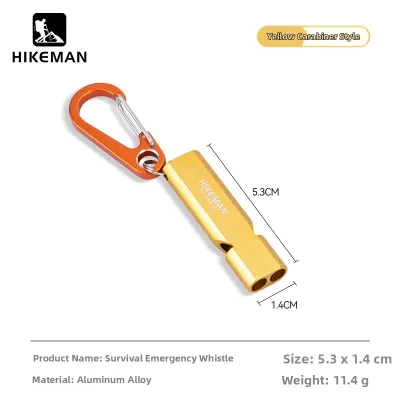
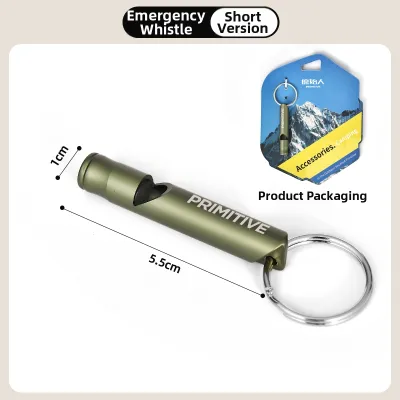
94 Lazada user ratings
It's really good and well-made with a smooth finish. The sound is loud and clear, making it perfect for hanging on a backpack during outdoor…Read full reviewShow less
It's really good and well-made with a smooth finish. The sound is loud and clear, making it perfect for hanging on a backpack during outdoor hiking. I'll definitely be back for more if I need them.
The sound is really loud and can be heard from far away. The craftsmanship is great, and the design looks beautiful.
It's quieter than I expected.
It's pretty good.
Pretty good!
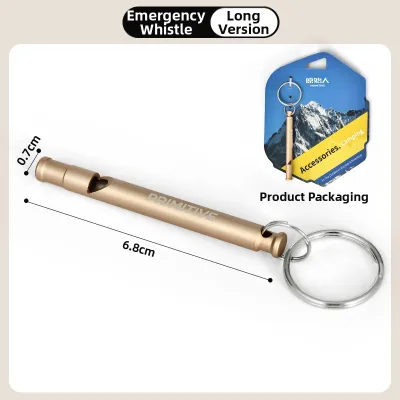
711 Lazada user ratings
Item was received in good order and condition. It looks and feels sturdy and produces a really loud output. I am satisfied with it. Hoping t…Read full reviewShow less
Item was received in good order and condition. It looks and feels sturdy and produces a really loud output. I am satisfied with it. Hoping this would serve me well and long with proper use and care.
The sound is loud, the touch feels smooth without any rough edges, and the whistle is pretty good. It's great to have as a backup at home.
I picked up this little whistle and was pleasantly surprised by its quality. The sound it makes is really loud, which is great!
The original population whistle is small and exquisite. I bought one before and my family took it, so I got another one.
A really useful item.
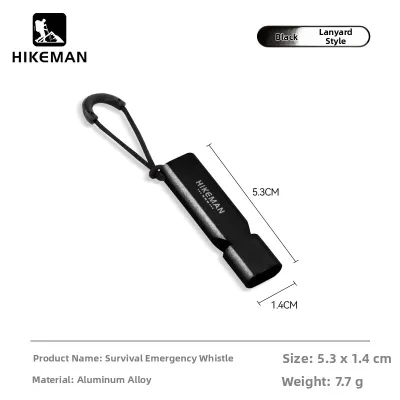
129 Lazada user ratings
This little whistle is super easy to carry around. I put it in my car and gave it a gentle test, and the sound is pretty clear!
The sound is bright and has great clarity. It's also super convenient to carry around. Love it!
The sound is very clear and can be heard from a long distance.
I tried it out, and the whistle is very loud. It works great!
🔨Durability:good
1,767 Lazada user ratings
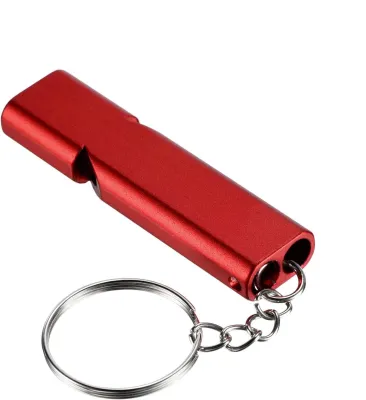
Compact and lightweight design, Durable aluminum construction, 🔄Versatility: versatile 🔨Durability: durable matibay tatagal 👜Portability: po…Read full reviewShow less
Compact and lightweight design, Durable aluminum construction, 🔄Versatility: versatile 🔨Durability: durable matibay tatagal 👜Portability: portable madali bitbitin campact For emergency lagi ko dala kasama ng Süsi ng bahay at nakalagay sa madali makita kaya bumili kana Save money bumili kapag sale at maganda sya mukhang mamahalin
Loud double tube whistle, clear sound and very durable build. Powerful sharp sound, perfect for sports and safety use. Lightweight double wh…Read full reviewShow less
Loud double tube whistle, clear sound and very durable build. Powerful sharp sound, perfect for sports and safety use. Lightweight double whistle, easy to carry and reliable. Strong and clear tone, works great for outdoor activities. Compact design with loud blast, ideal for coaches.
🔨Durability:10/10 👜Portability:10/10 🔄Versatility:10/10 Very handy and durable aluminum, easyto blow and use, thank you seller and to the fr…Read full reviewShow less
🔨Durability:10/10 👜Portability:10/10 🔄Versatility:10/10 Very handy and durable aluminum, easyto blow and use, thank you seller and to the friendly rider
lightweight and can be hooked in the ID lace. Loud and clear and whistle sound. Flexible kasi pwedeng keychain at magagamit for emergencies
Convenient keychain attachment, Great for emergency situations, very small and definitely handy.
1,715 Lazada user ratings
I already did the review on the other item that I thought is for the whistle. So this review is for the coin organizer. Same thing, it does …Read full reviewShow less
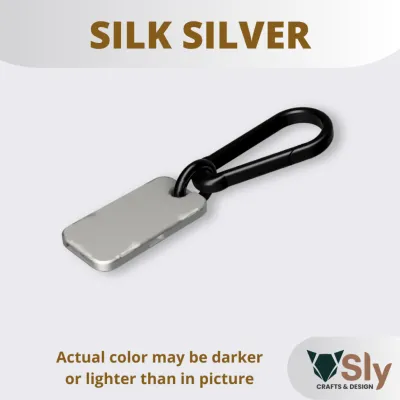
I already did the review on the other item that I thought is for the whistle. So this review is for the coin organizer. Same thing, it does it purpose and it feels durable. Thanks seller.
Easy carabiner clip, Safe for kids use, Loud emergency whistle, Durable 3D printed, Fast shipping service,
Perfect for hikers, Safe for kids use, Compact outdoor tool, Good seller support, Fast shipping service,
Good seller support, Clear sound alert, Loud emergency whistle, Safe for kids use, Easy carabiner clip,
337 Lazada user ratings
Ultra-loud whistle, Good seller service, Compact and lightweight, Perfect for emergency kits, High-frequency sound, High-frequency sound, Ge…Read full reviewShow less
Ultra-loud whistle, Good seller service, Compact and lightweight, Perfect for emergency kits, High-frequency sound, High-frequency sound, Genuine product, 🔨Durability:Good 👜Portability:Good 🔄Versatility:OK
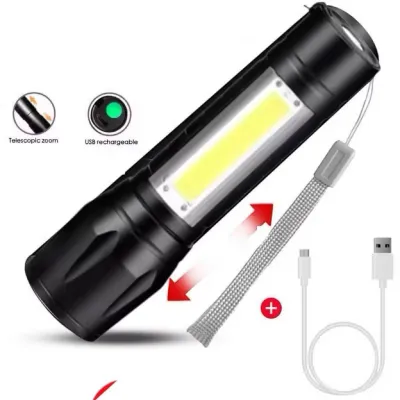
Bright LED flashlight, High-frequency sound, Perfect for emergency kits, Fast shipping,
Durable for outdoor use, Compact and lightweight, Bright LED flashlight,
Maganda po siya. Walang damage at malakas ang tunog. Salamat!
🔨Durability:excellent
59 Lazada user ratings
the whistle light looks durable enough, the light is bright and has 3 modes, the design is nice. the product has some weight on it. but the …Read full reviewShow less
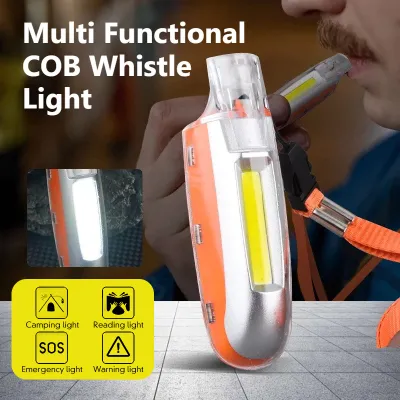
the whistle light looks durable enough, the light is bright and has 3 modes, the design is nice. the product has some weight on it. but the whistle is not loud enough. it will easily drown in a noisy environment.
🔨Durability: I can see that it’s going to last even if it drops on the ground a few times. It lis lightweight so my kid can wear/ hang it fr…Read full reviewShow less
🔨Durability: I can see that it’s going to last even if it drops on the ground a few times. It lis lightweight so my kid can wear/ hang it from the neck for easy access. It also has compact design.
🔨Durability:10/10 👜Portability:10/10 light is very bright, whistle is loud, ideal for students.
Compact design,
Prices are valid at publication and may change. Please refer to the product page for the latest price.
Realistic Audibility Limits in Loud Disaster Environments
Disaster environments are rarely quiet, and the ambient noise of a crisis can severely limit how far a whistle’s sound can travel. Heavy machinery, rushing floodwaters, collapsing structures, and howling winds generate massive acoustic interference. Most of these environmental sounds are low-frequency rumbles, which carry immense physical energy. While a whistle produces a high-frequency tone designed to stand out, the sheer volume of low-frequency disaster noise can easily mask the sound, making it virtually inaudible to anyone more than a few meters away.

Sound waves also behave very differently depending on the surrounding terrain. In an open, flat field, sound waves expand outward in all directions, losing energy steadily as they travel. In a cluttered, debris-filled environment—such as a collapsed concrete building or a landslide zone—the sound waves hit solid obstacles. Instead of traveling forward, the sound reflects off hard surfaces, scatters in random directions, or is absorbed by soft materials like soil, mud, and insulation. This acoustic scattering makes it incredibly difficult for rescuers to pinpoint the exact direction of the sound, even if they can hear a faint whistle blow.
Because of these factors, there is a massive gap between a whistle’s theoretical maximum range and its practical hearing distance in a crisis. Manufacturers often test whistles in quiet, open, flat environments under perfect weather conditions, resulting in impressive range estimates. In a chaotic, high-stress disaster setting, however, that theoretical range can shrink to a fraction of its original distance. You must assume that in a loud, active environment, your whistle may only be heard by those in your immediate vicinity.
Environmental and Physical Factors That Reduce Effectiveness
Weather conditions play a massive role in how sound travels through the air. Strong crosswinds can physically shear sound waves, bending them away from their path and carrying the sound downwind, away from potential rescuers upwind. Heavy rain and thick fog also act as physical barriers. Millions of falling water droplets absorb and scatter the high-frequency acoustic energy of a whistle, rapidly dampening the sound and reducing its carrying distance to a minimum.
Physical obstacles on the ground further degrade the effectiveness of your signal. Dense foliage, thick brush, and uneven topography absorb sound waves rather than reflecting them. In urban environments, thick concrete walls, steel beams, and piles of rubble act as highly effective sound barriers. If you are trapped beneath debris, the sound of your whistle may be completely muffled by the surrounding material, preventing it from reaching the surface even if you blow with maximum effort.
Finally, your own physical state is the ultimate limiting factor. A whistle requires a strong, steady column of air to produce its intended pitch and volume. If you are suffering from severe exhaustion, dehydration, hypothermia, or smoke inhalation, your lung capacity and expiratory pressure will be significantly reduced. Physical injuries, particularly to the face, jaw, or ribs, can make it impossible to form a tight seal around the mouthpiece or generate enough force to blow. In these situations, relying solely on a whistle can leave you unable to signal for help at all.
Avoiding False Security: When a Whistle Is Not Enough
A whistle is a valuable tool, but it cannot replace active survival strategies or sound judgment. It is a common mistake to assume that having a whistle in your kit means you can safely stay put and wait for rescue in a deteriorating environment. A whistle does not protect you from rising floodwaters, spreading fires, toxic gas accumulation, or secondary structural collapses. Your primary rule must always be to evacuate to a designated safe zone whenever it is physically safe to do so, rather than relying on a signaling device to bring help to a hazardous location.
There are specific scenarios where staying in place and blowing a whistle can actually increase your risk. For instance, in an active flood situation, water levels can rise faster than rescue teams can locate you, making immediate movement to higher ground a necessity. In an unstable structure, the physical exertion of blowing a whistle can cause dizziness, while the sound itself is unlikely to penetrate thick concrete. You must establish clear stop-conditions for whistle use: if you have signaled repeatedly with no response, or if your immediate surroundings become increasingly hazardous, you must stop blowing, conserve your physical energy, and prioritize movement or alternative survival actions.
When acoustic signaling is ineffective, you must be prepared to switch to visual or electronic methods. Carrying a high-lumen flashlight for night signaling, a compact signal mirror for daytime use, or highly visible, brightly colored clothing can provide alternative ways to attract attention. These tools do not rely on air pressure or acoustic clarity, making them excellent complements to your whistle in challenging environments.
Proper Usage and Maintenance for Reliable Signaling
To ensure your whistle performs when you need it most, regular inspection and proper maintenance are essential. Before adding a whistle to your preparedness kit, inspect it thoroughly for hairline cracks along the seams, which can cause air leaks and ruin the tone. Check the interior chambers for dirt, lint, or debris that could block the airflow. If your whistle uses a lanyard, verify that the cord is made of rot-resistant material and features a breakaway safety clasp to prevent accidental choking hazards during a fall or evacuation.
Your physical technique also determines the quality of the signal. Do not blow from your throat, as this produces a weak, inconsistent sound and can cause rapid hyperventilation. Instead, practice diaphragmatic breathing—inhaling deeply into your abdomen—to generate a steady, powerful column of air. Place the mouthpiece firmly between your lips, ensuring your teeth do not block the exit hole, and blow with a sudden, sharp burst of energy to produce a clear, piercing tone.
Where you store your whistle is just as important as how you use it. A whistle buried deep inside a backpack is useless if you are suddenly pinned or unable to move your arms freely. Secure the whistle to an easily accessible external point on your gear, such as the shoulder strap of your backpack, the zipper pull of your primary outdoor jacket, or integrated directly into your life jacket. It should be positioned where you can reach it with either hand, or even with your mouth if your arms are restricted.
Frequently Asked Questions (FAQ)
Do louder whistles always perform better in a disaster?
Not necessarily, as pitch and frequency modulation are often more critical than raw volume in chaotic environments. Many disasters generate low-frequency rumbles, meaning a whistle with a higher, piercing pitch can cut through the noise more effectively than a louder, lower-pitched model. Additionally, blowing an extremely loud whistle in a confined space, such as a collapsed room or a narrow ravine, can cause immediate hearing damage to your own ears, reducing your ability to hear incoming rescue calls or instructions.
Can a whistle be heard underwater or during a severe storm?
Standard emergency whistles are highly ineffective for underwater signaling because sound waves do not transition well across the air-water boundary. If you are submerged, the water will block the whistle’s chambers, preventing it from producing sound, and any sound generated above water will not penetrate effectively below the surface. During a severe storm, hurricane-force winds and torrential rain can reduce the practical range of a whistle to just a few meters, making it essential to combine your whistle with visual signals or electronic locator beacons.
Community discussion
Share your experience or ask a question. Comments are reviewed before publication.