
To excel in Philippine campus sports events like the UAAP, NCAA, or local intramurals, a school team must balance athletic precision with strict safety standards. High-energy cheering, stunting, and tumbling routines require a specialized set of gear designed to support athletes while withstanding intense tropical conditions. From high-density safety mats and supportive footwear to moisture-wicking apparel and crowd-engaging props, having the right equipment is essential for both performance and injury prevention. This guide outlines the core gear a school squad needs to prepare for competitive success.
Understanding Competition Rules and Safety Baselines
Before purchasing any gear, school athletic directors and coaches must consult the specific rulebooks of their target athletic associations. Major collegiate leagues, such as the University Athletic Association of the Philippines (UAAP) and the National Collegiate Athletic Association (NCAA), enforce strict guidelines regarding uniform designs, prop dimensions, and safety gear. Local school intramurals may have slightly different rules, but safety remains the universal baseline.
Rulebooks typically outline prohibited items, such as jewelry, metal hairpins, or hard-braced supports that could injure teammates during bases and tosses. Additionally, any safety equipment, particularly practice mats, should meet recognized athletic standards rather than relying on general retail marketing claims. Coaches must verify that all gear complies with the official guidelines of the active season to avoid costly point deductions or disqualifications on competition day.
Products mentioned in this guide

Prices are valid at publication and may change. Please refer to the product page for the latest price.
Selecting Apparel and Footwear for Cheering in Tropical Conditions
Uniforms and Base Layers
The tropical climate of the Philippines, characterized by high temperatures and intense relative humidity, demands high-performance apparel. Standard cotton fabrics trap sweat, increase weight, and cause severe chafing during long practice sessions in unairconditioned gyms. Teams should prioritize uniforms made from lightweight, moisture-wicking synthetic blends like polyester-spandex or nylon-spandex. These fabrics pull sweat away from the skin and dry quickly, keeping athletes comfortable and focused.

Fit is another critical factor for safety and execution. Tops, skirts, and spandex briefs must offer a snug, compression fit that stays secure without restricting breathing or movement. Loose fabric poses a serious hazard during complex pyramids or basket tosses, as a teammate’s fingers or shoes can easily get caught. Ensure all base layers feature flatlock seams to minimize friction, and verify that the cut allows a full range of motion for jumps, splits, and high-velocity tumbling.
Cheerleading Shoes
Footwear serves as the primary interface between the athlete and the performance surface, making it the most critical piece of personal gear. The ideal shoe depends heavily on the team’s primary training and competition venues. For indoor wooden courts, teams require specialized indoor cheer shoes with low-profile, non-marking rubber outsoles. These soles provide the necessary grip for bases to stand firmly and flyers to remain stable.
If the team frequently performs on outdoor concrete plazas or asphalt parade routes, standard indoor shoes will wear out quickly and lack durability. In these scenarios, look for all-terrain cheer shoes featuring reinforced uppers and rugged outsoles. Regardless of the venue, ensure the shoes provide robust arch support and high-impact shock absorption, typically through EVA foam midsoles, to protect athletes’ joints during repetitive landings.
Sourcing Stunting Mats and Protective Gear
Crash Mats and Landing Pads
High-risk elements like pyramids, tosses, and tumbling passes require dedicated safety surfaces to prevent severe injuries. For daily practice, teams must invest in high-density foam mats. Look for roll-away or folding carpeted mats with a thickness of at least 1.375 to 2 inches (approx. 3.5 to 5 cm) made of cross-linked polyethylene (XPE) foam. This material offers the necessary shock absorption to cushion falls and support joints.
When setting up folding mats, verify that they feature secure, heavy-duty Velcro connectors on all sides. These connections must lock the mats tightly together to prevent them from sliding apart during active routines. Gaps between mats can catch an athlete’s foot mid-tumble, leading to severe ankle or knee sprains. Always clean and dry the underlying floor before laying down mats to prevent the entire safety surface from sliding.
Joint and Impact Protection
Bases and flyers often benefit from targeted joint support during repetitive stunt training. Neoprene wrist guards, compression knee pads, and low-profile ankle braces can help stabilize joints and absorb impact. These tools are especially useful when learning new stunts or recovering from minor, coach-cleared sprains.
Safety Boundary: It is vital to remember that protective gear and mats are secondary safety measures; they do not replace proper spotting, progressive skill training, and certified coaching. Equipment cannot compensate for a lack of technical preparation or poor athletic judgment. If any mat or brace shows signs of structural damage, such as compressed foam or torn straps, stop using it immediately. Never attempt advanced skills if safety gear is compromised.
Building Strength with Practice and Conditioning Tools
Conditioning tools are essential for developing the strength, flexibility, and endurance required for competitive routines. Resistance bands of varying tension levels are highly versatile, allowing athletes to strengthen their rotator cuffs, ankles, and hip abductors—muscles critical for stable stunts and clean jumps. Light dumbbells (typically ranging from 1 kg to 5 kg) help bases build the shoulder endurance needed to hold extended stunts, while stretching straps assist flyers in safely achieving extreme flexibility for heel stretches and scorpions.
To refine spatial awareness and footwork, coaches should integrate agility ladders and high-visibility marker cones into daily drills. Agility ladders improve foot speed and coordination, which directly translates to sharper dance transitions. Marker cones are indispensable for mapping out exact formations and transition paths on the practice floor. Because these conditioning tools are lightweight and highly portable, they serve teams well across both off-season physical preparation and in-season routine refinement.
Preparing Game Day Visuals and Logistics
Visual Props and Audio
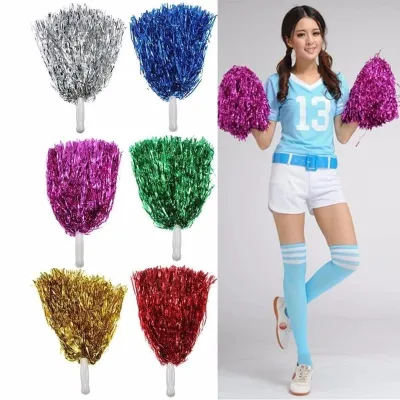
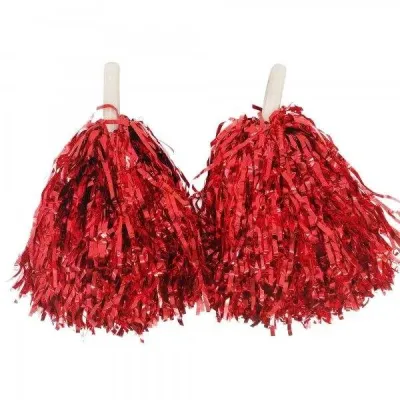
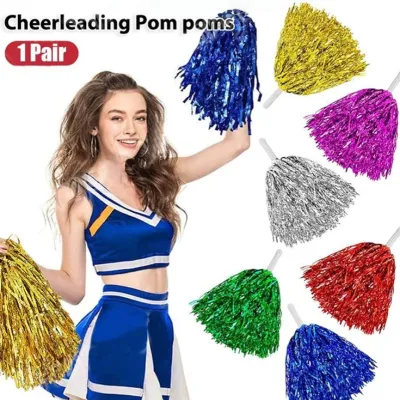
Visual props are crucial for securing high crowd-appeal scores in local competitions. Pom-poms should be selected based on weight, handle type, and durability. Metallic or plastic show-style pom-poms with baton handles or hidden hand straps allow athletes to maintain a secure grip during complex choreography. Prioritize shed-resistant designs; cheap pom-poms that drop plastic strands on the floor create a slip hazard for tumbling athletes.
Megaphones are equally important for projecting the team’s voice over loud arena crowds. Select lightweight molded plastic megaphones equipped with secure, adjustable wrist straps. This prevents the megaphone from flying out of an athlete’s hand during high-speed transitions. Ensure the megaphone’s size matches the athlete’s physical build to avoid throwing off their balance during motion sequences.
Hydration and Medical Kits
Competing and practicing in unairconditioned school gyms or outdoor arenas in the Philippines poses a constant risk of heat-related illnesses. A fully stocked, easily accessible team medical kit is mandatory. This kit must contain instant cold packs, high-quality athletic tape for joint wrapping, sterile bandages, antiseptic wipes, and blister pads.
To combat dehydration and heat exhaustion, the team must establish a structured hydration protocol. Invest in high-capacity, double-wall insulated water jugs that can keep water cold for hours despite tropical heat. Individual squeeze bottles should be clearly labeled for each athlete to maintain hygiene. Encourage regular, timed hydration breaks, and verify that athletes have access to electrolyte replacement drinks during high-intensity sessions to replenish lost sodium and potassium.
Maintaining Gear in a Humid Climate
The high humidity and warm temperatures of the Philippines create a breeding ground for mold, mildew, and bacteria, which can rapidly degrade expensive equipment.
- Moisture and Mold Prevention: Never allow damp uniforms, sweaty shoes, or used ankle braces to sit inside closed athletic bags or airtight plastic containers overnight. After every practice, athletes must air-dry their shoes and personal protective gear in a well-ventilated, shaded area. Mats must be wiped down and allowed to dry completely before being rolled up and stored in a dry, elevated storage room.
- Cleaning Protocols: Always check the manufacturer's care label on uniforms before washing. Wash delicate competition uniforms in cold water using a mild, color-safe detergent, and avoid using harsh chlorine bleach or fabric softeners, which can break down the elastic fibers of spandex and damage metallic foils. For high-contact equipment like practice mats, megaphones, and conditioning tools, use a non-corrosive, sports-grade disinfectant spray to sanitize surfaces without degrading the underlying materials.
- Inspection Routine: Establish a mandatory weekly inspection routine led by the coaching staff or team captains. Inspect shoe outsoles for worn-down tread that could cause slips, check mat covers for tears or exposed foam, and examine pom-poms for loose strands. Any damaged equipment must be repaired or replaced immediately to prevent catastrophic failures during a live performance or high-risk stunt.
Frequently Asked Questions (FAQ)
Can standard running shoes be used for cheerleading routines?
No, standard running shoes are highly unsuitable and potentially dangerous for cheerleading. Running shoes are engineered primarily for forward linear motion, featuring thick, cushioned heels and aggressive, uneven tread patterns designed to grip outdoor terrain. In cheerleading, these thick soles can easily catch on carpeted mats or polished gym floors, causing ankle rolls during lateral transitions. Furthermore, the bulky heels of running shoes make it extremely difficult for bases to secure a safe, firm grip on a flyer’s feet during stunts. Dedicated cheerleading shoes feature flat, low-profile soles, lateral stability, and specialized finger grooves that allow bases to hold stunts securely.
How should a new school team prioritize equipment purchases on a limited budget?
A newly established school team operating on a tight budget must prioritize safety and athlete protection above all else. The initial budget should be allocated to high-quality, certified high-density practice mats and a comprehensive first aid kit, as these directly protect athletes from injury. Proper, supportive cheerleading footwear should be the next priority. For apparel and visuals, start with basic, durable practice wear (such as plain spandex shorts and breathable tees) and standard, budget-friendly plastic pom-poms. Custom, high-embellished competition uniforms, metallic props, and advanced conditioning tools can be phased in later as the team secures school funding, alumni donations, or local corporate sponsorships.
Community discussion
Share your experience or ask a question. Comments are reviewed before publication.