
Starting your fishing journey in the Philippines is an exciting venture, thanks to the country’s vast coastlines, rich rivers, and productive freshwater lakes. However, walking into a tackle shop for the first time can be overwhelming with the sheer variety of rods, reels, lines, and lures on display. To begin successfully without overspending, you only need a few essential fishing items: a versatile spinning rod and reel combo, a spool of reliable monofilament line, a selection of basic hooks, some simple weights, and essential safety gear to protect you from the tropical sun. By focusing on these core tools, you can master the basics of casting and catching before deciding if you want to invest in specialized equipment.
How to Build a Budget-Friendly Starter Fishing Kit
When assembling your very first fishing kit, the key is smart budget allocation. It is easy to get distracted by high-tech gadgets, colorful lures, and specialized gear that you do not yet know how to use. A practical approach is to allocate approximately 60% of your starter budget to a reliable rod and reel combination, as this setup forms the foundation of your fishing experience. Allocate about 20% to your line and terminal tackle, which includes hooks, sinkers, and swivels. The remaining 20% should go toward basic accessories, such as a simple tackle storage box, nail clippers for cutting line, and essential sun protection.
If you set a total starter budget of ₱2,000 to ₱3,000, you can easily acquire a highly functional setup that will last for years with proper care. For example, a budget of ₱2,500 allows you to spend around ₱1,500 on a durable entry-level spinning combo, leaving ₱1,000 for high-quality monofilament line, a variety pack of hooks, a few lead sinkers, and a basic utility box. Spending less than this range often lands you in the lower-quality category, where gears can strip easily and rods may snap under minimal pressure. Conversely, spending more is unnecessary until you identify your preferred fishing style, whether that is freshwater pond fishing for tilapia or shore casting along coastal beaches.
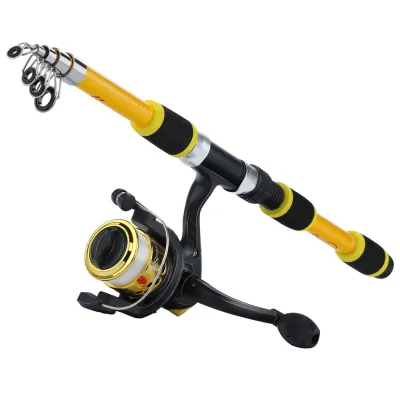
Products mentioned in this guide
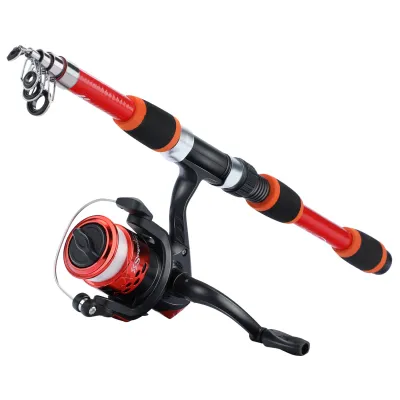
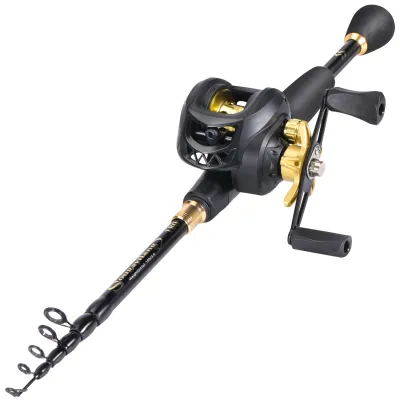
![[COD]Fishing Rod and Reel Set Fishing Rod Set Full Set Fish rods 1.8m Telesscopic Fishing Rod Fishing Rod and Reel Combos](https://img.lazcdn.com/g/p/dd36fe77f96794e78e35359c533a3b87.jpg_400x400q80.jpg_.webp)
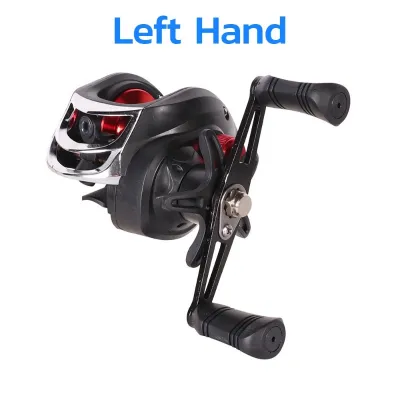
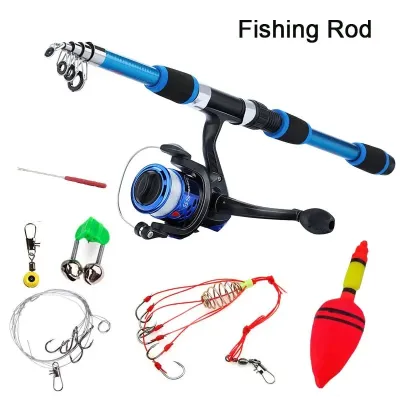
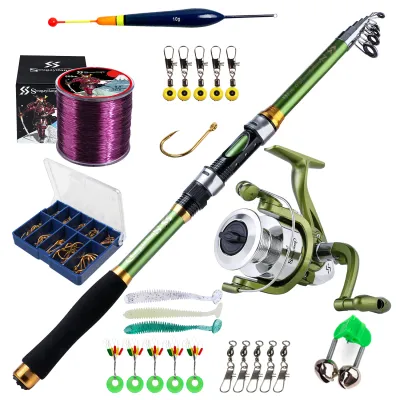
![[COD]Sougayiyang Fishing Rod Set Full Set Fishing Pole Set Full Kits With Telescopic Fishing Rod And Spinning Reel Baits Hooks Travel Pole Set](https://img.lazcdn.com/g/p/c3cea68773f0bc66fe49bb25b7faa531.jpg_400x400q80.jpg_.webp)
Prices are valid at publication and may change. Please refer to the product page for the latest price.
To get excellent value, compare options at both local physical tackle shops and reputable online marketplaces. Local tackle shops, often found near coastal communities or major rivers, are invaluable resources. The shopkeepers can provide localized advice on what fish are biting and which hook sizes work best in nearby waters. When shopping online, avoid buying the cheapest unbranded kits that promise dozens of accessories. These kits often contain low-quality line that tangles easily and hooks that bend under the weight of a modest fish. Instead, look for established entry-level brands and read user reviews carefully to verify durability.
Choosing Your First Fishing Rod and Reel Combo
Your rod and reel are the primary tools of the sport, and buying them together as a pre-matched combo is generally the smartest move for a beginner. Manufacturers design these combos to ensure the reel size matches the rod’s weight and casting capabilities. This eliminates the guesswork of balancing your gear, allowing you to focus entirely on learning how to cast. Purchasing components separately is better suited for experienced anglers who want to fine-tune their setup for highly specific techniques or target species.

For your first rod, look for a medium-light or medium power rating with a length between 6 and 7 feet. A 6.5-foot rod is highly versatile, offering an excellent balance between casting distance and control. In terms of material, fiberglass is highly recommended for beginners. While graphite rods are lighter and more sensitive, they are also brittle and can shatter if banged against a boat gunwale or dropped on rocks. Fiberglass rods are incredibly tough, forgiving of beginner mistakes, and highly affordable. Look for a two-piece rod, as it is much easier to transport in public utility vehicles, on a motorcycle, or in a compact car.
When it comes to the reel, a spinning reel (also known as an open-face reel) is the highly recommended choice for beginners. Spinning reels mount on the underside of the rod and use a stationary spool, which makes them highly resistant to the dreaded “bird’s nest” tangles that plague baitcasting reels. Baitcasting reels require precise thumb control to prevent the spool from overrunning, presenting a steep learning curve that can quickly ruin a beginner’s day on the water. A spinning reel in the 2000 to 3000 size range is ideal, as it holds plenty of line for local freshwater and light saltwater applications without feeling excessively heavy in hand.
Selecting the Right Fishing Line, Hooks, and Terminal Tackle
The fishing line is your direct connection to the fish, and choosing the right type is critical for success. For beginners, monofilament line is highly practical compared to braided line. Monofilament is inexpensive, easy to tie knots with, and has a natural stretch that acts as a shock absorber when a fish pulls hard. This stretch helps prevent the hook from tearing out of the fish’s mouth during a frantic fight. Braided line, while stronger and thinner, is highly sensitive to abrasion on rocks, requires complex specialized knots, and can easily cut your fingers if you try to pull a snagged line by hand.
A monofilament line with a breaking strength of 8 to 12 pounds (lb test) is the sweet spot for most beginner scenarios in the Philippines. This strength is thin enough to cast easily but strong enough to handle common species like tilapia, milkfish, and small groupers. If you plan to fish primarily in rocky coastal areas where your line might rub against sharp coral or concrete structures, upgrading to a 15-pound test monofilament provides a helpful safety margin against abrasion.
Your choice of hooks should match the size of the fish you realistically expect to catch, rather than the monsters you hope to find. For beginners, a variety pack of classic J-hooks or circle hooks in sizes ranging from size 6 to size 1/0 is highly practical. Circle hooks are particularly excellent for beginners because their unique curved design almost always hooks the fish automatically in the corner of the mouth when the fish swims away, reducing the need for a well-timed, aggressive hook set.
To complete your terminal tackle setup, you will need a few basic connectors and weights. Split shot sinkers are small, clamp-on lead weights that you can easily pinch onto your line with pliers to add casting weight or sink your bait. Egg sinkers, which have a hole running through the center, allow your line to slide freely so a fish can take the bait without feeling the weight of the sinker. Finally, barrel swivels and snap swivels are essential for preventing line twist, especially when fishing in moving water or using baits that spin during retrieval.
Essential Baits, Lures, and Tackle Storage
Deciding between natural bait and artificial lures depends largely on where you are fishing and how active you want to be. For complete beginners, natural bait is highly recommended because it relies on scent and taste to attract fish, making it effective even when your casting and retrieval techniques are still developing. Simple, locally sourced baits like earthworms, small freshwater shrimp, or dough balls made from flour and vanilla extract are incredibly effective for freshwater ponds and rivers. For coastal saltwater fishing, small pieces of fresh squid or peeled shrimp purchased from the local wet market are highly attractive to a wide variety of reef fish.
Artificial lures, such as soft plastic grubs, inline spoons, and small hard plastic minnows, require you to constantly cast and retrieve to mimic the movement of live prey. While lures are clean, reusable, and highly exciting to use, they require practice to master and are easily lost to underwater snags, which can quickly become expensive for a beginner. A good strategy is to start with natural bait to build your confidence and catch your first few fish, then gradually introduce a simple silver spoon or a pack of soft plastic curly-tail grubs to practice your retrieval techniques.
To keep your growing collection of gear organized, invest in a basic plastic utility box with adjustable dividers. Keeping your hooks, sinkers, swivels, and lures in separate compartments prevents them from tangling into a frustrating mess. In the hot, humid climate of the Philippines, moisture is the primary enemy of your fishing gear. Saltwater exposure and high humidity will cause hooks and metal components to rust rapidly, sometimes within a single day.
To prevent rust, establish a strict post-trip maintenance routine. After every fishing trip, especially if you fished in or near saltwater, rinse your rod, reel, and used tackle thoroughly with clean, fresh tap water. Leave your tackle box open in a shaded, well-ventilated area until every item is completely dry before closing it for storage. Applying a single drop of multi-purpose household oil to the moving parts of your reel and the pivots of your pliers will keep them operating smoothly and prevent corrosion.
Safety, Comfort, and Regulatory Must-Haves
Fishing is an outdoor activity that exposes you to the elements, meaning personal comfort and safety gear are just as important as your rod and reel. The tropical sun in the Philippines can be intense, making sun protection non-negotiable. Always wear a wide-brimmed hat, a long-sleeve UPF-rated rash guard or lightweight arm sleeves, and apply a generous amount of broad-spectrum sunscreen. Staying hydrated is equally critical, so always carry more fresh drinking water than you think you will need.
Footwear is another vital safety consideration. Slippery riverbanks, muddy pond edges, and wet concrete breakwaters can easily cause slips and falls. Avoid wearing loose flip-flops; instead, opt for closed-toe water shoes or old sneakers with good rubber grip to protect your feet from sharp rocks, broken glass, and stray hooks. Additionally, carrying a basic insect repellent will protect you from mosquitoes and sandflies, which are highly active near water sources during the early morning and late afternoon.
Polarized sunglasses are a highly valuable tool that serves a dual purpose. First, they block the intense glare reflecting off the water’s surface, allowing you to see underwater structures, submerged rocks, and even fish swimming near the surface. Second, they act as physical eye protection against stray hooks, heavy sinkers, or snapping lines during a cast or when trying to free a snagged hook.
Finally, responsible fishing requires compliance with local regulations. While casual, non-commercial hook-and-line fishing is widely permitted along public coastlines, many areas have specific rules. Municipal waters, marine sanctuaries, private fishponds, and national parks often have strict boundaries, seasonal closures, or catch limits. Before you cast your line, always take a moment to verify local rules with the nearest barangay hall or municipal agricultural office. Respecting local ordinances and avoiding restricted zones ensures that you support sustainable fishing practices and avoid unnecessary fines.
Frequently Asked Questions (FAQ)
Do I need a fishing license to fish in the Philippines?
For casual, recreational shore fishing along public coastlines and open rivers, a formal national fishing license is generally not required. However, local government units (LGUs) have the authority to regulate municipal waters, and some areas may require a local permit or a small environmental fee, especially in protected marine areas, ecotourism parks, or managed lakes. Private fishponds and commercial fishing parks always charge their own entry or per-kilogram fees. To ensure compliance, always ask the local barangay officials or municipal agricultural office about any active local ordinances before fishing.
Is it better to buy a pre-made fishing kit or build my own?
For complete beginners who want to start fishing immediately with minimal research, a pre-made rod and reel combo is highly recommended because the components are guaranteed to be balanced. However, avoid buying all-in-one kits that include cheap plastic tackle, as the included line, hooks, and swivels are often of very low quality and prone to breaking. A better approach is to buy a reputable brand’s pre-matched rod and reel combo, and then purchase your line, hooks, and sinkers separately so you can ensure the quality of the terminal tackle that actually connects you to the fish.
What is the best time of day for beginner fishing in tropical climates?
The early morning hours from sunrise until about 9:00 AM, and the late afternoon from 4:00 PM until dusk, are the most productive times for fishing in tropical climates. During these cooler hours, water temperatures are comfortable, and fish actively move to shallower waters to feed. Midday fishing is generally much slower because the intense tropical heat drives fish into deeper, cooler water where they become less active. Additionally, fishing during the cooler parts of the day protects you from peak UV exposure and heat exhaustion, making your overall experience much more enjoyable.
Community discussion
Share your experience or ask a question. Comments are reviewed before publication.