
To ensure a scooter is safe for a two-year-old, it must feature a stable three-wheel configuration, a low-to-the-ground deck with a high-traction surface, and an intuitive steering mechanism that matches a toddler’s developing motor skills. At this developmental stage, children are still mastering basic balance and bilateral coordination. Choosing a model with robust structural locks, protective handlebar grips, and a manageable overall weight prevents sudden tipping and control loss.
Stability and Steering Control for Toddlers
Two-wheel scooters require advanced dynamic balance that a typical two-year-old has not yet developed. A three-wheel design provides a self-standing base, reducing the constant effort needed to stay upright. This allows the child to focus on steering and pushing without the immediate risk of tipping over sideways when stationary or moving slowly.
When evaluating three-wheel configurations, models with two wheels in the front and one in the back generally offer superior stability compared to those with one wheel in the front and two in the back. The dual-front-wheel setup provides a wider track at the front where the child steers and leans, preventing forward-diagonal tipping during turns. Additionally, a single rear wheel keeps the back of the scooter narrow, preventing the child from repeatedly hitting their ankles against wide rear wheels while kicking.
Products mentioned in this guide
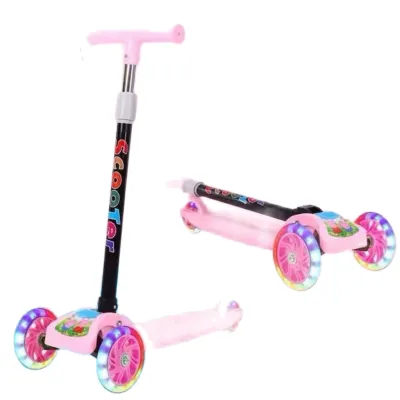
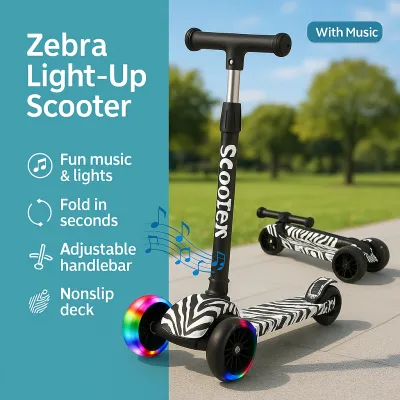
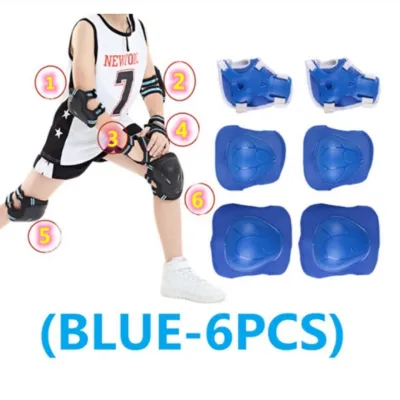
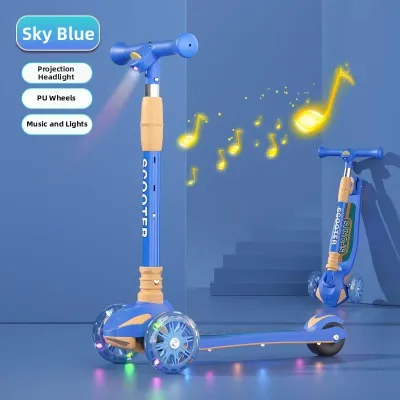
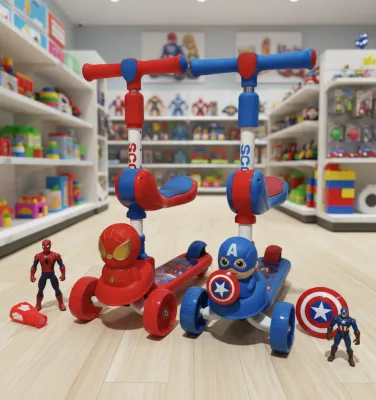
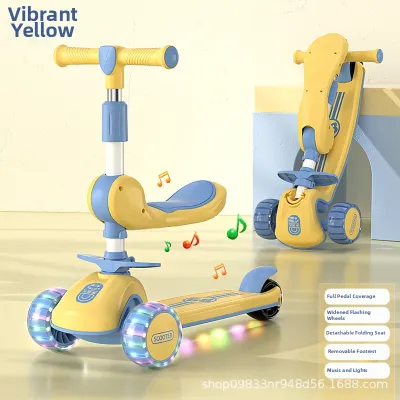
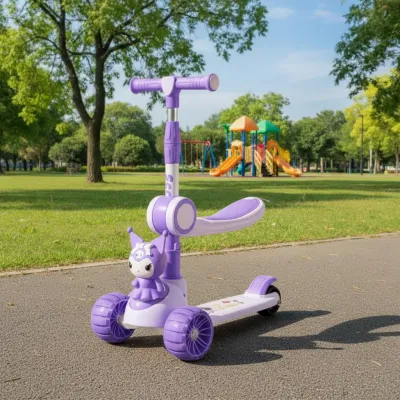
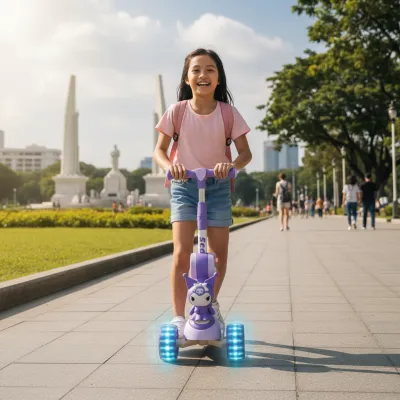
Prices are valid at publication and may change. Please refer to the product page for the latest price.
The steering mechanism itself is a critical safety factor. Direct mechanical steering, where turning the handlebars turns the wheel immediately, can be too sensitive for a toddler’s jerky movements, often leading to sharp, sudden turns that throw the child off balance. A lean-to-steer mechanism is highly recommended for this age group. This system uses the child’s natural body tilt to curve the scooter gently, which helps develop coordination and prevents jackknifing.
Wheel material and size also dictate how safely the scooter handles outdoor terrain. Look for large, wide wheels made of high-quality polyurethane (PU) rather than hard, hollow plastic. PU wheels absorb vibrations from rough outdoor surfaces, such as concrete pathways or paved driveways, and roll smoothly over small pebbles or cracks without jamming. Larger wheels (typically 120mm in the front) roll over obstacles more easily, reducing the risk of sudden stops that could send a toddler over the handlebars.
Deck Grip, Size, and Ground Clearance
The deck is the foundation of the child’s stance and must be designed to prevent slips. It must have a highly textured surface—either molded-in raised plastic patterns or a durable grip tape—to prevent small shoes from slipping, especially in humid or damp tropical conditions. You can test the grip by running your hand over it; it should feel distinctly rough and high-friction, even when exposed to moisture or sweat.

Deck dimensions must accommodate both feet side-by-side or one behind the other comfortably. However, it should not be so wide that it forces the child to kick at an awkward, outward angle, which can strain their hips and cause them to lose balance. Ensure all edges are rounded and smooth, with no sharp plastic burrs or metal edges from manufacturing that could scrape a child’s ankle.
Ground clearance is a delicate balance. A low deck (close to the ground) lowers the child’s center of gravity, making it much easier to push off and step on or off safely. If the deck is too high, the child must bend their supporting knee excessively, leading to rapid fatigue and instability. However, it must clear minor ground imperfections to avoid sudden stops from scraping.
Handlebar Security and Adjustability
As toddlers grow rapidly, an adjustable T-bar is essential, but it must lock securely. Look for dual-locking systems that combine a spring-loaded push-button with a physical collar clamp. Never rely solely on a friction clamp, which can slip under the child’s weight.
Grips must be made of non-toxic, textured rubber or thermoplastic elastomer (TPE). They should feature large, flared outer ends (end plugs). These flared ends protect the child’s hands from scraping against walls or the ground during a fall, and they prevent the hands from sliding off the sides of the bar during active steering.
To set the correct height, have your child stand on the deck. The handlebars should align roughly with their belly button or lower chest. If the handlebars are too high (near the chin), steering control is compromised, and a sudden stop could cause facial impact. If too low, the child will hunch forward, throwing off their balance.
Braking Systems and Weight Limits
The primary braking system for a toddler scooter is a rear fender foot brake. This brake covers the rear wheel and slows the scooter down when stepped on. Check that the spring tension is light enough for a lightweight toddler to depress easily, yet springy enough to return to its open position immediately.
Hand brakes, common on older kids’ bicycles and scooters, are highly unsuitable for two-year-olds. Toddlers lack the hand span, grip strength, and rapid cognitive-motor coordination required to squeeze a hand lever while maintaining their balance on a moving platform.
Always verify the manufacturer’s maximum weight limit, usually printed on a label beneath the deck or in the user manual. Ensure your child’s weight is well below this limit. A safe margin (e.g., the child weighing at least 5 to 10 kilograms less than the maximum capacity) ensures the frame does not flex excessively, which can degrade steering and braking performance.
Protective Gear and Safe Riding Boundaries
No safety feature on a scooter can replace personal protective equipment. A properly fitted, certified helmet is non-negotiable. It must sit flat on the head, covering the forehead, with the chin strap adjusted to fit snugly (allowing only one or two fingers between the strap and chin).
Knee and elbow pads protect against the inevitable scrapes on concrete or asphalt. Closed-toe shoes with good rubber soles are mandatory; never let a toddler ride in sandals, flip-flops, or barefoot, as they often use their feet to slow down, risking severe toe injuries.
Establish strict riding boundaries. Toddlers should only ride on flat, dry, non-slip surfaces, such as smooth park paths or private driveways. Avoid steep slopes, wet grass, tiled surfaces that become slick when wet, and any area near active motor vehicle traffic or swimming pools.
Constant, active parental supervision is required. A parent must remain within arm’s reach. Stop the ride immediately if the child shows signs of fatigue, loses focus, or if you notice any loose parts on the scooter.
Pre-Ride Safety Inspection Checklist
Before every single ride, perform a quick physical inspection to ensure the scooter remains structurally sound.
Check all visible screws, bolts, and folding mechanisms. Ensure the collar clamps on the handlebar stem are tight and that the folding hinge (if equipped) is fully locked into its riding position.
Spin both the front and rear wheels manually. They should spin freely and quietly. If you hear grinding noises or feel wobbling, the bearings may be damaged or dirty. Press down on the rear brake fender to verify it springs back quickly and is free of debris.
Inspect the deck and steering column for any signs of material fatigue, such as hairline cracks in the plastic, rust on metal components, or peeling grip tape. If any structural compromise is found, do not allow the child to ride until the part is replaced or repaired.
Frequently Asked Questions (FAQ)
Is a 3-wheel scooter safer than a 2-wheel scooter for a 2-year-old?
Yes, a 3-wheel scooter is significantly safer for a 2-year-old. At this age, children are still developing their gross motor skills and dynamic balance. A 3-wheel scooter provides a stable, self-standing platform that does not tip over when stationary, allowing the child to focus on learning how to push and steer without the added challenge of keeping the scooter upright.
Do I need to buy a scooter with a seat for my toddler?
A scooter with a removable seat can be a useful transitional toy, but you must evaluate the safety of the seat attachment mechanism. Ensure the seat locks firmly into place without wobbling and that the scooter’s base remains stable when the child is seated. Once your child can walk confidently and shows an interest in standing, the seat should be removed to allow them to develop proper scooter riding skills.
How do I know if the scooter is too heavy for my child to handle?
A scooter that is too heavy can be difficult for a 2-year-old to steer, push, or pick up after a fall, which can lead to frustration and accidents. Check the product’s net weight specifications; ideally, a toddler scooter should weigh under 3 kilograms. You can assess manageability by having your child practice pushing and turning the stationary scooter in a safe, carpeted indoor area before heading outside.

Community discussion
Share your experience or ask a question. Comments are reviewed before publication.